Ambient pressure, measured in pascals (Pa), represents the immediate force exerted by the weight of surrounding gases in a given environment, serving as a critical metric across meteorology, engineering, and manufacturing. The pascal is the International System of Units (SI) derived unit of pressure, defined as one newton per square meter ($\text{N/m}^2$). Understanding ambient pressure in pascals involves examining how atmospheric forces operate, how measurement tools interpret these values, and why this metric dictates the behavior of fluids, mechanical systems, and human physiology.
Defining Ambient Pressure and the Pascal (Pa)
Ambient pressure is the physical pressure of the immediate environment in which a system, object, or living organism is placed. It is interchangeable with barometric pressure when considering Earth's atmosphere at a specific location and altitude, but it can also refer to enclosed or artificial environments like hyperbaric chambers, vacuum systems, or pressurized cabins.
The pascal $(\text{Pa})$ quantifies this pressure. Because the pascal is a relatively small unit of measurement—representing a minute force spread over a large area—meteorologists, scientists, and engineers frequently rely on multiples such as the hectopascal ($\text{hPa}$) or kilopascal ($\text{kPa}$). One hectopascal equals $100\text{ pascals}$, and one kilopascal equals $1,000\text{ pascals}$. Standard atmospheric pressure at sea level is internationally defined as exactly $101,325\text{ Pa}$, or $101.325\text{ kPa}$, which is also equivalent to $1,013.25\text{ hPa}$ or 1 standard atmosphere ($\text{atm}$).
To visualize the magnitude of a pascal, imagine resting a small apple weighing approximately 102 grams on a flat surface of one square meter; the force exerted by that apple equals roughly one pascal. Because ambient pressure at sea level is over $100,000\text{ Pa}$, the actual force pressing down on every square meter of Earth's surface is immense, balanced equally by internal pressures within objects and living organisms.
Atmospheric Mechanics: Why Ambient Pressure Varies
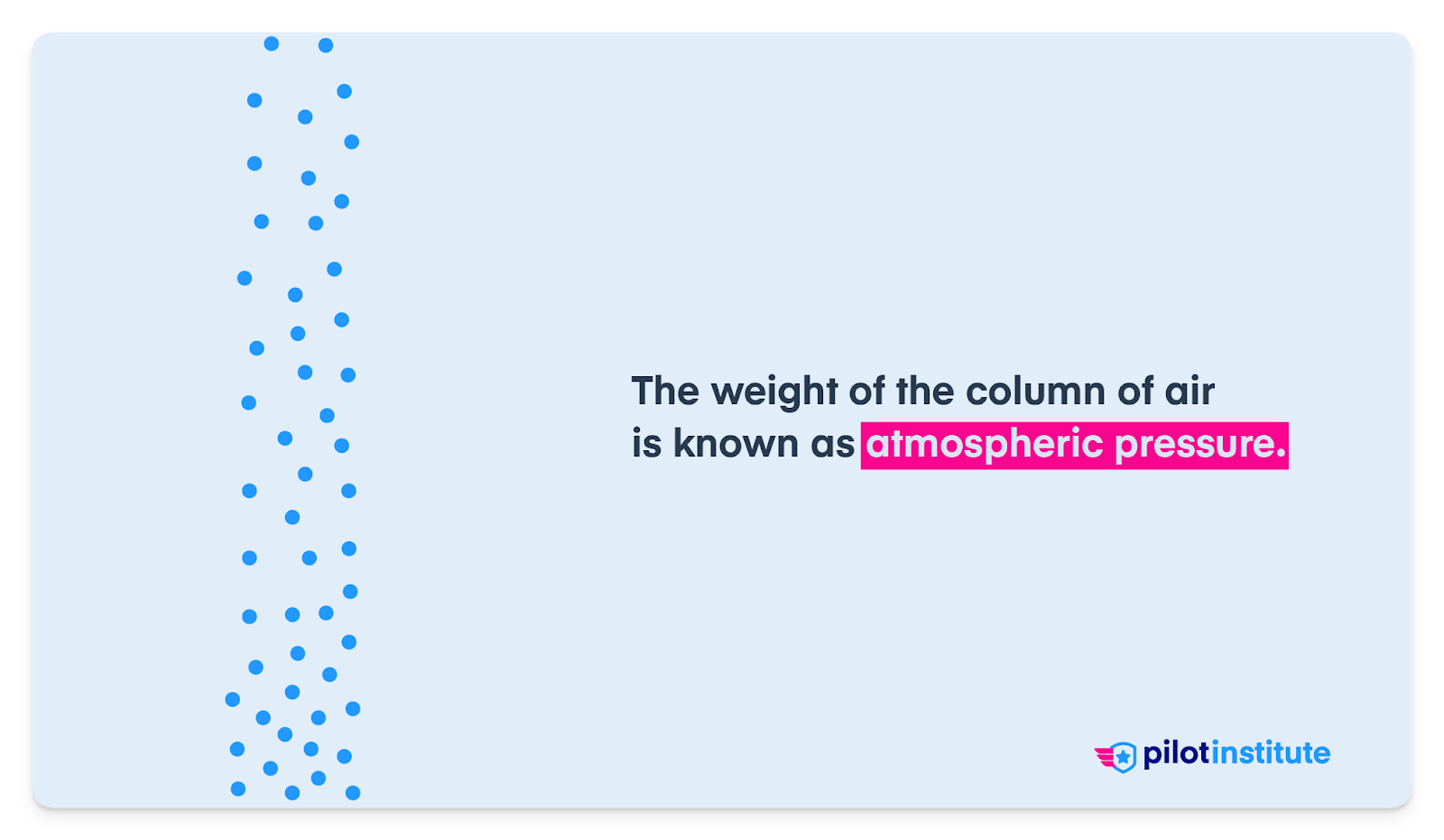
Ambient pressure is not a constant value across the globe; it fluctuates based on several interrelated environmental factors. The primary driver of ambient pressure variation is altitude. As an observer ascends from sea level to high-altitude regions like mountain ranges, the column of air remaining above decreases. Consequently, fewer gas molecules press down from gravity, leading to an exponential drop in ambient pressure.
| Location / Condition | Ambient Pressure in Pascals (Pa) | Alternative Units |
|---|---|---|
| Standard Sea Level | $101,325\text{ Pa}$ | $101.325\text{ kPa} / 1,013.25\text{ hPa}$ |
| High Altitude (approx. 3,000 m) | $\approx 70,121\text{ Pa}$ | $70.1\text{ kPa}$ |
| Commercial Aircraft Cabin | $\approx 75,000\text{ Pa}$ to $80,000\text{ Pa}$ | $75\text{ kPa}$ to $80\text{ kPa}$ |
| Severe Low-Pressure Storm System | $< 950,000\text{ Pa}$ (Typhoon/Hurricane) | $< 950\text{ hPa}$ |
| Moderate Industrial Vacuum | $1,000\text{ Pa}$ to $10,000\text{ Pa}$ | $1\text{ kPa}$ to $10\text{ kPa}$ |
Beyond altitude, weather patterns heavily influence ambient pressure readings. High-pressure systems (anticyclones) occur when cooler, denser air descends toward the Earth's surface, compressing the lower atmosphere and elevating ambient pressure values above the baseline. Conversely, low-pressure systems (cyclones or depressions) form when warm air rises, reducing the mass of air overhead and causing ambient pressure measurements in pascals to drop significantly. Temperature and humidity also play secondary roles; warm air is less dense than cold air, meaning a column of warm air exerts less pressure than an identical column of cold air at the same elevation.
Practical Applications Across Disciplines
Accurate knowledge of ambient pressure in pascals underpins operations in diverse fields, ranging from everyday industrial processes to advanced scientific research.
Meteorology and Aviation
In meteorology, tracking changes in ambient pressure allows forecasters to predict storms, wind patterns, and frontal movements. Barometers measure these shifts, and falling pressure typically signals approaching precipitation or severe weather. In aviation, altimeters are essentially sensitive barometers calibrated to estimate altitude based on ambient pressure. Because ambient pressure changes with weather as well as altitude, pilots must continuously calibrate their instruments to local barometric pressure settings—known as QNH or altimeter settings—to ensure correct clearance heights during takeoff and landing.
Engineering and Manufacturing
Industrial systems, HVAC design, and pneumatic machinery rely heavily on ambient pressure baselines. When engineers design compressed air systems, vacuum chambers, or fluid flow networks, the performance of these systems depends on the differential between internal operating pressure and external ambient pressure. For instance, pump efficiency, suction lift capabilities, and boiling points of liquids shift depending on whether an industrial plant sits at sea level or high in the mountains.
Automotive and Combustion Engines
Internal combustion engines ingest air based on local ambient pressure. At high altitudes where ambient pressure in pascals is lower, the air is less dense, meaning each engine stroke draws in fewer oxygen molecules. Without forced induction systems like turbochargers or superchargers to compensate, naturally aspirated engines experience a measurable loss of horsepower at high elevations.
Measurement Tools and Instrumentation
Quantifying ambient pressure requires specialized sensors designed to register minute changes in force against a reference area. Understanding how these devices function helps explain why pressure readings are expressed in pascals.
- Aneroid Barometers: These mechanical devices use a sealed, flexible metal capsule (aneroid cell) made of a beryllium-copper alloy. As ambient pressure rises, the capsule compresses; as pressure drops, it expands. Mechanical linkages translate these microscopic movements into needle deflection on a dial.
- Piezoresistive Pressure Sensors: Common in modern digital electronics, weather stations, and smartphones, these silicon-based sensors change electrical resistance when flexed by external pressure. The resulting electrical signal is converted digitally into direct pascal readings.
- Capacitive Pressure Sensors: These sensors measure changes in electrical capacitance between a flexible diaphragm and a fixed electrode. As ambient pressure deforms the diaphragm, the distance between the plates changes, yielding a highly accurate pascal measurement.
Common Challenges and Troubleshooting in Pressure Measurement
When measuring or working with ambient pressure in pascals, technicians and scientists often encounter calibration and environmental discrepancies that can skew data.
- Elevation Offsets: Failing to account for altitude differences between the measurement site and sea-level reference standards is a frequent error. Raw ambient pressure must often be adjusted to mean sea-level pressure (MSLP) to allow meaningful comparisons across different meteorological stations.
- Temperature Drift: Electronic pressure sensors can experience thermal drift, where internal electrical properties shift due to ambient temperature changes rather than actual pressure changes. High-quality instrumentation incorporates internal temperature compensation circuits to maintain pascal accuracy.
- Dynamic Pressure Interference: Placing a static pressure port too close to moving air currents or turbulence can cause dynamic pressure spikes, leading to artificially inflated or erratic ambient pressure readings. Proper sensor placement requires locations with undisturbed, static airflow.
Frequently Asked Questions
What is normal ambient pressure in pascals?
Normal ambient pressure at sea level is standardized at $101,325\text{ Pa}$ (or $101.325\text{ kPa}$). However, actual daily readings fluctuate between roughly $98,000\text{ Pa}$ and $104,000\text{ Pa}$ at sea level depending on weather conditions and localized atmospheric phenomena.
How do you convert hectopascals (hPa) to pascals (Pa)?
To convert hectopascals to pascals, multiply the value in hPa by 100, because one hectopascal equals one hundred pascals. For example, a standard barometric reading of $1,013\text{ hPa}$ equals $101,300\text{ Pa}$.
Why does ambient pressure affect water boiling points?
Water boils when its vapor pressure equals the surrounding ambient pressure. At high altitudes where ambient pressure in pascals is lower, less thermal energy is required for vapor bubbles to form and escape into the air. Consequently, water boils at lower temperatures on mountains than it does at sea level.
Is ambient pressure the same as gauge pressure?
No. Ambient pressure measures the absolute force exerted by the surrounding environment. Gauge pressure, by contrast, measures the difference between a system's internal pressure and the surrounding ambient pressure, effectively treating local ambient pressure as a zero reference point.
How does weather affect ambient pressure readings?
High-pressure systems feature sinking air that compresses the lower atmosphere, increasing ambient pressure at the ground. Low-pressure systems feature rising air that reduces atmospheric mass overhead, resulting in falling pascal measurements that frequently precede storms.
Conclusion and Next Actions
Mastering the concept of ambient pressure in pascals provides a solid foundation for evaluating atmospheric science, mechanical engineering designs, and environmental monitoring data. Whether you are calibrating meteorological equipment, calculating fluid dynamics, or analyzing high-altitude performance limits, always verify your baseline reference conditions and ensure sensors are properly adjusted for local elevation. For further investigation, consult local meteorological observation networks or engineering standards manuals to review historical barometric datasets for your specific geographic region.