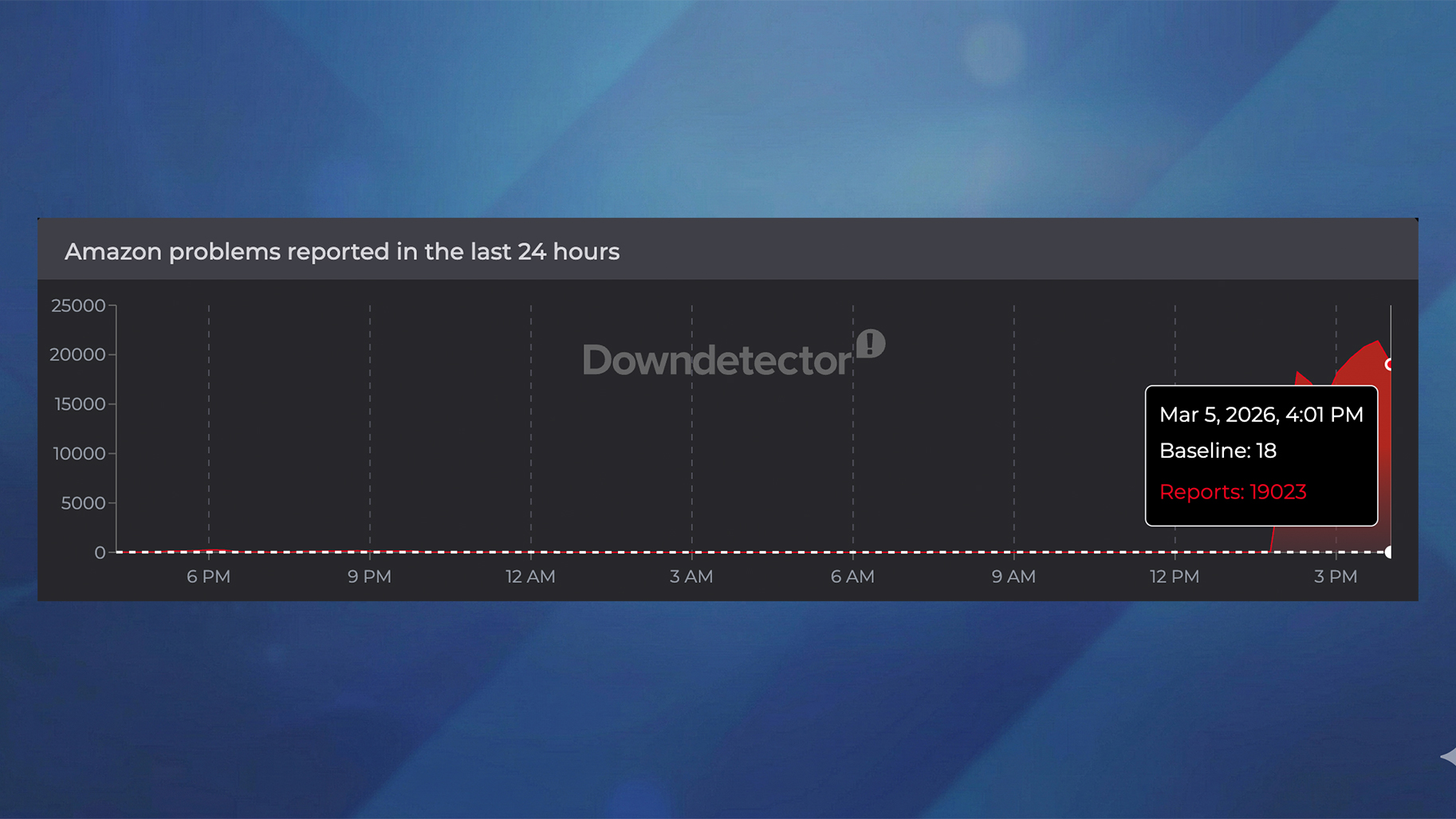
When Amazon Web Services (AWS) experiences a significant regional outage, Amazon’s physical fulfillment centers often stop operating because their core logistical systems—including barcode scanning, robotic routing, and inventory tracking—rely on cloud-based APIs to function. Without a stable connection to AWS servers, the hardware inside the warehouse cannot process real-time data, leading to immediate operational paralysis.
The Interconnected Ecosystem: How AWS Powers Fulfillment
The modern Amazon fulfillment center is not merely a warehouse; it is a sophisticated, highly automated industrial hub that functions as a physical extension of the AWS cloud. In 2026, this integration has only deepened as Amazon has moved toward more AI-driven logistics. Every movement of a package, from the moment it arrives at a receiving dock to the second it is loaded onto a delivery van, is dictated by software running on AWS infrastructure.
Warehouse Management Systems (WMS)
The Warehouse Management System is the brain of the facility. It handles the logic of where items are stored (stowing), how they are retrieved (picking), and how they are sorted. This system is not hosted on local servers within the warehouse building. Instead, it operates as a distributed application across AWS regions. When a worker scans a product, that request travels to an AWS data center, is processed against a massive database, and a response is sent back to the worker’s handheld device. If the AWS region hosting that logic (frequently US-EAST-1) goes down, the handheld devices become useless "bricks," unable to tell workers what to do next.
Robotics and Automation
Amazon’s use of robotics, including the Kiva systems and the newer Proteus autonomous mobile robots, relies on centralized coordination. These robots navigate using a complex map of the warehouse floor, but their high-level tasking—which pod to move, which route to take to avoid congestion—is managed by cloud-based orchestration services. During an AWS outage, the "traffic control" system fails. For safety and operational integrity, these robots are programmed to stop or return to a home state if they lose communication with the central server, effectively freezing the movement of inventory across millions of square feet of floor space.
Anatomy of a Logistics Shutdown
When an outage strikes, the shutdown occurs in stages, beginning with the digital interface and rapidly cascading into physical gridlock. The "down" status of an Amazon warehouse is rarely a total power failure; rather, it is a failure of the information flow required to move physical objects safely and efficiently.
Communication Breakdowns
The first sign of an outage is usually the failure of internal communication tools. Amazon associates use various proprietary applications, such as the "A to Z" app, to manage their shifts, view assignments, and report issues. When the back-end services for these apps fail, management cannot communicate instructions to thousands of employees simultaneously. This leads to a scenario where workers are physically present but lack the digital directives required to perform their roles.
Labor Management and Scheduling
AWS outages also impact the "Last Mile" logistics. Delivery Service Partners (DSPs) and Amazon Flex drivers rely on the Amazon Flex app for routing and package scanning. If the AWS services powering the routing engine are down, drivers cannot load their vans because they cannot "check in" the packages. This creates a massive bottleneck at the loading docks. Even if the warehouse workers could manually pick items, there would be no way to systematically hand them off to the delivery network.
Historical Context: The 2021 US-EAST-1 Incident
To understand why this remains a critical issue in 2026, one must look back at the landmark outage of December 7, 2021. This event served as a wake-up call for the entire logistics industry. A failure in the US-EAST-1 region (located in Northern Virginia) disrupted not just third-party websites like Netflix and Disney+, but Amazon’s own internal operations.
During that event, warehouses across the United States reported that scanners were non-functional. Drivers were seen idling in parking lots because they could not log into the apps required to start their routes. This specific incident highlighted the "circular dependency" problem: Amazon’s physical infrastructure was so reliant on its own cloud services that it could not recover until the cloud services themselves were restored. Since then, Amazon has invested heavily in "Local Zones" and edge computing, yet the sheer scale of the data processed means that total independence from the cloud remains elusive.
Critical Warehouse Systems and Their AWS Dependencies
The following table outlines the primary systems within an Amazon Fulfillment Center and how they are impacted by AWS downtime.
| System Name | Primary Function | AWS Dependency | Impact of Outage |
|---|---|---|---|
| Inventory Control | Tracks item locations | High (DynamoDB / Aurora) | Total inability to locate or stow items. |
| Robotic Drive Units | Moves inventory pods | Medium (IoT Core / EC2) | Robots stop moving; manual picking becomes necessary but slow. |
| Handheld Scanners | User interface for picking | High (API Gateway / Lambda) | Devices fail to process scans; workers cannot receive tasks. |
| Conveyor Sorters | Routes boxes to docks | Low (Local PLC / On-site) | Often continues to run briefly, but stops when buffers fill. |
| Flex/DSP Routing | Last-mile delivery GPS | High (S3 / Route 53) | Drivers cannot load vans or find delivery addresses. |
| Employee Timekeeping | Shift management/Clock-in | High (IAM / Internal Apps) | Workers cannot clock in/out; payroll data may be lost. |
Why "Local Mode" Isn't Always a Solution
A common question from observers is why Amazon doesn't simply build "offline" capabilities into its warehouses. In a facility processing hundreds of thousands of items per hour, "offline" operations are statistically and practically impossible.
- Data Consistency: If a warehouse goes offline and continues to "pick" items, that data must eventually be synced with the global Amazon storefront. If multiple warehouses are working off outdated inventory data, it leads to "phantom" stock—where a customer buys an item that is actually no longer available.
- Computational Demand: The pathfinding algorithms for thousands of robots require significant computational power. Hosting that level of server capacity locally in every one of Amazon's 1,100+ global facilities would be prohibitively expensive and a maintenance nightmare compared to the efficiency of the cloud.
- Security: Localized databases are harder to secure and update than a centralized, hardened AWS environment. Amazon prioritizes the security of its logistics data, which contains sensitive customer and shipping information.
Mitigating Risks: Amazon’s Strategy in 2026
By 2026, Amazon has implemented several architectural shifts to prevent a total "dark warehouse" scenario. These strategies aim to decouple the most critical physical safety functions from the public internet.
Multi-Region Failover
Amazon has moved many of its internal logistics tools to a multi-region active-active setup. This means that if the US-EAST-1 region fails, traffic can theoretically fail over to US-WEST-2 (Oregon). However, this failover is not instantaneous. The sheer volume of traffic generated by Amazon’s own logistics network is so large that shifting it to another region can cause "thundering herd" issues, where the backup region is overwhelmed by the sudden influx of requests.
Edge Computing and AWS Outposts
Many newer fulfillment centers are equipped with AWS Outposts. This is a service that brings AWS infrastructure and services to virtually any data center or on-premises facility. By running a version of the AWS stack locally within the warehouse, Amazon can maintain some level of operational continuity even if the connection to the main AWS region is severed. For example, local Outposts can handle basic scanner logic and robotic safety protocols, allowing the warehouse to continue moving at a reduced speed rather than shutting down entirely.
Impact on Customers and Third-Party Sellers
When AWS takes down the warehouse network, the ripple effects are felt throughout the entire e-commerce ecosystem.
- Delivery Delays: Even a two-hour outage can result in a 24-to-48-hour delay in delivery times. This is due to the "backlog" effect; once systems are back online, the warehouse must process the items that were missed during the downtime while also handling the current day's volume.
- Inventory Inaccuracy: For third-party sellers using Fulfillment by Amazon (FBA), an outage can mean that their inventory is "received" by the warehouse but not updated in the seller portal. This leads to lost sales opportunities during high-traffic periods.
- Prime Promises: Amazon’s "Same-Day" and "Next-Day" delivery promises are built on tight margins. An AWS outage essentially breaks the algorithmic promise of the Prime badge, leading to a surge in customer service inquiries and potential refund requests for shipping costs.
Troubleshooting and Monitoring During an Outage
For those monitoring the status of Amazon operations during a suspected AWS event, there are several key indicators of a warehouse-level disruption:
- AWS Service Health Dashboard: This is the first place to check for official confirmation of cloud issues. However, keep in mind that the public dashboard sometimes lags behind real-world impacts.
- DownDetector and Social Media: Warehouse employees often post on platforms like Reddit or X (formerly Twitter) when they are "standing down." If you see reports from multiple geographic locations regarding "scanners being down," it is almost certainly an AWS-related event.
- Amazon Seller Central: For merchants, if the "Manage Orders" page is failing to load or if inventory levels are frozen, it indicates that the API link between the warehouse and the storefront is broken.
FAQ
Can Amazon warehouses operate without the internet?
No. While some local mechanical systems (like conveyor belts) might have basic manual overrides, the logic required to sort, track, and ship packages is entirely dependent on a connection to AWS. Without the internet, the warehouse cannot verify what is inside a box or where it needs to go.
What happens to the workers during an AWS outage?
Typically, workers are asked to "stand down." They remain in the facility, usually in break rooms, while technicians work to restore the systems. Because these outages are beyond the workers' control, Amazon generally pays them for the duration of the downtime, though this can lead to mandatory overtime later in the week to catch up on the backlog.
How often do these outages occur?
Major regional outages that take down the entire warehouse network are rare, occurring perhaps once every year or two. However, smaller "micro-outages" or API latencies can occur more frequently, affecting specific tasks like labeling or truck check-ins without making national headlines.
Why doesn't Amazon use a different cloud provider as a backup?
AWS is a subsidiary of Amazon. Using a competitor like Microsoft Azure or Google Cloud for backup would be both a massive technical undertaking and a significant strategic conflict. Amazon’s entire software stack is built specifically to leverage AWS-native features like DynamoDB and SQS, making a multi-cloud transition for logistics nearly impossible.
Does an AWS outage affect Amazon Prime Video and Alexa too?
Yes, usually. Because these services also run on AWS infrastructure, they often fail simultaneously with the warehouse systems. However, they may be hosted in different "availability zones" or regions, so it is possible for Alexa to be functional while the warehouses are down, or vice versa.
Final Recommendation for Businesses and Consumers
In an era of total cloud dependency, businesses relying on Amazon’s fulfillment network should maintain a contingency plan for inventory management. For sellers, this means keeping a small portion of "safety stock" in a non-Amazon facility (Merchant Fulfilled) to ensure orders can still go out if FBA systems fail. For consumers, if you notice a major AWS outage reported in the news, expect your "Next-Day" delivery to be delayed by at least 48 hours, regardless of what the tracking page initially says. As we move deeper into 2026, the resilience of the physical world remains tethered to the stability of the digital one.