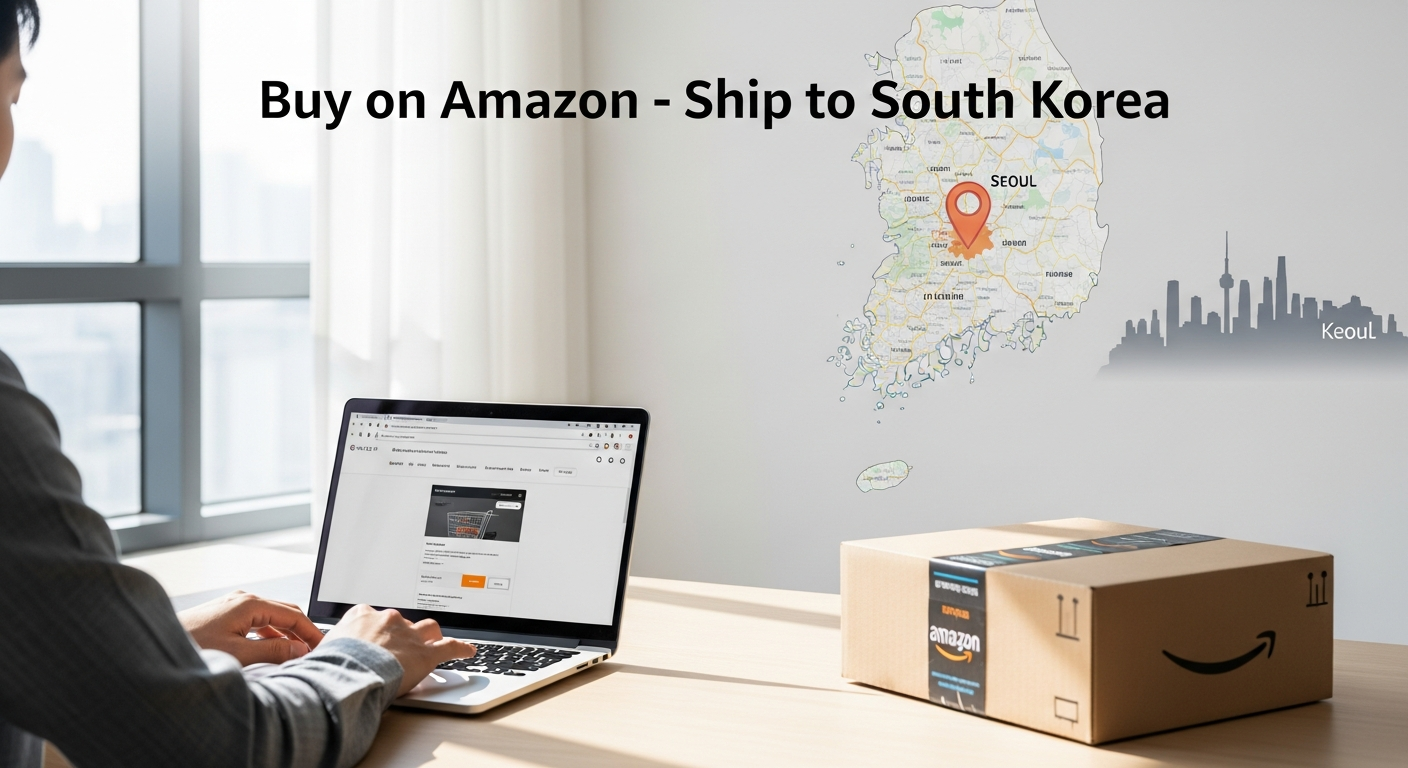
As of 2026, Amazon does not operate a dedicated local marketplace (amazon.co.kr) for physical goods in South Korea. Instead, it maintains a significant retail presence through a strategic partnership with 11st (11Street), offering an integrated Global Store experience. Additionally, Amazon dominates the local cloud sector via its extensive Amazon Web Services (AWS) infrastructure.
The Current Landscape of Amazon in South Korea (2026)
The retail environment in South Korea is one of the most sophisticated and competitive in the world. Unlike many other international markets where Amazon entered by building localized warehouses and a proprietary delivery fleet, the company has chosen a hybrid approach in the Korean peninsula. This strategy prioritizes cross-border e-commerce and high-level enterprise cloud services over the traditional "Amazon Warehouse" model.
For a consumer in Seoul or Busan in 2026, "using Amazon" typically refers to one of three activities: purchasing through the Amazon Global Store on the domestic platform 11st, ordering directly from Amazon.com (USA) or Amazon.co.jp (Japan) for international shipping, or utilizing digital services like Prime Video and Twitch (though the latter's service model has evolved significantly in the region).
While rumors of a full-scale Amazon fulfillment center on Korean soil have circulated for years, the company has remained focused on its partnership with SK Telecom’s e-commerce arm, 11st. This allows Amazon to tap into a massive local user base without the immense capital expenditure required to compete with domestic giants like Coupang, which already operates a near-perfected "dawn delivery" infrastructure.
The Strategic Partnership with 11st (11Street)
The cornerstone of Amazon's retail strategy in South Korea is its integration with 11st, one of the country's leading e-commerce platforms. Launched in August 2021 and matured by 2026, this partnership created the "Amazon Global Store" within the 11st app and website.
How the Amazon Global Store Functions
The Amazon Global Store on 11st allows Korean consumers to browse millions of products available on Amazon US. The interface is entirely in Korean, and prices are listed in Korean Won (KRW). This solves the primary barriers to entry for local shoppers: language and currency conversion.
When a customer places an order, the item is shipped from Amazon’s fulfillment centers in the United States directly to the customer's doorstep in Korea. By 2026, logistics optimizations have reduced average shipping times for these "Global Store" items to between 4 and 10 days, depending on the product's origin and customs processing speed.
Subscription Benefits and the Universe Pass
To drive loyalty, Amazon collaborated with SK Telecom to include Amazon benefits in the T Universe (Universe Pass) subscription. This service functions similarly to a localized version of Amazon Prime. Key benefits typically include:
- Free International Shipping: Subscribed users often receive free shipping on Amazon Global Store items, even for low-value purchases that would otherwise incur high cross-border fees.
- Monthly Coupons: Digital discount codes specifically for Amazon products.
- Bundled Services: Integration with other SK Telecom services, such as Google One storage or local food delivery discounts.
This partnership is a symbiotic relationship. 11st gains a massive inventory of unique international products that Coupang and Naver may not carry, while Amazon gains access to a localized payment gateway (11Pay) and a sophisticated customer service apparatus that handles inquiries in the local language.
Why Amazon Has Not Launched a Local Marketplace
To understand why there is no "Amazon.co.kr" with local warehouses, one must look at the dominance of Coupang. Often called the "Amazon of South Korea," Coupang has invested billions in its "Rocket Delivery" network.
The Coupang Factor
Coupang’s infrastructure allows for delivery within hours. A customer can order a grocery item at 11:00 PM and find it outside their door by 7:00 AM the next morning. For Amazon to compete with this, it would need to build a comparable network of "Rocket" fulfillment centers across a geographically small but densely populated country where real estate prices are exceptionally high.
Logistics and the "Last Mile"
South Korea's logistics sector is already highly optimized. Companies like CJ Logistics and the delivery arms of Naver and Gmarket provide high-speed, low-cost shipping. Amazon’s traditional competitive advantage—fast shipping—is neutralized in Korea because fast shipping is already the baseline standard. Consequently, Amazon’s value proposition in the region is product diversity rather than delivery speed. They provide the items that are not manufactured or stocked locally.
Amazon Web Services (AWS) in South Korea
While the retail side is a partnership-based model, the technical side is a different story. Amazon Web Services (AWS) has a massive, direct presence in South Korea. The AWS Asia Pacific (Seoul) Region was launched in early 2016 and has expanded consistently through 2026.
Infrastructure and Local Regions
The Seoul Region consists of multiple Availability Zones. These are physically separated data centers with redundant power, networking, and connectivity. By 2026, AWS has expanded its footprint to support the high demand from Korea’s tech-heavy economy, including:
- Gaming Giants: Companies like Krafton, Pearl Abyss, and Nexon rely on AWS for low-latency global gaming sessions.
- Enterprise Migration: Large conglomerates (Chaebols) like Samsung and LG use AWS for various parts of their cloud infrastructure and AI research.
- Public Sector: AWS has worked to meet local security certifications (such as K-ISMS) to allow government and educational institutions to use their cloud services.
The presence of AWS is arguably more impactful to the South Korean economy than Amazon’s retail wing, as it powers a significant portion of the country’s digital infrastructure.
How to Buy from Amazon While in South Korea
For residents in Korea, there are three primary ways to access Amazon's inventory in 2026. Each method has specific trade-offs regarding cost, speed, and variety.
1. The 11st Amazon Global Store
This is the most convenient method.
- Pros: Korean language support, local payment methods (including local credit cards and points), easier customs handling.
- Cons: Selection is limited compared to the full Amazon.com catalog. Some heavy or restricted items are not available.
2. Direct Purchase (Jik-gu) from Amazon.com
The term "Jik-gu" (직구) refers to direct overseas purchasing. Many Koreans prefer the US site for the full catalog.
- Pros: Access to every item that ships to Korea; often cheaper during major sales like Prime Day or Black Friday.
- Cons: Requires English proficiency; international shipping fees can be high; requires a Personal Customs Clearance Code (PCCC).
3. Using a Freight Forwarder (Bae-dae-ji)
If an item on Amazon.com does not ship to Korea, shoppers use a "Bae-dae-ji" (배대지). This is a third-party warehouse in the US that receives the package and then forwards it to Korea.
- Pros: Allows purchase of "US-only" items.
- Cons: More expensive; complicates the return process; longer wait times.
Customs and the Personal Customs Clearance Code (PCCC)
Regardless of the method used, all international shipments entering South Korea are subject to the Korea Customs Service regulations.
A critical requirement is the Personal Customs Clearance Code (PCCC). This is a unique number (starting with the letter P) issued by the customs office to prevent the misuse of national ID numbers. Residents (including expats) must provide this code when ordering from Amazon to ensure their package clears customs smoothly.
| Category | De Minimis Threshold (Tax-Free) | Notes |
|---|---|---|
| General Goods | Up to $150 USD | Includes clothing, electronics, and household items. |
| Goods from USA | Up to $200 USD | Due to the KORUS FTA, most goods from the US have a higher limit. |
| Medicines/Food | Up to $150 USD | Limited to 6 bottles/units; stricter health inspections apply. |
Note: The total value includes the product price and internal US shipping/tax, but usually excludes international shipping for tax calculation purposes, depending on the current year's specific enforcement.
Comparing Amazon to Local Korean E-commerce Leaders
For a consumer in 2026, the choice of platform often depends on what they are buying.
| Feature | Amazon (via 11st) | Coupang | Naver Shopping |
|---|---|---|---|
| Primary Strength | International brands & US imports | Unmatched delivery speed (Rocket) | Price comparison & "Naver Pay" |
| Delivery Speed | 4–10 Days (International) | Same day / Next morning | 1–3 Days |
| Product Origin | Global (US/Japan/UK) | Domestic (Warehouse-stocked) | Mixed (Third-party sellers) |
| Language | Korean (Integrated) | Korean | Korean |
| Best For | Electronics, Supplements, Brands | Groceries, Daily essentials | Fashion, Local household goods |
Challenges and the Regulatory Environment
Amazon’s growth in Korea is not without hurdles. The South Korean government maintains strict regulations regarding data privacy, dark patterns in UI design, and fair competition.
- Platform Legislation: Similar to the EU's Digital Markets Act, Korea has introduced various "Platform Acts" to prevent market dominance. Amazon’s partnership model helps it navigate these as it operates through a local entity (11st).
- Taxation: South Korea has strict VAT (Value Added Tax) collection rules for digital services and cross-border e-commerce. Amazon must ensure all prices reflect these local tax requirements to avoid customs delays.
- Certification (KC Mark): Many electronic products sold on Amazon do not have the "KC Mark" (Korea Certification). While individuals can import one unit for personal use, there are restrictions on reselling these items locally, which limits Amazon’s ability to "bulk ship" certain items to local hubs.
FAQ
Does Amazon Prime Video work in South Korea?
Yes, Amazon Prime Video is available as a standalone streaming service in South Korea. While the library is smaller than the US version, it includes localized subtitles and dubbing for major "Amazon Originals." It is often bundled with certain mobile carrier plans.
Can I use my US Amazon account on 11st?
No, you cannot link your existing Amazon.com account directly to 11st. You must create an 11st account. However, the items you see in the Amazon section of 11st are mirrors of the US inventory, managed through an API.
What is the 150/200 USD limit for Amazon orders?
This is the "de minimis" value. If your total order (including shipping in some cases) stays below $150 (or $200 for US-shipped items), you do not have to pay import duties or VAT. If you exceed this, you may be charged approximately 10-20% extra by customs.
Does Amazon provide customer service in Korean?
If you order through the 11st Amazon Global Store, you receive full Korean-language customer support. If you order directly from Amazon.com, support is primarily in English, though they have improved their machine-translation tools for chat support by 2026.
Why did Twitch (owned by Amazon) leave South Korea?
Twitch announced its departure from the South Korean market in late 2023 (effective 2024) due to prohibitively high network usage fees. While Amazon's retail and cloud (AWS) arms remain strong, the live-streaming segment faced unique localized cost challenges that made the business model unsustainable.
Practical Recommendations for Users
If you are currently living in or moving to South Korea in 2026, follow these steps to optimize your Amazon experience:
- Get your PCCC immediately: Visit the Korea Customs Service PCCC portal to generate your code. You will need a local phone number or "I-PIN" for verification.
- Use 11st for Routine Purchases: For supplements (like those from the Amazon-owned brand Solgar) or common US electronics, use the 11st Global Store. It saves you the headache of calculating customs fees.
- Monitor the KORUS FTA Limits: If you are buying a high-value item like a laptop, try to ensure it is shipped from a US-based Amazon warehouse to take advantage of the $200 tax-free threshold rather than the $150 threshold applied to other regions.
- Check for "Universe Pass" Deals: If you plan on making more than two Amazon purchases a year via 11st, the subscription usually pays for itself through the free shipping benefit alone.