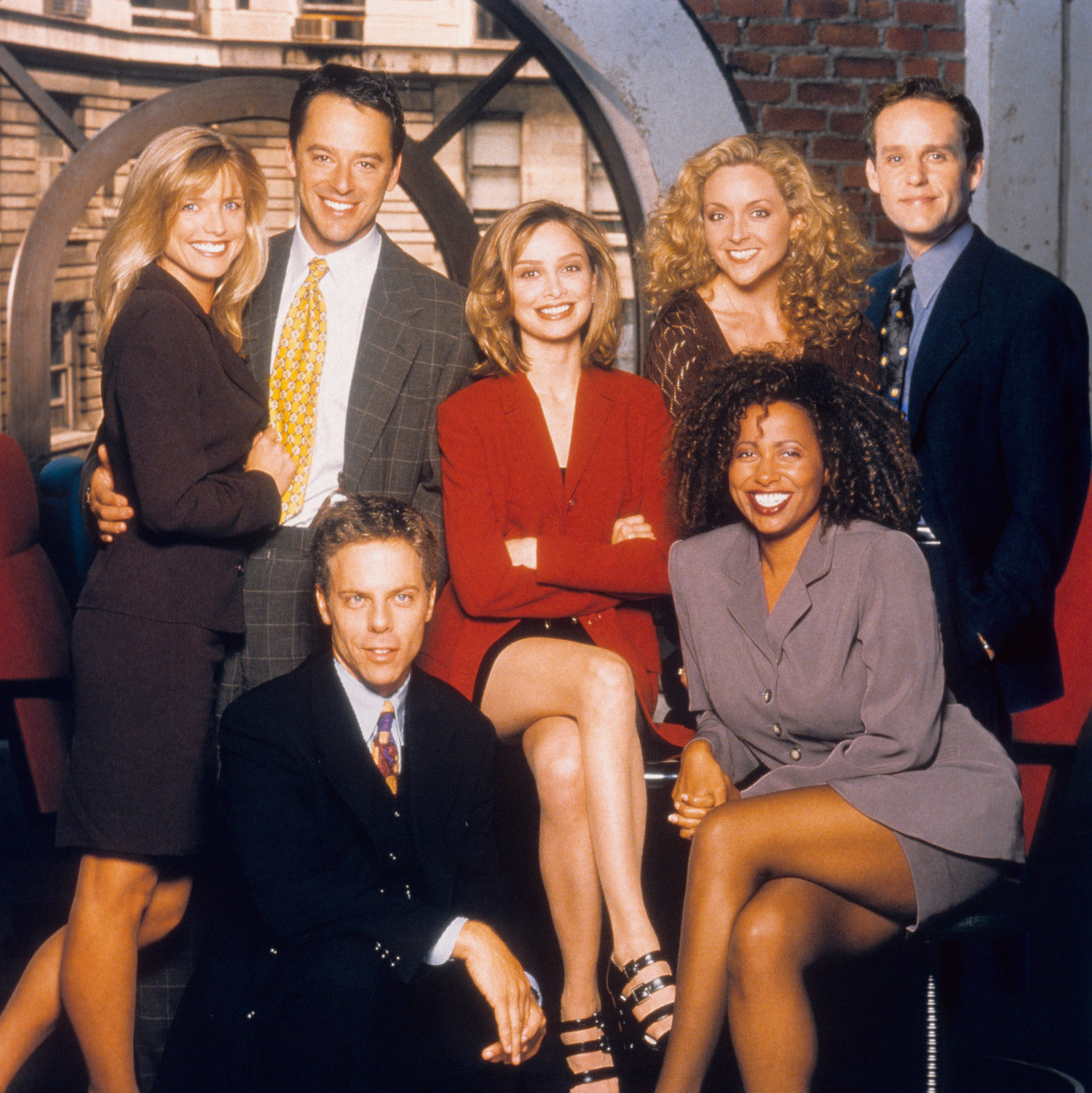
Jane Krakowski’s portrayal of Elaine Vassal in the legal comedy-drama Ally McBeal serves as one of the most defining performances of the late 1990s television landscape. As the eccentric, boundary-pushing receptionist at the law firm Cage & Fish, Krakowski balanced comedic absurdity with a distinct character arc that mirrored the show's focus on professional tension and personal eccentricity. Her work on the series solidified her status as a versatile performer, ultimately paving the way for her extensive career in television and theater.
Origins and Concept of the Elaine Vassal Character
Ally McBeal, created by David E. Kelley and airing from 1997 to 2002, was known for its surrealist tone, focus on internal monologue, and exploration of complex office dynamics. Within this environment, Jane Krakowski’s character, Elaine Vassal, was designed as a foil to the more introspective and often melancholy lead, Ally.
Elaine Vassal was introduced not merely as a clerical staff member but as the architect of the firm's office culture. She was famously known for her unearned self-confidence, her inventive—and often hazardous—inventions, and her unapologetic pursuit of office romance. Unlike many other television administrative assistants of the era, Elaine held a central position in the narrative flow. She frequently inserted herself into the private lives of the firm’s partners and associates, often acting as a catalyst for the show’s signature chaotic office meetings.
The character served several functional roles in the storytelling:
- The Comedic Disruptor: Elaine’s interjections during serious legal deliberations often served to undercut the tension, highlighting the absurdity of the firm’s daily operations.
- The Surrealist Element: Her inventions—such as the "Face Bra"—became running gags that underscored the show’s commitment to quirkiness over strict realism.
- The Office Conduit: Because of her role as the gatekeeper of the reception area, Elaine was the primary vector for gossip, which fueled the interpersonal conflicts that were the bread and butter of the series.
Technical Execution and Performance Style
Jane Krakowski’s performance style in Ally McBeal was characterized by a high-energy, physical approach to comedy. In the television landscape of 2026, critics often look back at her work as a masterclass in "broad comedy"—a style that requires perfect timing and the ability to maintain character consistency even in the most outlandish plotlines.
Krakowski utilized a specific set of tools to bring Elaine to life:
- Physicality: Her ability to pivot between moments of extreme vanity and sudden, sharp professional competence made the character multifaceted.
- Vocal Delivery: Elaine’s dialogue was often fast-paced and peppered with specific, idiosyncratic phrasing that distinguished her from the more lawyerly, articulate characters in the firm.
- Collaborative Timing: The chemistry between Krakowski and Peter MacNicol (who played John Cage) provided the show with some of its most memorable comedic beats. Their professional "dance" highlighted the thin line between professional necessity and personal obsession.
This performance was not merely about being "funny." It required the actor to ground a character who was arguably the most unrealistic person in the room. Krakowski ensured that even when Elaine was behaving in a way that defied standard social norms, she remained a sympathetic and essential part of the Cage & Fish team.
Comparing the Office Dynamics: Cage & Fish Staff
To understand the scope of the character’s impact, it is helpful to compare the roles and archetypes within the firm as they existed throughout the series' five-season run.
| Character Name | Role/Archetype | Narrative Function |
|---|---|---|
| Ally McBeal | The Protagonist | Internal conflict and existential inquiry. |
| John Cage | The Partner | Emotional grounding, eccentricity, and legal brilliance. |
| Elaine Vassal | The Receptionist | Chaos, comic relief, and social connectivity. |
| Richard Fish | The Founder | Representing the capitalist, often absurd, legal morality. |
| Billy Thomas | The Idealized Past | Serving as a catalyst for Ally’s professional/personal growth. |
The above table illustrates that while characters like John Cage represented the show's preoccupation with unique psychological states, Elaine Vassal was the anchor for the firm’s daily atmosphere. Without her, the transition between the courtroom drama and the office-based comedy would have lacked the necessary friction to keep the narrative moving.
Evolution of the Character Across Five Seasons
Across the 112 episodes of Ally McBeal, the character of Elaine Vassal underwent subtle shifts. While she remained the "face" of the office, the writers began to explore her personal aspirations beyond the front desk. This included her foray into professional dancing and her struggles to find a romantic partner who could match her intense, often exhausting personality.
In the later seasons, as the show’s tone matured, Krakowski’s performance became more nuanced. The writers allowed Elaine to show moments of genuine vulnerability, particularly when the firm faced existential threats. This evolution was critical for the show’s longevity; had Elaine remained a one-dimensional caricature, the character would have likely become redundant or irritating by the third season. Instead, Krakowski played her with enough humanity to ensure the audience remained invested in her eccentricities.
Cultural Legacy and Post-Ally Career
Jane Krakowski’s tenure on Ally McBeal provided her with a platform that she leveraged into a highly successful career in television and musical theater. Her performance as Elaine Vassal is frequently cited as the foundation for her later, critically acclaimed roles—most notably her portrayal of Jenna Maroney in 30 Rock. Both characters share a certain "unapologetic ego" and a penchant for making scenes about themselves, yet Krakowski’s ability to differentiate these performances through subtle timing and physical choices is what sets her apart as a performer.
Beyond the specific character traits, the Ally McBeal era is often viewed in 2026 as a pivotal moment for female comedic performances. The series pushed against the traditional, more constrained roles typically afforded to women in 1990s legal dramas. Elaine Vassal was a character who was allowed to be "too much"—too loud, too ambitious, and too weird—in a way that was rarely afforded to female characters of that period.
Frequently Asked Questions
Did Jane Krakowski sing on Ally McBeal? Yes, Krakowski’s background in Broadway theater was occasionally utilized on the show. While Ally McBeal was not a musical in the traditional sense, it frequently incorporated singing and dancing into its fantasy sequences. Krakowski’s ability to transition into these musical moments was a unique asset that the show’s producers utilized to deepen her character’s eccentricity.
How did Elaine Vassal's role change toward the end of the series? As the series progressed, Elaine’s professional scope expanded. She became increasingly involved in the firm's non-legal ventures and her personal plotlines focused more on her search for validation outside of her job at the reception desk. However, she remained a consistent fixture of the firm’s culture until the series finale.
Is Elaine Vassal considered an antagonist in the series? No. While she was often an irritant to other characters, she was not an antagonist. She represented the "id" of the law firm—acting on impulse and emotion without the filters applied by the lawyers. This made her an essential catalyst for the show’s comedy rather than a traditional villain.
Why was the "Face Bra" significant? The "Face Bra" was a quintessential Ally McBeal invention. It represented the show's willingness to lean into "magical realism" regarding beauty standards and the pressure on professional women to maintain a specific appearance. It became a shorthand for Elaine’s unique, albeit bizarre, ingenuity.
How did the role influence Jane Krakowski's career trajectory? The role established Krakowski as an expert in playing characters with a high degree of self-assurance and comedic ambition. This foundation allowed her to transition into high-profile comedic television roles in the mid-2000s and beyond, proving that she could command the screen in both ensemble casts and lead-supporting roles.
Recommendation for Further Context
For those interested in the historical impact of Ally McBeal, a review of the show's early seasons—specifically the introduction of the office dynamic in Season 1—is highly recommended. Watching the interaction between Elaine and the rest of the staff provides a clearer understanding of how the show managed to blend legal drama with workplace comedy. For students of television history, focusing on the pacing of the scenes involving the office staff is particularly useful for understanding how comedy was crafted for a pre-streaming broadcast audience.