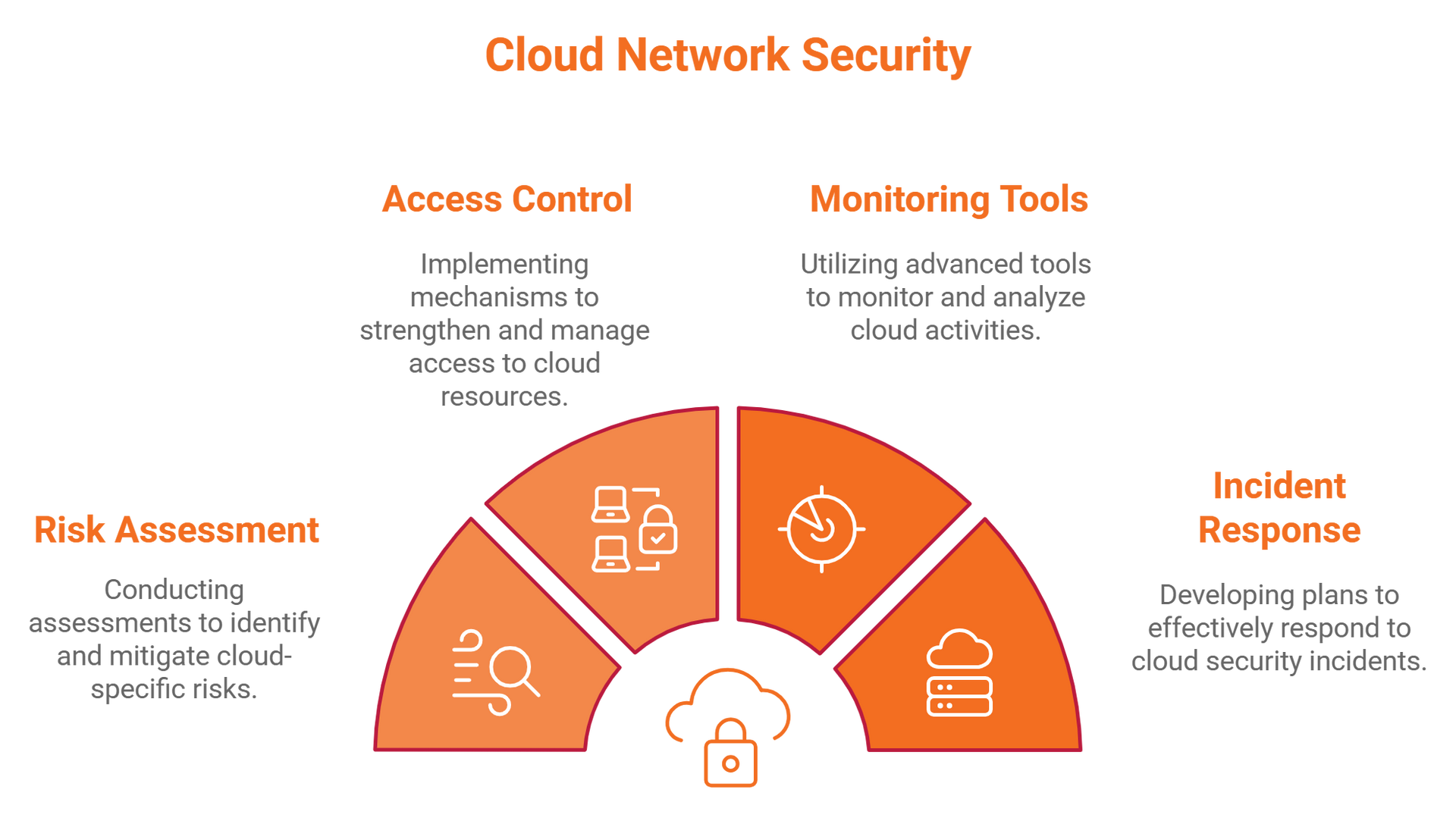
Cloud security is the comprehensive framework of policies, technologies, and controls designed to protect data, applications, and infrastructure hosted in cloud environments. It functions through a shared responsibility model where cloud providers secure the underlying hardware while customers manage the security of their data, configurations, and user access protocols.
The Foundational Pillars of Cloud Security
Understanding cloud security requires breaking it down into its core functional areas. As of 2026, the landscape has shifted from reactive perimeter defense to proactive, identity-centric security. These pillars ensure that even if one layer is bypassed, the entire system does not collapse.
Identity and Access Management (IAM)
Identity is the new perimeter in cloud computing. IAM systems define who can access what resources and under what conditions. Modern cloud security relies on Role-Based Access Control (RBAC) and Attribute-Based Access Control (ABAC) to ensure the principle of least privilege. This means users and services receive only the minimum level of access required to perform their functions. Multi-factor authentication (MFA) is no longer optional; by 2026, adaptive MFA—which uses machine learning to detect anomalous login patterns—has become the standard for preventing account takeovers.
Data Protection and Encryption
Data remains the primary target for attackers. Protecting it involves three distinct states:
- Data at Rest: Information stored on physical disks or cloud storage. This is protected using AES-256 encryption or higher, with keys managed via dedicated Key Management Services (KMS).
- Data in Transit: Information moving between the user and the cloud, or between cloud services. This is secured using Transport Layer Security (TLS) 1.3.
- Data in Use: Often referred to as Confidential Computing, this involves protecting data while it is being processed in memory. Trusted Execution Environments (TEEs) ensure that even the cloud provider’s administrative layer cannot see the plaintext data during computation.
Network Security
In a cloud environment, traditional hardware firewalls are replaced by virtualized security groups and network access control lists (NACLs). Micro-segmentation is a critical strategy here, where the network is divided into small, isolated zones to prevent lateral movement by an attacker. By 2026, many organizations have transitioned to Software-Defined Perimeters (SDP), which hide the infrastructure from the public internet entirely, making it "invisible" to unauthorized scanners.
The Shared Responsibility Model: Who Secures What?
The most common cause of cloud security failures is the misunderstanding of the shared responsibility model. This model dictates that security is a partnership between the Cloud Service Provider (CSP) and the customer.
| Responsibility Layer | Infrastructure as a Service (IaaS) | Platform as a Service (PaaS) | Software as a Service (SaaS) |
|---|---|---|---|
| Physical Data Center | Provider | Provider | Provider |
| Physical Network | Provider | Provider | Provider |
| Physical Hosts/Servers | Provider | Provider | Provider |
| Virtualization Layer | Provider | Provider | Provider |
| Operating System | Customer | Provider | Provider |
| Network Controls | Customer | Shared | Provider |
| Applications | Customer | Customer | Provider |
| Identity & Directory | Customer | Customer | Shared |
| Data & Content | Customer | Customer | Customer |
In IaaS (e.g., AWS EC2), the customer has the most control and thus the most responsibility, including patching the OS and securing the runtime. In SaaS (e.g., Microsoft 365 or Salesforce), the provider manages almost everything except the data and who is allowed to see it. Failure to recognize where the provider’s responsibility ends and the customer’s begins often leads to exposed databases and misconfigured storage buckets.
Security Considerations by Cloud Deployment Model
The type of cloud you choose significantly impacts your security posture and the complexity of your oversight.
Public Cloud
Public clouds are multi-tenant environments where resources are shared among different customers. The primary security challenge here is isolation. Providers like Amazon Web Services (AWS), Microsoft Azure, and Google Cloud Platform (GCP) invest billions in security, often offering a more robust defense than private data centers could afford. However, the sheer scale makes public clouds a high-value target for automated attacks.
Private Cloud
Private clouds are dedicated to a single organization. While this offers better physical isolation and control over hardware, it places the entire security burden back on the internal IT team. The risk here is often a "hard shell, soft interior," where if the perimeter is breached, the internal network lacks the rigorous Zero Trust controls found in modern public cloud setups.
Hybrid and Multi-Cloud
Most enterprises in 2026 utilize a multi-cloud strategy to avoid vendor lock-in and enhance redundancy. This introduces significant security complexity. Managing different security APIs, IAM structures, and compliance logs across multiple vendors requires a centralized Cloud Security Posture Management (CSPM) tool. Without centralized visibility, security gaps are almost inevitable.
Dominant Threats in the 2026 Cloud Landscape
While the cloud is inherently secure, the way it is used often introduces vulnerabilities. The Cloud Security Alliance (CSA) consistently identifies several top threats that continue to plague organizations.
Cloud Misconfigurations
Misconfiguration remains the number one cause of cloud data breaches. Because cloud resources are easily provisioned through code or simple consoles, it is easy to accidentally leave an S3 bucket open to the public or misconfigure a security group. Automated configuration auditing is essential to catch these errors before they are exploited by malicious scanners.
Insecure APIs
Cloud services communicate through Application Programming Interfaces (APIs). If an API is poorly designed or lacks proper authentication, it can serve as a direct gateway to sensitive data. Attackers often target APIs to bypass the user interface and interact directly with the backend storage or compute resources.
Supply Chain Vulnerabilities
Modern cloud applications are built using thousands of third-party libraries and containers. If a base image in a container registry is compromised, every application built on that image becomes vulnerable. In 2026, the focus has shifted toward securing the "Software Supply Chain" by using verified images and constant vulnerability scanning of the CI/CD pipeline.
AI-Driven Attacks
By 2026, cybercriminals are increasingly using artificial intelligence to automate the discovery of vulnerabilities. These tools can scan cloud environments for misconfigurations at a speed and scale that manual security teams cannot match. Consequently, defenders must also employ AI-driven security tools to detect and respond to these threats in real-time.
Regulatory Compliance and Governance
Compliance is often the driving force behind cloud security investments. Organizations must adhere to various legal frameworks depending on their industry and geography.
- GDPR (General Data Protection Regulation): Mandatory for any organization handling the data of EU citizens, emphasizing data sovereignty and the "right to be forgotten."
- HIPAA: For healthcare providers in the United States, requiring strict encryption and access controls for protected health information (PHI).
- PCI DSS: For any entity that processes credit card information, mandating rigorous network segmentation and monitoring.
- The EU AI Act: As of 2026, this regulation imposes specific security requirements on cloud-hosted AI models, focusing on data transparency and algorithmic accountability.
Governance involves the internal policies that ensure compliance is met. This includes regular auditing, continuous monitoring, and the use of Infrastructure as Code (IaC) to ensure that every new resource deployed meets the organization's security baseline automatically.
Implementation Steps for a Secure Cloud Environment
Securing a cloud environment is not a one-time setup but a continuous lifecycle. Organizations should follow these steps to establish a resilient posture.
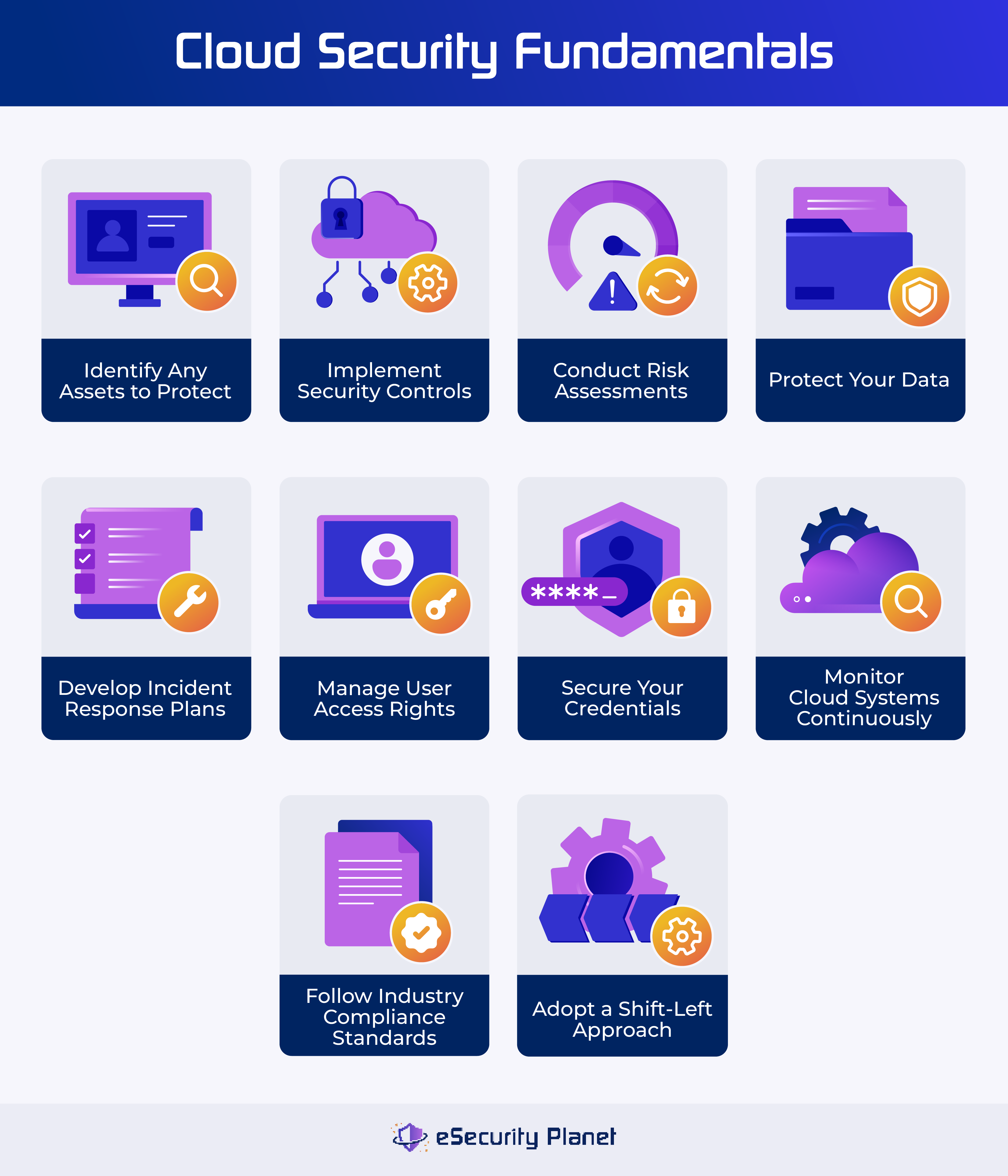
- Establish Visibility: You cannot secure what you cannot see. Use discovery tools to map every asset, service, and data store across your cloud environment.
- Adopt Zero Trust Architecture: Assume the network is already compromised. Every request—whether internal or external—must be authenticated, authorized, and encrypted.
- Automate Security Orchestration: Use tools like Cloud-Native Application Protection Platforms (CNAPP) to integrate security into the development lifecycle. This allows for "shifting left," where security issues are identified during the coding phase rather than after deployment.
- Implement Log Aggregation: Centralize logs from all cloud providers into a Security Information and Event Management (SIEM) system. This provides the audit trail necessary for forensic analysis after an incident.
- Conduct Regular Penetration Testing: Even with automated tools, manual testing by security professionals is necessary to find complex logic flaws that automated scanners might miss.
Frequently Asked Questions
Is data safer in the cloud than on-premises?
In most cases, yes. Major cloud providers spend more on physical security, redundancy, and specialized security staff than almost any individual company could. However, the security of the cloud (provider's job) is different from security in the cloud (your job). If you do not configure your settings correctly, the cloud can be less secure than a well-guarded on-premises server.
What is the difference between CSPM and CWPP?
Cloud Security Posture Management (CSPM) focuses on the configuration and compliance of the cloud environment itself (e.g., checking if buckets are public). Cloud Workload Protection Platforms (CWPP) focus on protecting the actual "workloads"—the virtual machines, containers, and serverless functions—from malware and active attacks. Most modern organizations use a combined approach known as CNAPP.
How does Zero Trust apply to cloud security?
Zero Trust is a strategic initiative that eliminates the concept of a "trusted" internal network. In the cloud, this means that even if a user is logged into the corporate VPN, they must still verify their identity for every individual resource they try to access. It relies on continuous verification and strict access controls.
Does cloud security impact system performance?
While encryption and deep packet inspection do require some overhead, modern cloud hardware is optimized for these tasks. The performance impact is usually negligible compared to the risk of a breach. Furthermore, using cloud-native security tools often improves performance by allowing for more efficient traffic routing and automated scaling of security resources.
What should I do if a cloud security breach occurs?
The first step is to execute your Incident Response Plan. This typically involves isolating the affected resources, revoking compromised credentials, and notifying relevant regulatory bodies if personal data was involved. Following the resolution, a post-mortem analysis is required to identify the root cause—usually a misconfiguration or stolen credential—and implement preventative measures.
Strategic Recommendation
For organizations operating in 2026, the most effective approach to cloud security is the adoption of a unified security platform that provides visibility across multi-cloud and hybrid environments. Avoid using disjointed security tools for different providers. Instead, prioritize a Zero Trust framework and automate your compliance checks through Infrastructure as Code. By treating security as an integrated part of the development process rather than an afterthought, you can leverage the agility of the cloud without compromising the integrity of your data.