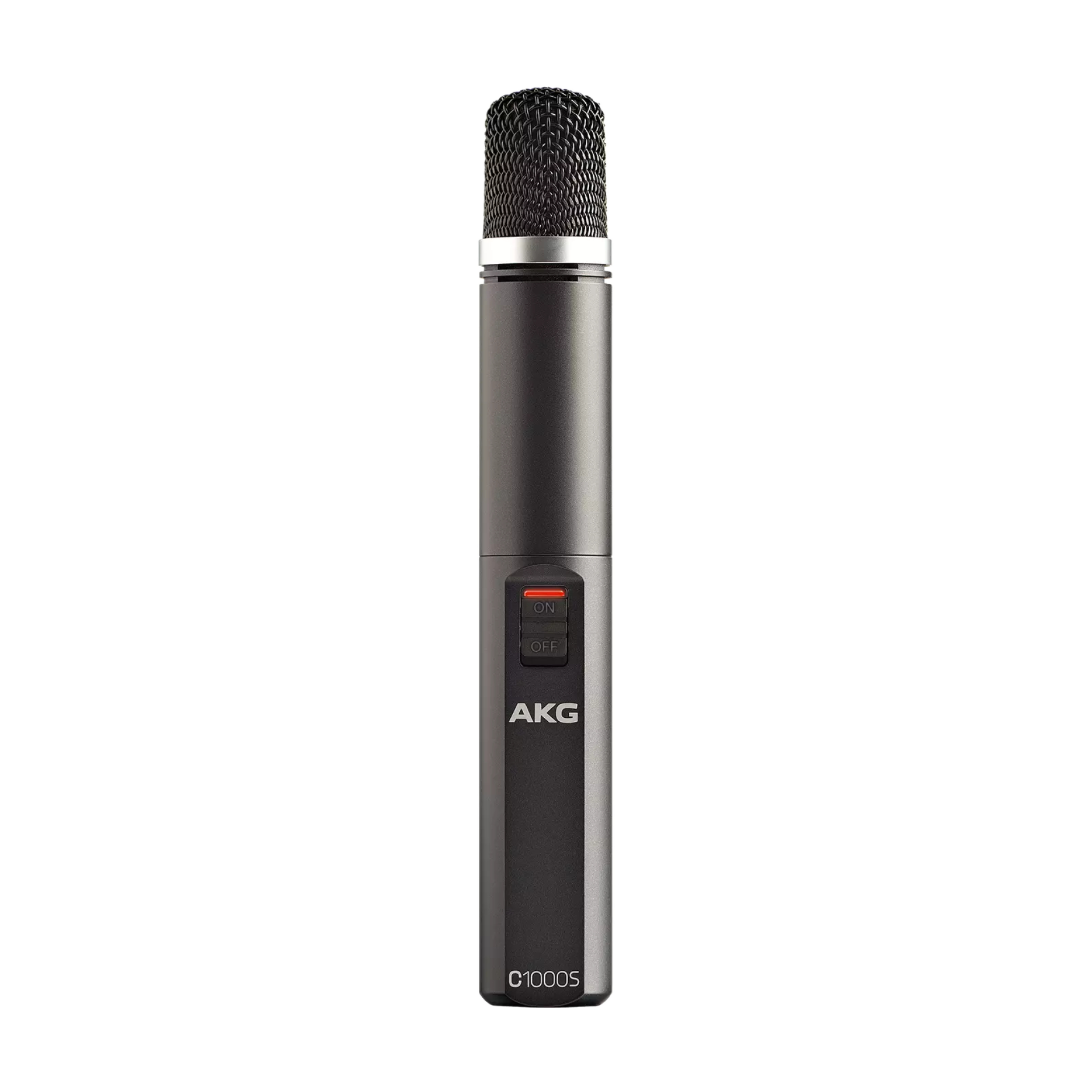
AKG studio microphones are essential tools for professional and home recording, known for their precision, durability, and distinct sonic signatures. From the versatile C414 series to the legendary C12 tube microphone, AKG provides high-fidelity solutions for capturing vocals, instruments, and high-SPL sources with legendary Austrian engineering and acoustic clarity.
The Legacy and Evolution of AKG Engineering
Founded in 1947 in Vienna, Austria, Akustische und Kino-Geräte (AKG) began as a company focused on cinema equipment. However, it quickly pivoted to transducer technology, creating some of the most iconic microphones in recording history. By 2026, while the brand has evolved under the Harman International and Samsung umbrella, the core principles of AKG’s acoustic design—transparency, reliability, and innovative diaphragm technology—continue to define their studio lineup.
The "AKG Sound" is often characterized by a detailed high-frequency response and a fast transient recovery. This makes their microphones particularly popular for sources that require "air" and definition, such as acoustic guitars, female vocals, and drum overheads. Understanding the different series and their technical applications is the first step toward building a world-class signal chain.
The C414 Series: The Industry Standard for Versatility
The AKG C414 is perhaps the most ubiquitous large-diaphragm condenser microphone in the world. It is the direct descendant of the legendary C12, miniaturized into a solid-state (FET) design. As of 2026, the series remains divided into two primary models that look nearly identical but serve distinct sonic purposes.
AKG C414 XLS vs. C414 XLII
The C414 XLS is designed for neutral, accurate sound reproduction. It maintains a flat frequency response that makes it ideal for capturing the "truth" of an instrument. It is widely used for piano, woodwinds, and as a room microphone where accuracy is paramount.
In contrast, the C414 XLII is tailored for vocals and lead instruments. It features a slight presence boost in the upper frequencies (around 3 kHz to 15 kHz), which helps the source "cut through" a dense mix. The XLII uses a capsule design that mimics the sonic characteristics of the original C12 tube microphone, offering a more "musical" rather than "clinical" capture.
Both models share impressive technical specifications:
- Nine Polar Patterns: Beyond the standard cardioid, omnidirectional, and figure-eight, these mics offer intermediate patterns like wide cardioid and hypercardioid.
- Low Self-Noise: At only 6 dB-A, they are among the quietest microphones available, essential for recording delicate acoustic sources.
- High SPL Handling: With pads capable of -6, -12, or -18 dB, these microphones can handle sound pressure levels up to 158 dB, making them safe for use on brass instruments or loud guitar cabinets.
The Large Diaphragm Condenser Hierarchy
For those who do not require the multi-pattern versatility of the C414, AKG offers several alternatives that cater to different budget and performance tiers.
AKG C214: The Streamlined Workhorse
The AKG C214 is often referred to as the "little brother" of the C414. It utilizes the same one-inch dual-diaphragm capsule found in the C414 XLS but is hardwired to a single cardioid polar pattern. By removing the complex pattern-switching electronics and the second diaphragm, AKG created a more affordable professional-grade mic that retains the classic AKG family sound. It is a favorite for home studio owners who primarily record solo vocals or acoustic guitar and do not need the complexity of a multi-pattern microphone.
AKG C314: The Middle Ground
The C314 bridges the gap between the C214 and C414. It features a dual-diaphragm design and offers four polar patterns (cardioid, supercardioid, omni, and figure-eight). It lacks the specialized LED peak indicators of the C414 but provides a more versatile recording experience than the C214 for stereo miking techniques or ensemble recording.
The P-Series (Perception): Entry-Level Excellence
For those entering the world of studio recording in 2026, the Perception series (P120, P220, P420) offers rugged construction and reliable FET circuitry.
- P120: A 2/3-inch diaphragm mic perfect for podcasting and basic instrument tracking.
- P220: A true one-inch large-diaphragm condenser that provides a warm, clear sound for vocals.
- P420: A multi-pattern version of the P220, allowing for M/S (Mid-Side) and Blumlein stereo recording on a budget.
Specialized Studio Microphones: C12 VR and C451 B
While general-purpose condensers are the backbone of most studios, AKG has produced specialized tools that have become legends in their own right.
AKG C12 VR: The Tube Legend
The AKG C12 VR (Vintage Restoration) is the premium tube microphone in the AKG catalog. It is a reissue of the original 1950s C12, utilizing a 6072A vacuum tube and the original CK12 capsule design. This microphone is prized for its "silky" high end and deep, rich low-frequency response. In a professional studio environment, the C12 VR is often the first choice for world-class vocalists who need a larger-than-life sound that solid-state microphones cannot replicate.
AKG C451 B: The Small Diaphragm Reference
The C451 B is a small-diaphragm condenser (SDC) designed for transient-heavy sources. It is famous for its use on drum overheads, hi-hats, and percussion. Because the diaphragm is smaller and lighter than that of a C414, it can react more quickly to the "attack" of a sound. This makes the C451 B an industry standard for capturing the "snap" of a snare drum or the "shimmer" of acoustic guitar strings.
Dynamic Microphones in the Studio
Although AKG is primarily famous for condensers, their dynamic microphones are staple items in drum recording kits worldwide.
AKG D112 MkII: The Kick Drum Standard
The D112 MkII is a large-diaphragm dynamic microphone specifically tuned for bass instruments. It features a high SPL capability and a specific frequency curve that emphasizes the "thump" of a kick drum (around 100 Hz) and the "click" of the beater (around 3-4 kHz). This pre-EQ'd sound allows engineers to get a professional kick drum sound with minimal processing.
Technical Specification Comparison Table
| Model | Transducer Type | Polar Patterns | Freq. Range | Max SPL (with pads) | Best Use Case |
|---|---|---|---|---|---|
| C414 XLS | Condenser | 9 Patterns | 20Hz - 20kHz | 158 dB | Neutral instruments, Piano |
| C414 XLII | Condenser | 9 Patterns | 20Hz - 20kHz | 158 dB | Vocals, Lead instruments |
| C214 | Condenser | Cardioid | 20Hz - 20kHz | 156 dB | Budget-friendly Vocals |
| C451 B | SDC Condenser | Cardioid | 20Hz - 20kHz | 155 dB | Overheads, Hi-hats |
| D112 MkII | Dynamic | Cardioid | 20Hz - 17kHz | 160+ dB | Kick Drum, Bass Amps |
| C12 VR | Tube Condenser | 9 Patterns | 30Hz - 20kHz | 128/148 dB | High-end Vocals |
Selection Guide: Matching the Mic to the Source
Choosing the right AKG microphone requires an understanding of the sound source's frequency content and dynamic range.
For Vocals
If you are looking for a "modern" vocal sound with plenty of detail, the C414 XLII or the C214 are the logical choices. For a smoother, more vintage character, the C12 VR or a used SolidTube (if available) provides the harmonic saturation inherent in vacuum tube designs.
For Acoustic Guitar
Small diaphragm condensers like the C451 B are excellent for capturing the intricate detail and fast transients of fingerpicking. However, many engineers prefer a C414 XLS placed about 12 inches from the 12th fret for a fuller, more body-focused sound.
For Drums
A standard AKG drum "shell pack" often includes a D112 MkII on the kick, C451 Bs on the hi-hat and overheads, and C214s or P170s on the toms. This combination provides a balance between the punch of dynamic mics and the clarity of condensers.
Maintenance and Best Practices
To ensure an AKG microphone lasts for decades, proper care is required.
- Storage: Always store condenser microphones in their cases with a silica gel packet to prevent moisture buildup on the capsule.
- Phantom Power: Ensure your interface or preamp provides a stable +48V for FET models. For the C12 VR, always use the dedicated external power supply.
- Pop Filters: AKG condensers are highly sensitive to "plosives" (B and P sounds). Always use a high-quality pop filter when recording vocals to protect the gold-sputtered diaphragm from moisture and breath blasts.
- Shock Mounts: Due to their high sensitivity, AKG studio mics can pick up low-frequency floor vibrations. Use the included H85 shock mount (or equivalent) for all critical tracking.
Frequently Asked Questions
What is the difference between AKG's Austrian-made and other models?
Historically, AKG's flagship models like the C12 VR and C414 were hand-assembled in Vienna, Austria. In recent years, production for certain lines has shifted. While manufacturing locations have changed for some mid-range and entry-level models, AKG maintains strict Quality Control (QC) standards to ensure that the "Austrian sound" remains consistent across their global manufacturing facilities in 2026.
Why is the AKG C414 so expensive compared to the C214?
The price difference reflects the complexity of the internal electronics. The C414 features a dual-diaphragm capsule, sophisticated switching for nine polar patterns, three bass-cut filters, three pre-attenuation pads, and an electronic peak-hold LED. The C214 is a simplified, single-diaphragm version that lacks these features, making it cheaper to manufacture while retaining similar core audio quality.
Can I use an AKG C414 for live performances?
Yes, though it is primarily a studio microphone. Many engineers use the C414 XLS for live overheads or grand piano in concert settings. However, because it is a sensitive condenser, you must be careful with monitor placement to avoid feedback. Its high SPL handling makes it physically durable enough for the stage.
Does the AKG D112 MkII require phantom power?
No. The D112 MkII is a dynamic microphone. Dynamic microphones do not require external power to operate. You can safely plug it into a preamp with phantom power turned on, but it will not use the power.
Is the AKG P120 good for professional vocals?
The P120 is an entry-level microphone. While it can produce clean recordings, it lacks the depth, low-noise floor, and high-frequency refinement of the C214 or C414. It is best suited for high-quality demos, podcasting, or as a secondary "utility" mic in a professional studio.
Final Recommendation for 2026
If you are looking to invest in a single, high-quality microphone that will cover almost any studio scenario, the AKG C414 XLS remains the most logical choice. Its neutrality allows it to be shaped in the mix to suit any genre, and its plethora of polar patterns makes it an invaluable learning tool for understanding room acoustics and stereo miking. For those on a stricter budget, the C214 offers the legendary AKG "sheen" at a fraction of the cost, making it the perfect starting point for any serious home recordist.