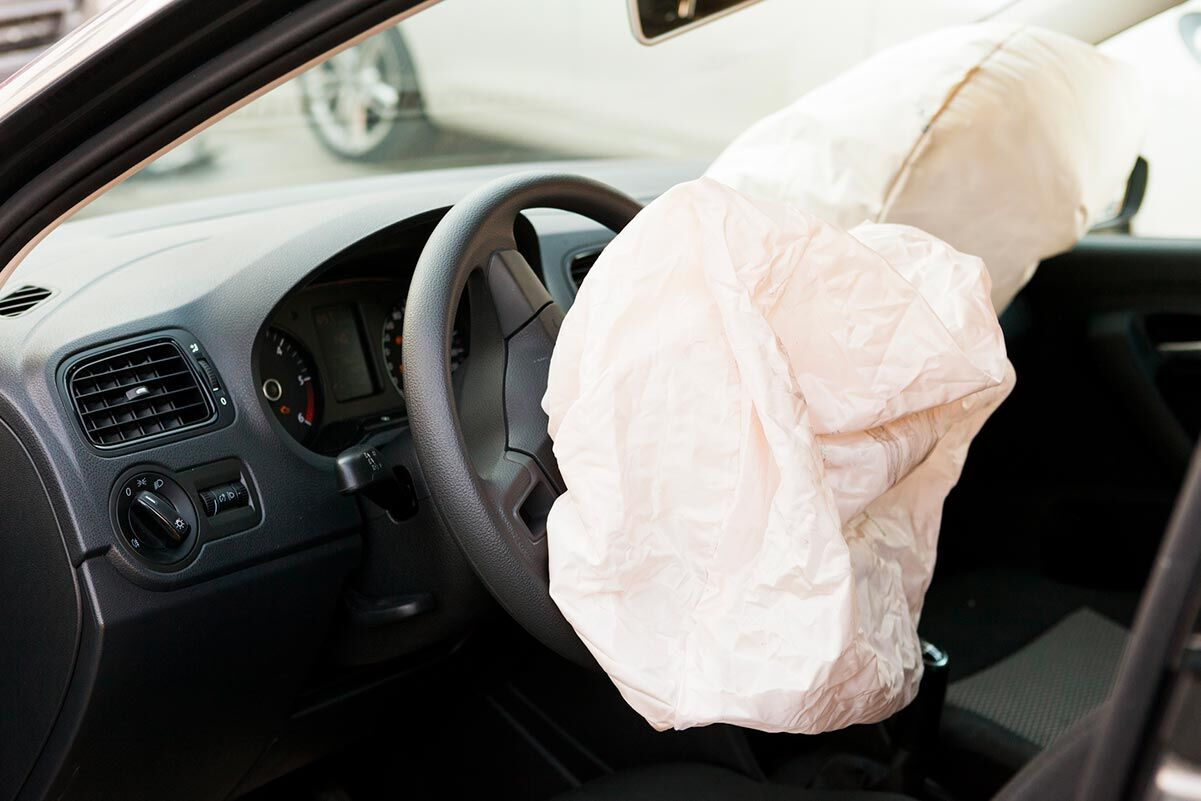
Air bag injuries in vehicle crashes occur due to the rapid, explosive force required to deploy the restraint system within milliseconds. While airbags are life-saving devices, they can cause abrasions, chemical burns, fractures, and acoustic trauma. Understanding proper seating positions and system mechanics is essential for minimizing these secondary risks during a collision.
The Mechanics of Airbag Deployment and Risk Factors
To understand why air bag injuries occur, one must first understand the physics of a "Supplemental Restraint System" (SRS). Airbags are not designed to replace seatbelts; rather, they work in tandem with them. When a vehicle’s sensors detect a significant frontal or side impact—typically equivalent to hitting a fixed barrier at 10 to 12 miles per hour—a signal is sent to the inflator unit.
Within 15 to 50 milliseconds, a chemical reaction (traditionally involving sodium azide or more modern solid propellants) generates nitrogen gas, inflating the nylon bag at speeds exceeding 200 miles per hour. As of 2026, most vehicles on the road utilize multi-stage deployment systems that adjust the force based on the occupant’s weight and seat position. However, the sheer velocity of the bag remains a primary source of trauma.
The risk of injury is highest during the "expansion phase." If an occupant is too close to the steering wheel or dashboard, they may strike the bag while it is still moving at its maximum outward velocity. Ideally, the occupant should strike the bag only after it has fully inflated and begun to deflate through rear vents.
Common Types of Airbag Injuries in Vehicle Crashes
Airbag-related injuries range from minor surface irritations to life-altering trauma. The severity often depends on the type of crash, the occupant's posture, and whether they were wearing a seatbelt.
Facial and Ocular Trauma
Because the face is often directly in the path of the deploying bag, it is the most common site of injury.
- Corneal Abrasions: The texture of the nylon bag can scrape the surface of the eye.
- Orbital Fractures: The blunt force can break the delicate bones surrounding the eye socket.
- Retinal Detachment: The sudden pressure wave from the deployment can cause internal eye structures to shift, potentially leading to permanent vision loss.
Friction and Chemical Burns
As the bag deploys, the rapid movement against the skin creates intense friction, often resulting in "carpet burn" style abrasions on the arms, face, and neck. Additionally, the chemicals used to trigger the deployment—and the cornstarch or talcum powder used to keep the bag lubricated inside its housing—can cause chemical burns. In some cases, the hot gases used for inflation can leak or vent toward the occupant, resulting in thermal burns.
Chest and Musculoskeletal Injuries
The chest is a primary target for the driver’s side airbag. While the bag prevents the driver from hitting the steering column, the force of the bag itself can cause:
- Rib Fractures: Particularly in older adults or those with lower bone density.
- Sternum Fractures: A direct result of the central impact of the bag.
- Wrist and Forearm Fractures: Often referred to as "airbag-induced fractures," these occur when the driver’s hands are positioned at the top of the wheel (the "10 and 2" position) rather than the safer "9 and 3" position. The deploying bag can snap the radius or ulna as it forces the arms upward and outward.
Auditory Damage and Tinnitus
One of the most overlooked air bag injuries is acoustic trauma. The sound of an airbag deploying inside a sealed vehicle cabin can reach 160 to 170 decibels. This level of sound pressure can cause immediate damage to the inner ear, resulting in permanent hearing loss or chronic tinnitus (ringing in the ears). The risk is higher in smaller vehicles where the cabin volume is limited, intensifying the pressure wave.
Why Airbag Injuries Occur: Proximity and Positioning
The primary cause of severe airbag injury is "out-of-position" (OOP) occupancy. As of 2026, safety guidelines emphasize that the "danger zone" for airbag deployment is the first 2 to 3 inches of expansion.
- Proximity to the Hub: Drivers who sit closer than 10 inches to the steering wheel are at a significantly higher risk. This is common among shorter drivers who move the seat forward to reach the pedals.
- Lack of Seatbelt Use: Without a seatbelt, the occupant’s body continues to move forward at the vehicle's pre-impact speed. This causes them to meet the airbag while it is still inflating with maximum force, rather than hitting a fully inflated bag.
- Resting Limbs on the Dashboard: Passengers who rest their feet on the dashboard are at risk for catastrophic hip and leg injuries, as the passenger-side airbag deploys upward and outward from the dash.
The Role of Defective Systems and Recalls
While most injuries are a result of the necessary force of deployment, some are caused by manufacturing defects. The most notable historical example is the Takata airbag recall, which involved millions of vehicles. The propellant in these units could degrade over time, causing the inflator to explode and spray metal shrapnel into the cabin.
In 2026, while newer solid-state propellants have largely mitigated these risks, mechanical failures can still occur. A non-deployment during a high-speed crash or an "inadvertent deployment" (where the bag fires without an impact) can both lead to severe injuries. Drivers should always check their vehicle’s VIN on the NHTSA Recalls Database to ensure their safety systems are up to date.
Comparing Injury Risks: Deployment vs. Non-Deployment
The following table outlines the trade-offs between the injuries prevented by airbags and the potential injuries caused by the bags themselves in various crash scenarios.
| Injury Category | Risk Without Airbag (Belt Only) | Risk With Airbag Deployment | Primary Prevention Goal |
|---|---|---|---|
| Traumatic Brain Injury (TBI) | High (Impact with wheel/dash) | Low to Moderate | Prevents skull-to-vehicle contact |
| Cervical Spine (Whiplash) | Moderate | Low | Limits extreme forward head movement |
| Facial Lacerations | High (Broken glass/plastic) | Moderate (Abrasions) | Prevents impact with hard surfaces |
| Rib/Sternum Trauma | Moderate (Belt loading) | Moderate (Bag force) | Distributes force over a wider area |
| Hearing Loss | Very Low | Moderate | Secondary Risk of deployment |
| Internal Organ Damage | High (Crushing force) | Low | Prevents torso compression |
Best Practices for Reducing Air Bag Injury Risk
As of 2026, automotive experts and the Insurance Institute for Highway Safety (IIHS) recommend several specific behaviors to maximize the benefits of airbags while minimizing the risk of injury.
- The 10-Inch Rule: Ensure there is at least 10 inches between the center of your breastbone and the center of the steering wheel. If you have trouble reaching the pedals at this distance, consider pedal extenders.
- The 9 and 3 Hand Position: Keeping your hands at the 9 o’clock and 3 o’clock positions on the steering wheel prevents your arms from being thrown into your face if the bag deploys. Avoid crossing your arms while turning.
- Tilt the Wheel Down: If your steering column is adjustable, tilt the wheel toward your chest rather than your head or neck. This ensures the bag deploys against the strongest part of your upper body.
- Children in the Back: Never place a rear-facing infant seat in the front seat of a vehicle equipped with a passenger-side airbag. Children under the age of 13 should always ride in the back seat to avoid the high-force deployment of frontal airbags.
- Proper Posture: Sit upright with your back against the seat. Leaning forward or to the side changes the expected impact point of the airbag, which can lead to neck or spinal injuries.
Navigating Post-Crash Recovery and Legal Rights
If you have been involved in a crash where an airbag deployed, a medical evaluation is mandatory, even if you feel fine. The adrenaline of a crash can mask symptoms of internal bleeding, retinal tears, or concussion.
Medical Evaluation Steps
- Respiratory Check: Inhaling the dust and chemicals from a deployment can trigger asthma attacks or chemical pneumonitis.
- Hearing Test: If you experience "muffled" hearing or ringing after a crash, see an audiologist immediately to document acoustic trauma.
- Skin Care: Treat chemical burns by flushing the area with cool water. Avoid applying ointments until a doctor has confirmed the type of burn (alkaline vs. thermal).
Legal Considerations
If an airbag injury seems disproportionate to the crash severity—for example, if the bag deployed with shrapnel or failed to deploy in a major collision—you may have a product liability claim. Documenting the scene, preserving the vehicle for inspection, and maintaining medical records are critical steps in seeking compensation for defects.
Frequently Asked Questions
Can an airbag deployment cause a concussion?
Yes. Although the airbag is softer than a dashboard, the rapid deceleration of the head as it strikes the bag can cause the brain to move within the skull, leading to a concussion. This is often exacerbated if the occupant was not wearing a seatbelt, as the velocity of the impact is higher.
What is the "dust" that comes out when an airbag deploys?
The dust is typically cornstarch or talcum powder, which is used by manufacturers to keep the bag pliable and prevent it from sticking while folded. You may also see a small amount of smoke, which is the byproduct of the nitrogen-gas-producing chemical reaction. While generally non-toxic, it can irritate the lungs and eyes.
Is it possible for an airbag to deploy for no reason?
Spontaneous or "inadvertent" deployment can occur due to electrical shorts, damaged sensors, or severe corrosion in the airbag control module. If this happens, it is considered a significant safety defect and should be reported to the manufacturer and federal safety regulators immediately.
Why does my chest hurt after the airbag deployed?
Chest pain is common and usually stems from the force of the bag hitting your sternum and ribs. While it may just be soft tissue bruising, it can also indicate fractured ribs or internal bruising (pulmonary contusion). Any chest pain following a deployment should be investigated with an X-ray or CT scan.
Can airbags be turned off for shorter drivers?
Some vehicles allow for the deactivation of the passenger airbag, but the driver’s airbag generally cannot be turned off without a specialized "on-off switch" authorized by the NHTSA. These are typically only granted for individuals with specific medical conditions or those who cannot maintain the 10-inch safety distance.
Practical Recommendations
If you are involved in a vehicle crash where the air bag has deployed, your first priority is to exit the vehicle safely once it has come to a complete stop, as the chemical residue can be a respiratory irritant. Seek an immediate medical screening specifically for ocular and auditory damage, as these injuries are often delayed in presentation. For long-term safety, always verify your vehicle’s safety system status via official recall databases and maintain a seating position that prioritizes distance from the deployment zones.