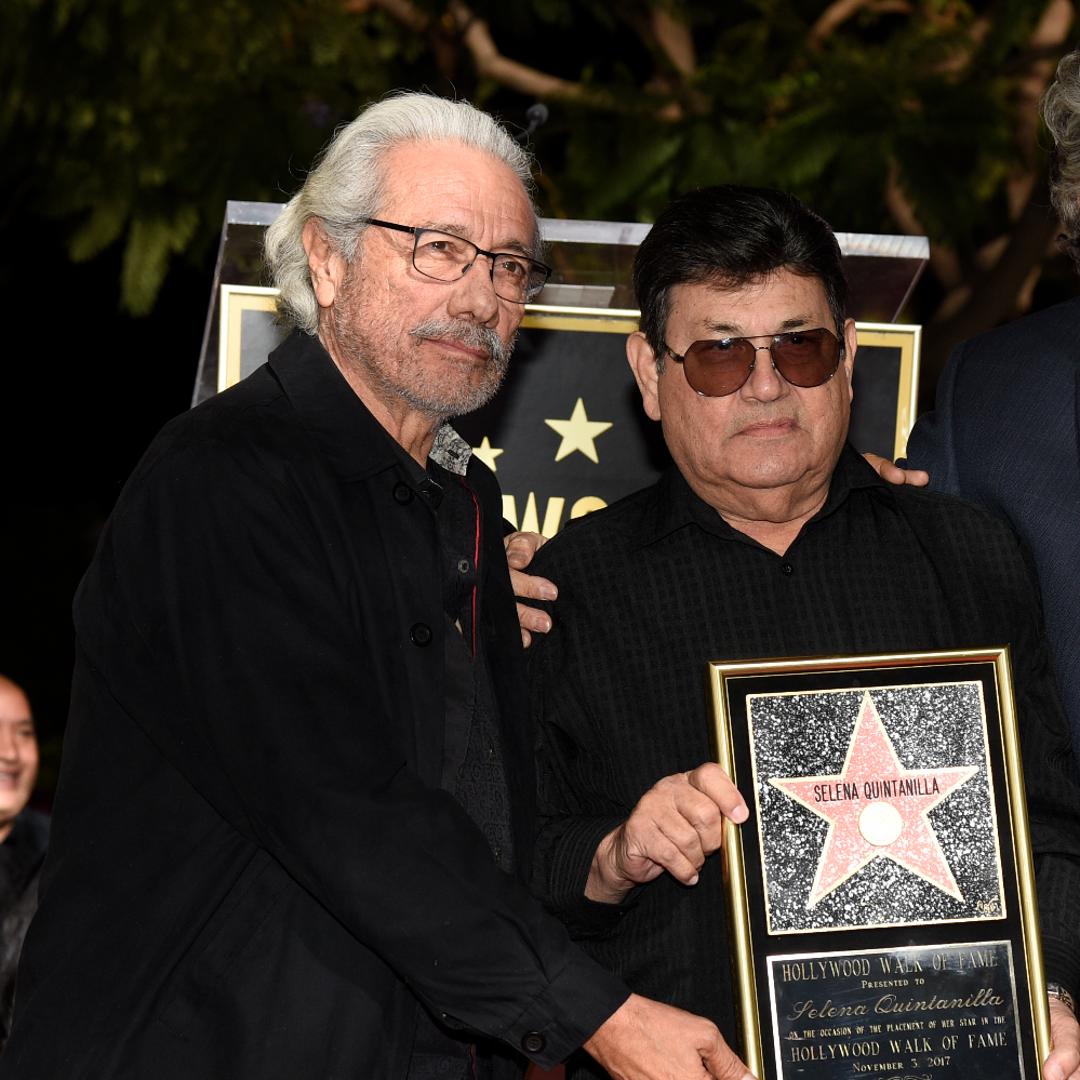
A.B. Quintanilla, the influential musician, songwriter, and record producer, was born on December 13, 1963. As a central figure in the development of Tejano music and a key architect of his sister Selena Quintanilla’s sound, his birthday serves as an annual moment for fans to reflect on the expansive musical contributions he has made over several decades of professional activity.
Biography and Early Life
Abraham Isaac Quintanilla III, known professionally as A.B. Quintanilla, was born in Toppenish, Washington. Raised in a family deeply embedded in the musical arts, his upbringing was heavily influenced by his father, Abraham Quintanilla Jr., who was a former musician himself. The family’s move to Corpus Christi, Texas, provided the backdrop for his formative years and the development of the musical entity that would become Selena y Los Dinos.
A.B. Quintanilla’s role within the family unit was multifaceted. Beyond his duties as a brother, he acted as the primary songwriter, bassist, and producer for the group. His ability to fuse traditional Tejano rhythms with contemporary pop, R&B, and cumbia elements established a distinct sonic identity that propelled the ensemble to international success. His birth on December 13th marks the start of a legacy that redefined the Latin music industry throughout the late 1980s and 1990s.
The Significance of the December 13 Date
For followers of the Quintanilla family history, December 13 is often acknowledged as a day of celebration, distinguishing the contributions of A.B. Quintanilla as both a performer and a producer. While the public often focuses on the legacy of the late Selena, A.B.’s role in crafting the arrangements that defined the "Selena sound" is a frequent subject of academic and enthusiast review.
In the context of the music industry, dates such as a performer's birthday often serve as milestones for retrospective analysis. It allows for a structured review of his discography, ranging from his initial work with Los Dinos to his later projects with the Kumbia Kings and Kumbia All Starz. By examining his trajectory since his birth in 1963, critics often point to his transition from a bass player in a family band to a sophisticated producer who helped bridge the gap between regional Mexican music and the global pop market.
Evolution of a Producer
The career of A.B. Quintanilla is characterized by constant innovation. Following the dissolution of Selena y Los Dinos, he did not remain stagnant. Instead, he utilized his production expertise to launch several successful musical acts that maintained the momentum of his previous work while pivoting toward more dance-oriented, urban-influenced genres.
Key Professional Phases
- The Los Dinos Era (1980s–1995): Establishing the foundation of the Tejano sound, where A.B. was responsible for writing some of the group’s most iconic hits.
- Kumbia Kings (1999–2006): A shift toward a fusion of cumbia, R&B, and hip-hop, which garnered massive commercial success and multiple award nominations.
- Kumbia All Starz (2006–present): A continuation of his focus on high-energy, fusion-style music designed for the contemporary Latin market.
This evolution demonstrates a technical mastery of studio production and an acute understanding of audience trends. His work as a producer has been recognized by various Latin music institutions, underscoring his technical aptitude for mixing, layering, and arranging complex vocal tracks alongside rhythmic foundations.
Musical Contributions and Impact
A.B. Quintanilla’s impact on the Latin music landscape is measurable through his songwriting credits. He was instrumental in creating the rhythmic syncopation that defines much of modern cumbia music. By prioritizing clean, melodic bass lines and infectious hooks, he ensured that his compositions remained accessible to both Spanish-speaking audiences and the broader American pop market.
Comparison of Musical Projects
The following table outlines the distinct creative directions taken during his career, highlighting his evolution from regional sounds to broader commercial fusions.
| Project Name | Primary Genre | Key Sonic Element | Impact Period |
|---|---|---|---|
| Selena y Los Dinos | Tejano / Pop | Polka-influenced accordions | 1980s–1990s |
| Kumbia Kings | Cumbia / R&B | Synthesized pop hooks | 1999–2006 |
| Kumbia All Starz | Regional Fusion | Electronic percussion | 2006–2010s |
This progression illustrates a professional who has successfully navigated the changing tides of the music industry. His ability to reinvent his sound while maintaining the core elements of his musical identity is a recurring point of interest for music historians studying the transition of Latin music into the mainstream.
Engaging with the Legacy
Fans often observe his birthday by revisiting his extensive catalog of music. In the digital age, this process has become more accessible through streaming platforms, which allow for a chronological exploration of his work. Understanding his journey from his early days in Washington to his emergence as a Latin music mogul provides context to the songs that continue to be played in both intimate and public settings across the Americas.
Beyond the music itself, fans frequently follow his public appearances and updates to track the ongoing evolution of his production techniques. Because he remains an active participant in the industry, his birthday is not just an opportunity for nostalgia, but a moment to observe his latest efforts in the studio and his continued influence on new generations of producers.
Troubleshooting Common Misconceptions
There is occasionally confusion regarding the timeline of the Quintanilla family members. It is important to distinguish that while A.B. Quintanilla is the architect behind much of the sound associated with the family, his personal projects—such as the Kumbia Kings—are separate entities from his work with his sister. Fans looking for specific tracks should verify the production credits, as his influence spans several decades and multiple independent music groups.
Furthermore, discrepancies sometimes appear in casual media regarding his early life. Verification of his 1963 birth date is consistently supported by biographical archives concerning the Quintanilla family’s history in Texas. When researching his career, it is advisable to rely on verified discography databases that list specific credits for songwriter and producer roles rather than third-party celebrity rumor sites.
Frequently Asked Questions
What is the significance of December 13 for A.B. Quintanilla? December 13 is the birth date of A.B. Quintanilla. Fans and music historians often mark this date to recognize his role as a producer, songwriter, and musician who was essential to the success of Selena y Los Dinos and later groups like the Kumbia Kings.
Did A.B. Quintanilla write the music for Selena? Yes, A.B. Quintanilla was the primary songwriter and producer for Selena y Los Dinos. He composed many of the group’s most successful tracks, crafting the unique blend of Tejano, pop, and cumbia that defined their sound throughout the 1990s.
What is the current status of A.B. Quintanilla's career? As of 2026, A.B. Quintanilla remains an active figure in the Latin music industry. He continues to engage in production work and performance, building upon his decades-long career as a musician and arranger.
Where was A.B. Quintanilla born? A.B. Quintanilla was born in Toppenish, Washington, in 1963, before his family relocated to Texas, where he would eventually begin his musical career.
What genre is A.B. Quintanilla most associated with? While he is most often associated with Tejano and Cumbia, his work is characterized by the fusion of these genres with R&B, pop, and hip-hop elements, making him a pioneer of modern Latin fusion.
Next Actions
To better understand the career of A.B. Quintanilla, it is recommended that enthusiasts explore his discography chronologically. By listening to the evolution from early Tejano recordings to his later work with the Kumbia Kings, one can gain a deeper appreciation for his development as a producer. For those interested in the technical aspects of his music, analyzing the arrangement and bass composition in his top tracks offers a clear view of his signature style.