Securing the best price life insurance quotes requires comparing carriers that evaluate risk factors differently, utilizing term policies for maximum initial affordability, and understanding how age, health, and coverage amounts drive premium rates.
Finding affordable life insurance coverage is a critical financial step for individuals looking to protect their family's future, cover outstanding debts, or replace lost income. Because insurance companies use proprietary underwriting guidelines, the same applicant can receive drastically different rate offers from multiple providers. Navigating the market effectively requires looking beyond basic advertisements to understand how carriers evaluate risk, what policy structures offer the highest value, and how to systematically compare quotes to secure the lowest possible price.
Understanding How Life Insurance Pricing Works
Life insurance pricing is not arbitrary; it is rooted in actuarial science and risk assessment. When you apply for a policy, underwriters examine a matrix of personal data to determine the statistical probability that you will file a claim during the term of the policy. The primary drivers of your price include your current age, biological sex, tobacco use, family medical history, driving record, occupation, and overall health status.
Every insurance carrier maintains its own underwriting guidelines and pricing tables. For example, one company might be exceptionally lenient regarding managed high blood pressure or a mild history of anxiety, offering its top-tier "Preferred Plus" rates to applicants with those conditions. Another carrier might view the same medical profile more strictly, bumping the applicant down to a standard or substandard rating class, which significantly increases the monthly premium. This variance is precisely why obtaining multiple quotes is the single most effective way to secure a competitive price.
Furthermore, the type of policy you select dictates the baseline cost. Permanent life insurance options, such as whole life or universal life, build cash value and remain active for your entire life, but they come with substantially higher price tags. Conversely, term life insurance provides pure death-benefit protection for a specified duration—such as 10, 20, or 30 years—making it the most cost-effective tool for budget-conscious consumers seeking maximum coverage during their peak working and child-rearing years.
Key Factors That Influence Your Life Insurance Quotes
To accurately interpret and compare life insurance quotes, you must understand the specific variables that underwriters evaluate. Insurance companies categorize applicants into distinct health tiers, ranging from preferred elite to standard tobacco. Minor adjustments in your profile can shift you between these tiers, altering your quote by hundreds or even thousands of dollars over the life of a policy.
Age and Gender
Age is the most rigid factor in life insurance pricing. Premiums increase by roughly 8% to 10% for every year you wait to purchase a policy. Locking in a rate early in life guarantees a lower baseline cost. Additionally, statistical data shows that women generally live longer than men, resulting in lower average life insurance rates for females across equivalent health and age brackets.
Health and Medical History
Underwriters review your medical records, prescription history, and often require a paramedical exam that includes blood and urine samples. Conditions such as high cholesterol, elevated blood glucose levels, a history of smoking, or a family history of heart disease or certain cancers will directly impact your quotes. Disclosing accurate information upfront prevents underwriting delays and ensures that the quotes you receive remain valid after formal review.
Coverage Amount and Term Length
The face value of the policy (the death benefit) and the length of the term directly scale your price. A $500,000 policy will cost roughly half as much as a $1,000,000 policy with the same carrier. Similarly, a 20-year term policy is more expensive than a 10-year term policy because the insurer is assuming financial risk over a longer duration. Selecting the appropriate coverage amount ensures you do not overpay for unneeded protection.
Comparison of Common Life Insurance Policy Types
| Policy Type | Duration | Cash Value | Primary Use Case | Relative Cost |
|---|---|---|---|---|
| Term Life | 10, 20, or 30 Years | No | Income replacement, mortgage protection | Lowest |
| Whole Life | Lifetime | Yes (Guaranteed) | Estate planning, lifelong final expenses | Highest |
| Universal Life | Lifetime | Yes (Flexible) | Flexible premiums, lifelong protection | Moderate to High |
| Final Expense | Lifetime | Yes (Small) | Covering burial and end-of-life costs | Moderate |
Strategies for Finding the Best Price Life Insurance Quotes
Securing the lowest price on a life insurance policy involves more than simply clicking on the first online quote generator you find. Strategic shopping, preparation, and timing play massive roles in minimizing your long-term insurance costs.
1. Work with an Independent Insurance Broker
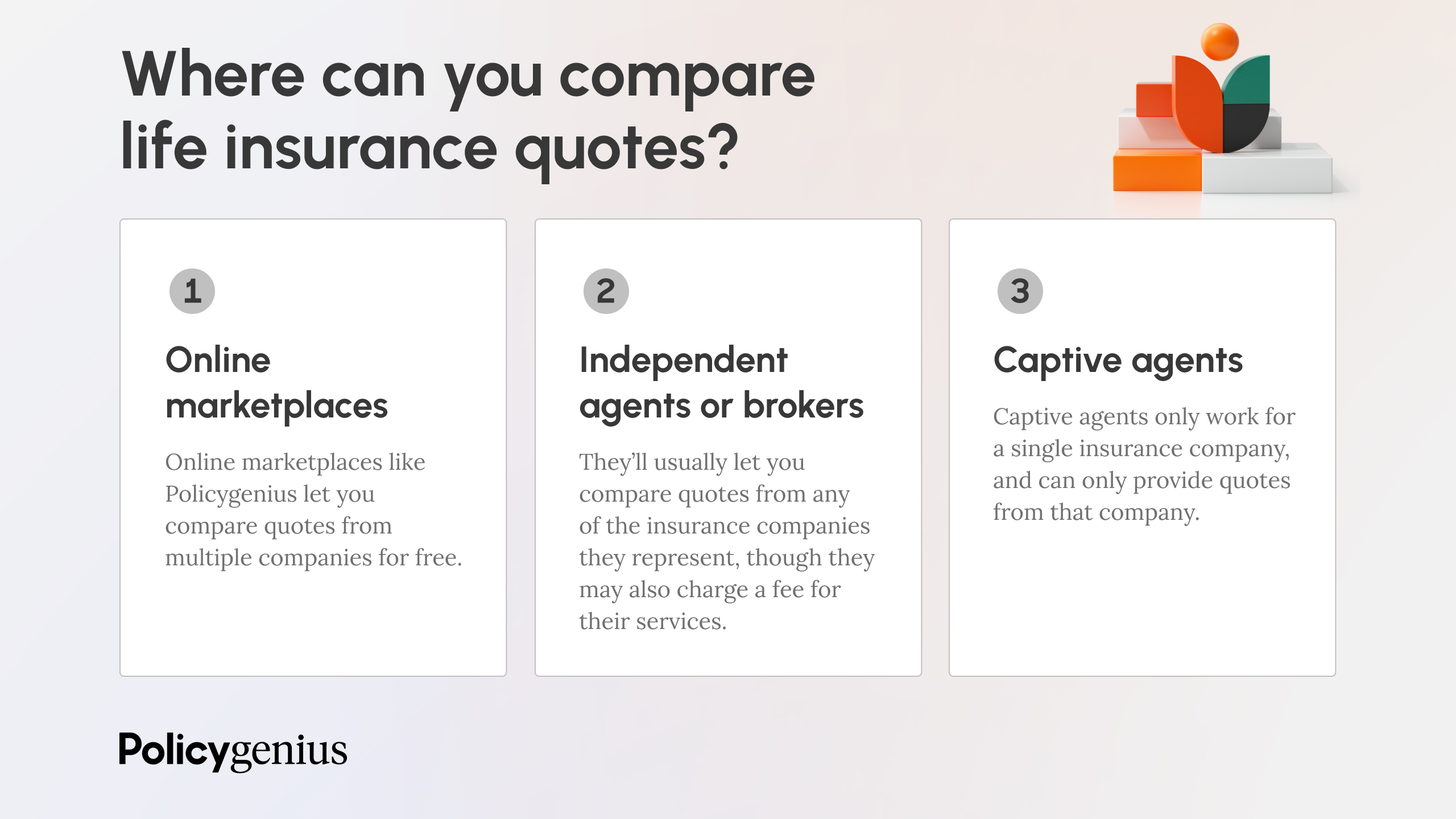
Captive agents work for a single insurance company and can only offer that specific company's products. Independent insurance brokers, on the other hand, have access to dozens of different carriers. An independent broker can run your demographic and health data across multiple top-tier companies simultaneously, identifying which specific carrier currently offers the most aggressive pricing for your unique demographic and medical profile.
2. Maintain Control Over Modifiable Risk Factors
While you cannot change your age or family medical history, you can control several modifiable risk factors prior to applying. If you use nicotine products in any form—including cigars, e-cigarettes, or nicotine replacement therapy—many traditional carriers will quote you at tobacco rates, which can double or triple your cost. Some companies offer non-tobacco rates to occasional cigar smokers or patch users, making it vital to shop specialized carriers if you have minor tobacco usage. Additionally, stabilizing blood pressure or improving cholesterol levels through diet and exercise before taking a medical exam can secure a higher health tier rating.
3. Apply When You Are Healthy and Young
Delaying your purchase is the most common reason people pay higher life insurance rates. Because premiums increase annually based on your age-nearest birthday, locking in a policy today shields you from future age-related rate hikes and guards against unexpected health developments that could make coverage more expensive or difficult to obtain tomorrow.
4. Bundle or Utilize Employer-Sponsored Options Wisely
Many employers offer group life insurance as an employment benefit, often equal to one or two times your annual salary. While convenient and sometimes free, these policies are usually tied to your employment and rarely provide enough coverage for a growing family. Use group coverage as a supplement, but rely on an individual term policy to secure a locked-in, independent rate that travels with you regardless of job changes.
Common Mistakes to Avoid When Shopping for Quotes
When navigating life insurance quotes, applicants frequently make errors that either cost them money or leave them underinsured.
- Buying Based Solely on the Lowest Initial Estimate: Instant online quote calculators often show the absolute best-case scenario ("Preferred Plus" rates). If you have minor health issues, your actual offer may be higher. Look for carriers with consistent underwriting practices rather than bait-and-switch teaser rates.
- Underestimating the Necessary Coverage Amount: Choosing a small policy to save a few dollars per month defeats the primary purpose of life insurance. Ensure your coverage adequately replaces your income for the necessary number of years and clears major liabilities like a mortgage.
- Failing to Disclose Complete Medical History: Intentionally omitting medical conditions on an application can lead to the policy being contested or rescinded later during a claim review. Complete transparency ensures total financial security for your beneficiaries.
Frequently Asked Questions
Can I get life insurance quotes without a medical exam?
Yes, many carriers offer "accelerated underwriting" or no-exam term life insurance policies. If you meet certain age and health criteria, algorithms evaluate your digital records—such as prescription databases and motor vehicle reports—to approve your policy without requiring a physical nurse visit and blood draw. However, traditional exam policies occasionally offer slightly lower rates if you are in exceptional health.
How much life insurance coverage do I actually need?
A common rule of thumb is to purchase a policy worth 10 to 12 times your annual income, plus additional funds to cover specific debts like a mortgage or children's college education. Evaluating your household's ongoing financial obligations provides a more tailored target than a simple multiplier.
What happens if my health changes after I lock in a term policy?
Once your term life insurance policy is issued and active, your rates and coverage are locked in for the duration of the term. Even if your health declines significantly five years into a 20-year term, your insurance company cannot raise your premiums or cancel your coverage as long as you continue paying your bills on time.
Are online life insurance quotes accurate?
Online quotes provide a reliable baseline estimate based on the health category you select. However, they are preliminary. The final verified price is only determined after the underwriting process evaluates your formal medical records and exam results.
Can I change my term policy into permanent life insurance later?
Many reputable term policies include a "conversion privilege." This contractual feature allows you to convert all or part of your term life insurance into a permanent whole life or universal life policy without undergoing a new medical exam or proving your insurability.
Next Actions for Securing Your Policy
Begin your search by calculating your ideal coverage amount and term duration based on your household's financial obligations. Next, consult with an independent insurance broker to pull quotes across multiple top-rated carriers simultaneously. Compare the underwriting guidelines of different companies to find the provider that looks most favorably upon your specific health and lifestyle profile. Finally, complete your application promptly to lock in the lowest possible age-based rate and protect your family's financial security for the years ahead.