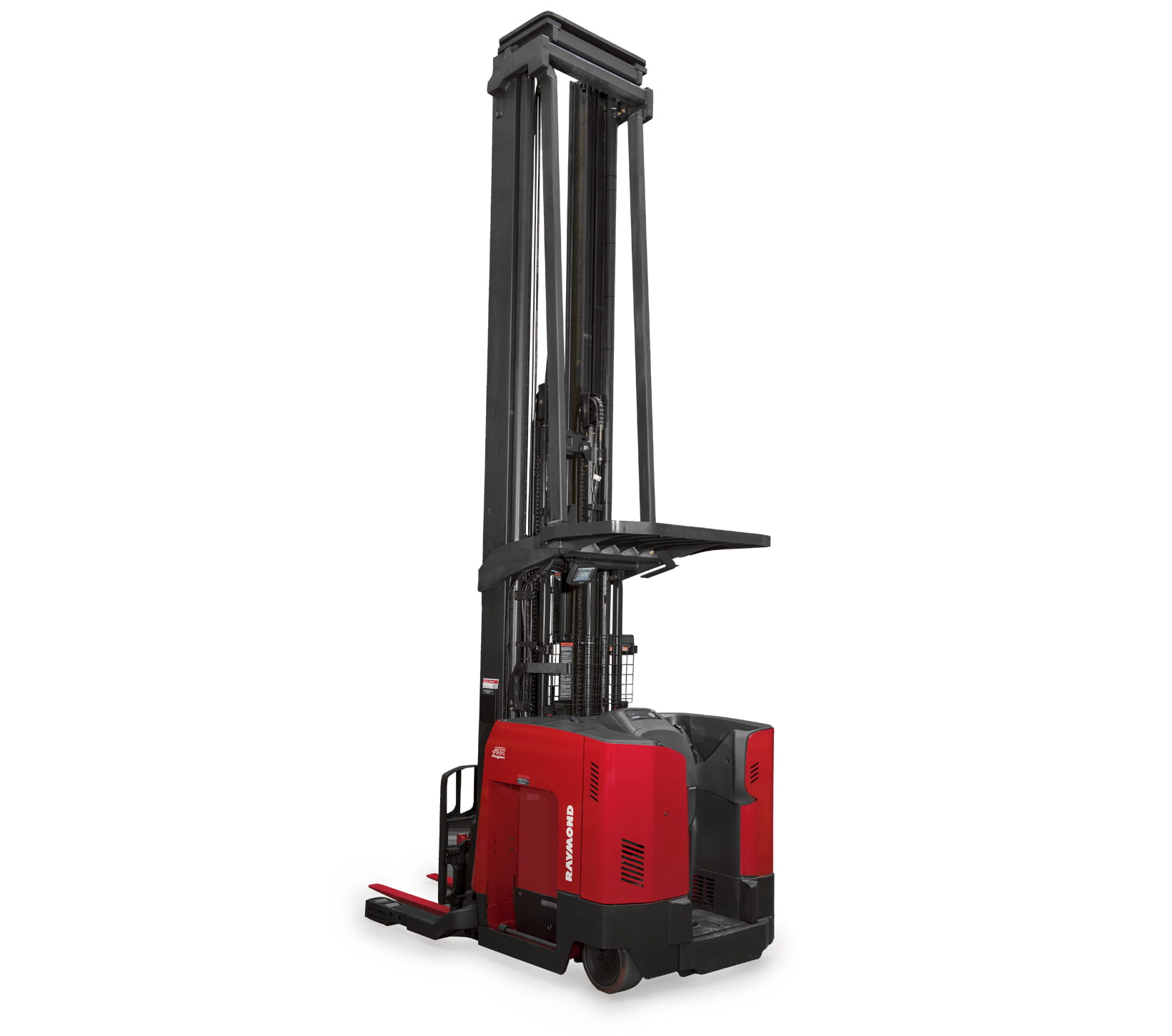
A 4-fork forklift, most commonly achieved through the installation of a multi-pallet handler attachment, allows an operator to transport two pallets side-by-side, effectively doubling material handling throughput. Successful implementation requires precise calculation of the vehicle's de-rated capacity, an understanding of the shifted center of gravity, and specialized operator training to manage the increased width and hydraulic complexity of the multi-fork system.
The Engineering Behind 4-Fork Systems
In the material handling industry of 2026, the "4-fork" configuration is rarely a fixed structural design from the factory. Instead, it is typically a sophisticated hydraulic attachment known as a double pallet handler. These systems consist of four individual forks that can be hydraulically positioned. When closed, the inner forks tuck inside or alongside the outer forks to function like a standard two-fork lift. When extended, they spread into two pairs, each capable of supporting a standard pallet.
Hydraulic Synchronization and Flow Dividers
The design of a 4-fork system relies heavily on hydraulic flow dividers. For the operator to safely pick up two loads, the forks must move in perfect synchronization. If one pair of forks moves faster than the other, the load becomes off-center, posing a significant tip-over risk. Modern 2026 systems utilize electronic flow sensors that communicate with the forklift’s Engine Control Unit (ECU) to ensure millimetric precision in fork spacing.
Structural Integrity of the Carriage
Adding two additional forks and the necessary hydraulic cylinders increases the "lost load" distance—the distance from the front face of the forklift carriage to the back of the forks. This design change moves the weight further away from the front axle, which acts as the fulcrum in a forklift’s seesaw-like physics model. Consequently, the carriage and the mast must be engineered to handle increased torsional (twisting) stress, especially if one pallet is slightly heavier than the other.
Understanding Capacity De-rating
The most critical safety factor in 4-fork operations is understanding that the forklift’s nameplate capacity no longer applies once the attachment is installed. The "Net Capacity" or "Residual Capacity" is always significantly lower than the truck's original rating.
The Impact of Attachment Weight
A double pallet handler is a heavy piece of equipment, often weighing between 1,000 and 2,500 pounds. This weight must be subtracted from the forklift's total lifting capacity before any load is even considered. In 2026, professional fleet managers use digital load-moment indicators to monitor these variables in real-time, but the fundamental physics remain constant.
Load Center Extension
Standard forklifts are usually rated at a 24-inch load center (the distance from the face of the forks to the center of the load). When using four forks to carry two pallets, the load center often remains 24 inches deep, but the lateral load center becomes a factor. If the two pallets are not identical in weight, the center of gravity shifts sideways. Furthermore, because the attachment itself adds thickness to the carriage (lost load thickness), the horizontal load center is pushed further forward, drastically reducing the maximum weight the truck can safely lift.
The Calculation Formula
While operators should always refer to the manufacturer’s data plate, the basic logic of de-rating follows this principle:
- Original Capacity × (A + B) / (A + B + C)
- Where A is the chassis wheelbase constant.
- B is the distance from the front axle to the fork face.
- C is the distance from the fork face to the new load center.
Operational Procedures for 4-Fork Forklifts
Operating a 4-fork system requires a higher level of spatial awareness and technical skill than standard forklift operation. The increased width and weight distribution changes the vehicle's handling characteristics.
Pre-Shift Inspections
In addition to standard engine, tire, and brake checks, 4-fork operators must inspect:
- Hydraulic Hoses: The additional cylinders required for fork spreading mean more potential leak points.
- Fork Synchronization: Ensuring the forks move together without lagging.
- Slide Bushings: These components allow the forks to move laterally; they must be lubricated and free of debris to prevent "binding."
- Locking Pins: Ensuring the attachment is securely fastened to the carriage.
Navigating Aisle Widths and Turn Radius
A 4-fork lift is substantially wider than a standard lift. This affects the "Right Angle Stack" calculation—the minimum space required for a forklift to turn into an aisle and deposit a load. Operators must account for the "swing" of the outer pallet. In high-density warehouses, 4-fork operations often require wider "transfer aisles" even if the storage aisles are narrow.
Floor Loading and Surface Integrity
Carrying two pallets at once doubles the pressure exerted on the warehouse floor. Before implementing 4-fork operations, facility managers must verify that the floor's PSI (pounds per square inch) rating can handle the combined weight of the forklift, the heavy attachment, and two maximum-capacity loads. This is particularly vital when operating on loading docks or inside trailers, where the concentrated weight can cause structural failure.
Safety Protocols and Training Requirements
OSHA (Occupational Safety and Health Administration) in the United States and similar regulatory bodies globally require specific training for any "powered industrial truck" attachment that changes the handling characteristics of the vehicle.
Stability Triangle Dynamics
The stability triangle—the area between the two front wheels and the center of the rear axle—becomes much more volatile with four forks. When carrying two loads, any high-speed turn can easily move the center of gravity outside this triangle, leading to a lateral tip-over. 2026 safety standards emphasize "slow-speed-turns-only" when the forks are spread and loaded.
Visibility Challenges
A significant drawback of the 4-fork design is the obstructed view. The wide carriage and multiple vertical fork backs create a larger "blind zone" directly in front of the operator. Standard safety procedure dictates that if visibility is obstructed by the load (which is almost always the case with double pallets), the operator must travel in reverse, except when climbing ramps.
Load Compatibility
Not all pallets are suitable for 4-fork handling. The operator must ensure that both pallets are of the same type and in good structural condition. If one pallet is a "GMA" standard and the other is a non-standard size, the fork spacing may not align correctly, leading to unstable load support.
Technical Specifications Comparison
The following table compares the typical operational differences between a standard 5,000-lb capacity forklift and the same unit equipped with a 4-fork (double pallet) attachment.
| Feature | Standard 2-Fork Setup | 4-Fork (Double Pallet) Setup |
|---|---|---|
| Gross Lifting Capacity | 5,000 lbs | 5,000 lbs (Base Truck) |
| Attachment Weight | ~0 lbs (Standard Forks) | 1,200 - 1,800 lbs |
| Net (Residual) Capacity | 5,000 lbs | 2,800 - 3,200 lbs |
| Lost Load Thickness | 0 inches | 4 - 8 inches |
| Horizontal Load Center | 24 inches | 28 - 32 inches |
| Typical Application | General Warehousing | High-Volume Beverage/Logistics |
| Operator Visibility | High | Low (Requires specialized mirrors/cameras) |
| Hydraulic Functions | 2 (Lift/Tilt) | 4 (Lift/Tilt/Side-Shift/Fork-Spread) |
Maintenance and Longevity
The 4-fork attachment is a high-maintenance component compared to static forks. Because it involves constant sliding and hydraulic pressure, specific wear patterns emerge.
- Inner Fork Wear: Because the inner forks are often used for single-pallet picks when the attachment is closed, they tend to wear down faster than the outer forks. This creates an uneven lifting surface. According to ANSI/ITSDF B56.1 standards, forks must be retired if they show a 10% reduction in thickness at the heel.
- Manifold Block Health: The hydraulic manifold that directs fluid to the four different cylinders can become clogged or develop internal seal leaks. This manifests as "drift," where the forks slowly spread or close without operator input.
- Grease Points: 4-fork systems have between 4 and 12 grease points that require weekly attention. Failure to lubricate the slide tracks results in "chatter," which can vibrate the load and cause it to shift during transport.
Common Mistakes in 4-Fork Operations
- Lifting Uneven Loads: Attempting to lift a 2,000-lb pallet on one side and a 500-lb pallet on the other. This creates massive lateral stress on the mast and can bend the carriage.
- Using the "Inner" Forks Only for Heavy Loads: Some operators treat a 4-fork lift like a standard lift but forget the residual capacity is lower. Even when using just the inner forks, the weight of the entire attachment still counts against the lift's capacity.
- Ignoring the Data Plate: Every forklift with an attachment must have a specific data plate that lists the capacity with that attachment. Operating with a "standard" plate while a 4-fork system is installed is a major safety violation.
Frequently Asked Questions
Can I install a 4-fork attachment on any forklift?
No. The forklift must have sufficient "reserve capacity" and the necessary hydraulic plumbing. Most 4-fork attachments require a "4-function" hydraulic valve (Lift, Tilt, Side-shift, and Fork-positioning). If your truck only has three valves, you would need to install a solenoid-operated selector valve or an additional hydraulic hose reel.
Does a 4-fork forklift require a special license?
While there isn't a separate "4-fork license," OSHA 1910.178 requires that operators be trained on the specific equipment they will use. This includes hands-on training with the attachment and a thorough understanding of the de-rated capacity chart.
Why is my 4-fork forklift lifting slower than my standard one?
The additional hydraulic cylinders in a 4-fork system require more fluid volume. Because the pump's flow rate (GPM) is constant, the fluid must be distributed across more components, which can result in slower lifting or spreading speeds compared to a standard two-fork configuration.
Are 4-fork systems better than "Single-Double" handlers?
These terms are often used interchangeably. A "Single-Double" is a specific type of 4-fork system designed to handle either one or two pallets. They are generally considered the gold standard for versatility in beverage distribution and large-scale retail logistics.
How do 4-fork forklifts impact warehouse aisle design?
They generally require wider aisles. While a standard lift might need a 12-foot aisle for comfortable maneuvering, a 4-fork lift carrying double pallets may require 14 to 15 feet to account for the "tail swing" and the wider front profile of the load.
Practical Recommendation
When transitioning to 4-fork forklift operations in 2026, start by performing a Floor and Rack Audit. Ensure your floor can handle the concentrated wheel loads and that your rack uprights are protected by heavy-duty guarding, as the wider loads increase the likelihood of "rack strikes." Furthermore, work closely with your forklift OEM (Original Equipment Manufacturer) to ensure the data plate is updated correctly. For maximum safety, equip these units with 360-degree camera systems to mitigate the inherent visibility issues caused by the wide carriage design.