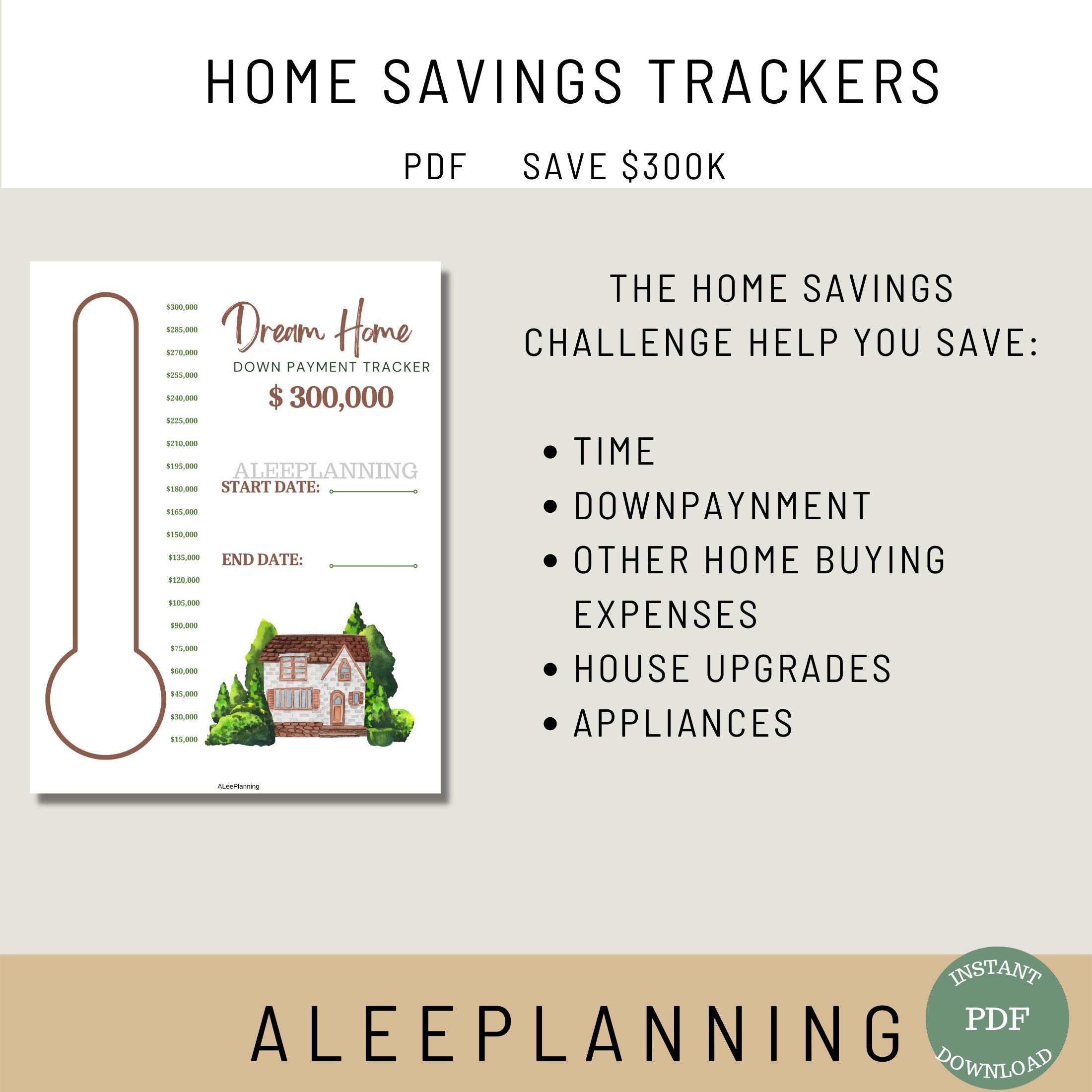
Putting down a $300,000 payment on a $500,000 house means you are financing a mortgage of $200,000, representing a massive 60% downpayment that drastically shifts your financial risk profile, monthly obligations, and overall purchasing dynamics compared to standard buyers. This monumental cash injection alters everything from private mortgage insurance requirements to long-term interest expenditure and portfolio liquidity.
Buying real estate is rarely a straightforward transaction of trading cash for keys. When an individual contemplates deploying a 60% equity stake upfront on a $500,000 property, they are entering a unique niche of home financing. This comprehensive guide breaks down the structural mechanics, financial trade-offs, loan options, and strategic considerations required to execute this transaction successfully.
The Financial Mechanics of a 60% Downpayment
To understand what happens when you put down $300,000 on a $500,000 home, you must first look at the baseline math of the transaction. The purchase price is $500,000. Subtracting your $300,000 downpayment leaves a loan amount—known as the principal balance—of $200,000.
In the United States mortgage market, standard conventional conforming loans typically require downpayments ranging anywhere from 3% to 20%. By exceeding the 20% conventional threshold threefold, you bypass several traditional safeguards and fees designed to protect lenders.
- Purchase Price: $500,000
- Downpayment (60%): $300,000 (Paid Upfront)
- Loan Amount (40%): $200,000 (Financed)
Elimination of Private Mortgage Insurance (PMI)
Private Mortgage Insurance protects the lender in case the borrower defaults. Lenders routinely mandate PMI whenever a conventional loan has a downpayment of less than 20%. Because your downpayment is 60%, you eliminate PMI entirely. This saves you anywhere from 0.5% to 1.5% of the original loan amount annually in insurance premiums, reducing your monthly carrying costs significantly.
Loan-to-Value (LTV) Ratio Advantages
Your Loan-to-Value (LTV) ratio is 40%. A low LTV ratio makes you an exceptionally low-risk borrower in the eyes of mortgage underwriters. This positioning often grants you access to the most competitive interest rates offered by lenders, as they have a massive equity cushion protecting them if home values fluctuate or you experience financial distress.
Evaluating the Pros and Cons of a Large Cash Allocation
Locking up $300,000 in a single residential property presents distinct advantages, but it also introduces notable opportunity costs. Before committing this volume of liquid capital to a real estate transaction, you must weigh the benefits against alternative financial strategies.
The Benefits of Massive Equity
- Ultra-Low Monthly Payments: With only $200,000 financed, your principal and interest payments will be minimal, insulating your monthly cash flow from economic volatility.
- Reduced Total Interest Paid: Over a 30-year amortization schedule, paying interest on a $200,000 balance instead of a $400,000 balance saves hundreds of thousands of dollars.
- Negotiation Leverage: Sellers and real estate agents view large downpayments—or cash-backed components—as indicators of strong financial capability, which can strengthen your purchase offer in competitive markets.
The Risks and Opportunity Costs
- Liquidity Strain: Sinking $300k into concrete and timber strips you of cash that could otherwise be deployed into emergency funds, retirement accounts, or higher-yielding investment vehicles.
- Opportunity Cost (The Stock Market vs. Real Estate): Over long historical periods, broad equity indexes like the S&P 500 have outperformed real estate appreciation rates. Leaving cash out of the market means missing potential compounding returns.
- Concentrated Portfolio Risk: Real estate is an illiquid asset class. Tying up a vast majority of your net worth in a single primary residence creates severe asset concentration.
Mortgage and Financing Options for a $200,000 Loan
Even though you are bringing a massive downpayment, you still need to secure a mortgage for the remaining $200,000. The type of loan you choose will dictate your closing costs, administrative hurdles, and long-term interest trajectory.
Conventional Conforming Loans
Backed by Fannie Mae or Freddie Mac, conventional loans are the most common choice for buyers with strong financial profiles. A $200,000 conventional loan falls well within standard conforming loan limits across the United States.
- Terms Available: Typically 15-year or 30-year fixed-rate mortgages.
- Credit Score Impact: To secure the best rates on a conventional loan with this structure, lenders typically look for a FICO score of 740 or higher, though your low LTV can sometimes soften minor credit blemishes.
15-Year vs. 30-Year Fixed Mortgages
With a relatively small loan balance of $200,000, you are in an ideal position to evaluate a 15-year fixed-rate mortgage.
| Feature | 30-Year Fixed Mortgage | 15-Year Fixed Mortgage |
|---|---|---|
| Monthly Principal & Interest (at ~6.5%) | ~$1,264 | ~$1,742 |
| Total Interest Paid Over Life of Loan | ~$255,000 | ~$113,000 |
| Cash Flow Flexibility | Higher (lower monthly obligation) | Lower (higher monthly obligation) |
| Interest Rate | Typically slightly higher | Typically lower (0.25% to 0.5% reduction) |
Choosing a 15-year mortgage accelerates your path to outright homeownership and slashes your total interest expense by more than half, though you must be comfortable with the higher required monthly payment.
Hidden Costs Beyond the Downpayment
A common mistake among buyers making large downpayments is assuming that cash reserves can be entirely depleted for the purchase. Beyond your $300,000 downpayment, several other financial obligations demand immediate attention at the closing table.
Closing Costs and Prepaids
Closing costs typically range from 2% to 5% of the loan amount, though some fees scale with the purchase price. On a $500,000 home purchase, expect to pay between $10,000 and $25,000 in lender fees, title insurance, appraisal fees, transfer taxes, and attorney fees. Furthermore, you will need to prepay your property taxes and homeowner's insurance to fund your initial escrow account.
Post-Closing Liquidity and Reserves
Lenders require proof of assets remaining after the transaction closes, known as "reserves." Even if a lender allows you to empty your accounts for the downpayment, doing so is dangerous. Financial planners recommend maintaining an emergency fund equal to three to six months of living expenses completely separate from your real estate transaction funds.
Ongoing Maintenance and Capital Expenditures
A $500,000 home requires ongoing maintenance. Standard guidance suggests budgeting 1% to 2% of the home's value annually ($5,000 to $10,000) for upkeep, repairs, and capital expenditures like roof replacements, HVAC servicing, or plumbing overhauls.
Step-by-Step Execution Guide for Your Purchase
Executing a transaction involving a heavy cash injection requires careful coordination between your financial institutions, real estate agent, and loan officer.
- Asset Verification and Liquidation: If your $300,000 is tied up in equities, mutual funds, or business accounts, begin the liquidation process weeks before closing. Lenders require a strict "paper trail" showing the source of the funds to comply with anti-money laundering regulations.
- Secure Pre-Approval: Present your financial profile to a mortgage broker or direct lender. Provide proof of funds for the $300k downpayment early so your pre-approval letter carries maximum weight with sellers.
- Home Inspection and Appraisal: Do not skip due diligence just because you have high equity. Ensure a licensed home inspector evaluates the structural, mechanical, and environmental integrity of the $500,000 property. If the appraisal comes in below $500,000, your downpayment math or purchase price may need to be renegotiated.
- Wire Transfer Execution: On closing day, your $300,000 downpayment will be wired directly from your verified financial institution to the title company or escrow agent handling the closing. Verify wire instructions via phone using a trusted, pre-established number to prevent wire fraud.
Frequently Asked Questions
Is it smart to put 60% down on a house?
Whether it is smart depends entirely on your broader financial portfolio. While it eliminates PMI, lowers monthly payments, and minimizes interest, it locks up significant liquidity. If that $300,000 represents your entire net worth, it is generally considered an over-concentration of risk. If it represents a small fraction of a diversified, multi-million-dollar portfolio, it is a safe and conservative capital allocation strategy.
Can I make an all-cash offer and get a mortgage later?
Yes, this is known as a "delayed financing" strategy. You can purchase the $500,000 house with cash (using your $300,000 down plus additional cash to cover the rest), and then secure a cash-out refinance shortly after closing to recoup a portion of your cash. However, lenders enforce strict seasoning requirements and documentation rules for delayed financing.
Does a large downpayment waive the home appraisal requirement?
No. Even if you are putting down 60% and borrowing a mere 40%, lenders still require a formal appraisal to confirm that the collateral ($500,000 house) is worth the purchase price. Lenders will not lend against an inflated purchase price regardless of how much cash the buyer brings to the table.
Will a 60% downpayment guarantee mortgage approval?
While it dramatically improves your approval odds, lenders still evaluate your debt-to-income (DTI) ratio, employment stability, and credit history. If your income cannot support the monthly principal, interest, taxes, and insurance (PITI) on the remaining $200,000 loan, the mortgage can still be denied.
How do I prove the source of a $300,000 downpayment to my lender?
Lenders require source-of-funds documentation. This includes 60 to 90 days of bank or brokerage statements showing the funds resting in your account. If the money came from a gift, inheritance, or sale of another property, you must provide a signed gift letter, probate documents, or a closing settlement statement from the previous sale.
Next Actions and Strategic Recommendations
Before committing $300,000 of hard-earned capital to a single real estate asset, consult with a fee-only fiduciary financial advisor and a certified tax professional. They can model how liquidating or transferring this capital impacts your tax bracket, capital gains liabilities, and long-term retirement trajectory. Once your financial team validates the move, secure a dedicated mortgage pre-approval that highlights your robust downpayment capabilities to stand out in the housing market.