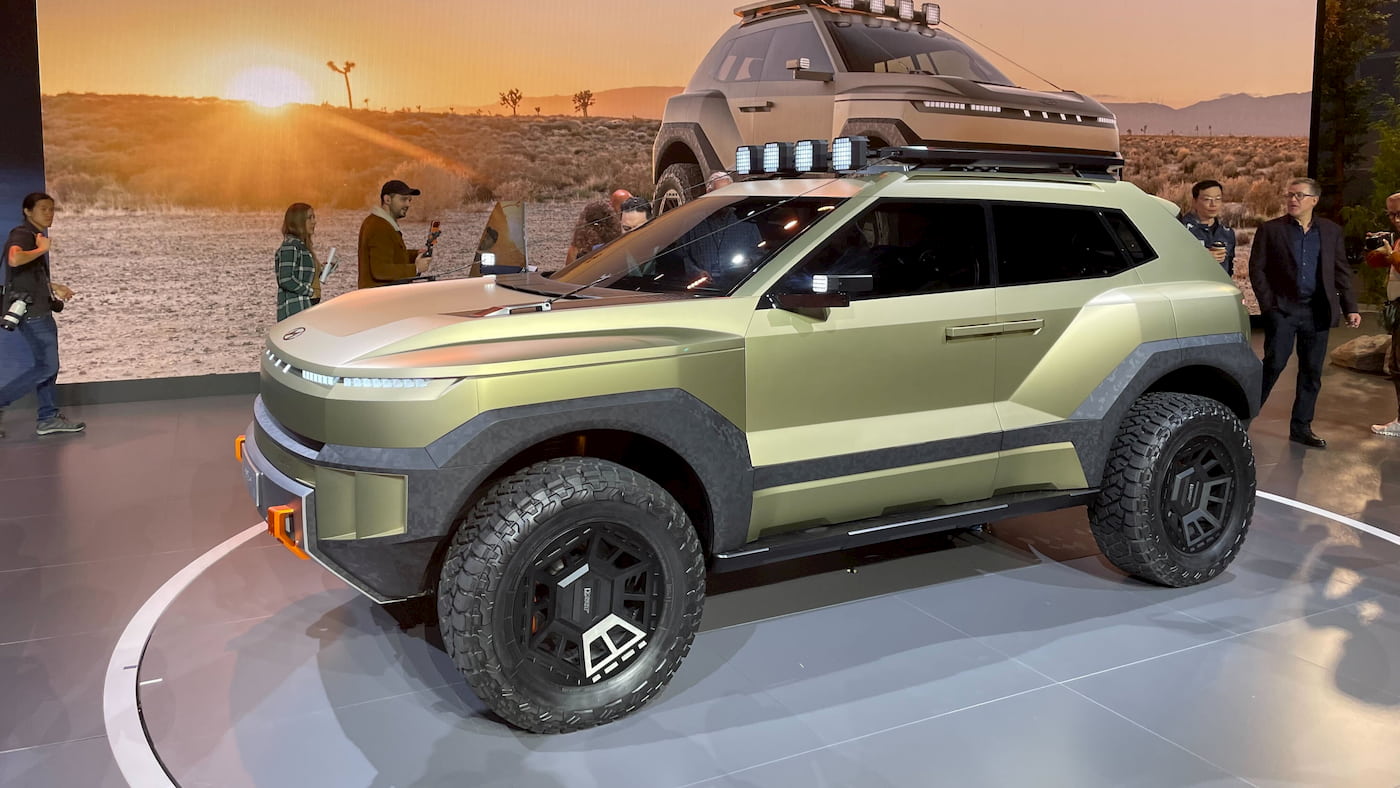
Choosing the best midsize SUV for off-road adventures in 2026 requires balancing mechanical durability, sophisticated traction software, and trail-ready geometry. The Toyota 4Runner, Ford Bronco, and Jeep Grand Cherokee stand out as the premier picks, offering specialized hardware like locking differentials, high-clearance suspensions, and advanced low-range transfer cases designed for technical terrain.
Off-roading has evolved significantly over the last decade. While the segment was once defined solely by heavy steel frames and manual shift levers, the landscape in 2026 is a blend of rugged tradition and high-torque electrification. Midsize SUVs remain the "sweet spot" for enthusiasts; they are large enough to carry gear for week-long overlanding trips but nimble enough to navigate tight "Jeep trails" where full-size trucks might struggle.
To help you navigate the current market, we have analyzed the three most capable midsize SUVs available today. These vehicles were selected based on their factory-standard equipment, aftermarket support, and proven reliability in harsh environments.
1. Toyota 4Runner: The Endurance King
The Toyota 4Runner has long been the gold standard for long-term reliability and resale value in the off-road community. Entering the 2026 model year, the sixth-generation 4Runner has fully matured on its TNGA-F global truck platform—the same high-strength boxed steel frame shared with the Land Cruiser and Tacoma.
Engineering and Powertrain
The 2026 4Runner has moved away from the aging V6 of previous decades in favor of the i-FORCE MAX hybrid powertrain. This system pairs a 2.4-liter turbocharged engine with an integrated electric motor, producing 326 horsepower and a massive 465 lb-ft of torque. For off-roaders, this torque is available almost instantly, which is critical for crawling over boulders or powering through deep sand.
The transition to the TNGA-F platform has also improved the 4Runner’s torsional rigidity. This means less body flex when the vehicle is articulated over uneven surfaces, allowing the suspension to do its job more effectively.
Off-Road Hardware: Trailhunter and TRD Pro
In 2026, Toyota offers two distinct flavors of off-road excellence. The TRD Pro remains the go-to for high-speed desert running, equipped with FOX Internal Bypass shocks that provide a "plush" feel over washboard roads while resisting bottoming out during jumps.
Conversely, the Trailhunter trim is a factory-developed overlanding rig. It features:
- Old Man Emu (OME) Suspensions: Specifically tuned for carrying heavy loads like roof racks and camping gear.
- 33-inch Toyo Open Country A/T tires: Providing a significant contact patch and 9.2 inches of ground clearance.
- High-Mount Air Intake: Often called a snorkel, this helps the engine breathe clean air in dusty environments and provides extra peace of mind during water crossings.
The "Why" Behind the Pick
The 4Runner earns its spot because it bridges the gap between a daily driver and a dedicated trail tool. Its Multi-Terrain Select (MTS) system and CRAWL Control act as a virtual spotter, managing braking and throttle so the driver can focus entirely on steering through technical obstacles.
2. Ford Bronco: The Technical Master
Since its rebirth, the Ford Bronco has challenged the status quo by offering a refined independent front suspension (IFS) that doesn't sacrifice extreme rock-crawling capability. In 2026, the Bronco remains the most modular SUV on the market, allowing owners to strip the doors and roof for a true open-air experience.
The Sasquatch Package Advantage
What sets the Bronco apart is Ford’s decision to make its most aggressive off-road features available across almost every trim level via the Sasquatch Package. This includes:
- 35-inch Mud-Terrain Tires: These offer a massive advantage in ground clearance (11.6 inches) and approach angles.
- Electronic-Locking Front and Rear Axles: These ensure that all wheels turn at the same speed, regardless of traction, which is essential for "wheels-up" rock crawling.
- HOSS 2.0 (High-Performance Off-Road Stability Suspension): Bilstein position-sensitive dampers that provide stability at high speeds and flexibility on the rocks.
Specialized Off-Road Tech
Ford’s "G.O.A.T. Modes" (Goes Over Any Type of Terrain) are perhaps the most intuitive in the industry. By adjusting the Bronco's shift points, steering feel, and traction control parameters, the vehicle can optimize itself for Mud/Ruts, Rock Crawl, or Baja mode in seconds.
A standout feature for 2026 is Trail Turn Assist. By braking the inside rear wheel during a tight turn on loose soil, the Bronco can pivot around its own axis, significantly reducing its turning radius. This is a game-changer on narrow mountain switchbacks where a traditional three-point turn might be dangerous.
The "Why" Behind the Pick
The Bronco is the pick for the enthusiast who prioritizes technical capability and customization. Its ability to run 35-inch tires from the factory without a lift kit—and still maintain decent highway manners—makes it a formidable competitor in the midsize segment.
3. Jeep Grand Cherokee: The Luxury Trailblazer
The Jeep Grand Cherokee (WL) represents the sophisticated side of off-roading. While the 4Runner and Bronco feel like "trucks," the Grand Cherokee offers a unibody construction that provides superior on-road comfort while maintaining the "Trail Rated" pedigree Jeep is famous for.
Quadra-Drive II and Air Suspension
The heart of the Grand Cherokee's off-road prowess is the Quadra-Drive II 4WD system. It features a rear Electronic Limited-Slip Differential (ELSD) that can anticipate low traction and proactively distribute torque to the wheels with the most grip.
In 2026, the Quadra-Lift Air Suspension is a critical component for off-roaders. It allows the driver to raise the vehicle at the push of a button, providing up to 10.9 inches of ground clearance. When the trail ends and the highway begins, the suspension lowers to improve aerodynamics and fuel efficiency.
The 4xe Hybrid Integration
The Grand Cherokee 4xe (plug-in hybrid) has become the dominant off-road configuration for Jeep. The electric motor provides 470 lb-ft of torque, nearly matching the 4Runner's output but with the added benefit of "silent wheeling." Navigating a forest in near-silence using only electric power allows for a deeper connection with nature and less disturbance to local wildlife.
The battery pack and electronics are waterproofed, allowing the Grand Cherokee to maintain a water-fording depth of 24 inches, despite its complex electrical architecture.
The "Why" Behind the Pick
The Grand Cherokee is the best pick for the driver who needs a professional, luxurious vehicle for the work week but wants to tackle the Rubicon Trail or Moab on the weekend. It is the most "dual-purpose" vehicle on this list, offering heated/ventilated massaging seats alongside a heavy-duty two-speed transfer case.
Technical Comparison of the Top 3
The following table compares the flagship off-road specifications for the 2026 models of these three vehicles. Note that specifications can vary based on specific sub-trims and optional packages.
| Feature | Toyota 4Runner (TRD Pro) | Ford Bronco (Sasquatch) | Jeep Grand Cherokee (Trailhawk 4xe) |
|---|---|---|---|
| Ground Clearance | 9.2 Inches | 11.6 Inches | 10.9 Inches (Max Lift) |
| Approach Angle | 32 Degrees | 43.2 Degrees | 35.7 Degrees |
| Max Torque | 465 lb-ft | 415 lb-ft (2.7L V6) | 470 lb-ft |
| Front Locker | No (Standard) / Yes (Trailhunter) | Yes (Electronic) | No (Uses Brake-Lock Diff) |
| Rear Locker | Yes (Electronic) | Yes (Electronic) | Yes (eLSD) |
| Sway-bar Disconnect | Yes (Stabilizer Disconnect Mechanism) | Yes (Electronic Hydraulic) | No (Fixed/Adaptive) |
| Wheels/Tires | 33-inch All-Terrain | 35-inch Mud-Terrain | 31.5-inch All-Terrain |
Key Factors When Choosing Your Off-Road SUV
Understanding Geometry: Angles Matter
When evaluating these three picks, the most important numbers are often not the horsepower figures, but the angles.
- Approach Angle: This determines how steep an obstacle you can climb without the front bumper hitting the ground. The Ford Bronco leads this category significantly.
- Departure Angle: This ensures your rear bumper doesn't drag when you're coming off a rock or out of a ditch.
- Breakover Angle: This is the measure of the vehicle's ability to clear a peak without "high-centering" (getting stuck on the frame rails).
Suspension: Articulation vs. Speed
A common mistake is assuming one suspension type is best for everything. The 4Runner’s solid rear axle provides excellent articulation (keeping tires on the ground over uneven terrain), which is vital for slow-speed crawling. The Bronco’s independent front suspension, while slightly less "flexy" than a solid axle, provides much better control at high speeds over desert terrain. The Grand Cherokee’s air suspension is highly versatile but is more complex to repair if a bag fails in the wilderness.
Weight and Payload
Off-roaders often forget that adding bumpers, winches, and rooftop tents increases the vehicle's weight. The 4Runner Trailhunter is specifically engineered for this, featuring higher-rated springs from the factory. If you plan on long-distance overlanding with 500+ lbs of gear, payload capacity should be your primary metric.
Maintenance and Long-Term Ownership
Buying an off-road SUV involves a commitment to more rigorous maintenance than a standard crossover. In 2026, with the prevalence of turbochargers and hybrid systems, adhering to oil change intervals is non-negotiable.
- Differential Fluid: After deep water crossings, it is essential to check differential and transfer case fluids for milkiness, which indicates water contamination.
- Chassis Lubrication: Off-road driving subjects the frame and suspension components to grit and salt. Regular high-pressure undercarriage washes are necessary to prevent corrosion.
- Software Updates: In 2026, the traction control systems in the Bronco and Grand Cherokee are highly software-dependent. Ensure your vehicle’s over-the-air (OTA) updates are current to benefit from the latest terrain-mode calibrations.
According to the National Highway Traffic Safety Administration (NHTSA), vehicle safety in off-road conditions also depends heavily on tire pressure. Airing down your tires to 15-20 PSI increases the footprint and traction on sand and rocks, but you must have an onboard compressor to air back up before hitting the pavement.
Frequently Asked Questions
Which midsize SUV has the best fuel economy for off-roading?
The Jeep Grand Cherokee 4xe and the Toyota 4Runner i-FORCE MAX are the leaders in this category. The Jeep allows for roughly 25-30 miles of all-electric range, which is perfect for short trail runs or commuting. The Toyota's hybrid system focuses more on torque assistance but still offers a significant improvement over the 16-18 MPG averages seen in older gas-only models.
Can I daily drive a Ford Bronco with the Sasquatch package?
Yes, but with caveats. While the Sasquatch package offers incredible capability, the 35-inch mud-terrain tires produce more "road hum" on the highway and can slightly decrease fuel efficiency. However, the modern HOSS suspension is designed to keep the vehicle stable at 75 MPH, making it much more civil than dedicated off-roaders of the past.
Is independent front suspension (IFS) worse than a solid front axle?
For 95% of users, IFS is actually better. While a solid front axle (like on a Jeep Wrangler) offers more "flex" for extreme rock crawling, an IFS system (found on the 4Runner, Bronco, and Grand Cherokee) provides better steering precision, better handling on paved roads, and higher comfort levels for the passengers.
Does the 2026 Toyota 4Runner still have the roll-down rear window?
Yes, Toyota has preserved the signature power roll-down rear window in the 2026 model. This feature is highly valued by off-roaders for increased ventilation and easier access to gear in the cargo area without opening the entire liftgate.
What is the most reliable 4WD system for remote travel?
Historically, the Toyota 4Runner’s part-time 4WD system is considered the most reliable due to its mechanical simplicity. However, the modern electronic transfer cases in the Bronco and Grand Cherokee have proven to be robust over millions of miles of testing. For "expedition-style" travel where you are hundreds of miles from a dealership, the 4Runner remains the preferred choice for its ease of repair and global parts availability.
Final Recommendation
For the buyer who wants a vehicle that will last 20 years and handle any trail with poise, the Toyota 4Runner is the definitive choice. Its new hybrid powertrain and Trailhunter trim make it the ultimate overlanding platform for 2026.
If your goal is to tackle the most technical rock-crawling trails or you want the most "fun" factor with removable doors, the Ford Bronco with the Sasquatch package is unbeatable.
For those who refuse to sacrifice luxury and need a vehicle that looks as good at a valet stand as it does in a mud pit, the Jeep Grand Cherokee 4xe provides the best balance of sophisticated tech and legendary Jeep capability.