A 12-month accelerated Bachelor of Science in Nursing (BSN) is an intensive, fast-track academic pathway designed for individuals who already hold a non-nursing bachelor's or higher degree. This rigorous program compresses traditional four-year nursing coursework and clinical hours into an intensive one-year format, leveraging prior general education credits to focus entirely on professional nursing theory, practice, and hands-on clinical training.
Understanding the 12-Month Accelerated BSN (ABSN) Model
The accelerated Bachelor of Science in Nursing program represents one of the most efficient routes into the healthcare workforce for career changers and college graduates. Traditional nursing degrees require four full years of undergraduate education, mixing general education requirements like humanities, social sciences, and basic electives with core nursing courses. In contrast, an ABSN program assumes that students have already mastered these foundational subjects through their prior degree.
By eliminating general education prerequisites from the active curriculum, institutions can focus exclusively on nursing science, pharmacology, health assessment, pathophysiology, and clinical rotations. However, compressing four years of specialized education into a single calendar year creates an exceptionally intense learning environment. Students often compare the schedule to a full-time job combined with a demanding graduate program, requiring complete dedication, strong time-management skills, and robust support systems.
Who Is the Ideal Candidate?
Accelerated BSN programs are built for motivated adult learners. Typical candidates fall into a few distinct categories:
- Recent university graduates whose non-nursing majors (such as biology, psychology, or kinesiology) left them wanting a more direct, clinical career.
- Mid-career professionals seeking to pivot into a stable, high-demand field with clear upward mobility.
- Individuals with advanced degrees (such as master's or doctoral credentials) who want to transition into direct patient care or advanced practice nursing roles.
Success in these programs depends heavily on prior academic discipline. Because the curriculum moves at a rapid pace, concepts are introduced and tested in a fraction of the time allotted in traditional programs. Admissions committees look closely at cumulative undergraduate grade point averages (GPAs), particularly in science prerequisites, to gauge an applicant's ability to handle the cognitive load.
Admissions Prerequisites and Academic Requirements
Gaining admission to a competitive 12-month accelerated BSN program requires careful preparation. Because these programs are condensed, schools maintain strict prerequisite standards to ensure students can handle the academic rigor from day one.
Prerequisite Coursework
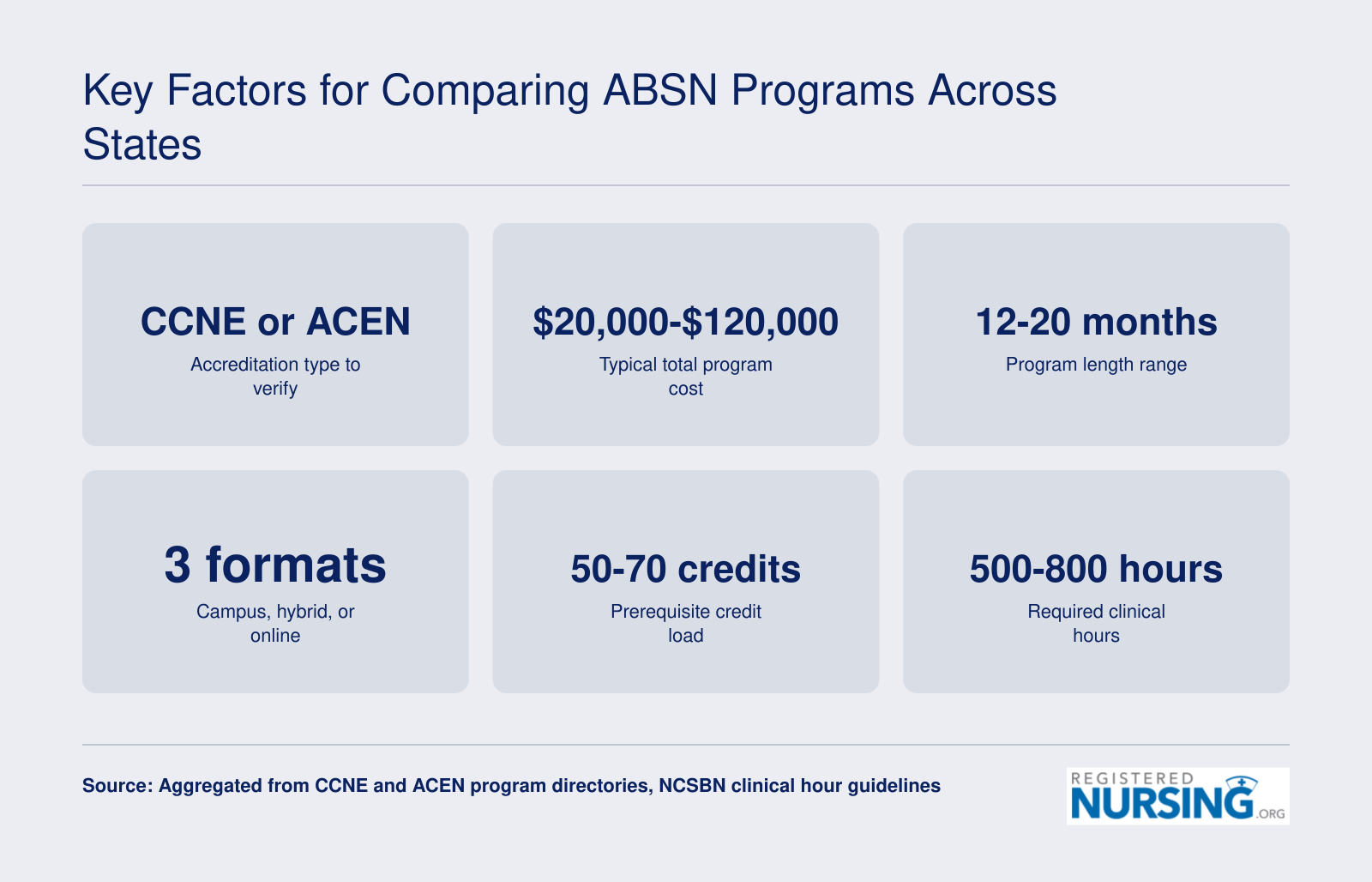
Before applying, students must typically complete a series of specific science and foundational courses. These classes ensure that every incoming student possesses a baseline understanding of human biology and chemistry. Common prerequisites include:
- Anatomy and Physiology I & II (with concurrent or separate laboratory components)
- Microbiology (focusing on pathogenic microorganisms and infection control)
- General, Organic, or Biochemistry (depending on the institution's specific curriculum)
- Statistics (often covering inferential and descriptive statistics for healthcare research)
- Human Growth and Development or Developmental Psychology (spanning the lifespan)
Most nursing schools enforce an expiration window for science prerequisites—typically five to ten years—requiring applicants to retake courses if their previous credits are too old.
Additional Admissions Criteria
Beyond prerequisite coursework, admissions departments evaluate several other components of an applicant's profile:
- Minimum GPA: Most accredited ABSN programs require a cumulative undergraduate GPA of 3.0 or higher on a 4.0 scale, though competitive programs often favor applicants with higher averages, particularly in science GPA calculations.
- Entrance Exams: Some institutions require standardized entrance testing, such as the Test of Essential Academic Skills (TEAS) or the Health Education Systems Incorporated (HESI) Admission Assessment.
- Letters of Recommendation: Academic and professional references who can attest to the applicant's work ethic, critical thinking, and resilience under pressure.
- Personal Statement or Essay: A targeted essay explaining the applicant's motivation for entering the nursing profession and their readiness for an intensive, fast-paced educational format.
| Requirement Category | Typical Standard / Expectation | Purpose in Admissions |
|---|---|---|
| Prior Education | Bachelor’s degree or higher from a regionally accredited institution | Ensures foundational general education competencies are already met. |
| Cumulative GPA | 3.0 minimum (higher preferred for competitive placement) | Measures historical academic performance and study stamina. |
| Science Prerequisites | Anatomy, Physiology, Microbiology, Chemistry (grades of C+ or B minimum) | Verifies biological and chemical literacy required for pharmacology and pathophysiology. |
| Clinical Clearances | Background check, drug screening, immunizations, CPR certification | Mandated by clinical partner facilities prior to patient contact. |
The Curriculum and Clinical Experience Structure
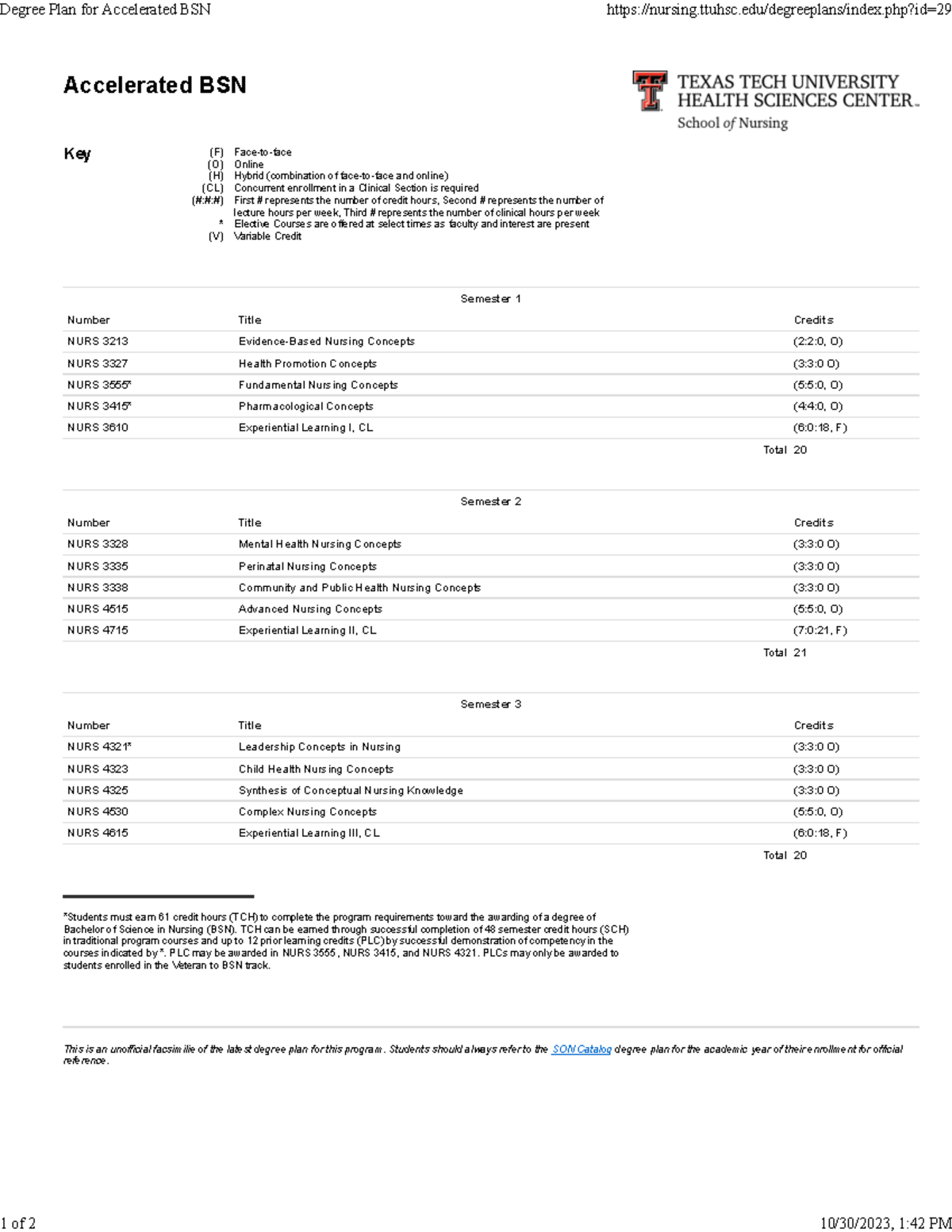
A typical 12-month ABSN curriculum runs continuously across three or four consecutive semesters (e.g., Fall, Spring, Summer), eliminating traditional academic breaks. This continuous schedule allows schools to pack upward of 60 to 70 credits of nursing-specific coursework into 52 weeks.
Didactic and Classroom Instruction
Classroom instruction covers the theoretical framework of professional nursing. Courses are front-loaded or run concurrently with lab simulations. Core subjects include:
- Foundations of Nursing Practice: Introducing the nursing process, clinical judgment, patient safety, and fundamental bedside skills.
- Pathophysiology and Pharmacology: Examining how diseases alter normal physiological functioning and how pharmacological agents interact with the human body.
- Adult Health and Medical-Surgical Nursing: Focusing on the care of adult patients experiencing acute and chronic illnesses across various organ systems.
- Maternal-Newborn and Pediatric Nursing: Covering family-centered care, obstetrics, neonatal health, and childhood development.
- Mental and Behavioral Health Nursing: Exploring psychiatric disorders, therapeutic communication, and psychological support in clinical settings.
- Leadership, Ethics, and Evidence-Based Practice: Preparing students for nursing management, healthcare policy, legal frameworks, and research utilization.
Hands-On Clinical Rotations
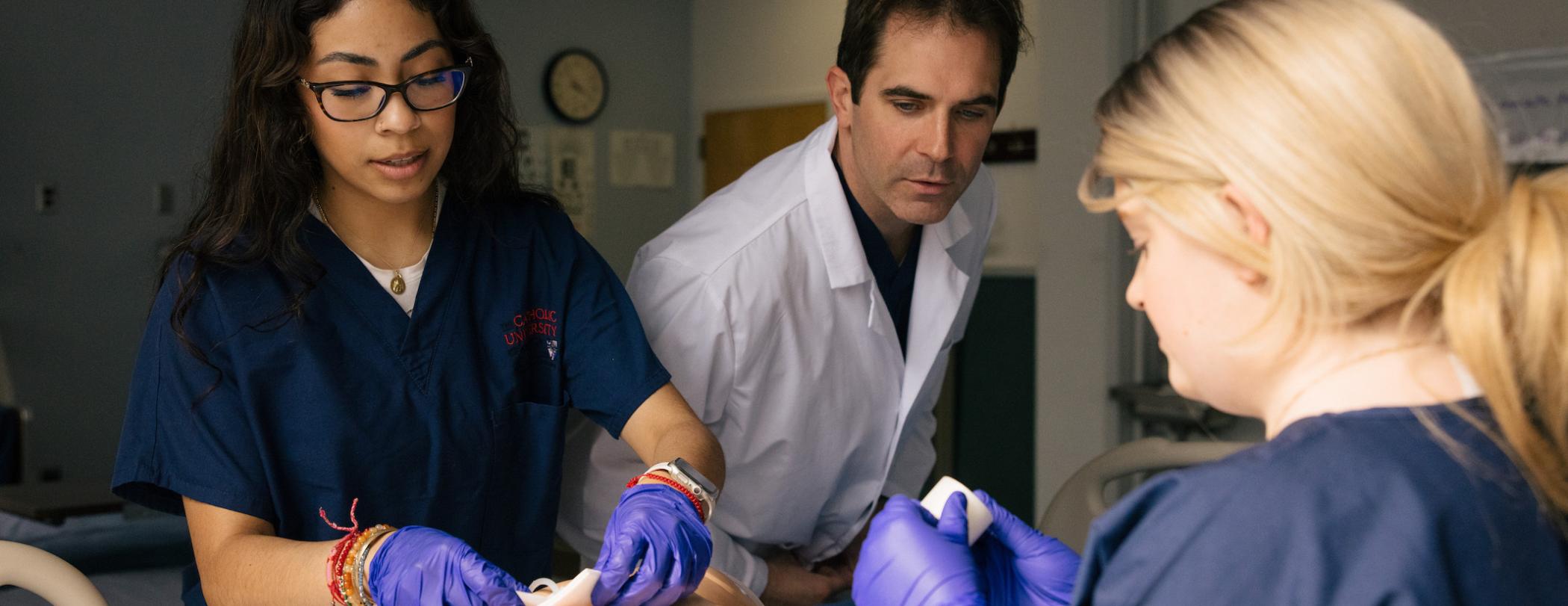
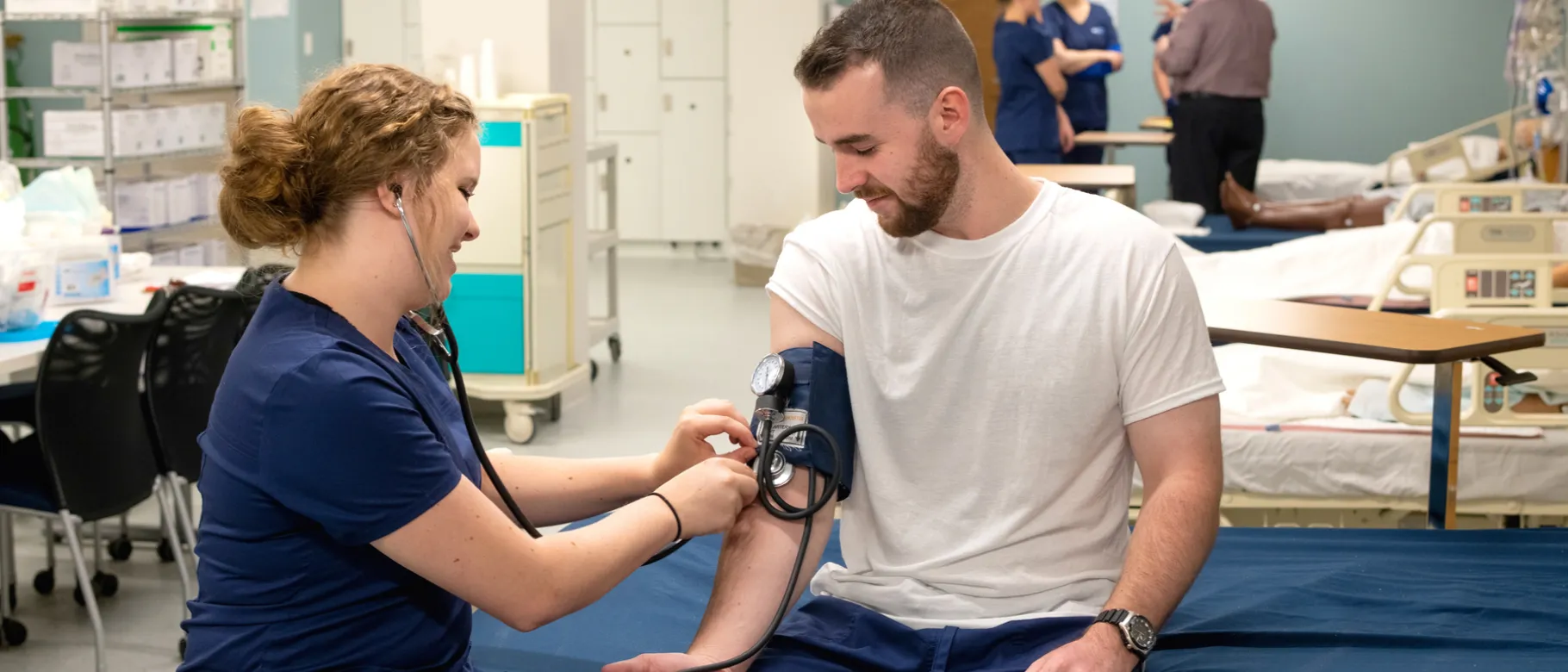
Theory is immediately applied through extensive clinical hours. Despite the one-year timeline, ABSN students must fulfill state board of nursing requirements, which often mandate 500 to 800 hours of direct patient care. Clinical placements take place in diverse healthcare environments, including major hospital networks, outpatient clinics, rehabilitation centers, and community health agencies.
Students work under the direct supervision of clinical instructors and registered nurse preceptors. These shifts often start early in the morning or occur during evening and weekend hours, reflecting real-world nursing schedules. In addition to hospital floors, programs utilize advanced simulation laboratories where students practice high-acuity scenarios, code management, and procedural skills on computerized manikins before treating live patients.
Financial Considerations, Costs, and Return on Investment
Investing in an accelerated BSN program requires careful financial planning. Because these programs are intensive, holding a full-time job during the program is strongly discouraged and, in many cases, explicitly prohibited by academic policies.
Tuition and Associated Expenses
Tuition rates vary significantly depending on whether the institution is public or private, in-state or out-of-state. Total program tuition often ranges from $30,000 to over $80,000. Beyond tuition, students must budget for mandatory additional expenses:
- Textbooks and Digital Learning Platforms: Comprehensive nursing textbook bundles, clinical assessment tools, and online NCLEX preparation software.
- Uniforms, Equipment, and Supplies: Stethoscopes, blood pressure cuffs, medical shears, specialized shoes, and clinical uniforms.
- Compliance Fees: Criminal background checks, drug screenings, medical immunizations, titer testing, physical examinations, and CPR/BLS certification.
- Living Expenses: Because external employment is severely restricted or impossible, students must secure adequate funding for housing, food, and personal expenses for the entire year.
Funding Options and Financial Aid
While federal financial aid is available, financial aid structures for second-degree students differ from traditional undergraduate paths. Because ABSN students already hold a bachelor's degree, they have typically exhausted their federal Pell Grant eligibility. However, they remain eligible for federal Direct Unsubsidized Loans and Graduate PLUS loans, depending on whether the program awards a second bachelor's degree or transitions into an entry-level master's pathway.
Additionally, many hospital systems and healthcare networks offer tuition assistance, loan forgiveness, or employment-commitment bonds. Under these arrangements, a healthcare employer covers a portion of the student's tuition in exchange for a signed contract requiring the new graduate to work at their facility for a specified period (typically two to three years) post-licensure.
Preparing for the NCLEX-RN and Entry-Level Practice
The ultimate milestone of any 12-month ABSN program is eligibility to sit for the National Council Licensure Examination for Registered Nurses (NCLEX-RN). Passing this comprehensive board exam is required to obtain state licensure and legally practice as a registered nurse.
Curriculum Integration of Board Preparation
Reputable ABSN programs integrate NCLEX preparation into the fabric of the curriculum rather than treating it as an afterthought. Course exams are frequently formatted using alternate-item question types modeled after the NCLEX, such as multiple-answer (SATA), ordered response, and matrix grid questions.
Many programs purchase specialized review platforms (such as ATI or Kaplan) and require students to pass benchmark exit exams before graduation. These diagnostic tools identify weak knowledge domains—such as pharmacology or maternal-child health—allowing students to remediate specific topics before taking the actual licensing exam.
Transitioning to Professional Practice
Upon graduating with an ABSN, new nurses enter the workforce as registered nurses, often participating in nurse residency programs offered by major hospital employers. These residency programs ease the transition from student to independent practitioner through structured mentorship, continued clinical education, and debriefing sessions.
Because ABSN graduates bring maturity, life experience, and a previous degree to the healthcare team, they frequently advance rapidly into leadership tracks, specialized units (such as intensive care units or emergency departments), or graduate education programs for nurse practitioners, nurse anesthetists, or clinical nurse specialists.
Frequently Asked Questions
Can I work a full-time job while enrolled in a 12-month ABSN program?
Working a full-time job is generally discouraged and often unsustainable due to the extreme time demands of the curriculum. Between 20 to 30 hours of weekly classroom instruction, lab work, and 12 to 24 hours of clinical rotations—plus extensive independent study—most students find that external employment compromises their academic performance. Some students successfully manage flexible, part-time per-diem work, but academic counselors typically advise securing loans or savings to cover living expenses.
Are accelerated BSN programs harder than traditional BSN programs?
The academic content taught in an ABSN program is identical to that of a traditional BSN program; the material is simply compressed into a much shorter timeframe. While traditional students spread their nursing courses over two to three years, ABSN students cover the exact same volume of theory and clinical hours in 12 to 18 months. Consequently, the pace is significantly faster, requiring exceptional time management and rapid assimilation of complex scientific concepts.
What happens if I fail a nursing course during an accelerated program?
Due to the cohort-based, lock-step nature of most accelerated programs, failing a single nursing course can disrupt a student's progression. Many programs have strict academic policies stipulating that a failing grade (typically anything below a C+ or B-) results in dismissal from the program, as courses are often only offered sequentially once per year. Students struggling academically are encouraged to utilize faculty office hours, peer tutoring, and academic support services immediately.
Do employers view accelerated BSN graduates differently than traditional BSN graduates?
Hiring managers in hospital networks and healthcare systems view ABSN graduates very favorably. Because ABSN students already possess a prior bachelor's degree, employers recognize them as mature candidates with proven college-level dedication, strong foundational problem-solving skills, and well-developed interpersonal communication abilities. On paper and in practice, an ABSN diploma carries the exact same professional licensure eligibility and academic weight as a traditional BSN.
Can I go straight from an ABSN into a nurse practitioner graduate program?
While it is technically possible to enroll in BSN-to-DNP (Doctor of Nursing Practice) or MSN programs shortly after graduation, most nursing educators and healthcare employers strongly recommend working as a bedside registered nurse for at least one to two years. Gaining hands-on clinical experience in acute care settings solidifies the diagnostic reasoning, assessment skills, and physiological intuition necessary to succeed in advanced practice nursing roles.
Next Actions and Strategic Recommendations
If you are planning to pursue a 12-month accelerated BSN program, begin by auditing your academic transcripts against the specific prerequisite requirements of your target nursing schools. Ensure that all science courses are recent enough to meet institutional standards and register for any missing prerequisite classes immediately.
Concurrently, research accredited programs in your region or evaluate reputable online-hybrid models that partner with local clinical sites. Reach out to university admissions advisors early to clarify application windows, financial aid structures, and background check requirements. Proper advance planning ensures a seamless transition into this demanding and rewarding professional pathway.