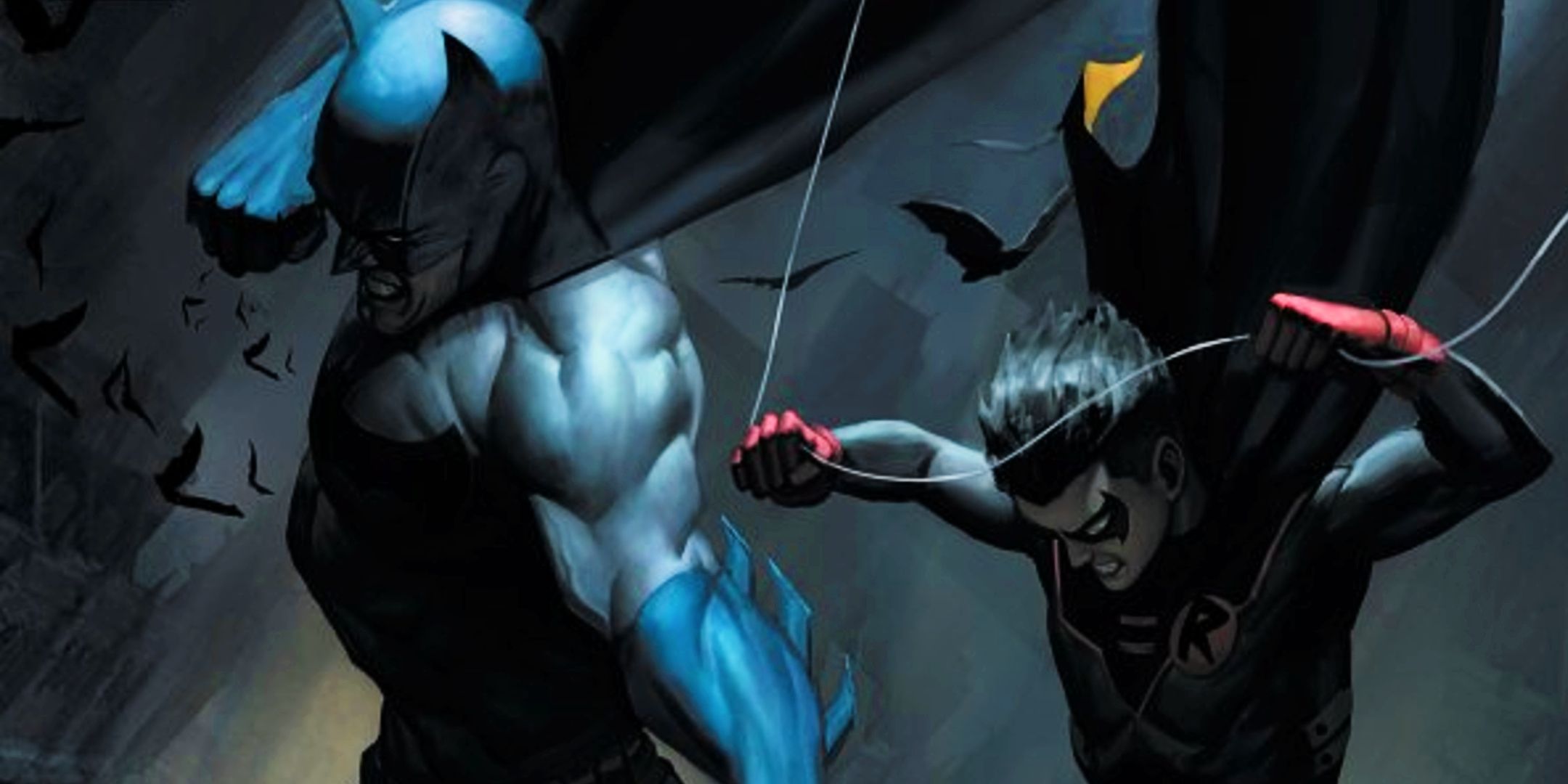
Determining the ten strongest DC villains requires examining characters whose destructive capabilities transcend planetary scales, reaching across multiverses, manipulating reality, and threatening the very fabric of existence. From primordial cosmic entities and extradimensional tyrants to corrupted gods, these figures represent the ultimate limits of power within the DC Universe, possessing abilities that routinely outmatch the combined efforts of the Justice League.
Understanding Power Scaling in the DC Universe
Power scaling within the DC Universe operates on a multi-tiered hierarchy that extends far beyond traditional physical strength. To evaluate the true threat level of a villain, comic historians and narrative analysts look at several core vectors: raw physical output, energy manipulation, control over fundamental concepts (such as time, space, and entropy), and reality-warping capabilities. Characters who can lift planets pale in comparison to those who can unmake the timeline with a thought or consume entire dimensions.
When evaluating these entities, standard metrics like punching power or durability take a back seat to ontological status. Is the villain bound by the laws of physics, or are they a fundamental law themselves? Do they operate within a single universe, or do they threaten the infinite Multiverse and the Godsphere beyond it? Establishing these boundaries clarifies why street-level masterminds or standard world-conquerors do not make the cut, leaving space exclusively for cosmic forces, conceptual embodiments, and transcendental threats.
The 10 Strongest DC Villains Ranked
The following ranking evaluates the ten most powerful antagonists in DC lore based on their canonical feats, narrative scaling, and conceptual authority.
10. Nekron
Nekron is the physical manifestation of death and darkness within the DC Universe, acting as the ultimate ruler of the Unliving Realm. As a conceptual entity, Nekron does not merely kill; he represents the absence of life and the inevitable end of all things. During the Blackest Night storyline, his power grew to existential proportions as he raised an army of fallen heroes and villains, threatening to extinguish all emotion and life in the cosmos. His scythe can slice through almost any known substance, and his connection to the emotional spectrum allows him to manipulate darkness and necrotic energy on a universal scale.
9. Eclipso
Originally the Wrath of God and the vengeance of the Biblical presence before being replaced by the Spectre, Eclipso is a primordial entity of pure malice. Trapped within the Heart of Darkness—a black diamond—Eclipso possesses mortal hosts to wreak havoc across the universe, multiplying his victims' dark impulses. At his full power, Eclipso can manipulate reality, cast continent-shrouding eclipses, project devastating energy blasts, and alter the laws of physics. His divine origins grant him a tier of magic and durability that few mortals or metahumans can hope to pierce.
8. Parallax
Parallax is the yellow entity of fear, one of the seven emotional entities of the emotional spectrum forged by the universe's creation. As a cosmic parasite, Parallax feeds on the terror of sentient beings across the cosmos. When Parallax successfully bonded with Hal Jordan, creating the infamous villain "Emerald Twilight," the combined entity gained the ability to warp reality, manipulate time, travel through dimensions instantly, and rewrite the universe's timeline. Even separated from a host, Parallax remains a god-like abstract threat capable of terrifying entire star systems.
7. Brainiac (True Form)
While various iterations of Brainiac throughout comic history have served as localized threats—bottling cities and hoarding knowledge—the true, original Brainiac is a singular, multiversal entity. Unlike his mechanical drone avatars, the actual Brainiac exists as a vast cybernetic intelligence that spans dimensions, consuming the collective knowledge of countless realities while destroying the worlds he plunders. His psionic capabilities, near-infinite processing power, and advanced hyper-technology make him a conceptual disease to civilization, capable of outsmarting entire pantheons of gods.
6. Darkseid (True Form)
The tyrannical ruler of Apokolips, Darkseid in his physical avatar is already a New God of terrifying power, armed with the apocalyptic Omega Beams capable of erasing objects from existence or tracking targets across dimensions. However, his "True Form" is a multiversal singularity of pure conceptual evil. When True Form Darkseid falls into the mortal universe, his sheer spiritual mass and gravitational pull threaten to drag the entire Multiverse down into the Hell of Apokolips. He is less a physical being and more a fundamental, inescapable law of authoritarian domination.
5. The Anti-Monitor
Introduced as the ultimate antagonist of Crisis on Infinite Earths, the Anti-Monitor is a creature of pure anti-matter ruling over the anti-matter universe. Armed with a destructive wave that consumed infinite positive-matter universes, the Anti-Monitor was powerful enough to wipe out entire multiversal timelines single-handedly. He has repeatedly served as a central engine of cosmic destruction, requiring the combined might of DC's strongest heroes, magical forces, and temporal anomalies to stop. His durability and anti-matter manipulation make him a walking apocalypse.
4. Trigon
Trigon is an interdimensional demon of immense and terrifying proportions, responsible for the destruction of millions of worlds across diverse dimensions. As a master of dark magic, reality warping, and soul manipulation, Trigon's power dwarfs standard magical entities. He is essentially a god of sin and destruction within his realm, capable of absorbing entire universes into his domain. His influence corrupts planetary populations effortlessly, and his physical durability allows him to shrug off attacks from teams like the Justice League and the Teen Titans without slowing down.
3. Imperiex
Imperiex, known as the Imperiex-Prime, is a primordial entity of pure entropy whose sole mission is to destroy the existing universe so that a perfect one may be born from its ashes. Carrying the power of the Big Bang within his armor, Imperiex creates and destroys galaxies as casually as a mortal flicks away dust. When his probe entities are defeated, his true form is unleashed—a titan of cosmic energy whose sheer presence warps space-time. Defeating Imperiex required an alliance of Earth's heroes, New Genesis, and an incredible expenditure of temporal-spatial energy.
2. Superboy-Prime
An alternate-reality version of Clark Kent from a world without superheroes, Superboy-Prime possesses the raw, unadulterated Kryptonian power set, but with a psychological instability and a power ceiling derived from a Silver Age comic book logic that makes him absurdly overpowered. During Infinite Crisis, Superboy-Prime punched the walls of reality itself, altering retroactive continuity and historical events within the DC Universe. He has shattered the Source Wall, ripped through armor designed to contain cosmic gods, and fought entire corps of Green Lanterns simultaneously, making him a walking narrative-breaking anomaly.
1. The Empty Hand
Sitting at the absolute peak of DC's villain hierarchy is The Empty Hand, the primary antagonist of the Gentry introduced during the Multiversity event. Representing the ultimate meta-fictional threat, The Empty Hand exists outside the local Multiverse within the mysterious space known as The Nothing. This entity commands forces capable of destroying entire multiverses with casual indifference, operating on a level of narrative and ontological supremacy that leaves standard cosmic beings helpless. As a representation of editorial destruction and systemic erasure, The Empty Hand remains the most formidable adversary ever faced by DC's pantheon.
Comparative Overview of Top DC Villains
| Villain Name | Primary Origin / Nature | Core Power Set | Threat Scale |
|---|---|---|---|
| Nekron | Manifestation of Death | Necromancy, scythe projection, emotion suppression | Universal / Conceptual |
| Eclipso | Corrupted Wrath of God | Divine magic, host possession, solar eclipse manipulation | Universal / Mystical |
| Parallax | Emotional Entity of Fear | Fear consumption, reality warping, timeline manipulation | Multiversal |
| Brainiac (True Form) | Multiversal Cybernetic Intellect | Infinite processing, city-bottling, psionic supremacy | Multiversal |
| Darkseid (True Form) | New God of Evil | Omega Beams, conceptual mass, gravitational collapse | Multiversal |
| The Anti-Monitor | Master of Anti-Matter | Anti-matter waves, reality destruction, energy absorption | Multiversal |
| Trigon | Interdimensional Demon | Dark magic, soul harvesting, planetary consumption | Interdimensional |
| Imperiex | Embodiment of Entropy | Big Bang energy generation, galaxy erasure, entropy | Universal / Cosmic |
| Superboy-Prime | Altered Kryptonian Human | Reality-punching, absurd physical strength, invulnerability | Universal / Meta-physical |
| The Empty Hand | Meta-fictional Entity | Narrative erasure, multiversal destruction, supreme nothingness | Omniversal / Meta |
Frequently Asked Questions
Who is the absolute strongest villain in DC Comics?
The absolute strongest villain in DC Comics is generally considered to be The Empty Hand, due to its meta-fictional status, supreme authority over the multiverse, and ability to erase entire reality frameworks. Among conventional cosmic entities within the narrative, characters like the Anti-Monitor and True Form Darkseid represent the peak of physical and conceptual power.
Is Darkseid stronger than the Anti-Monitor?
In their standard avatars, Darkseid and the Anti-Monitor possess comparable cosmic threat levels, but the Anti-Monitor's capacity to consume entire multiverses with anti-matter waves places his raw destructive output above Darkseid's standard physical form. However, True Form Darkseid operates on a conceptual plane that complicates traditional scaling, often making their relative power dependent on the specific storyline.
How does Superboy-Prime achieve such high power levels?
Superboy-Prime draws power from a pre-Crisis Silver Age Kryptonian biological framework, combined with psychological instability and unique meta-narrative abilities. Unlike standard modern Kryptonians, his invulnerability and strength thresholds were written without standard vulnerabilities, allowing him to alter reality simply through physical force, such as punching barriers of time and space.
Can Brainiac defeat Darkseid in a direct conflict?
Brainiac relies on supreme intellect, cybernetic assimilation, and tactical information warfare rather than brute physical force. While Brainiac could potentially outsmart a physical avatar of Darkseid by acquiring advanced Apokoliptian technology, True Form Darkseid would overwhelm Brainiac's network through sheer conceptual and existential mass.
What makes an entity a "conceptual" villain in DC?
A conceptual villain does not merely possess physical strength or energy manipulation; they embody fundamental ideas of the universe—such as death, fear, anti-matter, entropy, or authoritarian control. Because they represent foundational laws of reality, defeating them usually requires altering the rules of the universe rather than engaging in physical combat.
Final Recommendations for Exploring DC Cosmic Lore
For readers seeking to dive deeper into the grand scale of DC's cosmic hierarchy, approaching these characters requires starting with foundational crossover events. To understand the Anti-Monitor and Superboy-Prime, begin with Crisis on Infinite Earths and Infinite Crisis. For a look at conceptual entities like Nekron and Parallax, explore Blackest Night and Green Lantern: Rebirth. Examining these monumental storylines provides the necessary context for appreciating how DC constructs its scales of cosmic power and existential conflict.