Evil Geniuses (EG) stands as one of the most storied, enduring, and successful organizations in the history of competitive Dota 2. From the foundational era of Valve's flagship MOBA to their historic victory at The International 2015 and their eventual restructuring, the North American powerhouse shaped the global meta, nurtured legendary talent, and defined an era of professional esports.
The Origins and Early Years of Evil Geniuses in Dota 2
The journey of Evil Geniuses in Dota 2 began in earnest during the game's beta and early commercial release phase in 2011 and 2012. As one of North America's oldest esports franchises—founded originally in 1999—EG sought to establish a premier presence in the burgeoning multiplayer online battle arena space. Early rosters featured pioneers of the Western scene, including Clinton "Fear" Loomis, Jimmy "DeMoN" Ho, and Stephen "Bulba" Soto.
During these formative years, the competitive landscape was heavily dominated by European and Chinese powerhouses. Evil Geniuses served primarily as a regional contender, experiencing fluctuating rosters and inconsistent tier-one results. The structural instability of the North American scene posed a persistent challenge, but the organization maintained its commitment to fielding a competitive team. The turning point arrived when management decided to build around the veteran resilience of Fear and cultivate emerging North American prodigies, creating a development pipeline that would soon change the trajectory of Western Dota.
The Golden Era: The International 2015 Champions
The zenith of Evil Geniuses' Dota 2 legacy occurred between 2014 and 2016, a period widely regarded as the golden age of North American Dota. Following a strong third-place finish at The International 2014 (TI4) with a roster featuring Fear, Saahil "Universe" Arora, Peter "ppd" Dager, Artour "Arteezy" Babaev, and Ludwig "zai" Wåhlberg, the team underwent crucial adjustments.
By 2015, the roster featured Fear, Universe, ppd as the analytical captain and drafter, alongside young star Syed Sumail "Sumai1" Hassan and breakout carry Kurtis "Aui_2016" Ling. This iteration combined cold, calculated drafting with hyper-aggressive mechanical execution. Sumai1’s arrival introduced a terrifying mid-lane presence, renowned globally for his Storm Spirit play.
At The International 2015 (TI5) in Seattle, EG executed a masterclass tournament run. They navigated the upper bracket with poise, relying on ppd's draft wizardry and Universe's iconic "Million Dollar Dream Coil" (though technically achieved as part of a legendary multi-hero vacuum-chronosphere synergy against CDEC Gaming in the grand finals). EG defeated CDEC Gaming 3-1 to claim the Aegis of Champions and a historic multi-million dollar prize pool. This victory marked the first time a North American organization won The International, cementing EG's legacy in esports lore.
| Tournament / Milestone | Year | Placement / Achievement | Core Roster Highlights |
|---|---|---|---|
| The International 2014 | 2014 | 3rd Place | Fear, Universe, ppd, Arteezy, zai |
| Dota 2 Asia Championships (DAC) | 2015 | Champions | Fear, Universe, ppd, Sumai1, Aui_2016 |
| The International 2015 (TI5) | 2015 | Champions (1st) | Fear, Universe, ppd, Sumai1, Aui_2016 |
| The International 2018 | 2018 | 3rd Place | Arteezy, Sumai1, S4, Fly, Cr1t- |
| DCP Season Dominance | 2021 | Multiple Major Podiums | Arteezy, Abed, Nightfall, Cr1t-, Fly |
Roster Iterations and Post-TI5 Consistency
Following their TI5 triumph, Evil Geniuses maintained a reputation for elite consistency, rare for Western Dota teams. Unlike many championship rosters that quickly dissolved, EG remained a top-tier contender across multiple Dota Pro Circuit (DPC) seasons.
The organization became synonymous with high-profile roster shuffles and dramatic storylines, particularly involving the acquisition and departure of star carry player Arteezy. Despite various lineup changes—including the integration of international talents like Andreas "Cr1t-" Nielsen, Gustav "s4" Magnusson, Tal "Fly" Aizik, and Abed Azel "Abed" Yusop—EG consistently qualified for Valve Majors and placed in the top tiers of subsequent Internationals, securing another notable third-place finish at The International 2018.
Throughout these years, EG's operational philosophy emphasized rigorous bootcamping, data-driven drafting, and psychological resilience. Even when failing to capture a second Aegis of Champions, the team remained a perennial boss fight for every other organization on the circuit.
Transition to South America and Organization Exit
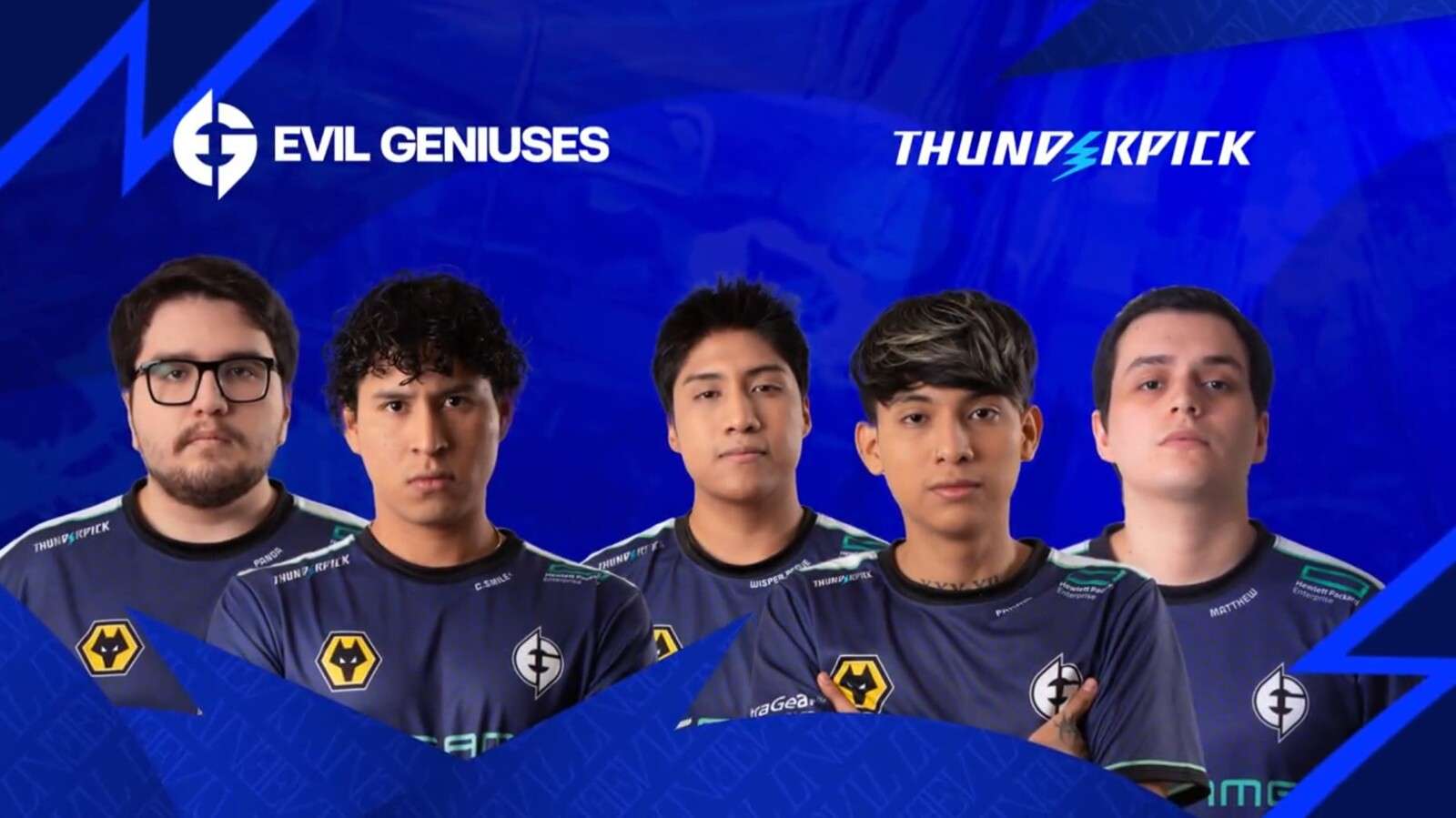
A major paradigm shift occurred in late 2022. Facing changing economic landscapes within esports and a desire to tap into passionate emerging regions, Evil Geniuses made the bold decision to release their legendary North American roster and sign an elite South American lineup based in Peru.
This final iteration of the EG Dota 2 division featured Christian "Pakazs" Savina, Gonzalo "DarkMago" Herrera, Rafael "Sacred" Yonatan, Farith "Matthew" Puente, and Jose "Pandaboo" Padilla. Competing under the familiar EG banner, this South American squad immediately dominated regional leagues and placed strongly at international Majors, proving the viability and sheer mechanical talent of the South American competitive ecosystem.
However, broader financial pressures within the parent company and shifting corporate strategies led Evil Geniuses to scale back its esports operations significantly. By late 2023, EG formally exited competitive Dota 2, concluding a legendary twelve-year chapter in the game's ecosystem.
Legacy and Impact on the Dota 2 Ecosystem
The footprint left by Evil Geniuses on Dota 2 extends far beyond trophy counts. The organization served as an incubator for some of the greatest minds and players in the game.
- Tactical Innovation: Captains like ppd revolutionized how teams approached drafting, map control, and economic efficiency, treating the game's draft phase as a strategic chess match.
- Talent Development: EG pioneered the blueprint for blending grizzled veterans (such as Fear) with raw, unproven mechanical geniuses (such as Sumai1 and Arteezy), setting a standard for modern roster construction.
- Regional Pride: For over a decade, EG was the undisputed standard-bearer for North American esports, carrying the hopes of a region through every Valve Major and International.
Frequently Asked Questions About Evil Geniuses in Dota 2
When did Evil Geniuses win The International?
Evil Geniuses won The International 2015 (TI5), held at KeyArena in Seattle, Washington. They defeated the Chinese team CDEC Gaming 3-1 in the grand finals to secure the championship and the Aegis of Champions.
Who were the most notable players to represent EG in Dota 2?
Over its 12-year history, EG featured many legendary players. Some of the most prominent include Clinton "Fear" Loomis, Saahil "Universe" Arora, Peter "ppd" Dager, Syed Sumail "Sumai1" Hassan, Artour "Arteezy" Babaev, and Andreas "Cr1t-" Nielsen.
Did Evil Geniuses remain a North American team until the end?
No. In late 2022, Evil Geniuses departed from their traditional North American roster and signed a top-tier South American team composed of Peruvian players before ultimately exiting the competitive Dota 2 scene in late 2023.
How many times did Evil Geniuses finish in the top 3 at The International?
EG secured multiple podium finishes at Valve's flagship tournament, most notably winning TI5 (2015), placing 3rd at TI4 (2014), 3rd at TI6 (2016), and 3rd at TI8 (2018), establishing a legacy of remarkable consistency.
Conclusion and Next Actions
Evil Geniuses remains a cornerstone entity in the history of competitive Dota 2, remembered for calculated strategies, legendary player development, and historic championship moments. For fans and researchers looking to study their legacy further, reviewing tournament vods from The International 2015 and analyzing ppd's drafting methodologies offer profound insights into the evolution of professional tactical play.