In 2026, the sculpture drawing the most attention in New York City is the High Line Plinth commission, currently featuring Ivan Argote’s "Dinosaur"—a colossal, hyper-realistic pigeon—alongside the recently completed Anish Kapoor "Mini-Bean" at 56 Leonard Street. These works have become central to New York’s public art discourse, blending technical engineering with viral social commentary.
New York City has long served as a rotating gallery for world-class public art, but the landscape in 2026 is defined by a shift toward monumental realism and high-concept engineering. Whether you are a local resident or a visitor, understanding the context, location, and technical background of these pieces is essential for navigating the city’s current cultural highlights.
The Anish Kapoor Sculpture at 56 Leonard Street: The "Mini-Bean"
Perhaps no piece of public art in recent Manhattan history has faced as long a road to completion as the Anish Kapoor sculpture at the base of the "Jenga Tower" in Tribeca. While technically finalized and unveiled to the public in early 2023, it remains a primary point of attention in 2026 due to its unique architectural integration and the sheer technical mastery required to maintain its mirror-like finish in a dense urban environment.
A Masterpiece of Seamless Engineering
The sculpture, often colloquially called the "Mini-Bean" due to its resemblance to Kapoor’s Cloud Gate in Chicago, is a 40-ton, 48-foot-long polished stainless steel work. Unlike its Chicago counterpart, which sits in an open plaza, the NYC sculpture is wedged beneath the cantilevered floors of 56 Leonard Street. This creates a fascinating tension between the organic, fluid shape of the steel and the rigid, pixelated geometry of the Herzog & de Meuron-designed skyscraper.
The attention this piece draws in 2026 stems from its "seamless" construction. During its decade-long installation process, the primary challenge was welding the individual stainless steel plates so precisely that no seams would be visible. In the variable climate of New York, where temperatures can swing 90 degrees Fahrenheit between seasons, the steel expands and contracts. The internal suspension system—a complex web of springs and struts—allows the shell to move without buckling or cracking.
Impact on the Tribeca Streetscape
For visitors in 2026, the Kapoor sculpture offers a surreal experience. As you walk down Church Street, the building appears to be crushing the sculpture, while the sculpture’s mirrored surface reflects the surrounding 19th-century textile warehouses and modern luxury condos in a distorted, psychedelic loop. It has become a premier destination for photography, though the "attention" it draws is often a mix of architectural awe and the logistical reality of managing crowds on a narrow Manhattan sidewalk.
The High Line Plinth: "Dinosaur" and the Giant Pigeon Phenomenon
While the Kapoor sculpture represents permanent architectural integration, the most "viral" new sculpture drawing attention in 2026 is located on the High Line at 30th Street. The High Line Plinth, a dedicated site for rotating monumental art, is currently home to Ivan Argote’s "Dinosaur."
The Philosophy of "Dinosaur"
Installed in late 2024 and remaining a fixture through much of 2026, "Dinosaur" is a hyper-realistic, 16-foot-tall cast-aluminum pigeon. The sculpture has ignited fierce debate among New Yorkers, which is precisely why it draws so much attention. By placing a common "street bird" on a pedestal typically reserved for war heroes or historical figures, Argote subverts the traditional concept of a monument.
The name "Dinosaur" refers to the evolutionary lineage of birds, but it also serves as a poignant reminder of who truly "owns" the city. In a metropolis defined by glass towers and elite real estate, the pigeon is the ultimate survivor—an inhabitant that transcends social class. In 2026, the sculpture continues to serve as a backdrop for countless social media posts and academic discussions regarding the nature of urban wildlife and public space.
Technical Specifications of the Plinth
The High Line Plinth is engineered to support massive weights, allowing for works like "Dinosaur" to withstand the high winds of the Hudson River waterfront. The sculpture itself is meticulously painted to mimic the iridescent feathers of a standard New York pigeon, a feat of craftsmanship that requires regular conservation to protect against UV damage and the city's corrosive salt air.
The Portal: A Digital Sculpture Connecting Cities
Beyond physical bronze and steel, the "Portal" installation—a circular digital sculpture—has drawn significant international attention since its initial debut near the Flatiron Building. In 2026, the Portal concept has evolved from a temporary experiment into a rotating fixture of NYC’s public art strategy.
The Portal consists of a large circular screen and camera that provides a 24/7 live video link to other "Portals" in cities like Dublin, Vilnius, and Lublin. It is a "sculpture of connection." The attention it draws is often social rather than purely aesthetic; it facilitates silent, real-time interactions between strangers across the Atlantic. In 2026, the NYC Portal is frequently relocated to different "bridge" neighborhoods, serving as a technological landmark that challenges the static nature of traditional sculpture.
Comparative Overview of Major NYC Sculptures (2026)
To help you plan your visit to these landmarks, the following table compares the primary sculptures currently drawing the most attention in New York City.
| Sculpture Name | Location | Artist | Material | Main Draw |
|---|---|---|---|---|
| The "Mini-Bean" | 56 Leonard St (Tribeca) | Anish Kapoor | Polished Stainless Steel | Seamless mirror reflections; architectural tension. |
| Dinosaur | High Line (at 30th St) | Ivan Argote | Cast Aluminum | A 16-foot pigeon; commentary on urban hierarchy. |
| The Portal | Rotating (Flatiron/various) | Benediktas Gylys | Digital / Mixed Media | Real-time visual connection to global cities. |
| Old Tree | High Line (Past Exhibit) | Pamela Rosenkranz | Synthetic Polymer/Steel | A vibrant pink "organ-like" tree (Still discussed in 2026). |
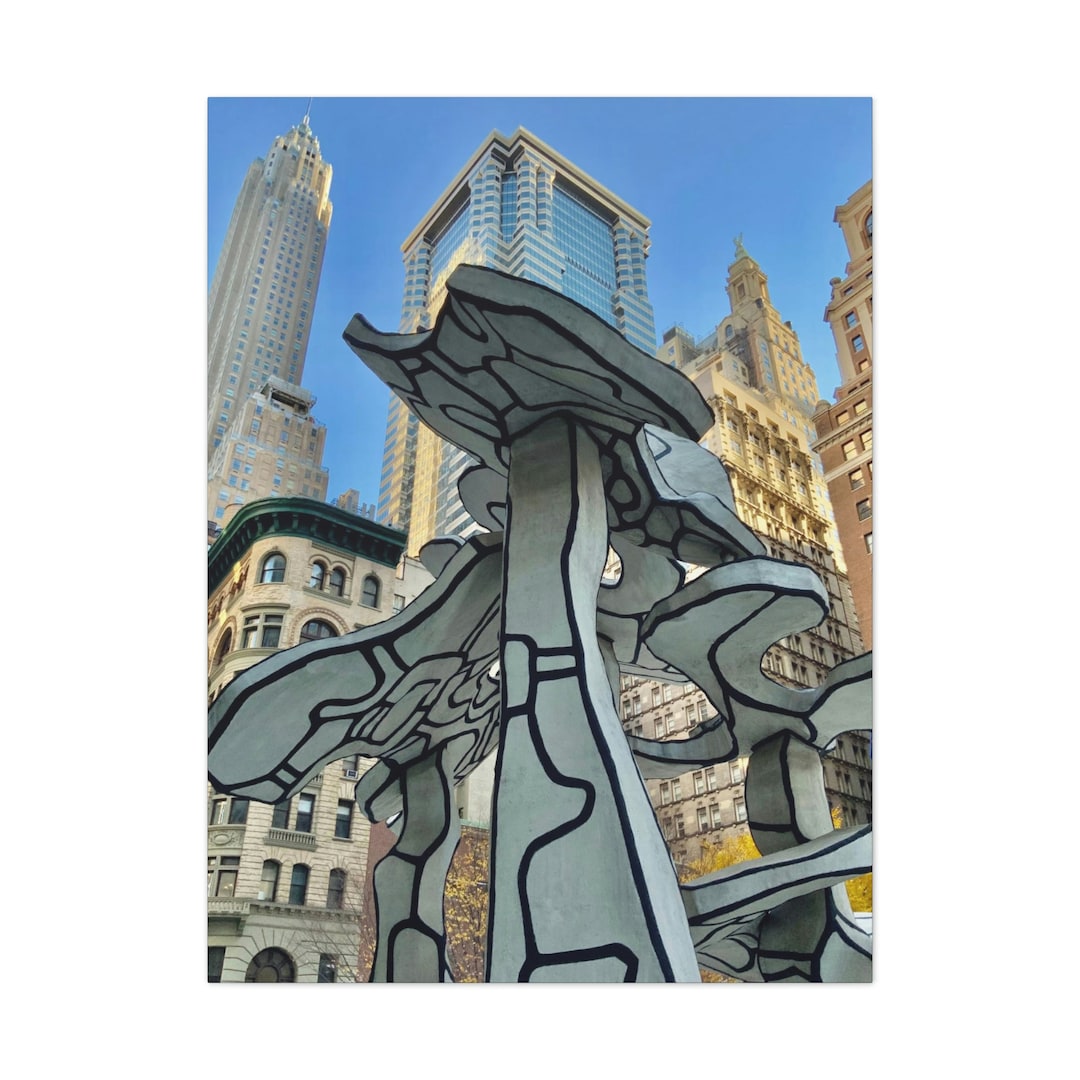
| Group of Four Trees | 28 Liberty St Plaza | Jean Dubuffet | Fiberglass/Polyurethane | A classic modernist contrast to the new digital works. |
Technical Challenges of Maintaining Public Art in NYC
Sculptures in New York City face environmental and social stressors that most museum-housed art never encounters. In 2026, the maintenance of these pieces is as much a part of their story as their creation.
Weather and Atmospheric Corrosion
The Kapoor "Mini-Bean" requires a specialized cleaning crew to remove fingerprints and city grime almost daily. Because the finish is "A-grade" mirror-polished, even the slightest scratch or residue is visible. Furthermore, NYC’s proximity to the ocean means the air contains trace amounts of salt, which can accelerate the tea-staining (surface oxidation) of lower-grade stainless steel. The 56 Leonard sculpture uses high-nickel alloy steel to combat this, but it still requires periodic buffing with specialized compounds.
Structural Integrity and Public Safety
Sculptures like "Dinosaur" on the High Line must be engineered for "wind load." At the elevation of the High Line, wind gusts can be significantly stronger than at street level. The internal steel skeletons of these sculptures are bolted into the concrete of the park, requiring regular inspections by structural engineers to ensure that the vibrations from nearby construction and subway lines do not fatigue the metal.
Navigating Privately Owned Public Spaces (POPS)
Many of the new sculptures drawing attention are located in Privately Owned Public Spaces (POPS). This is a unique New York City zoning tool where developers are allowed more floor area in exchange for providing high-quality, accessible public space.
The Kapoor sculpture is a prime example of a POPS requirement. While the sculpture is owned by the condominium board of 56 Leonard, the area it occupies must remain open to the public. This legal framework ensures that even as the city becomes more densely developed, art remains accessible to everyone, not just those who can afford a museum ticket. For visitors in 2026, it is important to respect these spaces; while they are "public," they are often monitored by private security to prevent vandalism or "tagging," which has been a recurring issue for the mirror-finished works.
Why Public Art Draws More Attention in 2026
In a world increasingly dominated by digital screens and virtual reality, the physical presence of a massive, tactile object in the middle of a sidewalk creates a necessary friction.
- Scale and Proximity: Unlike a painting in a gallery, these sculptures allow for 360-degree interaction. You can walk under the Kapoor Bean or stand eye-to-eye with the giant High Line pigeon.
- The "Instagrammability" Factor: In 2026, the success of public art is often measured by its social reach. Sculptures that offer distorted reflections or surreal scales are tailor-made for contemporary digital sharing.
- Civic Identity: After the challenges of the early 2020s, New York has leaned heavily into public art as a way to revitalize commercial districts. These sculptures serve as "anchors" that draw foot traffic back into neighborhoods like Tribeca and the Chelsea waterfront.
Frequently Asked Questions
Is the Anish Kapoor "Mini-Bean" permanent?
Yes, the sculpture at 56 Leonard Street is a permanent installation. It was commissioned specifically for the building and is integrated into the structural footprint of the tower. Unlike the rotating exhibits on the High Line, the Kapoor sculpture is a lasting addition to the NYC skyline.
Can I visit the High Line "Dinosaur" sculpture for free?
Yes, access to the High Line and its Plinth is free of charge. However, during peak hours in 2026, the High Line sometimes implements a "timed entry" system or one-way walking traffic to manage the volume of visitors, especially near the 30th Street Plinth where "Dinosaur" is located.
Are these sculptures accessible at night?
Most NYC public sculptures are accessible 24/7 if they are on a standard sidewalk (like the Kapoor Bean). However, the High Line has specific operating hours (typically closing at 10:00 PM or 11:00 PM depending on the season). The Kapoor sculpture is particularly striking at night when the city lights reflect off its polished surface.
How often does the High Line Plinth art change?
The High Line Plinth commissions typically rotate every 18 months. If you are visiting in late 2026, you may see the transition between "Dinosaur" and the next selected commission. These selections are made through a global call for proposals managed by High Line Art.
Is it okay to touch the sculptures?
While most public art is meant to be experienced closely, "touching" is generally discouraged for mirror-finished pieces like the Kapoor sculpture, as skin oils can smudge the finish and jewelry can scratch the surface. For the cast-aluminum works on the High Line, touching is generally permitted, but climbing is strictly prohibited for safety reasons.
Recommendations for Your Visit
If you are planning to see the new sculptures drawing attention in NYC this year, start your journey in Tribeca at 56 Leonard Street. The morning light provides the best reflections on the Kapoor sculpture and the streets are generally quieter.
From there, take the A, C, or E train uptown to 14th Street and enter the High Line at the Gansevoort Street entrance. Walk north toward 30th Street. This path allows you to see several other smaller art installations before reaching the "Dinosaur" on the Plinth. This "Art Walk" covers roughly 1.5 miles and provides a comprehensive look at how 2026 New York integrates creativity into its urban fabric. For the most up-to-date schedule of temporary installations, check the NYC Parks official website.