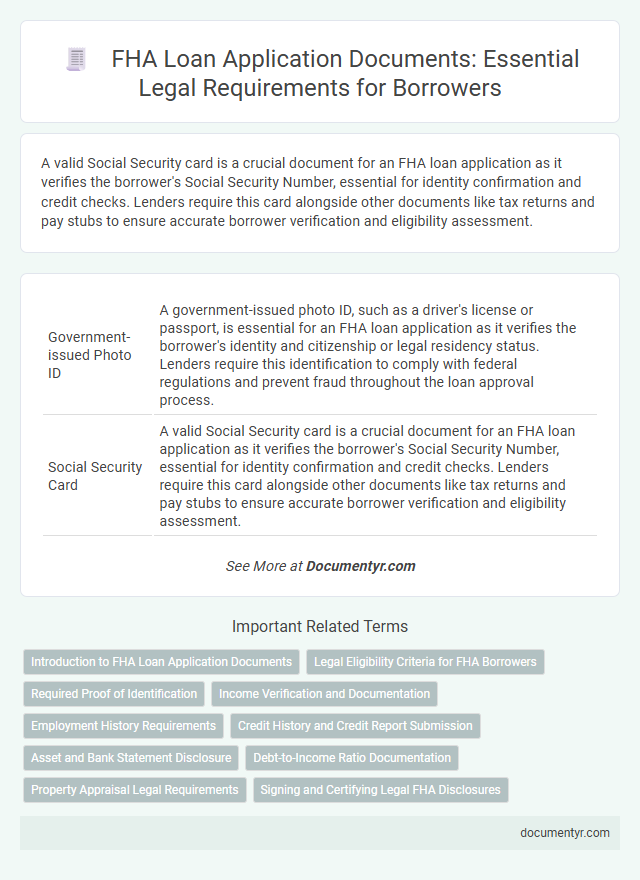
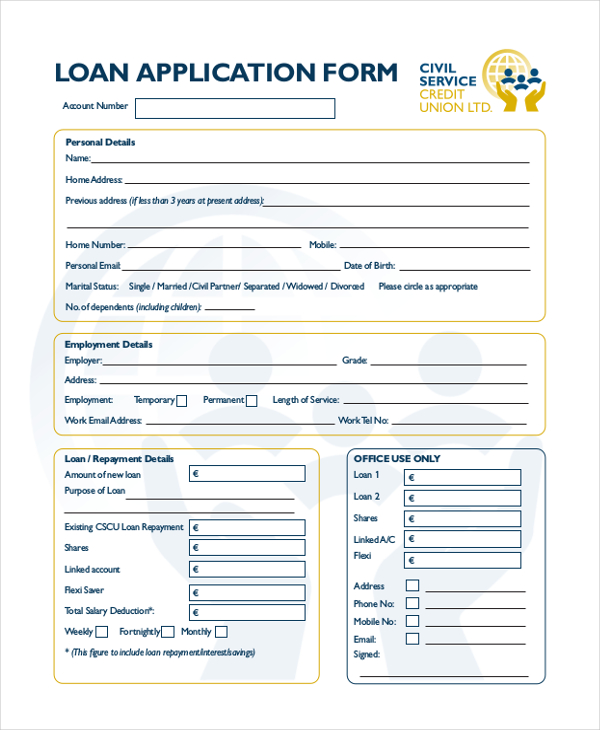
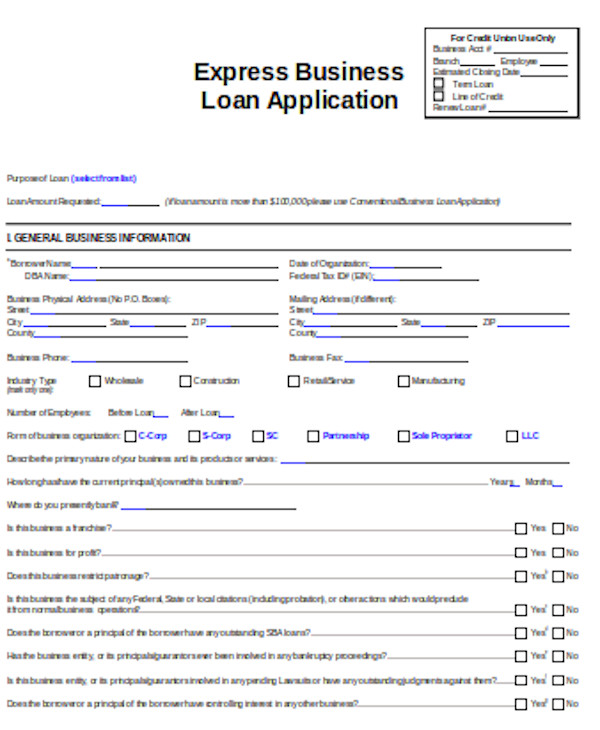
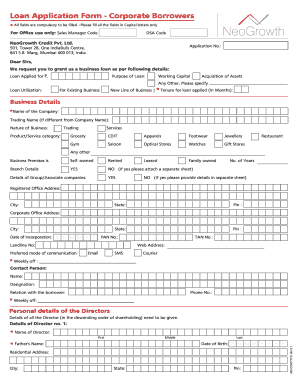
A standard loan application serves as a formal request for credit, requiring borrowers to provide detailed personal, financial, and employment information. By examining a loan application example, borrowers can identify the specific data points lenders use to assess creditworthiness, such as income stability, debt-to-income ratios, and collateral value, ensuring a more efficient approval process.
Understanding the Structure of a Modern Loan Application
In 2026, the loan application process has become increasingly digitized, yet the core components remain rooted in risk assessment and regulatory compliance. Whether you are applying for a personal loan, an auto loan, or a mortgage, the application is designed to answer three fundamental questions for the lender: Who are you, can you afford the debt, and will you pay it back?
The application is not merely a data-entry exercise; it is a legal document. In the United States, for instance, lenders must adhere to the Equal Credit Opportunity Act (ECOA), which prohibits discrimination, while also satisfying Know Your Customer (KYC) and Anti-Money Laundering (AML) requirements. Understanding each section of the application helps you gather the necessary documentation before you begin the process.
Section 1: Personal Identification and Contact Information
This section establishes your identity. Lenders use this data to pull your credit report from bureaus like Equifax, Experian, or TransUnion.
- Full Legal Name and Aliases: You must provide your name exactly as it appears on government-issued identification.
- Social Security Number (SSN) or ITIN: This is the primary key for credit history retrieval.
- Date of Birth: Used to verify you are of legal age to enter a binding contract.
- Current Address and Residency History: Lenders typically ask for at least two years of residential history. Stability in housing is often viewed as a positive risk indicator.
- Contact Information: Verified email addresses and phone numbers are essential for the "e-signing" processes common in 2026.
Section 2: Employment and Income Verification
The "Ability to Repay" (ATR) rule is a cornerstone of modern lending. Lenders need to see a consistent stream of income that can support the new monthly payment alongside your existing obligations.
- Current Employer: You will provide the company name, your job title, and the length of employment. If you have been with your current employer for less than two years, you must provide previous employment details.
- Gross Monthly Income: This is your total income before taxes. Lenders prefer this figure because it is a standardized metric.
- Secondary Income Sources: This includes bonuses, commissions, overtime, alimony, child support, social security, or investment dividends. In 2026, lenders often use automated tools to verify these via direct bank API links (such as Plaid or MX).
A Detailed Example of a Personal Loan Application
To better visualize the process, let’s look at a hypothetical application for a $15,000 Debt Consolidation Loan.
Applicant Profile: Sarah J.
- Purpose of Loan: Debt Consolidation (Paying off three high-interest credit cards).
- Requested Amount: $15,000.
- Term: 36 Months.
| Application Field | Example Entry | Rationale for the Lender |
|---|---|---|
| Loan Purpose | Debt Consolidation | Helps the lender understand the risk; consolidation often improves the borrower's financial health. |
| Gross Annual Income | $72,000 | Determines the baseline for the Debt-to-Income (DTI) calculation. |
| Monthly Housing Payment | $1,800 (Rent) | Essential for calculating residual income after fixed costs. |
| Employment Status | Full-Time (4 years) | Long-term employment suggests a lower risk of sudden income loss. |
| Total Monthly Debt | $450 (Car Loan + Minimum CC Payments) | Used to calculate the current DTI before the new loan is added. |
In this example, Sarah J. would likely see a prompt to "Link Bank Account." By doing so, the lender’s AI-driven underwriting engine can instantly verify that the $6,000 gross monthly income ($72,000 / 12) is actually hitting her account. This "permissioned data" approach has replaced the need for physical paystubs in many 2026 lending environments.
The Mortgage Application Example: Form 1003
The most complex example of a loan application is the Uniform Residential Loan Application (URLA), also known as Fannie Mae Form 1003. If you are a borrower looking for a home loan, this is the specific format you will encounter.
The Components of Form 1003
- Type of Mortgage and Terms: You specify if you are seeking a Conventional, FHA, VA, or USDA loan, along with the interest rate type (Fixed vs. ARM).
- Property Information: Unlike a personal loan, a mortgage requires the address of the specific asset being used as collateral.
- Borrower Information: This includes a deep dive into your marital status and number of dependents, which can impact your cost-of-living calculations in certain jurisdictions.
- Assets and Liabilities: This is a comprehensive balance sheet. You must list checking accounts, savings, 401(k)s, and IRAs. You must also list every open credit line, student loan, and car lease.
- Declarations: A series of "Yes/No" questions regarding legal issues, such as "Are you a party to a lawsuit?" or "Have you declared bankruptcy in the last seven years?"
Critical Ratios Borrowers Must Understand
When you submit a loan application example, the lender immediately converts your data into two primary ratios:
1. Debt-to-Income Ratio (DTI)
The DTI is calculated by dividing your total monthly debt payments by your gross monthly income. For example, if your debts (including the proposed new loan) total $2,000 and your gross income is $5,000, your DTI is 40%.
- Back-End DTI: Includes all debts (housing + car + credit cards).
- Front-End DTI: Includes only housing-related costs (mortgage, insurance, taxes).
- 2026 Standard: Most lenders look for a back-end DTI of 43% or lower, though some "high-limit" personal loans allow up to 50% for high-earning borrowers.
2. Loan-to-Value Ratio (LTV)
Relevant for auto and mortgage applications, the LTV compares the loan amount to the appraised value of the asset.
- Example: A $400,000 loan on a $500,000 home results in an 80% LTV.
- Significance: A lower LTV usually results in better interest rates because the lender has more "equity cushion" if you default.
Common Documentation Required to Support Your Application
Even in a digital-first 2026 landscape, you should have "The Big Three" document categories ready to verify your application entries:
- Proof of Income: The last two years of W-2 forms or 1099s. If self-employed, the last two years of federal tax returns (including Schedule C) are mandatory. For 2026, many lenders also require an IRS Form 4506-C, which gives them permission to request a transcript of your tax return directly from the IRS.
- Asset Verification: The last two to three months of bank statements for all accounts. Lenders are looking for "large deposits" that aren't payroll-related, as these must be sourced to ensure they aren't undisclosed loans.
- Identification: A high-resolution color scan of your Driver’s License, Passport, or Permanent Resident Card.
Potential Pitfalls in the Application Process
Errors on a loan application can lead to immediate denial or, worse, accusations of "loan fraud." Borrowers should be wary of these common mistakes:
- Estimating Income: Never "round up" your income. If you state you make $80,000 but your W-2 shows $78,500, the discrepancy can trigger a manual review and delay your funding by weeks.
- Omitting Debt: Do not leave out the "small" credit card or the personal loan from a family member if it appears on your credit report. Underwriters will find these during the credit pull.
- Recent Credit Inquiries: Applying for multiple loans simultaneously can lower your credit score and make you appear "credit hungry." In 2026, it is advisable to use "soft pull" pre-qualification tools before submitting a formal "hard pull" application.
- Job Gaps: If you have a gap in employment of more than 30 days within the last two years, be prepared to provide a written explanation. Lenders in 2026 are generally understanding of gaps for education or family care, provided you have returned to stable employment.
How Lenders Process Your Application in 2026
Once you hit "submit," the application usually goes through an Automated Underwriting System (AUS). This software checks your data against the lender's specific risk "buckets."
- Instant Approval: If your credit score, DTI, and income verification (via API) all meet the criteria, you may receive an approval within seconds.
- Conditional Approval: The lender likes your profile but needs one or two more things, such as a clarification on a specific bank deposit or a more recent paystub.
- Manual Review: If your situation is complex (e.g., you own multiple businesses or have a "thin" credit file), a human underwriter will examine the application. This is where the clarity of your initial entries becomes most important.
Frequently Asked Questions
Does filling out a loan application example impact my credit score?
Simply viewing a template or "example" does not affect your score. However, submitting a formal application usually triggers a "hard inquiry." In 2026, most personal loan platforms offer a "Check Your Rate" feature that uses a soft credit pull, which does not impact your score. The hard pull only occurs after you select a specific offer and proceed to the final signing.
What if I am self-employed? How does my application differ?
Self-employed borrowers must provide more evidence of income stability. Instead of a simple W-2, you will likely need to provide a Year-to-Date (YTD) Profit and Loss Statement and a Balance Sheet. Lenders in 2026 often use the average of your last two years of net taxable income to determine your qualifying salary.
Can I include my spouse’s income on my individual loan application?
Generally, no. If you are applying for an individual loan, you can only include income to which you have a legal claim. However, if you apply for a joint loan, both incomes and both sets of debts are factored into the DTI. Joint applications can often help you qualify for larger amounts, provided the co-borrower has a strong credit profile.
How long is a loan application valid once submitted?
Most loan approvals and the associated interest rate locks are valid for 30 to 60 days. If you do not close the loan within that window, the lender may require you to "refresh" your application with updated bank statements or a new credit pull to ensure your financial situation hasn't deteriorated.
What is the "Statement of Intent" in a loan application?
This is a legal declaration where you state how the funds will be used. For example, if you take out a "Home Improvement" loan but use it to buy a luxury vehicle, you could be in violation of the loan agreement. In some cases, specifically with mortgages, this section also asks if you intend to occupy the property as your primary residence, which drastically affects the interest rate.
Summary of Next Actions for Borrowers
To ensure your loan application is successful, follow these logical steps:
- Check Your Credit Report: Before applying, pull your own report to ensure there are no errors.
- Calculate Your DTI: Use your gross income and current monthly debts to see if you fall below the 43% threshold.
- Gather Digital Documents: Have PDF versions of your last two years of tax returns and last three months of bank statements ready for upload.
- Use Pre-Qualification Tools: Always start with a soft-pull offer to compare rates without damaging your credit score.
By approaching the loan application as a transparent data-sharing process rather than a hurdle, you can navigate the 2026 lending environment with confidence and secure the financing you need under the best possible terms.