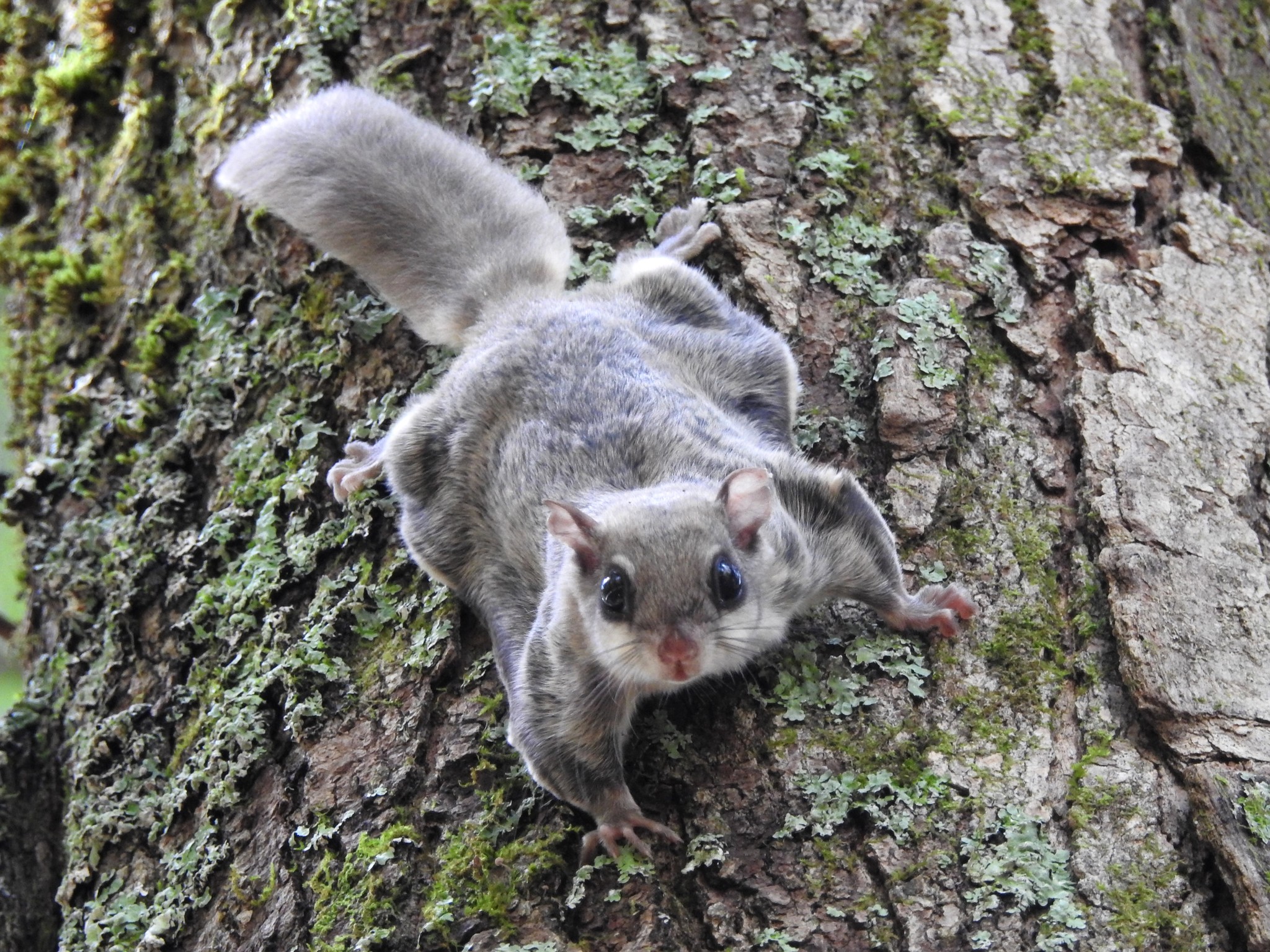
No, flying squirrels are not marsupials. They are placental mammals belonging to the order Rodentia and the family Sciuridae. While they share a striking physical resemblance to the marsupial sugar glider, this is a classic example of convergent evolution. Flying squirrels develop fully within the mother’s uterus, supported by a placenta, rather than maturing in an external pouch.
The confusion between flying squirrels and marsupials usually stems from the existence of the sugar glider (Petaurus breviceps), a small, gliding mammal from Australia that looks almost identical to the flying squirrels found in North America and Eurasia. Despite their similar appearance and shared ability to glide through the air, these two groups of animals are separated by millions of years of evolution and vastly different reproductive biological systems.
Biological Classification and Taxonomy
To understand why flying squirrels are not marsupials, we must first look at their place in the biological tree of life. As of 2026, the scientific classification of these animals remains a cornerstone of mammalogy, helping researchers distinguish between superficial similarities and deep-rooted genetic lineages.
Flying squirrels are members of the tribe Pteromyini. This tribe falls under the family Sciuridae, which includes all squirrels, including tree squirrels, ground squirrels, chipmunks, and marmots. As rodents, their most defining characteristic is their specialized teeth—specifically a pair of continuously growing incisors in both the upper and lower jaws that must be kept short by gnawing.
In contrast, marsupials like the sugar glider belong to the infraclass Marsupialia. Their evolutionary path diverged from placental mammals (Eutherians) approximately 160 million years ago during the Jurassic period. While flying squirrels are more closely related to a beaver or a capybara than they are to a sugar glider, the sugar glider is more closely related to a kangaroo or a Tasmanian devil than it is to any squirrel.
Taxonomic Breakdown of the Flying Squirrel
- Kingdom: Animalia
- Phylum: Chordata
- Class: Mammalia
- Order: Rodentia
- Family: Sciuridae
- Subfamily: Sciurinae
- Tribe: Pteromyini
By contrast, the sugar glider is in the order Diprotodontia, the same order that houses koalas and wombats. This fundamental taxonomic split is the primary reason why "flying squirrel" and "marsupial" are mutually exclusive terms.
Reproductive Biology: Placental vs. Marsupial
The most significant distinction between flying squirrels and marsupials lies in how they reproduce and raise their young. This biological divide is what separates the infraclass Eutheria (placental mammals) from Metatheria (marsupials).
The Placental Method (Flying Squirrels)
Flying squirrels, like humans, dogs, and most other familiar mammals, are placental mammals. During pregnancy, the developing fetus is nourished via a complex organ called the placenta. This organ facilitates the exchange of nutrients, oxygen, and waste products between the mother’s blood and the fetus.
Because of the efficiency of the placenta, flying squirrel pups can remain in the womb for a relatively long gestation period (around 40 days for the Southern flying squirrel). When they are born, they are higher on the developmental scale than marsupial newborns, although they are still born hairless and with their eyes closed. They spend several weeks in a nest, nursing from their mother until they are strong enough to begin gliding.
The Marsupial Method (Sugar Gliders)
Marsupials have a much shorter internal gestation period. A sugar glider, for example, is pregnant for only about 15 to 17 days. The offspring, called a joey, is born in an extremely altricial state—essentially an embryo with well-developed forelimbs.
Immediately after birth, the tiny joey must crawl from the birth canal into the mother’s marsupium (pouch). Once inside, it attaches to a teat, which swells in its mouth to lock the joey in place. The joey remains in the pouch for about two months, completing the development that a placental mammal would have finished inside the uterus.
Convergent Evolution: Why They Look Alike
If they are so distantly related, why do many people ask if flying squirrels are marsupials? The answer lies in convergent evolution. This is a biological phenomenon where two unrelated species evolve similar traits because they live in similar environments or fill similar ecological niches.
Both flying squirrels and sugar gliders are:
- Nocturnal: They are active at night to avoid many daytime predators.
- Arboreal: They live primarily in the canopy of trees.
- Gliders: They need to move between trees without descending to the forest floor, where they are vulnerable to predators.
To survive in these conditions, both animals evolved a patagium—a furry, parachute-like membrane of skin that stretches between their front and hind legs. When they leap from a branch and extend their limbs, this membrane catches the air, allowing them to glide distances of over 150 feet (45 meters).
They also both evolved large, dark eyes to maximize light intake in the dark and long tails used for balance and as rudders during flight. To the casual observer, these adaptations make them look nearly identical, but these features evolved independently in two completely different parts of the world.
Flying Squirrel vs. Sugar Glider: A Detailed Comparison
While they appear similar at a glance, several physical and behavioral traits can help you distinguish between a placental flying squirrel and a marsupial sugar glider.
| Feature | Flying Squirrel (Placental) | Sugar Glider (Marsupial) |
|---|---|---|
| Scientific Family | Sciuridae (Rodent) | Petauridae (Marsupial) |
| Geographic Origin | North America, Europe, Asia | Australia, New Guinea, Indonesia |
| Reproduction | Long gestation, no pouch | Short gestation, matures in pouch |
| Teeth | Two prominent, ever-growing incisors | Multiple types, including "diprotodont" lower incisors |
| Tail | Flat, rudder-like, furry | Cylindrical, semi-prehensile, often darker at tip |
| Odor | Relatively odorless | Scent glands (males have a bald spot on head) |
| Diet | Seeds, nuts, fungi, some insects | Nectar, tree sap, pollen, insects |
| Social Structure | Often solitary or small winter huddles | Highly social, living in large colonies |
Anatomical Differences: Beyond the Surface
When looking closer at the anatomy of these animals, the differences become even more pronounced. Scientists use these skeletal and dental markers to identify fossils and classify living specimens.
Dentition
Flying squirrels have the classic dental formula of a rodent: 1/1, 0/0, 1/1, 3/3. This means they have one pair of incisors on top and bottom, no canines, and a set of premolars and molars. Their incisors have a thick layer of enamel on the front but not the back, which creates a self-sharpening chisel edge as they gnaw.
Sugar gliders are diprotodont marsupials. They have two large lower incisors that point forward, which they use to gouge bark from trees to access sap. Unlike rodents, their teeth do not grow continuously in the same manner, and they have a more complex arrangement of molars designed for crushing insects and lapping up liquids.
The Patagium and Skeletal Support
While both animals have a patagium, the way it is supported differs. Flying squirrels possess a unique piece of cartilage called a calcaneal spur or "styliform process" that extends from the wrist. This cartilage acts like a tent pole, extending the membrane further out than the limb alone could reach, allowing for greater surface area and better lift.
Sugar gliders lack this specific wrist cartilage. Their membrane extends from the fifth finger of the hand to the first toe of the foot. While they are still exceptional gliders, the underlying structural mechanics of their "wings" are anatomically distinct from those of the flying squirrel.
Scent and Communication
Sugar gliders are known for being much more "vocal" and "scent-oriented" than flying squirrels. Male sugar gliders have visible scent glands on their foreheads (which often look like a small bald patch) and on their chests. They use these to mark their territory and members of their colony.
Flying squirrels communicate more through high-pitched chirps and ultrasonic vocalizations that are often beyond the range of human hearing. While they have some scent glands, they do not have the prominent, specialized marking glands found in marsupials.
Geographic Distribution and Habitat
Another reason for the common confusion is that people in different parts of the world use the term "flying squirrel" to describe different animals.
- In North America: If you see a small gliding animal in the woods of Virginia or Oregon, it is a Southern (Glaucomys volans) or Northern (Glaucomys sabrinus) flying squirrel. These are placental rodents.
- In Australia: There are no native squirrels of any kind in Australia. If you see a small gliding animal in the Australian bush, it is almost certainly a Sugar Glider or one of its relatives, such as the Squirrel Glider or the Mahogany Glider. These are all marsupials.
- In Asia and Europe: This is the heart of flying squirrel diversity. The Siberian flying squirrel ranges from the Baltic Sea to the Pacific Ocean. Asia is also home to the Giant Flying Squirrels (Petaurista), which can be the size of a domestic cat. All of these are placental rodents.
The geographic isolation of Australia allowed marsupials to diversify into roles that are filled by placental mammals elsewhere. In Australia, the sugar glider fills the same ecological role that the flying squirrel fills in North America.
Common Misconceptions About Flying Squirrels
As we move through 2026, many myths persist regarding these animals, fueled by their elusive nature and nocturnal habits.
"Flying squirrels can actually fly."
This is incorrect. Flying squirrels do not have the musculature or wing structure for powered flight. Unlike bats (the only mammals capable of true flight), squirrels are gliders. They use gravity and the surface area of their patagium to descend at an angle. A flying squirrel can, however, steer mid-air by adjusting the tension of its membrane and moving its tail.
"Sugar gliders are just 'Australian Flying Squirrels'."
While this is a common nickname, it is biologically inaccurate. Calling a sugar glider a flying squirrel is like calling a dolphin a "water cow." While they might share a habitat or a shape, their internal systems and evolutionary histories are fundamentally different.
"Flying squirrels make better pets because they aren't marsupials."
The suitability of an animal as a pet has little to do with its reproductive system. However, sugar gliders are much more common in the exotic pet trade. Because sugar gliders are highly social, they require significant time and attention to prevent depression. Flying squirrels are also kept as pets, but they have different dietary needs (more focused on nuts and seeds) and can be more difficult to bond with if not hand-raised from a very young age.
FAQ: Frequently Asked Questions
Do flying squirrels have pouches?
No, flying squirrels do not have pouches. They are placental mammals, and their young develop fully inside the mother's uterus. Only marsupials, such as sugar gliders, possums, and kangaroos, have pouches (marsupiums) to carry their underdeveloped young.
What is the closest relative to a flying squirrel?
The closest relatives to flying squirrels are standard non-gliding tree squirrels. Genetic studies have shown that flying squirrels evolved from tree-dwelling squirrels that developed the ability to glide to escape predators and move more efficiently between food sources.
Are there any marsupials in North America?
Yes, but the flying squirrel is not one of them. The only marsupial native to North America (north of Mexico) is the Virginia Opossum (Didelphis virginiana). While it is a marsupial, it does not glide and looks nothing like a squirrel.
Can a flying squirrel and a sugar glider interbreed?
No. They belong to entirely different infraclasses of mammals. A flying squirrel and a sugar glider are as genetically different as a human and a kangaroo. They cannot reproduce with one another.
How do flying squirrels survive the winter?
Unlike many rodents that hibernate, flying squirrels remain active throughout the winter. To stay warm, they often engage in "social thermoregulation," where multiple squirrels (sometimes up to 20 or more) huddle together in a single tree cavity to share body heat.
Summary of Key Takeaways
If you are trying to identify whether an animal is a flying squirrel or a marsupial, remember these three definitive points:
- Geography: If it is native to the Americas, Europe, or Asia, it is a placental flying squirrel. If it is native to Australia or New Guinea, it is a marsupial glider.
- Reproduction: Flying squirrels have a placenta and no pouch; sugar gliders give birth to tiny "joeys" that live in a pouch.
- Taxonomy: Flying squirrels are rodents (Order Rodentia); sugar gliders are diprotodonts (Order Diprotodontia).
Understanding the difference between these two animals provides a fascinating window into how nature solves the same problems—moving through trees and avoiding predators—using two completely different biological toolkits. Whether it's the placental flying squirrel of the Appalachian mountains or the marsupial sugar glider of the Australian outback, both represent the incredible adaptability of life on Earth.