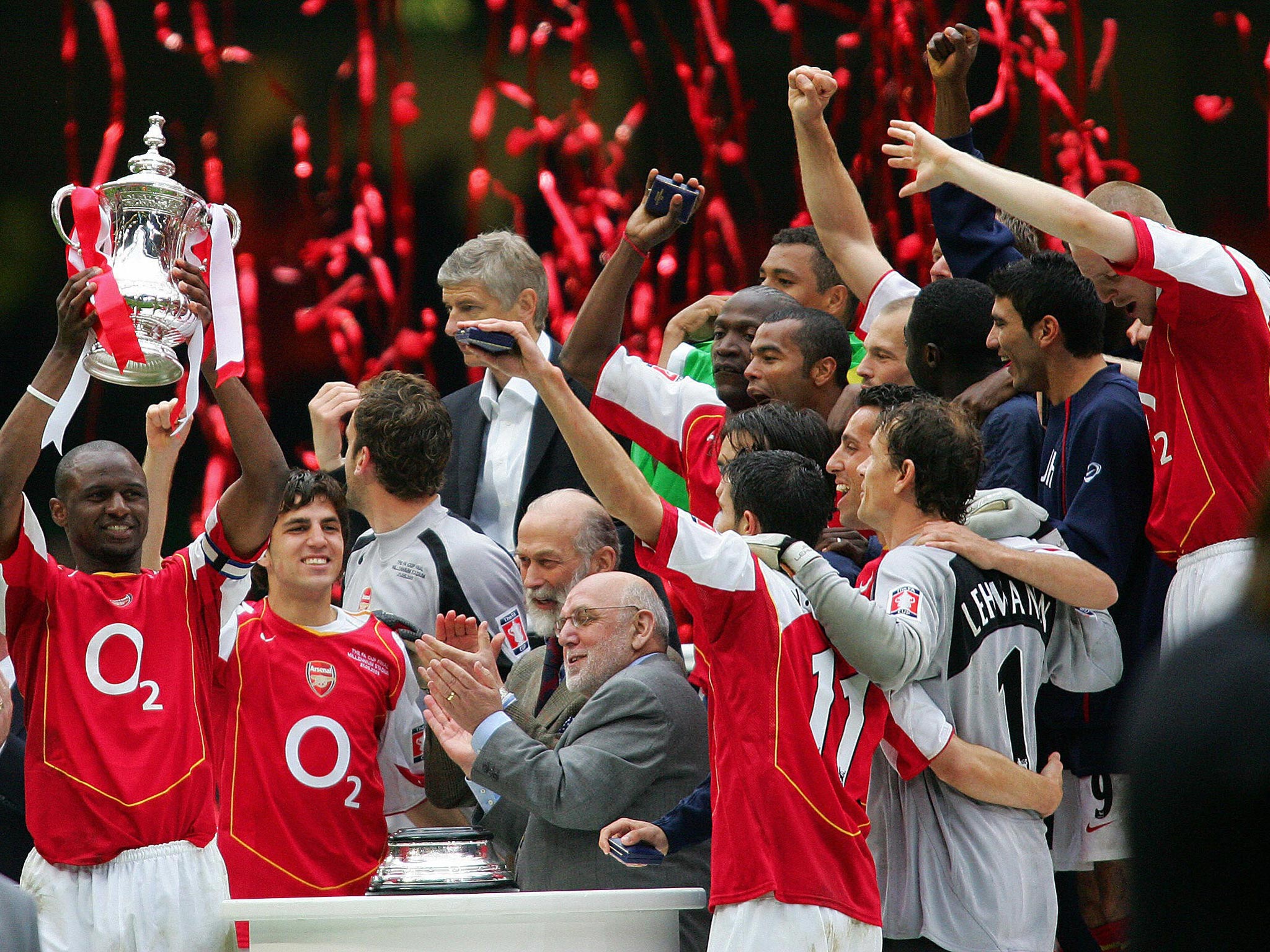
Arsenal Football Club is the most successful team in the history of the FA Cup, having secured a record 14 titles as of 2026. Their journey through the world’s oldest football competition is defined by era-defining managers, iconic goals at Wembley Stadium, and a unique cultural connection to a trophy that has often saved their seasons and cemented their legendary status in English football.
The FA Cup has been the backbone of Arsenal’s trophy cabinet for nearly a century. While league titles represent the grind of a long season, the FA Cup has provided the club with its most dramatic and emotional moments. From the first win under Herbert Chapman in 1930 to the tactical masterclass of Mikel Arteta in 2020, the "Gunners" have consistently found a way to navigate the complexities of knockout football. This journey is not just about the final matches but about the evolution of a club that transitioned from a regional side in Woolwich to a global powerhouse based in North London.
The Origins: From Woolwich to the First Finals
Arsenal’s relationship with the FA Cup began in the late 19th century when they were still known as Royal Arsenal. Their early entries into the competition were often short-lived, as the club struggled to compete with the professional powerhouses of the North. However, the move to Highbury in 1913 and the subsequent appointment of Herbert Chapman in 1925 changed the trajectory of the club forever.
Chapman viewed the FA Cup as a vital tool for building the club’s prestige. Before Arsenal became a dominant force in the league, they had to prove they could win on the biggest stage. Their first major final came in 1927, a match remembered for a tragic mistake by goalkeeper Dan Lewis that gifted Cardiff City the win. Rather than letting the defeat demoralize them, the club used it as a catalyst for the "Golden Era" of the 1930s.
The Herbert Chapman Era and the 1930s Dominance
The 1930 FA Cup Final remains one of the most significant matches in Arsenal’s history. Facing Huddersfield Town—the club Chapman had previously led to greatness—Arsenal secured a 2-0 victory at Wembley. This was the club’s first major trophy, and it signaled the beginning of a period where Arsenal became the "Team of the Decade."
Throughout the 1930s, Arsenal’s FA Cup journey was characterized by a revolutionary approach to tactics and fitness. Under Chapman, and later George Allison after Chapman's untimely death, Arsenal utilized the WM formation to devastating effect. They reached the final again in 1932 (losing controversially to Newcastle) and won it again in 1936 against Sheffield United. During this era, the FA Cup was arguably held in higher regard than the First Division title, and Arsenal’s success in the competition established them as the "Bank of England" club—wealthy, successful, and prestigious.
Post-War Resilience and the 1950 Triumph
Following the suspension of football during World War II, Arsenal had to rebuild. The 1950 FA Cup journey was a testament to the club's resilience. Led by manager Tom Whittaker, Arsenal reached the final to face Liverpool. The match is remembered for the performance of Reg Lewis, who scored both goals in a 2-0 win.
This victory was crucial because it proved that Arsenal could remain competitive in a changing footballing landscape. However, the 1950s and 1960s were largely a period of "near misses" and decline for the Gunners in the FA Cup. It wasn't until the arrival of Bertie Mee and a new generation of players that the club would once again reach the pinnacle of the competition.
The 1970s: The Double and the Five-Minute Final
The 1970-71 season remains etched in Arsenal folklore. The FA Cup journey that year culminated in a final against Liverpool, just days after Arsenal had secured the league title at White Hart Lane. The final went to extra time, where Charlie George scored one of the most iconic goals in the history of the competition—a long-range strike followed by his famous "lying on the grass" celebration. This win secured Arsenal’s first League and Cup "Double."
The late 1970s saw Arsenal reach three consecutive FA Cup finals (1978, 1979, and 1980), a remarkable feat of consistency. The most famous of these was the 1979 final against Manchester United, known as the "Five-Minute Final." After leading 2-0, Arsenal conceded two goals in the dying minutes, only for Alan Sunderland to score a dramatic winner in the 89th minute. This match perfectly encapsulates the high-stakes drama that has defined Arsenal’s journey in this tournament.
George Graham and the Defensive Masterclass of 1993
When George Graham took over in the mid-1980s, he instilled a "win at all costs" mentality built on a legendary back four. While Graham is often associated with the 1989 league title, his 1993 FA Cup campaign was historic. Arsenal became the first English club to win both the FA Cup and the League Cup in the same season.
The 1993 final against Sheffield Wednesday required a replay. In the final minute of extra time in the replay, central defender Andy Linighan rose to head home the winner despite having a broken nose. This victory epitomized the grit and determination of Graham’s Arsenal, showing that their FA Cup success was built as much on defensive solidity as it was on attacking flair.
The Wenger Revolution: Becoming the King of the FA Cup
The arrival of Arsène Wenger in 1996 fundamentally altered Arsenal’s FA Cup journey. Wenger viewed the competition as a platform for his brand of expressive, attacking football. Under his stewardship, Arsenal won the FA Cup seven times, making him the most successful manager in the competition's history.
The Early Successes (1998–2005)
Wenger’s first Double in 1998 included an FA Cup win over Newcastle United. This was followed by the 2002 Double, where Ray Parlour and Freddie Ljungberg scored spectacular goals against Chelsea in Cardiff. The 2003 win against Southampton and the 2005 victory over Manchester United (the first final decided by a penalty shootout) cemented Arsenal’s status as the dominant cup team of the early 2000s.
Ending the Trophy Drought (2014–2017)
After 2005, Arsenal went nine years without a trophy. The FA Cup was the competition that finally ended that drought. The 2014 final against Hull City was a rollercoaster; Arsenal fell 2-0 behind within eight minutes but fought back to win 3-2 in extra time thanks to an Aaron Ramsey goal.
Arsenal defended the title in 2015 with a 4-0 demolition of Aston Villa, and in 2017, they produced one of their best-ever Wembley performances to defeat a heavily favored Chelsea side 2-1. This 13th title moved Arsenal ahead of Manchester United as the outright record holders.
The 14th Title: Mikel Arteta and the Pandemic Final
In 2020, during a season interrupted by the COVID-19 pandemic, Mikel Arteta led Arsenal to their 14th FA Cup title. The journey included a semi-final victory over Manchester City and a 2-1 win over Chelsea in the final. Pierre-Emerick Aubameyang scored both goals in an empty Wembley Stadium. This victory was significant as it occurred during Arteta’s first season as a manager, reinforcing the idea that the FA Cup is intrinsically linked to Arsenal’s identity, regardless of the manager or the era.
Statistical Breakdown of Arsenal’s FA Cup Success
To understand the scale of Arsenal's achievement, it is helpful to look at the numbers behind their record-breaking journey.
| Category | Statistic | Details |
|---|---|---|
| Total Titles | 14 | Record holders (1930, 1936, 1950, 1971, 1979, 1993, 1998, 2002, 2003, 2005, 2014, 2015, 2017, 2020) |
| Total Final Appearances | 21 | Tied for most appearances in the final. |
| Most Successful Manager | Arsène Wenger | 7 Titles (Most by any manager in history). |
| Consecutive Wins | 2 | Achieved twice (2002–2003 and 2014–2015). |
| Most Goals in Finals | Multiple | Reg Lewis, Freddie Ljungberg, Pierre-Emerick Aubameyang (all scored 2+ in various finals). |
| Venues Won In | 3 | Old Wembley, Millennium Stadium (Cardiff), and New Wembley. |
Why Arsenal Dominates the FA Cup: A Technical Analysis
Arsenal’s consistent success in the FA Cup can be attributed to several factors that distinguish them from their rivals.
- Squad Depth and Rotation: During the Wenger era, Arsenal mastered the art of rotating the squad in the early rounds (3rd and 4th rounds) while still maintaining a high level of technical quality. This allowed key players to remain fresh for the semi-finals and finals.
- Tactical Versatility: Arsenal has won the cup playing various styles—from the rigid defensive discipline of George Graham’s "Boring, Boring Arsenal" to the expansive, possession-based game of Arsène Wenger and the transitional, counter-attacking style utilized by Mikel Arteta in 2020.
- Wembley Affinity: Arsenal has developed a "home away from home" relationship with Wembley. Their familiarity with the pitch dimensions and the occasion of a big cup day has often given them a psychological edge over opponents.
- Prioritization: While other "Big Six" clubs have occasionally treated the FA Cup as a secondary priority compared to the Champions League or the Premier League, Arsenal has historically viewed the competition as a vital path to success and a way to maintain a winning culture.
Key Figures in the Arsenal FA Cup Journey
- David Seaman: The goalkeeper’s miraculous save against Sheffield United in the 2003 semi-final is often cited as the greatest save in the competition's history.
- Patrick Vieira: He ended his Arsenal career by scoring the winning penalty in the 2005 final against Manchester United.
- Aaron Ramsey: The "Cup Final Specialist" who scored the winning goals in both the 2014 and 2017 finals.
- Ashley Cole: Although he later moved to Chelsea, Cole won three of his record seven FA Cup titles with Arsenal.
- Ian Wright: A crucial part of the 1993 success, scoring in both the original final and the replay against Sheffield Wednesday.
Common Challenges in the Modern FA Cup
Despite their record, Arsenal’s journey has not been without its struggles. In the modern era (leading up to 2026), the competition has faced challenges from the expansion of the Champions League and the financial dominance of state-owned clubs.
- The "Giant-Killing" Risk: Arsenal has occasionally fallen victim to lower-league opposition, such as the 2018 loss to Nottingham Forest or the 1992 defeat to Wrexham. These moments serve as a reminder that the FA Cup journey requires total focus regardless of the opponent's standing.
- Fixture Congestion: With the 2026 football calendar becoming increasingly crowded, managing player fatigue while pursuing a deep cup run has become more difficult for Arsenal managers.
FAQs About Arsenal's FA Cup Journey
How many times has Arsenal won the FA Cup?
As of 2026, Arsenal has won the FA Cup 14 times. Their first title came in 1930, and their most recent was in 2020. They hold the record for the most wins by any club in the history of the competition.
Who is Arsenal's most successful manager in the FA Cup?
Arsène Wenger is the most successful manager, not just for Arsenal but in the history of the competition, with seven titles. He led the club to victory in 1998, 2002, 2003, 2005, 2014, 2015, and 2017.
Has Arsenal ever won the FA Cup in consecutive years?
Yes, Arsenal has achieved "back-to-back" FA Cup wins twice. The first instance was in 2002 and 2003, and the second was in 2014 and 2015. Winning the trophy in consecutive years is a rare feat that highlights a period of sustained dominance in knockout football.
Which player has the most FA Cup medals with Arsenal?
Several players have won multiple medals, but Ashley Cole and Petr Cech hold high counts overall (though some were with other clubs). Regarding players who won them specifically during the Arsenal journey, players like Ray Parlour, Patrick Vieira, and Martin Keown are among the most decorated.
What was the most dramatic Arsenal FA Cup final?
The 1979 "Five-Minute Final" against Manchester United and the 2014 comeback against Hull City are widely considered the most dramatic. In 1979, the game saw three goals in the final five minutes, while in 2014, Arsenal had to overturn a two-goal deficit to end a nine-year trophy drought.
Conclusion and Next Actions for Fans
Arsenal’s journey in the FA Cup is a central pillar of the club’s heritage. It is a story of records broken, tactical revolutions, and a persistent ability to rise to the occasion at Wembley. For fans looking to engage further with this history, the Arsenal Museum at the Emirates Stadium offers an extensive collection of FA Cup memorabilia, including original medals and the trophies themselves.
As we move through the 2026 season, the FA Cup remains the most realistic and prestigious domestic cup target for the club. To follow the current journey, supporters should monitor the official FA Cup draw dates in early January, as the 3rd round remains the traditional starting point for Arsenal's perennial quest to extend their record to 15 titles.