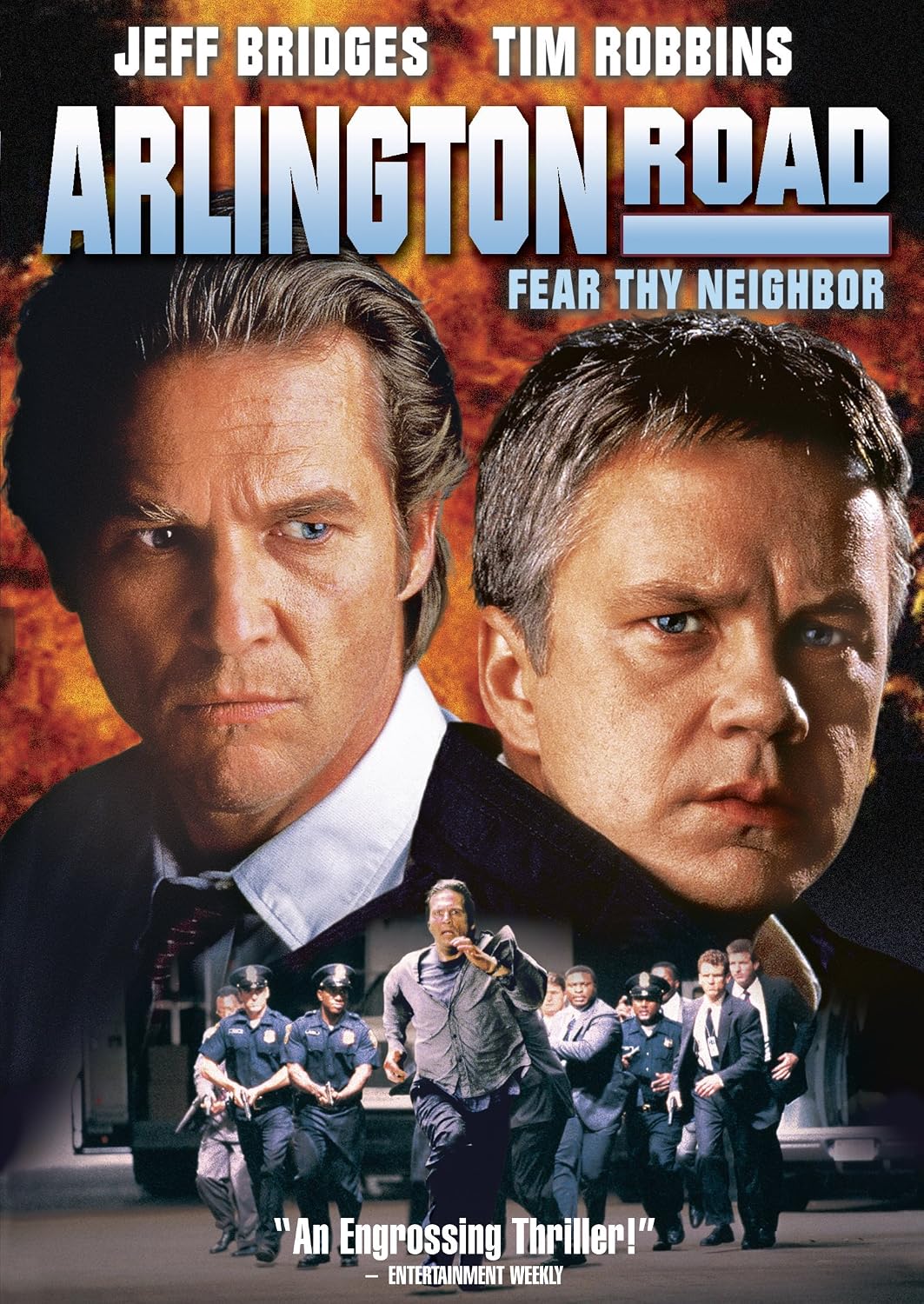
Arlington Road is a 1999 psychological thriller directed by Mark Pellington, starring Jeff Bridges as a paranoid professor and Tim Robbins as his seemingly perfect neighbor. The film is a chilling exploration of domestic terrorism and suburban anxiety, famously remembered for its subversive ending and its hauntingly accurate portrayal of extremist ideologies hiding in plain sight.
The Narrative Foundation of Arlington Road
To understand why Arlington Road remains a poignant piece of cinema even in 2026, one must first look at its narrative architecture. The story centers on Michael Faraday (Jeff Bridges), a widower and history professor at George Washington University. Faraday specializes in the study of American extremist groups, a subject that is deeply personal to him. His wife, an FBI agent, was killed in a botched raid on a separatist group—an event that mirrors real-life American tragedies like the Ruby Ridge siege or the Waco massacre.
Faraday lives a quiet life in a Virginia suburb with his young son, but his world is upended when he saves the life of a neighbor’s child. This act of heroism introduces him to the Langs: Oliver (Tim Robbins) and Cheryl (Joan Cusack). At first, the Langs appear to be the embodiment of the American dream—friendly, helpful, and community-oriented. However, Faraday’s expertise in domestic terrorism begins to color his perception of Oliver. What starts as a minor discrepancy in Oliver’s past—a lie about where he went to school—spirals into a full-blown obsession. Faraday becomes convinced that his neighbors are not who they claim to be, but are instead part of a sleeper cell planning a devastating attack.
The brilliance of the screenplay, written by Ehren Kruger, lies in the ambiguity of Faraday’s mental state. For much of the film, the audience is forced to wonder: Is Faraday a grieving man suffering from post-traumatic stress and projecting his fears onto innocent people, or has he truly discovered a monster living next door? This tension is the engine that drives the film toward its harrowing conclusion.
The Powerhouse Performances of Jeff Bridges and Tim Robbins
The success of a psychological thriller often rests on the shoulders of its lead actors, and Arlington Road features two of the finest performers of their generation at the height of their powers. The chemistry—or rather, the friction—between Jeff Bridges and Tim Robbins is what makes the film's central conflict so visceral.
Jeff Bridges as Michael Faraday
Jeff Bridges delivers a performance that is uncharacteristically frantic. Known for his "laid-back" persona in many roles, Bridges portrays Faraday as a man on the edge of a nervous breakdown. His physicality is jittery, his eyes are often bloodshot, and his speech is rushed. This portrayal is essential because it makes the audience doubt him. We see a man who is neglecting his son and his girlfriend (played by Hope Davis) in favor of scouring blueprints and tracking his neighbor’s movements. Bridges makes Faraday’s desperation palpable, turning him into a tragic figure whose intellect becomes his own worst enemy.
Tim Robbins as Oliver Lang
In contrast, Tim Robbins provides a masterclass in the "banality of evil." His portrayal of Oliver Lang is unnervingly calm. Robbins uses his tall, imposing frame to project a sense of paternal stability, yet there is a coldness behind his eyes that suggests a calculated mind at work. Unlike many movie villains who chew the scenery, Robbins plays Oliver as a man who is simply playing a role. He is the perfect neighbor, the perfect father, and the perfect friend. This makes his eventual confrontation with Faraday all the more terrifying because it reveals that the most dangerous threats are often the ones that look exactly like us.
Joan Cusack’s Supporting Turn
Special mention must be made of Joan Cusack. While Bridges and Robbins dominate the screen time, Cusack’s performance as Cheryl Lang adds a layer of suburban horror that is truly unique. She brings a "Stepford Wife" energy to the role, where a friendly smile can feel like a threat. One specific scene involving a chance encounter in a grocery store remains one of the most chilling moments in 1990s thriller history, proving that she was the perfect foil for Robbins.
Thematic Depth: Paranoia, Grief, and the Quiet Neighbor
As we examine the film from the perspective of 2026, its themes feel more relevant than ever. Arlington Road was released in a post-Oklahoma City bombing world but before the events of September 11, 2001. It captured a very specific American anxiety: the fear that the enemy is not "over there," but right here, in the heart of the suburbs.
The Anatomy of Paranoia
The film explores how paranoia can be a self-fulfilling prophecy. Michael Faraday’s trauma makes him hyper-vigilant, but it also isolates him. The movie asks whether being right is worth the cost of one's sanity and relationships. It challenges the viewer to define the line between healthy skepticism and obsessive conspiracy-theorizing—a line that has become increasingly blurred in the modern digital age.
The "Sleeper Cell" in Suburbia
The concept of the "sleeper cell" is handled with a grounded realism that eschews typical Hollywood tropes. The extremists in Arlington Road are not caricatures; they are organized, disciplined, and patient. They understand that the best way to hide is to blend in completely. The film suggests that the structures of suburban life—the anonymity of the commute, the privacy of the backyard, the politeness of the neighborhood association—are the perfect camouflage for those wishing to do harm.
Directorial Style and Visual Language
Director Mark Pellington, known for his background in music videos (including Pearl Jam’s "Jeremy"), brought a distinct visual style to Arlington Road. He avoided the flat, bright lighting common in late-90s dramas, opting instead for a palette that feels increasingly heavy and shadowed as the film progresses.
- Cinematography: The use of Dutch angles (canted frames) subtly signals Faraday’s world sliding off its axis. As his obsession grows, the camera work becomes more erratic, mirroring his internal state.
- The Score: Composed by Angelo Badalamenti, the music is a key component of the film’s atmosphere. Badalamenti, famous for his work with David Lynch on Twin Peaks, creates a soundscape of low-frequency hums and sudden, jarring orchestral swells that keep the audience in a state of perpetual unease.
- Editing: The pacing is deliberate. Pellington allows the first hour to breathe, focusing on character development and the building of trust (and mistrust) before accelerating into a high-speed third act that leaves the viewer breathless.
Comparing Arlington Road to Other Thrillers
To understand its place in cinematic history, it is helpful to compare Arlington Road with other films of its era. The late 90s were a "golden age" for psychological thrillers, but this film stood out for its refusal to follow the established rules of the genre.
| Feature | Arlington Road (1999) | Se7en (1995) | The Game (1997) |
|---|---|---|---|
| Primary Theme | Domestic Terrorism | Moral Decay | Loss of Control |
| Protagonist Motivation | Grief and Suspicion | Professional Duty | Boredom and Wealth |
| Visual Style | Suburban Gothic | Gritty Urban Noir | Sleek Corporate Noir |
| Ending Tone | Extremely Bleek/Subversive | Tragic/Inevitable | Twist/Redemptive |
| Villain Archetype | The "Ordinary" Neighbor | The Philosophical Zealot | The Shadowy Organization |
While Se7en is often cited as the pinnacle of the 90s thriller, Arlington Road is perhaps more disturbing because its horror is rooted in the mundane. There are no elaborate traps or "Seven Deadly Sins" motifs—only blueprints, rental trucks, and misplaced packages.
The Legacy of the Subversive Ending
No discussion of Arlington Road starring Tim Robbins and Jeff Bridges is complete without addressing its ending. Without revealing the specific mechanics for those who have yet to see it, it is safe to say that the film features one of the most daring and uncompromising finales in Hollywood history.
In an era where test screenings often forced directors to film "happy endings" or ensure the hero wins, Mark Pellington fought to keep the original vision of the script. The ending serves as a profound political statement about the vulnerability of a free society and the ease with which narratives can be manipulated. It transforms the movie from a standard thriller into a cautionary tale that lingers in the mind long after the credits roll. It is the reason the film is still studied in film schools in 2026; it serves as a masterclass in subverting audience expectations.
Why You Should Watch It in 2026
In 2026, we are more connected than ever, yet the themes of isolation and the "unknown neighbor" remain potent. The film’s lack of modern technology—no smartphones, no social media tracking—actually enhances the tension. Faraday has to do real, physical detective work, which makes his vulnerability feel more acute.
Furthermore, the performances have aged incredibly well. Jeff Bridges’ portrayal of a man losing his grip on his life is a career-best, and Tim Robbins’ chilling composure remains the gold standard for a specific type of cinematic villain. It is a film that demands multiple viewings; once you know the outcome, watching the interactions between the two men in the first act takes on a completely different, much darker meaning.
Practical Viewing Information
As of 2026, Arlington Road has undergone a significant 4K restoration, which is available on major streaming platforms and high-definition physical media. The restoration highlights Pellington’s specific color grading and provides a much clearer look at the intricate production design of the Langs' house, which is filled with subtle clues about their true nature.
- Look for the Director’s Cut: Some versions include expanded scenes between Bridges and Davis that further flesh out Faraday's deteriorating personal life.
- Audio Setup: This is a film that benefits from a high-quality sound system to fully appreciate Badalamenti’s haunting score.
- Parental Guidance: Due to its intense themes and a few scenes of violence, it remains a firm "R" rating and is recommended for mature audiences.
Frequently Asked Questions
Is Arlington Road based on a true story?
No, Arlington Road is a fictional story. However, it was heavily influenced by the atmosphere of the 1990s in the United States, specifically the rise of anti-government sentiment and domestic terrorist incidents like the Oklahoma City bombing in 1995. The character of Michael Faraday was specifically written to be an expert on these real-world events to ground the film in reality.
Why is the ending of the film considered so controversial?
The ending is considered controversial because it defies the traditional "Hollywood Hero" arc. Most thrillers end with the protagonist defeating the villain and uncovering the truth. Arlington Road takes a much darker path that emphasizes the power of the antagonist's planning and the tragedy of the protagonist's failure. It was a significant risk for a major studio film at the time.
What is the significance of the title "Arlington Road"?
The title refers to the street where the characters live, but it also serves as a metaphor for the "typical" American life. By placing the horror on a street with such a common, suburban-sounding name, the filmmakers suggest that these events could happen anywhere. Arlington is also a location deeply associated with American history and the military, adding another layer of irony to the domestic terrorism theme.
Does the film have any sequels or spin-offs?
There are no sequels or direct spin-offs of Arlington Road. The story is self-contained and its ending is so definitive that a sequel would likely undermine the impact of the original. However, its influence can be seen in many subsequent "neighbor from hell" thrillers and television series focused on domestic espionage and sleeper cells.
How did critics react to the film upon its initial release?
Initially, critics were divided, though the consensus has grown more positive over time. Some found the plot to be far-fetched at the time, while others praised the performances and the tension. In the years since, especially following real-world events that mirrored the film's themes, it has been re-evaluated as a visionary and ahead-of-its-time thriller.
Final Recommendation
If you are a fan of high-stakes psychological dramas that prioritize character and atmosphere over mindless action, Arlington Road starring Tim Robbins and Jeff Bridges is an essential watch. It is a haunting, intellectual exercise in suspense that refuses to give the audience an easy way out. To get the most out of the experience, try to go in with as little knowledge of the plot twists as possible, and pay close attention to the small details in Tim Robbins' performance. It is a film that will leave you looking at your own neighbors a little differently the next morning.