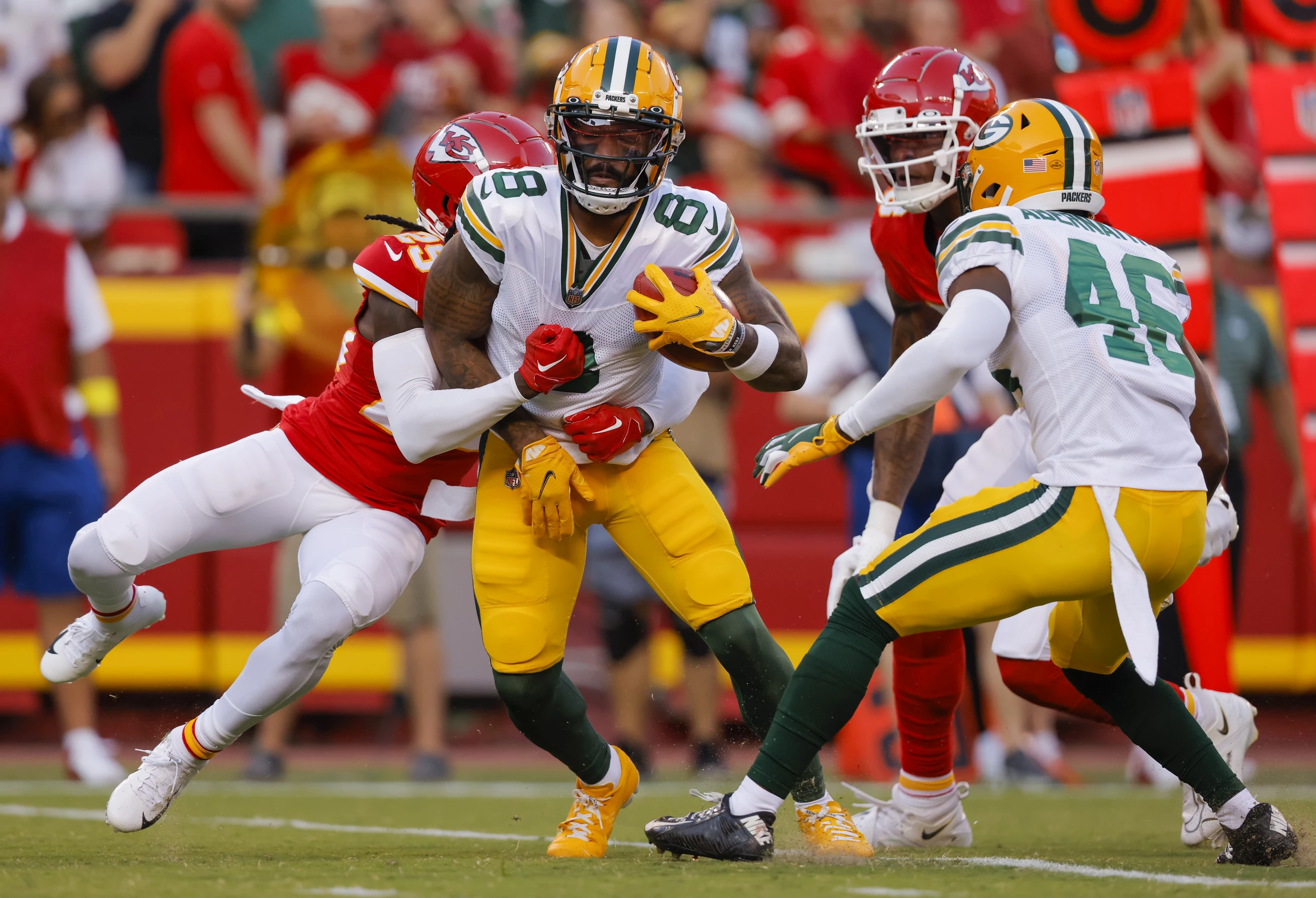
An arm shiver is a powerful football technique where a player uses their forearm and elbow in a sharp, upward or forward striking motion to deliver a blow to an opponent. Primarily utilized by linemen, the shiver aims to "shock" the opponent, disrupting their momentum and creating the separation necessary to shed a block or maintain a defensive gap.
The Biomechanics of a Successful Arm Shiver
The arm shiver is often misunderstood as a simple shove, but in the context of high-level football in 2026, it is a highly calibrated athletic movement. To define the arm shiver accurately, one must look at the kinetic chain required to execute it effectively. The power does not originate in the arm itself; rather, it begins with the feet and hips.
A player begins in a low, coiled stance. As the ball is snapped, they explode upward. The energy travels from the ground, through the legs, and into the hips. This "triple extension" (ankles, knees, and hips) provides the forward and upward thrust. As the player engages the opponent, they lead with the forearm—typically the meaty part of the ulna—keeping the elbow tucked close to the ribs.
The "shiver" occurs at the moment of impact. Unlike a sustained push, which allows an opponent to lean into the defender and maintain balance, the shiver is a momentary, violent transfer of force. By striking the opponent's chest plate or shoulder pads with the forearm, the player creates a jarring sensation that momentarily freezes the opponent’s feet. In technical coaching terms, this is often called "the shock." Without this shock, a lineman is merely wrestling; with it, they are controlling the point of attack.
Offensive vs. Defensive Applications
While the arm shiver is a tool available to any player on the field, its application varies significantly depending on which side of the ball the player occupies. The strategic goals of an offensive lineman and a defensive lineman are diametrically opposed, and the shiver reflects these differences.
The Defensive Lineman’s Shiver
For a defensive tackle or defensive end, the arm shiver is a tool of liberation. The primary goal of a defender is to "get off" the block. If a defender allows an offensive lineman to get their hands inside and "lock on," the defender loses their ability to pursue the ball carrier.
The defender uses the arm shiver to prevent that lock-on from happening. By striking the offensive lineman's chest with a forearm shiver, the defender creates enough space to then employ a secondary move, such as a "rip" or a "swim." In 2026, defensive coaches emphasize the "shiver and shed" progression. The shiver stalls the blocker, and the "shed" involves the defender using their hands to throw the blocker aside once the separation is established.
The Offensive Lineman’s Shiver
Offensive linemen use the shiver more conservatively, often as a "stunt-beater" or in pass protection. While offensive line play has shifted toward "the punch" (using the palms of the hands), the arm shiver remains a staple in tight-quarters blocking.
When an offensive guard is pulling or moving in space, an arm shiver allows them to clear a defender without needing to fully square up and engage in a traditional drive block. It is also used during "double teams." One lineman may deliver a heavy shiver to a defender to knock them off balance before moving to the second level to block a linebacker, leaving their teammate to finish the initial block.
Legal vs. Illegal: Navigating the 2026 Rulebook
Understanding the definition of an arm shiver requires a clear grasp of what is legal under modern officiating standards. As of 2026, player safety protocols—specifically those focused on head and neck trauma—have refined the boundaries of the arm shiver.
The "Hands to the Face" Boundary
The most common penalty associated with a poorly executed arm shiver is "Illegal Use of Hands" or "Hands to the Face." According to NFL Operations, a player may not make forceful contact with the helmet or facemask of an opponent. Because the arm shiver is an upward-moving strike, if the player’s forearm slides up from the chest plate and strikes the chin or the grill of the helmet, a 15-yard penalty is nearly certain.
The Difference Between a Shiver and a Punch
In the rulebooks for the NFL, NCAA, and NFHS, there is a strict distinction between a "shiver" and a "punch."
- A Shiver: Uses the forearm and is generally considered a blocking or shedding motion.
- A Punch: Involves a closed fist or a swinging motion of the arm aimed at striking the opponent.
If an official determines that the player swung their arm like a club or used a closed fist, the action is classified as "unnecessary roughness" or "fighting," which can lead to immediate ejection. The legality of the shiver relies on the arm remaining bent and the contact being made with the forearm, not the fist.
| Feature | Arm Shiver | Punch (Illegal) | Open-Hand Strike |
|---|---|---|---|
| Primary Surface | Forearm/Ulna | Closed Fist | Palms |
| Motion | Upward/Forward Thrust | Swinging/Hooking | Direct Extension |
| Primary Goal | Shock and Separation | Injury/Retaliation | Control and Leverage |
| Penalty Risk | Low (if below neck) | High (Ejection) | Minimal |
| Context | Lineman Engagement | Personal Foul | Pass Protection |
Historical Evolution of the Technique
The arm shiver has deep roots in the history of the sport, evolving from the "Head Slap" era. In the 1960s and 70s, players like Deacon Jones utilized the head slap to disorient offensive linemen. When the head slap was banned due to its dangerous nature, players pivoted to the chest-level arm shiver.
By the early 2000s, the technique became more refined. Coaches began teaching the "one-arm shiver," which allowed a defender to maintain a "free arm" to grab the ball carrier while using the other arm to hold off a blocker. In 2026, the technique has integrated elements of martial arts, focusing on the "unbalancing" of an opponent. Modern players are taught to target specific pressure points on the shoulder pads to maximize the leverage gained from a single strike.
Training and Drills: Mastering the Shiver
For athletes looking to implement the arm shiver, training must focus on both explosive power and technical precision. Because the move is high-impact, improper form can lead to injuries for both the initiator and the target.
The Sled Drill
The five-man sled remains the gold standard for teaching the arm shiver. Coaches look for:
- Lower Body Coil: The player must start in a three-point stance with a flat back.
- The "Pop": On the whistle, the player drives into the sled, leading with the forearm. The goal is to make the sled "chatter" or lift off the ground.
- The Recoil: After the strike, the player must immediately reset their hands to a defensive position. A shiver followed by "dead hands" is a failed rep.
Hand-Fighting Progressions
Advanced players practice the arm shiver in "half-line" drills. Here, the focus is on timing. If a defender throws the shiver too early, the offensive lineman can simply "parry" it. If they throw it too late, the blocker has already established position. The "sweet spot" is the moment the offensive lineman reaches out to engage; that is when the shiver is most effective at breaking the blocker's "bridge" (the extension of their arms).
Safety and Injury Prevention in 2026
Despite its effectiveness, the arm shiver carries inherent risks. From a medical perspective, the repetitive impact on the forearm can lead to chronic issues if not managed correctly.
Protecting the Ulnar Nerve
The ulnar nerve runs close to the surface near the elbow. A direct impact on this area during a shiver can cause "funny bone" sensations or, in chronic cases, ulnar neuropathy. High-level players in 2026 often wear specialized padded sleeves that provide a layer of high-density foam over the ulna to dampen the vibration of the strike.
Elbow and Shoulder Health
The sudden deceleration of the arm upon hitting a 300-pound opponent puts significant stress on the elbow joint and the rotator cuff. Coaches now emphasize "soft-tissue maintenance," including forearm rolling and eccentric strengthening of the triceps, to ensure the arm can withstand the thousands of shivers delivered over the course of a season.
Furthermore, the 2026 guidelines from the American Football Coaches Association (AFCA) emphasize that the head must be "kept out of the fight." Any arm shiver that involves the player dipping their head forward is corrected immediately to prevent cervical spine compression.
Frequently Asked Questions
Is the arm shiver legal in high school football?
Yes, the arm shiver is legal in high school football as long as the contact is made with the forearm and remains below the opponent’s neck. Players must avoid using a closed fist or a "clubbing" motion, which can be flagged as a personal foul.
How does an arm shiver differ from a "rip" move?
The arm shiver is a "power" move used to create initial separation, while the "rip" is a "finesse" or "leverage" move. Often, a defender will use an arm shiver first to knock a blocker back, then follow up with a rip move (uppercutting their arm under the blocker's arm) to fully pass them.
Why do some coaches prefer the "punch" over the "shiver"?
The "punch" (using the palms) generally allows for better finger control and "grabbing" within the framework of the jersey, which is essential for offensive linemen. The shiver is more of a "hit-and-run" technique, making it more popular for defensive players or pulling blockers who don't need to sustain a long-term engagement.
Can an arm shiver cause a concussion?
While the shiver is aimed at the chest, the resulting "whiplash" effect can cause a player's head to snap back, which carries a concussion risk. This is why 2026 rules are so strict about the height of the strike; keeping the blow on the chest plate minimizes the transfer of force to the brain.
What equipment helps with performing an arm shiver?
Beyond padded sleeves, modern shoulder pads are designed with "hitting hinges"—flexible sections over the deltoid that allow the arm to move freely through the shiver motion without the pads "riding up" and hitting the player in the chin.
Practical Recommendation for Players and Coaches
For players looking to add the arm shiver to their repertoire in 2026, the focus should be on timing over tension. Many young players make the mistake of tensing their arm muscles before the strike, which actually slows down the movement. Instead, the arm should remain relatively relaxed until the millisecond before impact.
Coaches should film their players from a side profile during drills to ensure the "elbow-to-ribs" connection is maintained. If the elbow "flares out" during the shiver, the player loses nearly 40% of their power and exposes their arm to injury. Master the "short-stroke" shiver—a strike that travels only six to eight inches but carries the full weight of the lower body—to become a dominant force on the line of scrimmage.