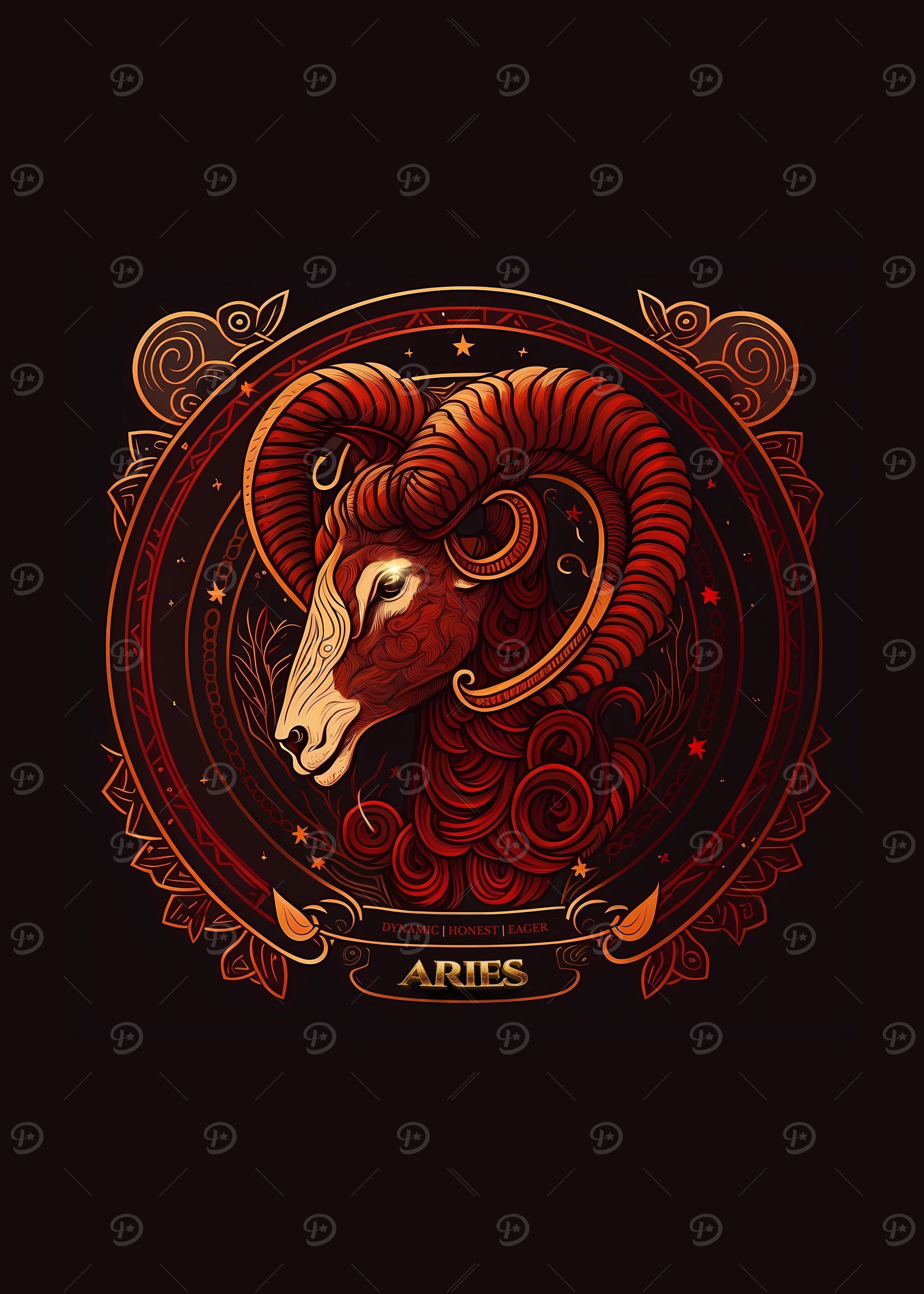
Aries is represented by the Ram, a male sheep characterized by its powerful, spiraling horns and assertive nature. While often confused with Capricorn, which is represented by the Goat (specifically the Sea-Goat), Aries holds a distinct position as the first sign of the zodiac, symbolizing new beginnings, fire, and the leadership of Mars.
For those navigating the complexities of astrology in 2026, the distinction between these two horned creatures is more than just a matter of biological classification. It represents a fundamental difference in elemental energy, planetary rulership, and the archetypal journey of the soul through the celestial wheel. To call an Aries a "goat" is to misidentify their core motivation, their mythological history, and their unique placement in the astronomical calendar.
The Mythological Origins of the Aries Ram
The association of Aries with the Ram is rooted deeply in Hellenistic and Babylonian traditions. In Greek mythology, the Ram is identified as the winged, golden-fleeced creature known as Chrysomallos. This divine being was sent by the nymph Nephele to rescue her children, Phrixus and Helle, from the machinations of their stepmother, Ino.
The story tells of the children escaping on the back of the Ram across the sea. While Helle unfortunately fell into the water (naming the Hellespont), Phrixus survived and was carried to Colchis. In gratitude, the Ram was sacrificed to Zeus and its Golden Fleece was preserved, later becoming the central object of the quest for Jason and the Argonauts. Zeus placed the Ram among the stars as the constellation Aries to honor its bravery and service.
This myth highlights the specific "Ram" qualities that define the sign:
- Heroism and Rescue: The Ram acts as a savior, moving swiftly to resolve a crisis.
- The Golden Fleece: Symbolizing something of immense value, rarity, and solar power.
- Sacrifice for a Greater Cause: The transition from a physical protector to a celestial guide.
Distinctive Physical and Symbolic Horns
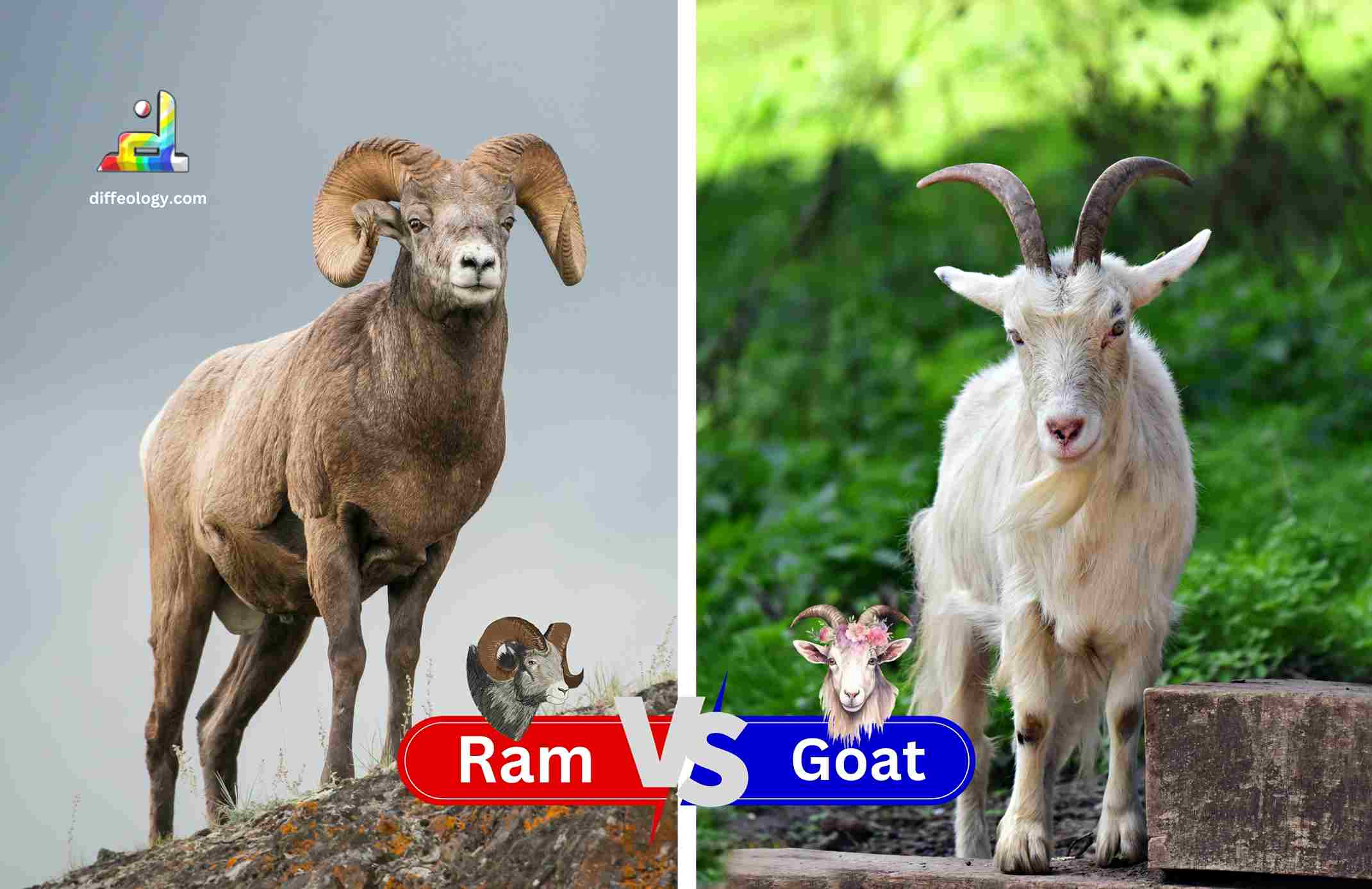
One of the primary reasons for the confusion between Aries and Capricorn is the presence of horns. However, the horns of a Ram and a Goat are structurally and symbolically different.
The Spiral of the Ram
Rams (Ovis aries) possess thick, heavy horns that typically grow in a downward and then upward spiral. These horns are used for "ramming"—a head-on collision that demonstrates dominance and strength. In astrology, the Aries glyph (♈) mimics the "V" shape of a ram’s face and the outward curve of its horns. This symbolizes the outward-moving, centrifugal force of the spring season and the "me-first" attitude of the first house.
The Scimitar or Twist of the Goat
Capricorns are represented by the Goat (Capra hircus), often the mythical Sea-Goat with the tail of a fish. Goat horns are generally more upright, scimitar-shaped, or tightly twisted (as seen in the Markhor). Goats are climbers, using their horns for defense while they navigate steep, treacherous terrain. The Capricorn glyph (♑) is far more complex, often incorporating the loop of a fish tail, representing the integration of emotional depth (the water) and material ambition (the mountain).
Comparing Aries and Capricorn
To resolve any remaining ambiguity, it is helpful to view the Ram and the Goat side-by-side. As of 2026, astrological practice continues to emphasize the "Cardinal" nature of both signs, yet their expressions remain polar opposites in many regards.
| Feature | Aries (The Ram) | Capricorn (The Goat) |
|---|---|---|
| Zodiac Position | 1st Sign (Beginning) | 10th Sign (Peak) |
| Element | Fire | Earth |
| Modality | Cardinal (Initiating) | Cardinal (Structuring) |
| Ruling Planet | Mars | Saturn |
| Anatomical Rule | The Head | The Knees, Bones, Teeth |
| Primary Goal | Self-assertion and Discovery | Achievement and Legacy |
| Season | Spring Equinox (Northern Hemisphere) | Winter Solstice (Northern Hemisphere) |
| Symbolic Action | Pushing forward/Charging | Climbing upward/Enduring |
Why the Distinction Matters in Astrology
The difference between a Ram and a Goat is the difference between impulse and strategy.
The Martian Energy of the Ram
Aries is ruled by Mars, the planet of war, action, and desire. The Ram does not wait for permission; it charges. This is the energy of the sprout breaking through the frozen soil in early spring. It is raw, unfiltered, and intensely focused on the "now." When we identify Aries as a Ram, we acknowledge this head-strong, pioneering spirit. A ram uses its head to clear obstacles, mirroring the Aries tendency to tackle problems head-on without overthinking the long-term consequences.
The Saturnian Energy of the Goat
Capricorn is ruled by Saturn, the planet of time, restriction, and mastery. The Goat is patient. It understands that the path to the summit is long and requires calculated moves. While the Ram might exhaust itself in a sprint, the Goat is built for the marathon. By confusing the two, one overlooks the "Earth" element of Capricorn—the need for stability and physical proof of success—versus the "Fire" element of Aries—the need for excitement and the thrill of the start.
The Astronomical Perspective: The Constellation Aries
In the night sky, the constellation Aries is relatively inconspicuous compared to its neighbors like Taurus or Leo. However, its historical significance in astronomy is unparalleled. For centuries, the "First Point of Aries" was the location of the Sun during the vernal equinox.
The Precession of the Equinoxes
Due to the Earth's axial precession, the vernal equinox has moved into the constellation of Pisces and is heading toward Aquarius. However, in Western Tropical Astrology, which is most commonly used in 2026, the sign of Aries is still fixed to the start of Spring. The constellation itself contains three prominent stars:
- Hamal (Alpha Arietis): The name is derived from the Arabic Al Hamal, meaning "the sheep" or "the ram." It is a yellow giant star that marks the head of the ram.
- Sheratan (Beta Arietis): Marking the "second horn," this star's name relates to a "sign" or "mark," historically signaling the beginning of the year.
- Mesarthim (Gamma Arietis): A beautiful binary star system that was one of the first discovered by telescope.
The very names of these stars, maintained by organizations like the International Astronomical Union, reinforce the identity of the constellation as a sheep or ram, never a goat.
Common Sources of Confusion
If the distinction is so clear in mythology and astronomy, why does the "Goat" label persist for Aries in casual conversation?
1. The "Horned Sign" Generalization
To the uninitiated, the zodiac contains three "horned" signs: Aries (Ram), Taurus (Bull), and Capricorn (Goat). Without looking closely at the iconography, many people lump them together as "horned animals." Because the word "Goat" has become a common colloquialism (e.g., G.O.A.T.), it is sometimes mistakenly applied to Aries, who certainly exhibits "greatest of all time" confidence.
2. The Babylonian "Hired Man"
In ancient Babylonian astronomy, the stars of Aries were originally associated with "The Hired Man" (Dumuzi the Shepherd). Over time, the shepherd became identified with his flock. By the time the Greeks formalized the zodiac, the "Hired Man" had been fully replaced by the Ram, but the early agrarian roots sometimes lead to confusion regarding which livestock animal was being depicted.
3. Translation and Language
In some languages, the words for "sheep," "ram," and "goat" share linguistic roots or are translated loosely in older texts. However, in modern English and standardized astrological practice, the nomenclature is strictly divided.
The Personality of the Ram: Archetypal Behavior
Understanding Aries as a Ram helps explain the psychological profile of people born under this sign (March 21 – April 19).
The "Head-First" Approach
Aries rules the head. This is why the Ram symbol is so apt; a ram’s primary tool and weapon is its skull. Aries individuals are known for being "headstrong." They often suffer from headaches or injuries to the face and head because they literally and figuratively lead with that part of their body. They don't look where they are going as much as they feel the direction they want to move and go there instantly.
Cardinal Fire: The Spark
As a Cardinal sign, Aries initiates. As a Fire sign, it burns with enthusiasm. The Ram represents the initial spark of life. If you watch rams in the wild, their interactions are brief, intense, and decisive. They do not spend days grazing in contemplative silence like the Capricorn goat might on a lonely cliffside. They are social, competitive, and highly energized.
Practical Guidance for 2026: Identifying Aries Correctly
If you are commissioning artwork, writing an astrological report, or purchasing a gift for an Aries in 2026, ensure you are using the correct iconography.
- Avoid: Cloven hooves that look too dainty, long "beards" (a goat trait), or thin, scimitar-style horns.
- Look for: Thick, curled horns (the "Aries curl"), a sturdier, more muscular build, and a profile that emphasizes the forehead.
- Color Palettes: Use reds, oranges, and metallic tones like iron (the metal of Mars), rather than the earthy browns and greys associated with Capricorn.
Frequently Asked Questions
Is Aries a male or female sign?
In traditional astrology, Aries is classified as a "masculine" or "diurnal" sign. This does not refer to the gender of the person born under the sign, but rather the nature of the energy, which is active, expressive, and outward-bound (yang), as opposed to receptive and inward-bound (yin).
Can an Aries have "goat-like" qualities?
While the primary symbol is the Ram, an individual's entire birth chart (the "natal chart") matters. If an Aries person has several planets in Capricorn or a prominent Saturn, they may exhibit the discipline and caution of a Goat. However, their core Sun sign essence remains the Ram.
Why is the Ram the first sign of the zodiac?
The zodiac begins with Aries because it coincides with the Vernal Equinox in the Northern Hemisphere—the moment when day and night are of equal length and the "triumph of light" begins. This represents the birth of the solar year, making the assertive, "infant" energy of the Ram the perfect symbol for the start of the cycle.
What is the difference between a sheep and a ram?
A ram is specifically an uncastrated male sheep. While all rams are sheep, not all sheep are rams. The zodiac sign specifically utilizes the ram because of its horns and its aggressive, territorial nature, which matches the influence of the planet Mars.
Does the "Golden Fleece" have a specific meaning for Aries?
Yes, it represents the "prize" or the "higher self" that the Aries must learn to protect or attain. It suggests that beneath the aggressive, sometimes brash exterior of the Ram lies something of immense spiritual and material value that must be handled with care.
How do I explain this to someone who thinks I'm a "Goat"?
You can simply explain that while both animals have horns, the Ram (Aries) is a fire sign that charges forward, whereas the Goat (Capricorn) is an earth sign that climbs upward. Tell them that Aries is about the "start" of the journey, while Capricorn is about the "summit."
Moving Forward with the Ram
The distinction between the Ram and the Goat is a foundational piece of astrological literacy. By recognizing Aries as the Ram, you honor its role as the pioneer of the zodiac—the brave, often impulsive leader who clears the path for the other eleven signs to follow. Whether you are studying the stars for personal growth or professional accuracy in 2026, keep the image of the spiraling horn and the golden fleece in mind. The Ram is not merely an animal; it is the celestial engine of initiative, powered by Mars and fueled by the fire of the first breath of spring.