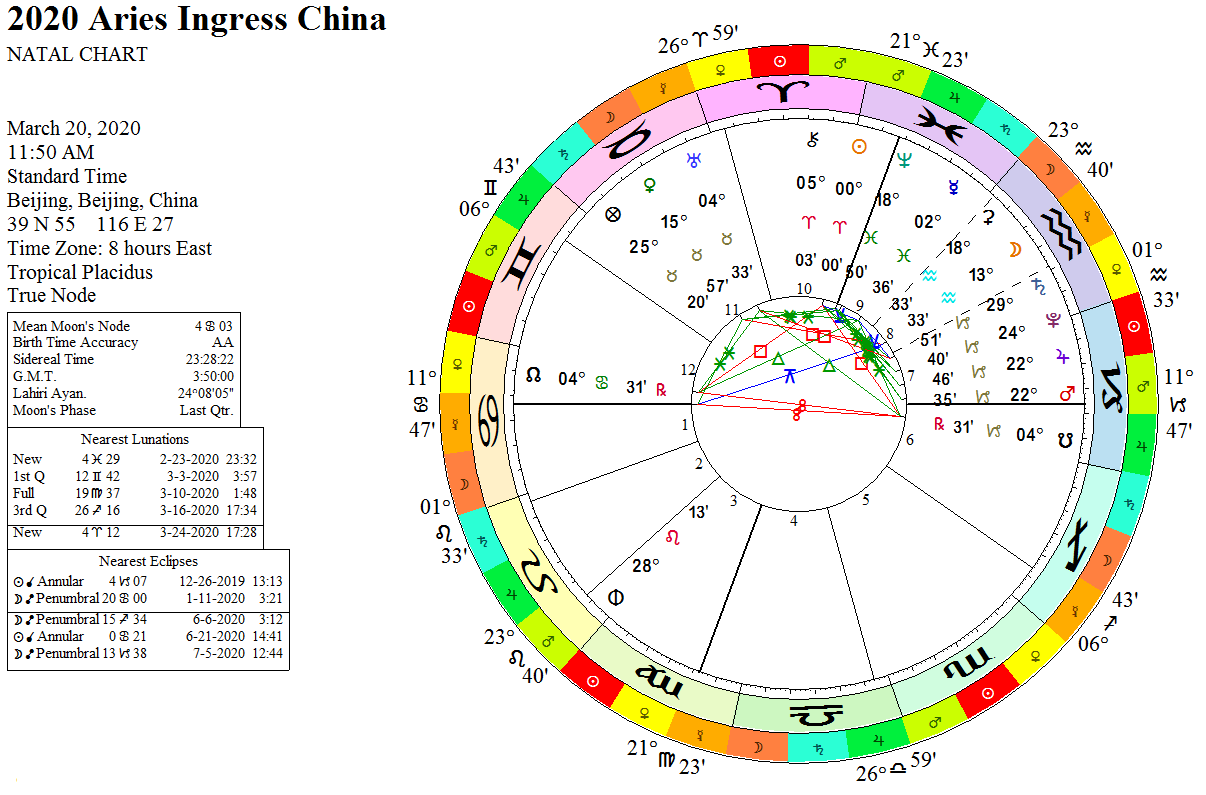
The Aries time period officially begins when the Sun reaches 0° longitude on the ecliptic, an event known as the Vernal Equinox. In 2026, this transition occurs on March 20 at approximately 14:46 UTC. While the traditional date range for the Aries sun sign is March 21 to April 19, the exact moment of ingress varies slightly each year due to the Earth's orbit.
Understanding the Solar Ingress into the First Sign
In the study of astrology and celestial mechanics, the "ingress" refers to the moment a celestial body enters a specific zodiacal sign. The most significant of these is the Sun's entry into Aries. Because Aries is the first sign of the zodiac in the Western Tropical system, this event marks the beginning of the astrological new year.
The relationship between the Sun and the "first sign" is defined by the intersection of two imaginary circles in the sky: the celestial equator and the ecliptic. The ecliptic is the path the Sun appears to take around the Earth over the course of a year. The celestial equator is an extension of Earth’s own equator into space. When the Sun crosses from the southern celestial hemisphere into the northern celestial hemisphere, it hits the 0° point of Aries.
This specific degree is historically and technically referred to as the "Vernal Point" or the "First Point of Aries." Even though the physical constellation of Aries has shifted away from this point due to astronomical precession, the tropical zodiac—used by the vast majority of Western practitioners—anchors the start of the Aries time period to this seasonal marker.
Precise Timing for the 2026 Aries Season
As we navigate the year 2026, it is essential to distinguish between the generalized "Aries season" and the precise astronomical moment the Sun enters the sign. For most of the 20th and 21st centuries, the Equinox has toggled between March 20 and March 21.
In 2026, the Sun makes its transit into the first sign on March 20. This begins a 30-day period where the Sun travels through the 30 degrees of Aries. The season concludes when the Sun enters Taurus, which in 2026 will occur on April 20.
| Event | Date (2026) | Time (UTC) | Technical Significance |
|---|---|---|---|
| Aries Ingress (Vernal Equinox) | March 20 | 14:46 | Sun hits 0° Aries; Day and night are equal. |
| Middle of Aries Season | April 4 | 02:30 | Sun hits 15° Aries; Peak Cardinal Fire energy. |
| Taurus Ingress | April 20 | 01:51 | Sun leaves Aries; End of the first sign period. |
The slight variation in these dates from year to year is the reason why individuals born on "the cusp" (the 19th, 20th, or 21st of March) must check a precise ephemeris or birth chart to determine their true sun sign. A person born on March 20, 2026, at 10:00 AM UTC would technically still be a Pisces, as the Sun has not yet hit the first sign.
The Mechanics of the Tropical Zodiac vs. Sidereal Constellations
One of the most frequent points of confusion regarding the Aries time period is the difference between the zodiac sign and the constellation. This distinction is vital for understanding why we say the Sun "hits the first sign" at the equinox.
The Tropical System
The Western zodiac is a "Tropical" system. It is defined by the relationship between the Earth and the Sun, specifically the seasons. In this system, 0° Aries is fixed to the Vernal Equinox. Regardless of where the stars are in the background, the moment the Sun crosses the celestial equator going north, it is in Aries. This system focuses on the energetic cycle of the solar year, where Aries represents the initial burst of spring (in the Northern Hemisphere).
The Sidereal System and Precession
The Sidereal zodiac, used primarily in Vedic astrology (Jyotish), aligns the signs with the actual physical constellations. Because of a phenomenon called the Precession of the Equinoxes, the Earth’s axis wobbles slowly over a 26,000-year cycle. This causes the equinox point to drift backward through the zodiac at a rate of about one degree every 72 years.
Currently, when the Sun hits the "First Point of Aries" (the equinox), it is actually physically located in the constellation of Pisces. In about 600 years, the equinox will move into the constellation of Aquarius. However, for the purpose of the Aries time period in Western astrology, we maintain the 0° Aries designation at the equinox to preserve the seasonal symbolism of the signs.
The Significance of Aries as the "First Sign"
Why is Aries considered the first sign, and why does the "astrological year" start now rather than on January 1st? The answer lies in the concept of the Cardinal Modality.
In astrology, signs are categorized by their "quality" or "modality": Cardinal, Fixed, or Mutable. Aries is a Cardinal sign, meaning it is a "starter" or an "initiator." Because it coincides with the spring equinox, it represents the moment life breaks through the soil after winter. It is the archetype of the seed cracking open.
The "Aries time period" is characterized by:
- Initiation: The drive to start new projects and assert individuality.
- Vitality: The Sun is "exalted" in Aries, meaning it functions with high efficiency and strength in this sign.
- The Id: Aries represents the "I Am" principle—the emergence of the ego and self-awareness.
This period serves as a global "reset." While the Gregorian calendar uses January 1st for civil and legal purposes, the solar-zodiacal calendar follows the natural rhythms of the Earth. Many ancient cultures, including the Babylonians and early Romans, celebrated the new year at the start of the Aries period because it aligned with the visible renewal of the natural world.
Calculating the Sun’s Movement: The Technical Ecliptic
To understand when the Sun "hits" the sign, we must look at ecliptic longitude. The ecliptic is divided into 12 equal segments of 30 degrees each.
- Aries: 0° to 30°
- Taurus: 30° to 60°
- Gemini: 60° to 90°
- And so forth through Pisces (330° to 360°/0°).
The Sun does not move at a perfectly uniform speed relative to our perspective on Earth because Earth's orbit is elliptical, not perfectly circular. This is why the Aries time period isn't exactly the same number of minutes and seconds every year. According to Kepler's Laws of Planetary Motion, Earth moves faster when it is closer to the Sun (perihelion) and slower when it is further away (aphelion). This slight variance means the Sun may spend roughly 29.5 days in some signs and over 30 days in others.
Common Myths About the Aries Transition
There are several misconceptions regarding the time the Sun spends in the first sign. Resolving these helps in accurately interpreting astronomical and astrological data.
Myth 1: The Sun enters Aries on March 21 every year
This is perhaps the most common error. Due to leap years and the fact that a solar year is approximately 365.24 days, the equinox shifts. As noted, in 2026, the ingress occurs on March 20. In some years, it can even occur on March 19 in certain time zones.
Myth 2: NASA "changed" the zodiac signs
Every few years, news reports surface claiming that NASA has discovered a "13th sign" (Ophiuchus) and that the dates have shifted. NASA's official position, as documented on their Space Place website, is that they study astronomy, not astrology. They correctly point out that the constellations have shifted relative to the signs due to precession, but this does not change the Aries time period for those using the Tropical zodiac, which is a mathematical division of the sky rather than a star-based one.
Myth 3: You are a "Cusp" sign
In technical astrology, there is no such thing as being "both" signs. The Sun is either at 29° 59' 59" Pisces or 0° 00' 01" Aries. The transition is instantaneous. While a person born during the hours of the transition may feel they share traits of both signs, the Sun can only be in one sign at a specific moment.
How to Verify the Aries Ingress Yourself
If you are a student of astronomy or astrology in 2026 and want to verify the exact time the Sun hits the first sign, you can use several professional resources:
- The Swiss Ephemeris: This is the gold standard for high-precision celestial calculations.
- The Multiyear Interactive Computer Almanac (MICA): Provided by the US Naval Observatory, this tool offers precise timings for equinoxes and solstices.
- Solar Fire or Astrolog: These are professional-grade software packages that calculate the ingress based on your specific geographic location and time zone.
When looking at these tools, look for the "Sun Ingress Aries" or the "March Equinox" data point. This will give you the exact minute the Sun achieves 0° 00' 00" of longitude.
Frequently Asked Questions
What time does the Sun enter Aries in 2026?
In 2026, the Sun enters Aries on March 20 at 14:46 UTC. Depending on your time zone, this may fall in the morning, afternoon, or evening. For example, in New York (EDT), this occurs at 10:46 AM on March 20.
Why is Aries called the first sign?
Aries is the first sign because its beginning point is anchored to the Vernal Equinox. In the Northern Hemisphere, where Western astrology was formalized, this is the start of spring—a time of rebirth and new beginnings. Historically, the zodiac was designed to mirror the agricultural and biological cycles of the year.
How long does the Aries time period last?
The Aries period lasts for approximately 30 days. It begins at the March Equinox and ends when the Sun reaches 30° of ecliptic longitude, at which point it enters Taurus. In 2026, this period runs from March 20 to April 20.
Does the Sun hit Aries at the same time for everyone?
The astronomical event happens at a single universal moment for the entire planet. However, the local clock time will differ based on your time zone. While it happens at 14:46 UTC, someone in Tokyo will experience the ingress at 11:46 PM, while someone in Los Angeles will experience it at 7:46 AM.
What is the "First Point of Aries"?
The "First Point of Aries" is the location of the Vernal Equinox in the sky. It is used as a reference point in celestial navigation and astronomy. Even though this point currently sits in the constellation of Pisces due to the Earth's axial precession, the name remains a legacy term from antiquity when the sign and constellation aligned.
Summary of Next Actions
To accurately track the Aries time period in 2026, you should first identify your local time zone's offset from UTC. Because the ingress occurs on March 20 at 14:46 UTC, most of the world will celebrate the start of the Aries season on that day. If you are calculating a birth chart or a specific event chart for this period, ensure you use topocentric coordinates to account for the exact moment of the Sun’s transit across the 0° mark. For those interested in the symbolic new year, the day of the equinox is the appropriate time to set intentions, reflecting the "cardinal" and "initiating" energy of the first sign.