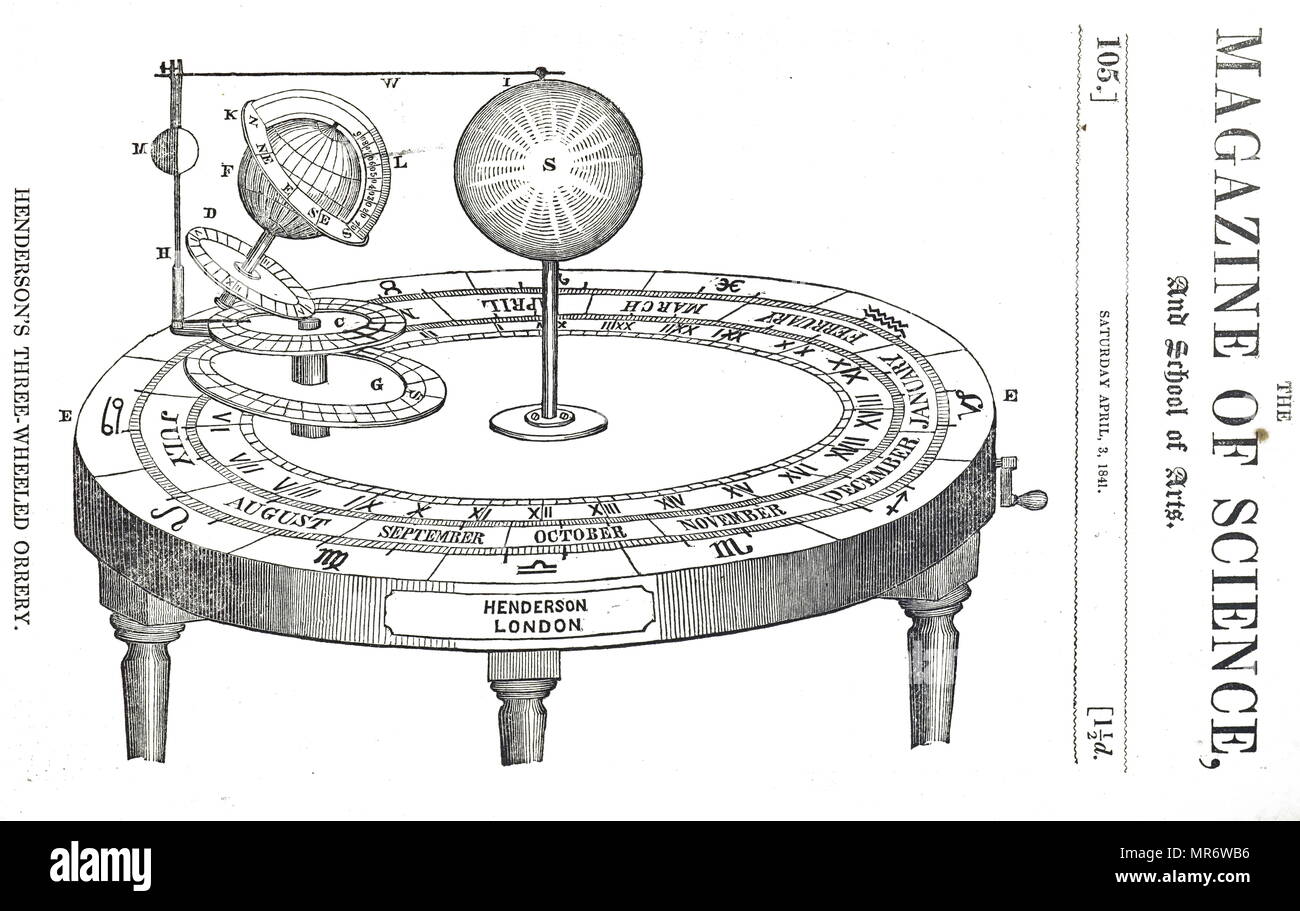
Aristarchus of Samos was a third-century BCE Greek astronomer and mathematician who first proposed that the Earth revolves around a stationary Sun. By using geometric calculations to estimate the relative sizes and distances of celestial bodies, he challenged the geocentric consensus of antiquity, establishing the conceptual foundation for the modern heliocentric model nearly 1,800 years before Nicolaus Copernicus.
The Intellectual Climate of Ancient Greek Astronomy
To understand the magnitude of Aristarchus’s contribution, one must first recognize the prevailing scientific paradigm of the 3rd century BCE. During this era, the "common sense" observation that the Sun, Moon, and stars moved across the sky led to the nearly universal adoption of the geocentric (Earth-centered) model. Scholars like Eudoxus and later Aristotle developed complex systems of homocentric spheres to explain the movement of celestial bodies, assuming the Earth remained fixed at the center of the universe.
Aristarchus emerged from the Ionian school of thought, which prioritized mathematical logic and physical observation over mythological explanation. While his predecessors had begun to suspect the Earth was spherical, the idea that the "hearth of the universe" was anything other than the Earth was considered radical, if not heretical. Aristarchus’s move toward heliocentrism was not merely a philosophical guess; it was a logical deduction derived from his efforts to measure the physical scale of the cosmos.
The Mathematical Foundation: On the Sizes and Distances
The only work by Aristarchus that has survived to 2026 is his treatise On the Sizes and Distances of the Sun and Moon. In this text, he does not explicitly argue for heliocentrism, but he provides the geometric proof that likely led him to that conclusion. He sought to determine the ratio of the distance between the Earth and the Moon to the distance between the Earth and the Sun.
The Half-Moon Observation
Aristarchus observed that when the Moon appears exactly half-illuminated (the first or third quarter phase), the Earth, Moon, and Sun form a right-angled triangle. By measuring the angle between the Sun and the Moon at this precise moment, he could use trigonometry (though formal trigonometry had not yet been fully developed) to calculate the distance ratio.
He estimated this angle to be 87 degrees. Using this figure, he calculated that the Sun was 18 to 20 times farther away from the Earth than the Moon is. In reality, the angle is approximately 89.85 degrees, and the Sun is about 400 times farther away. While his instruments were not precise enough to capture the true value, his methodology was mathematically sound.
Calculating Relative Volume
By combining his distance measurements with observations of lunar eclipses, Aristarchus estimated the sizes of the Sun and Moon relative to the Earth. He concluded that the Sun’s diameter was approximately 6.3 to 7.2 times that of the Earth. While modern data shows the Sun's diameter is roughly 109 times that of Earth, Aristarchus’s conclusion was revolutionary for its time: the Sun was significantly larger than the Earth.
It is widely believed among historians of science that this specific discovery—that the Sun is a massive body compared to the Earth—led Aristarchus to propose heliocentrism. It defied physical intuition that a massive object like the Sun would revolve around a much smaller object like the Earth.
The Heliocentric Hypothesis in "The Sand Reckoner"
While Aristarchus’s own volume on the heliocentric system is lost to history, we know of its existence through the writings of his contemporary, Archimedes. In his work The Sand Reckoner, Archimedes describes Aristarchus’s "hypotheses" in detail to calculate how many grains of sand would fit in the universe.
Archimedes records that Aristarchus proposed:
- The fixed stars and the Sun remain unmoved.
- The Earth revolves around the Sun in a circular orbit.
- The Sun lies at the center of this orbit.
- The sphere of the fixed stars is so large that the ratio of the Earth's orbit to the distance of the stars is comparable to the ratio of the center of a sphere to its surface.
This fourth point was an ingenious solution to the problem of stellar parallax. If the Earth moved, the positions of the stars should appear to shift relative to one another. Because no such shift was visible to the naked eye, critics argued the Earth must be stationary. Aristarchus countered by arguing the stars were simply so far away that any observable shift was negligible.
Comparison of Ancient Astronomical Models
The following table compares the defining characteristics of the Aristotelian geocentric model, the Aristarchan heliocentric model, and the modern scientific understanding as of 2026.
| Feature | Geocentric (Aristotle/Ptolemy) | Aristarchan Heliocentrism | Modern Astronomy (2026) |
|---|---|---|---|
| Central Body | Earth | Sun | Sun (Solar System center) |
| Earth's Motion | Stationary | Daily rotation & annual orbit | Daily rotation & annual orbit |
| Planetary Paths | Epicycles and Deferents | Circular Orbits | Elliptical Orbits |
| Stars | Fixed on a nearby sphere | Fixed on an immense sphere | Distant suns in a vast galaxy |
| Universe Size | Relatively small | Immense/Near infinite | Approximately 93 billion light-years |
| Primary Evidence | Sensory perception | Geometric distance ratios | Spectroscopy, GR, and Telemetry |
Why the Heliocentric Model Was Initially Rejected
Despite its mathematical elegance, the heliocentric model did not become the standard for nearly two millennia. Several factors contributed to its dismissal by the ancient world:
1. Lack of Observable Parallax
As mentioned, the inability to detect stellar parallax was the strongest scientific argument against Aristarchus. Without telescopes, it was impossible to see the minute shifts in stellar positions caused by the Earth’s orbit. Critics found it more plausible that the Earth was stationary than that the universe was so vast as to make the stars appear unmoving.
2. The Problem of Physics and Inertia
Ancient physics, particularly Aristotelian physics, suggested that heavy objects naturally moved toward the center of the universe (the Earth). If the Earth were moving at high speeds through space, people of the time argued that birds would be left behind, and a dropped stone would not fall straight down. The concepts of gravity and inertia were not yet understood.
3. Religious and Philosophical Opposition
Aristarchus faced significant cultural backlash. According to Plutarch, Cleanthes, a contemporary philosopher, suggested that Aristarchus should be charged with impiety for "disturbing the hearth of the universe." Moving the Earth from the center of the cosmos was seen by many as a subversion of the divine order.
The Legacy: From Samos to Copernicus
Aristarchus is often called the "Copernicus of Antiquity," but this title arguably undersells his originality. While Nicolaus Copernicus is credited with the Scientific Revolution, he was aware of Aristarchus’s work. In the original manuscript of De revolutionibus orbium coelestium, Copernicus specifically cited Aristarchus as a predecessor who believed in the Earth's motion, though he later deleted this reference before publication for reasons that remain debated by historians.
The revival of Aristarchus’s ideas during the Renaissance was facilitated by the preservation of Greek texts by Islamic scholars and later by the Byzantine diaspora. When telescopes were eventually developed in the 17th century, the detection of the phases of Venus and, eventually, stellar parallax in 1838 by Friedrich Bessel, finally provided the empirical proof that Aristarchus’s geometric intuition had been correct all along.
Technical Analysis of the Aristarchan Universe
Aristarchus’s model was the first to scale the universe into dimensions that transcended human experience. By suggesting the stars were "at an infinite distance," he was the first to recognize that the universe was orders of magnitude larger than previously imagined.
His use of the Method of Exhaustion and early geometric theorems allowed him to bound his results. For instance, in On Sizes and Distances, he used a series of propositions to prove that the Sun's diameter is greater than 18 times but less than 20 times the Moon's diameter. This level of rigorous bounding was the precursor to the limit-based thinking found in modern calculus.
Frequently Asked Questions
Did Aristarchus prove the Earth rotates on its axis?
Yes, Aristarchus proposed that the Earth rotates daily on its axis to explain the apparent motion of the stars at night. This was a significant departure from the geocentric view, which required the entire celestial sphere—an unimaginably large structure—to rotate around the Earth every 24 hours.
Why is Copernicus more famous than Aristarchus for heliocentrism?
Copernicus is more famous because he provided a complete, predictive mathematical model that could compete with the Ptolemaic system for calculating planetary positions. Aristarchus’s work was largely lost or treated as a mathematical curiosity, whereas Copernicus’s work arrived at a time when the printing press and the telescope were about to revolutionize the spread and verification of scientific ideas.
How did Aristarchus calculate the distance to the Sun?
He measured the angle between the Sun and Moon when the Moon was exactly half-full. He determined this angle to be 87 degrees. By treating the Earth, Moon, and Sun as three points of a right triangle, he used the cosine of 87 degrees to find the ratio of the distances. While his angle measurement was off by about 3 degrees, the geometric logic was flawless.
Was Aristarchus the first person to suggest the Earth moves?
He was the first to suggest the Earth orbits the Sun (heliocentrism). However, earlier thinkers like Philolaus (a Pythagorean) suggested the Earth moved around a "Central Fire" (not the Sun), and Heraclides of Pontus had suggested that the Earth rotates on its axis. Aristarchus was the first to synthesize these into a Sun-centered system.
What happened to Aristarchus’s other writings?
Most of Aristarchus's writings were lost during the various destructions of the Library of Alexandria and the general loss of ancient texts during the Middle Ages. We only know of his heliocentric theory because Archimedes, who was one of the few people capable of understanding Aristarchus's math, documented it in his own work.
Next Actions for Further Exploration
To truly appreciate the birth of heliocentrism, one should examine the geometric proofs in the surviving text On the Sizes and Distances of the Sun and Moon. Modern translations, such as those by Sir Thomas Heath, provide a step-by-step look at how Aristarchus used chords and triangles to map the sky. Additionally, visiting a planetarium or using modern astronomical software can help visualize the "parallax problem" that Aristarchus correctly identified but could not solve with the tools of his time. For those interested in the history of science, researching the works of Seleucus of Seleucia, the only known follower of Aristarchus in antiquity, provides insight into how these ideas briefly survived in the Hellenistic world before being overshadowed by Ptolemy.