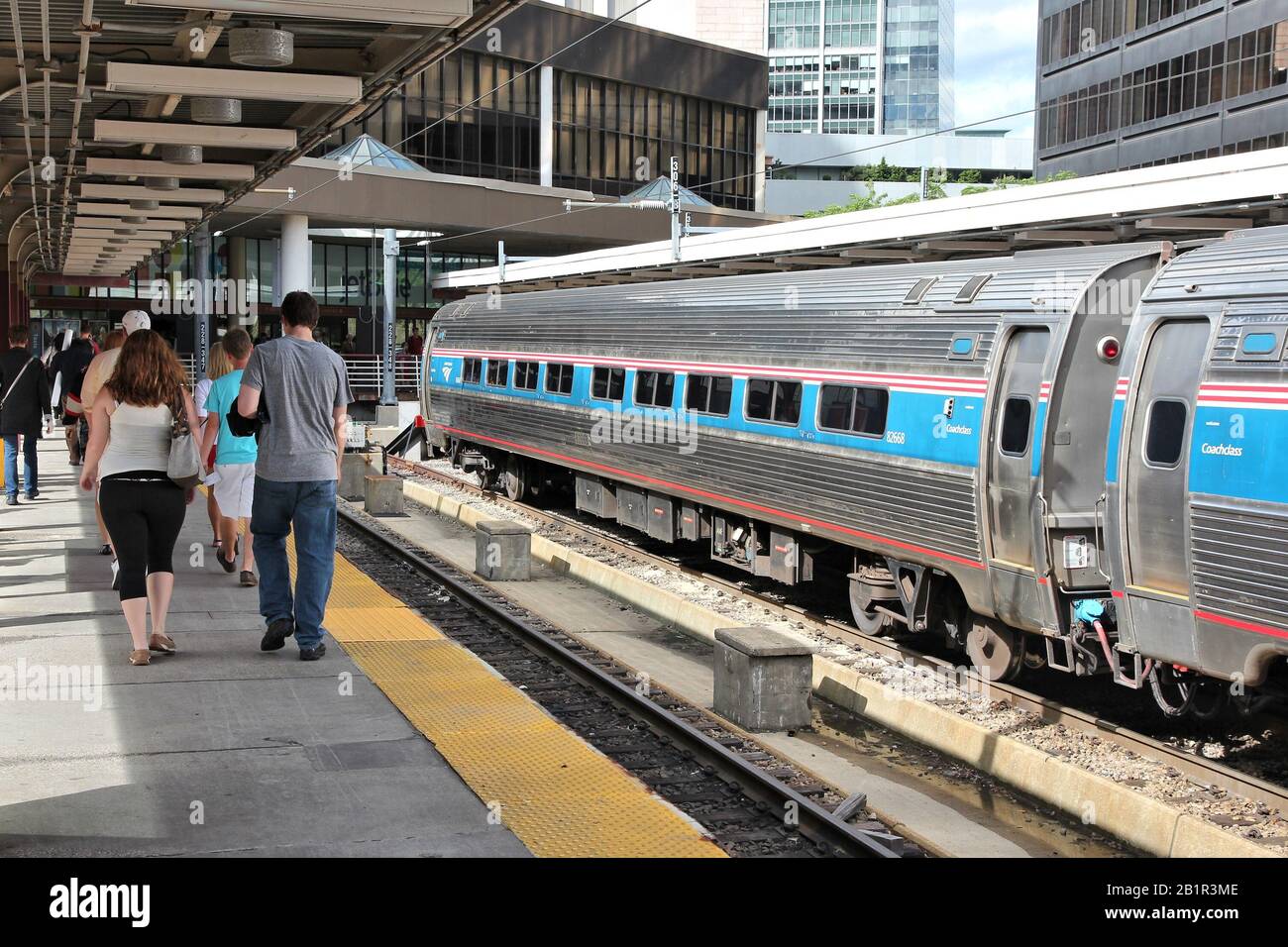
Traveling from Boston, Massachusetts, to New York City’s Moynihan Train Hall at Penn Station is one of the most efficient, scenic, and reliable ways to navigate the Northeast Corridor. Amtrak provides high-frequency service connecting South Station in Boston to the heart of Midtown Manhattan, offering travelers a seamless alternative to regional flights or the often-congested I-95 corridor. By leveraging the Northeast Regional or Acela services, passengers can navigate between these two major cultural and financial hubs with minimal stress, provided they understand the boarding procedures, fare structures, and station logistics.
Understanding the Route and Service Options
The rail connection between Boston and New York is part of Amtrak’s flagship Northeast Corridor (NEC) line. This route is unique in the United States for its high ridership volume and the variety of service levels available. When booking a trip from Boston South Station or Back Bay Station to New York Penn Station, you will generally choose between two primary train types: the Acela and the Northeast Regional.
The Acela Service
The Acela is Amtrak’s premium, high-speed train service. It is designed for business travelers and those prioritizing time efficiency. The Acela reaches higher top speeds over specific segments of the track and features fewer stops than the Northeast Regional. In 2026, the Acela experience continues to prioritize comfort, offering spacious seating with power outlets, adjustable lighting, and large tray tables. Business class is the standard, while First Class offers additional amenities, including complimentary meals served at your seat and access to exclusive lounge facilities at select stations.
The Northeast Regional Service
The Northeast Regional is the workhorse of the corridor. It is generally more affordable than the Acela, though it makes more station stops—such as Providence, New Haven, and Stamford—which adds time to the total journey. Despite the longer transit duration, it remains a highly competitive option. Features include Coach and Business Class seating, a Café Car serving snacks and beverages, and free Wi-Fi. For many travelers, the Northeast Regional provides the optimal balance between cost and convenience.
Station Logistics: Navigating Departures and Arrivals
Effective travel planning requires a clear understanding of the terminals at both ends of your journey.
Boston Departures
Most passengers depart from South Station, which serves as the primary hub for Amtrak, the MBTA Commuter Rail, and bus lines in Boston. Alternatively, many trains also stop at Back Bay Station. Back Bay is often more convenient for travelers located in the Back Bay, Copley Square, or Fenway areas. It is essential to check your ticket carefully, as the departure time is specific to the station selected. Both stations offer clear signage and multiple transit connections, but it is recommended to arrive at least 30 minutes before your scheduled departure to navigate the platform layout.
Arrival at Moynihan Train Hall
In New York City, Amtrak service terminates at the Moynihan Train Hall, which is part of the larger Penn Station complex. Moynihan Train Hall, housed in the historic James A. Farley Building, offers a modern, airy terminal experience that contrasts with the traditional underground concourse of the older Penn Station.
Upon arrival, passengers have immediate access to:
- NYC Subway Lines: Easy underground access to the A, C, E, 1, 2, and 3 trains.
- Taxi and Rideshare: Dedicated pickup zones managed to reduce congestion.
- Connectivity: The hall features ample seating, dining options, and high-speed transit information displays.
Cost Considerations and Booking Strategies
Amtrak utilizes a demand-based pricing model, similar to airline ticketing. The price of your ticket from Boston to New York will fluctuate based on several factors, including how far in advance you book, the time of day, and the day of the week.
Fare Buckets and Flexibility
- Value Fares: These are the most economical tickets, usually available if you book several weeks or months in advance. These tickets are often non-refundable but may be exchanged for eVouchers.
- Flexible Fares: These provide the highest level of freedom, allowing for full refunds or penalty-free changes. If your travel plans are subject to sudden shifts, this is the recommended tier.
- Business Class Upgrades: On the Northeast Regional, upgrading to Business Class provides guaranteed seating, extra legroom, and a 25% bonus on Amtrak Guest Rewards points.
| Feature | Northeast Regional | Acela |
|---|---|---|
| Primary Focus | Value & Reliability | Speed & Premium Comfort |
| Top Speed | 125 mph | 150 mph |
| Seating Classes | Coach, Business | Business, First |
| WiFi Access | Included | Included |
| Avg. Transit Time | 4 hours, 15 minutes | 3 hours, 45 minutes |
Essential Travel Requirements and Procedures
To ensure a smooth journey, familiarize yourself with Amtrak’s operational policies as they stand in 2026.
Baggage Allowance
Passengers are permitted to bring two personal items and two carry-on bags at no additional charge. Unlike air travel, there is generally no weighing of bags, provided you can handle them yourself. However, all luggage must be stored in the overhead racks or designated luggage towers at the ends of the train cars. Large or specialized items, such as bicycles or musical instruments, may require prior reservation or adherence to specific storage guidelines.
Identification and Tickets
While Amtrak does not require a formal security screening process like the TSA, you must carry a valid government-issued photo ID. You should have your ticket ready either in the Amtrak mobile app or printed as a physical document. Conductors scan tickets while the train is in motion, so there is no need to present your ticket at a gate, though you should be at your boarding platform a few minutes before the scheduled arrival.
Pet and Service Animal Policies
Amtrak has a specific policy for small pets on the Northeast Corridor. Small dogs and cats (up to 20 pounds, including the carrier) are permitted on most trains for a small additional fee. It is mandatory to book the pet spot in advance, as there is a limit on the number of animals allowed per train. Service animals are permitted on all trains at no additional charge and do not require a reservation, though they must remain under the owner’s control at all times.
Improving the On-Board Experience
The train ride between Boston and New York is famous for its scenic views, particularly as the tracks wind along the Connecticut shoreline. To maximize your comfort:
- Seating Selection: If traveling on the Acela or in Business Class on a Regional, you can select your seat in advance via the Amtrak app. If you prefer quiet, check the train configuration to see if there is a "Quiet Car."
- Connectivity: While onboard Wi-Fi is provided, it is optimized for browsing and email, not high-bandwidth streaming. Downloading movies or large files prior to departure is recommended.
- Dining: The Café Car offers a variety of hot and cold options. However, passengers are permitted to bring their own food and non-alcoholic beverages onto the train, which can be a cost-effective strategy for longer trips.
Troubleshooting Common Issues
Despite the efficiency of the Northeast Corridor, operational delays can occur. Common issues include:
- Track Work: Infrastructure maintenance can occasionally lead to speed restrictions. Check the "Service Alerts" section on the Amtrak website or app 24 hours before your trip.
- Station Confusion: Boston has multiple commuter rail hubs. Ensure you are at the correct station (South Station or Back Bay) to avoid missing your connection.
- Booking Errors: If you need to change your travel date, do so as early as possible through the "Modify Trip" feature in the Amtrak portal. Last-minute changes often result in higher fare differences.
Frequently Asked Questions
Is it cheaper to fly or take the train from Boston to NYC?
When you account for the cost of airport transfers, the time spent in security lines, and the baggage fees associated with short-haul flights, the train is frequently the more economical and efficient choice. The train delivers you directly to the city center, saving the time and expense of a commute from JFK, LaGuardia, or Newark.
Can I use my phone to board the train?
Yes. Amtrak’s mobile app generates a QR code that serves as your ticket. Simply have this displayed on your screen when the conductor walks through the aisle to scan tickets.
How much luggage can I bring on an Amtrak train?
You are allowed two personal items (up to 25 lbs each) and two carry-on bags (up to 50 lbs each). If you have more than this, you may need to look into checked baggage services if available at your departure/arrival stations, though many NEC stations do not offer checked baggage.
Does the train have power outlets?
Yes. Every seat on the Northeast Regional and Acela is equipped with standard power outlets. It is wise to bring a portable charger as a backup, but you will generally be able to keep your devices powered throughout the journey.
Are the trains ever sold out?
Yes, especially on Friday afternoons, Sunday evenings, and during major holidays. Because Amtrak uses dynamic pricing and capacity management, prices rise as the train fills up. Booking your travel at least two weeks in advance is the best way to secure your preferred departure time and a lower fare.
What happens if I miss my train?
If you hold a Flexible fare, you can generally move your ticket to a later train at no extra cost, provided seats are available. If you hold a non-refundable Value fare, you may be required to pay a fee to change your ticket or potentially forfeit the fare if you do not cancel before the train departs.
Final Recommendations for Your Trip
To ensure your journey from Boston to New York Penn Station is as smooth as possible, prioritize booking your travel at least two to four weeks in advance to capture the best pricing. Download the Amtrak app to your smartphone and enable push notifications for your specific train number; this ensures you receive real-time updates regarding platform assignments and any potential service disruptions.
Upon arriving at South Station, locate the large digital departure boards to verify your platform number, as these are often assigned only 10–15 minutes before the train arrives. Finally, if you are planning to utilize the New York City subway upon arrival at Moynihan Train Hall, ensure you have a contactless payment method—such as a credit card or mobile wallet—ready for the OMNY fare payment system, which has replaced traditional ticket kiosks. With these logistics managed, you can enjoy a productive or relaxing journey through the heart of the Northeast.