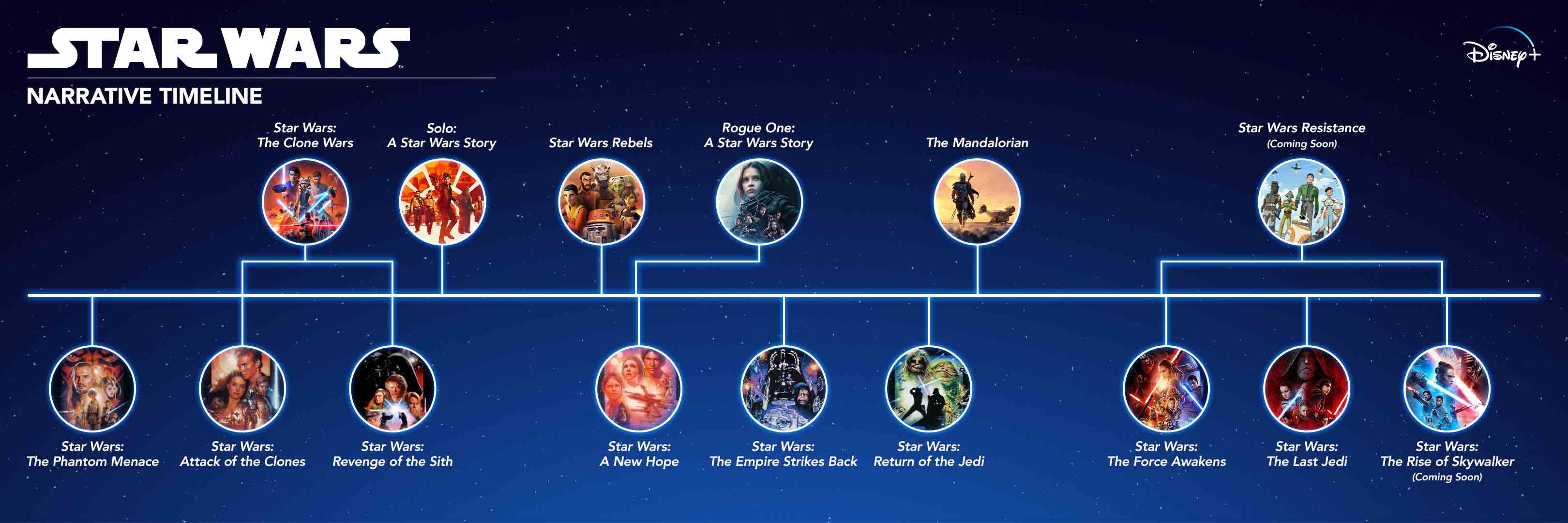
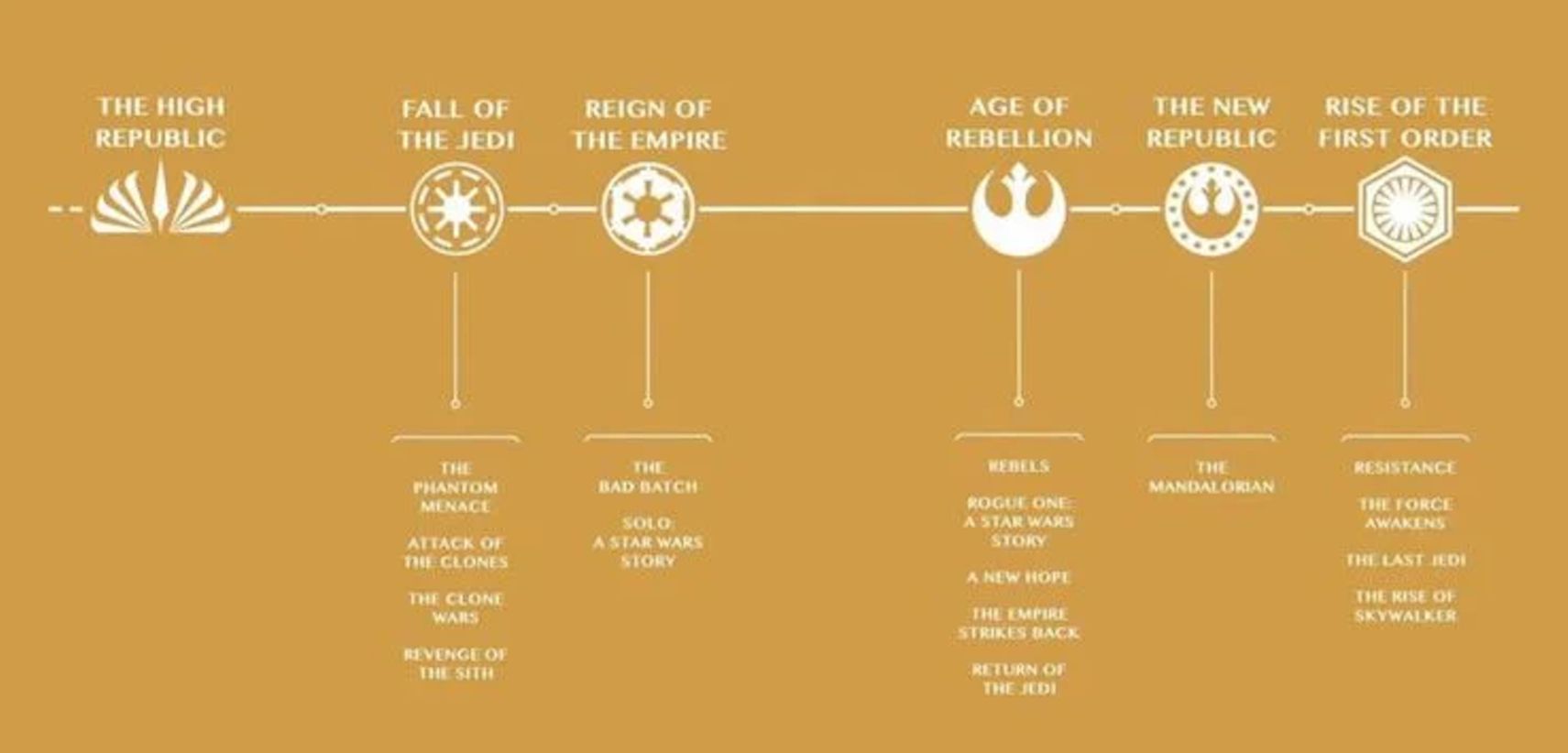
To watch the Star Wars saga in chronological order, you must follow the timeline of the galaxy's history, measured by the Battle of Yavin (BBY/ABY). The sequence begins with the High Republic era (The Acolyte), moves through the Prequel Trilogy and the Clone Wars, traverses the Imperial era (Andor, Rebels, Rogue One), covers the Original Trilogy, explores the New Republic (The Mandalorian, Ahsoka), and concludes with the Sequel Trilogy.
Understanding the chronological progression of Star Wars is essential for grasping the complex political shifts, the evolution of the Jedi Order, and the multi-generational Skywalker legacy. While the films were released out of order over nearly five decades, a chronological viewing provides a linear perspective on how a democratic Republic transformed into a fascist Empire and how a New Republic struggled to maintain peace against the rising First Order.
Understanding the Star Wars Dating System: BBY and ABY
Before diving into the specific media, it is necessary to understand how time is measured in the Star Wars universe. The central fixed point is the Battle of Yavin, the climactic conflict in A New Hope where the first Death Star was destroyed.
- BBY (Before the Battle of Yavin): This covers everything leading up to the destruction of the first Death Star. Years count backward; for example, 32 BBY (the start of the Prequels) occurs before 19 BBY (the end of the Prequels).
- ABY (After the Battle of Yavin): This covers everything following the victory at Yavin. Years count forward; for example, the events of The Mandalorian take place around 9 ABY, while the Sequel Trilogy begins in 34 ABY.
Using this calendar allows fans to precisely place every book, comic, television show, and film within a cohesive narrative framework.
The Era of the High Republic (c. 100 BBY)
The earliest point in the filmed "live-action" and "animated" canon currently sits in the twilight of the High Republic. This was a golden age for the Jedi and the Galactic Republic, characterized by expansion, exploration, and a Jedi Order that was at the height of its cultural and spiritual influence.
The Acolyte
Set approximately 100 years before The Phantom Menace, The Acolyte serves as the chronological starting point for the visual media. It explores the emergence of dark side powers in a galaxy that believes the Sith have been extinct for a millennium. This series provides critical context for how the Jedi Order's internal politics and relative complacency began to settle in long before the arrival of Anakin Skywalker.
The Prequel Era: The Fall of the Republic (32 BBY – 19 BBY)
The Prequel era focuses on the erosion of democracy and the rise of Darth Sidious. This period is defined by the transition from a period of relative peace to the total mobilization of the galaxy for the Clone Wars.
Star Wars: Episode I – The Phantom Menace (32 BBY)
The story begins here with the discovery of Anakin Skywalker on Tatooine and the subtle return of the Sith. It establishes the "Rule of Two" and introduces the political deadlock of the Galactic Senate that Palpatine exploits to gain power.
Star Wars: Episode II – Attack of the Clones (22 BBY)
Set ten years after The Phantom Menace, this film marks the beginning of the Clone Wars. The Jedi are forced into roles as military generals, a fundamental shift that contributes to their eventual downfall.
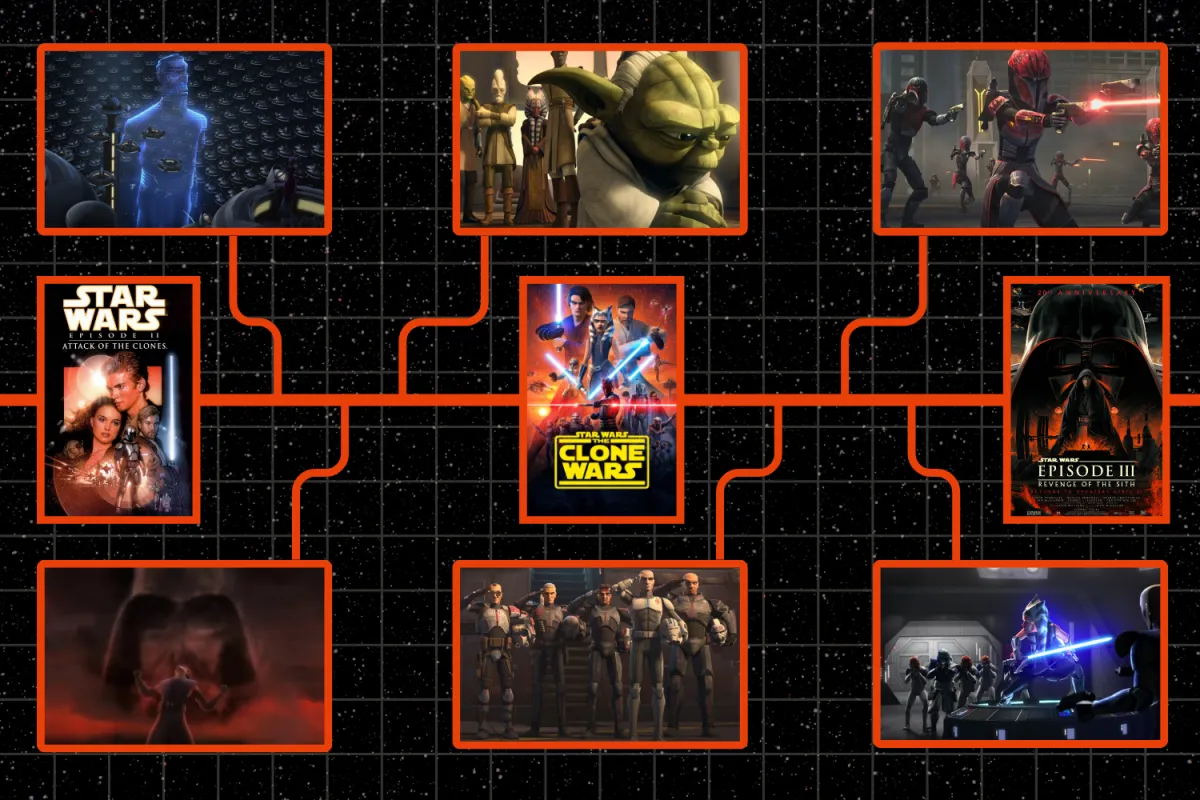
Star Wars: The Clone Wars (22 BBY – 19 BBY)
This encompasses the feature film and the seven-season animated series. Chronologically, this is the most dense period of Star Wars history. It bridges the gap between Episodes II and III, detailing the growth of Ahsoka Tano, the increasing darkness within Anakin, and the humanization of the Clone troopers. For the most accurate experience, some fans follow a specific "episode-by-episode" chronological list, as the early seasons were released as an anthology.
Star Wars: Episode III – Revenge of the Sith (19 BBY)
The climax of the Prequel era. It depicts the final days of the Clone Wars, the execution of Order 66, the transformation of Anakin into Darth Vader, and the birth of the Galactic Empire.
The Reign of the Empire: The Dark Times (19 BBY – 0 BBY)
Following the fall of the Republic, the galaxy entered a period often referred to as the "Dark Times." During this nearly 20-year span, the Empire consolidated power, hunted the remaining Jedi, and faced the first sparks of organized rebellion.
Star Wars: The Bad Batch (19 BBY – c. 15 BBY)
Picking up immediately after Order 66, this animated series follows an elite squad of clones. It provides essential lore regarding the transition from clones to conscripted Stormtroopers and the early stages of the Empire’s cloning projects, which have long-term implications for the Sequel era.
Solo: A Star Wars Story (c. 13 BBY – 10 BBY)
This film explores the origins of Han Solo, Chewbacca, and Lando Calrissian. It illustrates the lawlessness of the outer rim during the Empire's ascendancy and introduces the criminal syndicate Crimson Dawn.
Obi-Wan Kenobi (9 BBY)
Set ten years after Revenge of the Sith, this series focuses on Kenobi’s exile on Tatooine and his brief emergence to save a young Leia Organa. It bridges the emotional gap between the Prequel and Original versions of Obi-Wan and Darth Vader.
Andor (5 BBY – 0 BBY)
A gritty, political thriller that details how the disparate rebel cells began to coalesce into the Rebel Alliance. It focuses on Cassian Andor and the high-stakes espionage required to challenge the Imperial bureaucracy.
Star Wars Rebels (5 BBY – 0 BBY)
This animated series spans the five years leading up to A New Hope. It introduces the "Ghost" crew and delves into the mystical aspects of the Force while showing the official formation of the Rebellion under leaders like Mon Mothma.
Rogue One: A Star Wars Story (0 BBY)
The events of Rogue One lead directly into the opening minutes of A New Hope. It tells the story of the mission to steal the Death Star plans, emphasizing the sacrifice required to give the Rebellion a fighting chance.
The Rebellion Era: The Original Trilogy (0 BBY – 4 ABY)
The Original Trilogy is the heart of the franchise, focusing on Luke Skywalker's journey to become a Jedi and the ultimate defeat of the Galactic Empire.
- Star Wars: Episode IV – A New Hope (0 BBY/0 ABY): The destruction of the first Death Star.
- Star Wars: Episode V – The Empire Strikes Back (3 ABY): Set three years later, featuring the Battle of Hoth and the revelation of Luke’s parentage.
- Star Wars: Episode VI – Return of the Jedi (4 ABY): The Battle of Endor, the death of Emperor Palpatine (temporarily), and the redemption of Anakin Skywalker.
The New Republic Era (5 ABY – 34 ABY)
After the Empire's defeat at Endor, the galaxy struggled to rebuild. This era, popularized by "The Mando-verse," explores the power vacuum left by the Empire and the rise of remnants seeking to bring back the old order.
The Mandalorian (c. 9 ABY – 11 ABY)
The first live-action series, set five years after Return of the Jedi. It follows Din Djarin and Grogu as they navigate a galaxy where the New Republic's reach is thin and Imperial remnants are still active.
The Book of Boba Fett (c. 9 ABY)
Taking place concurrently with and after The Mandalorian Season 2, this series explores Boba Fett’s survival and his attempt to take over Jabba the Hutt’s former criminal empire on Tatooine.
Ahsoka (c. 11 ABY – 12 ABY)
Focusing on the former Jedi apprentice Ahsoka Tano, this series is a direct sequel to the narrative threads left in Star Wars Rebels. It introduces the concept of intergalactic travel and the threat posed by the return of Grand Admiral Thrawn.
Skeleton Crew (c. 9 ABY – 12 ABY)
Set in the same timeframe as The Mandalorian, this series follows a group of children lost in the galaxy. It expands the "New Republic" era by showing different corners of the universe through the eyes of those not directly involved in the galactic civil war.
The Rise of the First Order: The Sequel Trilogy (34 ABY – 35 ABY)
The final era of the current Skywalker Saga occurs roughly 30 years after the fall of the Empire. The New Republic has become complacent, allowing the First Order to rise from the ashes of the Imperial remnants.
- Star Wars: Episode VII – The Force Awakens (34 ABY): The introduction of Rey, Finn, and Kylo Ren, and the destruction of the Hosnian System.
- Star Wars: Episode VIII – The Last Jedi (34 ABY): Picking up immediately after the previous film, focusing on the depletion of the Resistance and Luke Skywalker’s final stand.
- Star Wars: Episode IX – The Rise of Skywalker (35 ABY): The conclusion of the saga, featuring the return of Palpatine and the final battle between the Jedi and the Sith.
Comprehensive Star Wars Chronological Table
The following table summarizes the chronological order of the primary live-action and animated Star Wars projects as of 2026.
| Timeline Placement | Title | Media Type |
|---|---|---|
| c. 100 BBY | The Acolyte | Live-Action Series |
| 32 BBY | Episode I: The Phantom Menace | Feature Film |
| 22 BBY | Episode II: Attack of the Clones | Feature Film |
| 22–19 BBY | The Clone Wars (Movie & Series) | Animation |
| 19 BBY | Episode III: Revenge of the Sith | Feature Film |
| 19–15 BBY | The Bad Batch | Animation |
| 13–10 BBY | Solo: A Star Wars Story | Feature Film |
| 9 BBY | Obi-Wan Kenobi | Live-Action Series |
| 5–0 BBY | Andor | Live-Action Series |
| 5–0 BBY | Star Wars Rebels | Animation |
| 0 BBY | Rogue One: A Star Wars Story | Feature Film |
| 0 BBY/ABY | Episode IV: A New Hope | Feature Film |
| 3 ABY | Episode V: The Empire Strikes Back | Feature Film |
| 4 ABY | Episode VI: Return of the Jedi | Feature Film |
| c. 9–12 ABY | The Mandalorian / Ahsoka / Skeleton Crew | Live-Action Series |
| 34 ABY | Episode VII: The Force Awakens | Feature Film |
| 34 ABY | Episode VIII: The Last Jedi | Feature Film |
| 35 ABY | Episode IX: The Rise of Skywalker | Feature Film |
Release Order vs. Chronological Order: Which is Better?
A common debate among fans is whether to watch in chronological order or release order. Each has distinct advantages depending on the viewer's familiarity with the franchise.
The Case for Chronological Order
Watching chronologically (from The Acolyte to The Rise of Skywalker) allows for a seamless understanding of the galaxy's history. You see the rise and fall of the Republic and Empire in a linear fashion. This is often preferred by those who enjoy historical world-building and want to see characters like Anakin Skywalker or Ahsoka Tano evolve naturally over their lifetimes.
The Case for Release Order
For first-time viewers, release order (starting with A New Hope) is often recommended. This preserves the original narrative impact of the major twists—most notably the reveal in The Empire Strikes Back. Furthermore, the technological jump from the Prequels (CGI-heavy) to the Original Trilogy (practical effects) can be jarring if watched chronologically.
Expert Guidance for a 2026 Viewing Marathon
If you are planning a comprehensive marathon in 2026, consider these technical tips for the best experience:
- Group the "Mando-verse": Treat The Mandalorian, The Book of Boba Fett, and Ahsoka as a single narrative block. They are heavily interconnected and often feature overlapping storylines.
- Don't Skip Animation: The Clone Wars and Rebels provide essential context for live-action shows like Ahsoka and The Mandalorian. Without the animated series, many character motivations in the New Republic era may seem unclear.
- Check Official Timelines: For the most up-to-date placement of new 2025/2026 releases, refer to the official Star Wars Databank or Disney+, which often features a "Star Wars through the Ages" chronological category.
- The "Machete Order" Alternative: Some fans suggest a hybrid order to preserve twists: IV, V, I, II, III, VI. This treats the Prequels as a flashback after the Vader reveal in Episode V.
Frequently Asked Questions
Where does "The Acolyte" fit in the timeline?
The Acolyte is set at the end of the High Republic era, approximately 100 years before the events of The Phantom Menace. It is currently the earliest live-action point in the chronological timeline, predating the birth of Anakin Skywalker and the fall of the Jedi Order.
Is "The Clone Wars" movie necessary for the timeline?
Yes, the 2008 The Clone Wars animated movie serves as the pilot for the series. It introduces Ahsoka Tano as Anakin’s Padawan. Without it, her appearance in the series and her later importance in Ahsoka and The Mandalorian lacks its foundational introduction.
How many years pass between the Original and Sequel trilogies?
Approximately 30 years pass between Return of the Jedi (4 ABY) and The Force Awakens (34 ABY). During this time, the New Republic was established, Luke Skywalker attempted to rebuild the Jedi Order, and the Imperial remnants reformed into the First Order in the Unknown Regions.
Does "Andor" happen before or after "Obi-Wan Kenobi"?
Andor takes place after Obi-Wan Kenobi. While Obi-Wan Kenobi is set in 9 BBY, the first season of Andor begins in 5 BBY and leads directly up to the events of Rogue One (0 BBY).
Are the "Star Wars Stories" (Solo, Rogue One) canon?
Yes, both Solo and Rogue One are essential parts of the official Disney canon. They provide critical backstory for the Rebel Alliance and the characters of Han Solo and Princess Leia (via the stolen plans).
Final Recommendation
For the most immersive experience in 2026, watch in chronological order if you are a returning fan looking to see the grand tapestry of the Force unfold. However, if you are introducing a new viewer to the franchise, start with Release Order (A New Hope) to preserve the narrative surprises and the original magic of the 1977 debut. Whichever path you choose, the Star Wars saga remains a landmark of modern storytelling that rewards deep attention to its historical and chronological details.