Competing in the ranked ladder of Age of Empires is the definitive way for players to measure their strategic growth, test their build orders against high-level opposition, and earn a transparent skill rating. Whether you are playing Age of Empires II: Definitive Edition or the modern Age of Empires IV, the ranked system provides a structured environment that matches you against opponents of similar ability, ensuring that every victory feels earned and every loss serves as a lesson in efficiency and execution.
Understanding the Ranked Ecosystem
The ranked system in Age of Empires serves as the competitive backbone for the franchise. It utilizes an Elo-based matchmaking system—a rating algorithm originally designed for chess—which adjusts your skill points based on the results of your matches and the relative strength of your opponent. If you defeat a player with a significantly higher rating, you gain more points; conversely, losing to a lower-ranked player results in a steeper penalty.
In 2026, the ranked experience is integrated directly into the game client. Players navigate to the "Multiplayer" tab, select "Ranked," and choose their preferred game mode—typically 1v1, Team Games (2v2, 3v3, or 4v4), or specialized modes like Empire Wars. Once queued, the server analyzes available players to find a match that balances queue time with skill parity. The primary goal of the system is to maintain a 50% win rate for the average player, meaning that as you improve, the game will automatically pair you with increasingly formidable adversaries to challenge your current knowledge of unit compositions, resource management, and map control.
Prerequisites for Ranked Play
Before entering your first ranked match, it is essential to ensure you are technically and strategically prepared. Unlike casual custom games where settings are arbitrary, ranked games follow specific competitive rulesets.
Hardware and Network Requirements
Reliable performance is non-negotiable in real-time strategy (RTS) games.
- Stable Connection: Ranked games are highly sensitive to latency. Wired Ethernet connections are strongly recommended over Wi-Fi to prevent "lag spikes" that can interrupt your micro-management during critical combat encounters.
- System Stability: Ensure your system meets the minimum requirements for the game version you are playing. If your frame rate drops during large-scale battles, your ability to issue commands effectively—often referred to as your Actions Per Minute (APM)—will suffer.
- Game Version: Always keep your game updated to the latest build. Ranked queues are version-specific; if you are running an outdated version, the client will restrict you from accessing the matchmaking pool until you perform the necessary update via the storefront or launcher.
Strategic Foundations
Ranked play is unforgiving toward those who lack a fundamental "build order." A build order is a pre-planned sequence of villager assignments and building constructions that optimizes your early-game economy. Without one, you will find yourself behind in resources and army size before the mid-game even begins. Spend time practicing against AI opponents until you can execute your chosen civilization's core opening without hesitation.
The Seasonal Structure and Skill Tiers
Both Age of Empires II and IV utilize a seasonal model. Each season typically lasts several months, culminating in a soft reset of rankings. This reset ensures that the ladder remains fluid and that players who have improved significantly since the previous season are moved toward their accurate skill bracket.
Understanding Rankings and Medals
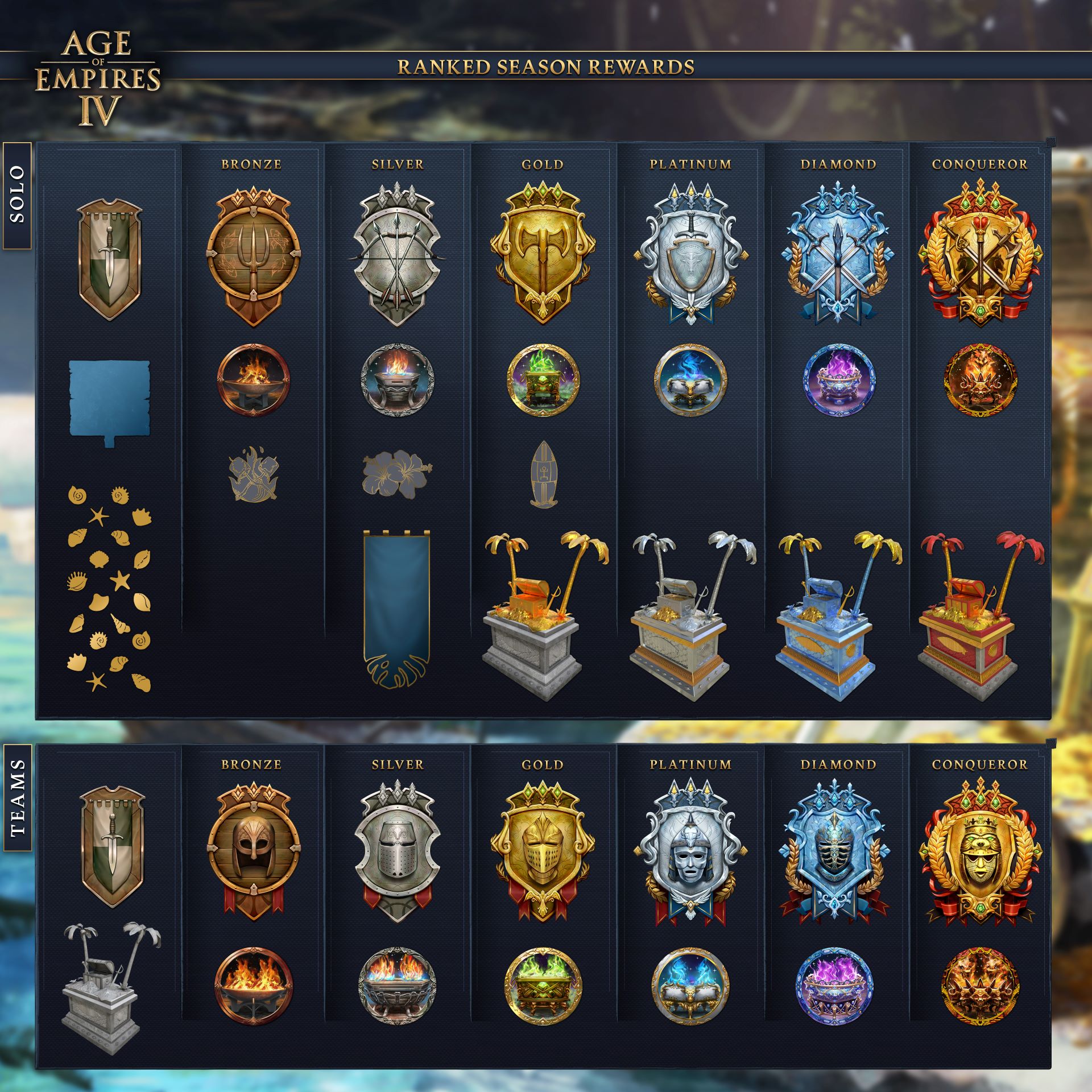
The game categorizes players into tiers, ranging from Bronze to Conqueror (or similar nomenclature depending on the specific title). These tiers represent your standing relative to the broader population.
| Tier | Skill Range / Description | Primary Objective |
|---|---|---|
| Bronze | Beginners learning basic macro | Focus on villager production |
| Silver | Developing consistent build orders | Minimize idle time |
| Gold | Proficiency in multiple matchups | Learn counter-units |
| Platinum | Advanced micro and map awareness | Optimize resource collection |
| Diamond | Competitive mastery of strategy | Refine scout-based adaptations |
| Conqueror | Elite-level play and execution | Master late-game transitions |
Progression through these tiers is not merely about winning; it is about consistency. Even if you lose a match, if you performed better than your rating suggests—perhaps by surviving a rush or managing a superior economy—the Elo system acknowledges your performance.
Step-by-Step Guide to Your First Ranked Match
- Select Your Civilization: Within the ranked menu, familiarize yourself with the civ-select interface. Some players specialize in a single civilization to master its unique mechanics, while others play a "random" or "pooled" set to become well-rounded.
- Choose Your Queue: If you are a solo player, start with the 1v1 queue. Team games add a layer of complexity regarding communication and shared goals, which can be overwhelming if you are still learning the basics of your own economy.
- Initiate the Queue: Click the "Find Match" button. The system will search for a host or server instance. During this time, stay near your computer, as match-finding can take anywhere from 30 seconds to several minutes depending on your region and the time of day.
- Accept the Match: Once a match is found, you will be prompted to accept. Failure to click "Accept" in time will result in a temporary queue penalty.
- Observe the Map and Matchup: As the game loads, use the "Map View" to identify your starting resources. Immediately begin your practiced build order upon spawning.
- Post-Match Analysis: After the game ends, do not immediately queue again. Open the "Match History" tab and watch the replay. Identify why you won or lost. Did you float too much wood? Did you fail to scout an enemy castle drop? This retrospective analysis is the single most important habit for climbing the ladder.
Common Mistakes and How to Avoid Them
The most common trap for new ranked players is "ladder anxiety"—the fear of losing points and dropping in rank. This anxiety often causes players to play overly defensively. Remember that your rank is simply a tool to ensure you get challenging games. If you are ranked higher than your skill level, you will eventually lose games until the system re-calibrates you. Accept this process as part of improvement.
Another technical mistake is neglecting "hotkeys." Professional players rarely click on buildings or units to command them. If you are clicking your mouse to select villagers or produce units, you are losing valuable seconds. Spend an hour in the "Learn to Play" or "Art of War" tutorials within the game to map essential production and command functions to your keyboard.
Comparing Ranked Modes: 1v1 vs. Team Games
Choosing between 1v1 and Team Games changes the nature of the challenge entirely.
1v1 Dynamics
In 1v1, the responsibility is entirely yours. You must scout your opponent, manage your economy, and control your army simultaneously. It is the purest test of your personal skill and the most efficient way to climb the ranks, as your progress is not tied to the performance or behavior of teammates.
Team Game Dynamics
Team games require coordination. You may be responsible for a specific "role," such as a pocket player focusing on booming (rapid economic expansion) while your flank player defends against early aggression. While these games can be more forgiving if you make a mistake, they also introduce variables outside your control, such as disconnects or lack of communication from allies.
Frequently Asked Questions
Is it necessary to use "meta" strategies to rank up?
While "meta" (Most Effective Tactic Available) strategies often use the most statistically powerful units, at most ranks, the player who executes their strategy with the fewest mistakes will win. It is better to master a solid, standard build order than to attempt a complex, high-risk strategy you haven't practiced.
What should I do if my opponent resigns early?
In ranked play, a resignation is a legitimate end to the match. The system will automatically process the Elo change based on the game duration and the status of the match at the time of surrender. Do not attempt to force the opponent to stay; accept the win and move to the next game.
How are ties handled in ranked matches?
Age of Empires games rarely end in a tie, but in the event of a server-side disconnect or a draw, the Elo system is designed to treat the match as void. Neither player typically gains or loses significant points, preventing unfair rank degradation due to technical instability.
Can I change my civilization mid-season?
Yes, you can swap your chosen civilization at any time in the ranked lobby. While sticking to one civ helps you learn faster, trying different civilizations can help you understand your opponents' weaknesses by experiencing their limitations firsthand.
How often does the ranked ladder reset?
The ladder resets at the start of every new ranked season. In 2026, the standard cadence for seasons remains consistent with historical patterns, usually aligning with major balance patches or content updates, occurring every 3 to 4 months.
Professional Next Steps
To truly ascend, your next action should be to record a session of yourself playing. Watch the playback without moving your hands, focusing entirely on your own screen. Look for idle villagers—if you see even one, you have identified an immediate area for improvement. Second, visit community-curated databases such as the "Age of Empires" official forums or trusted third-party statistics sites to view the most popular "build orders" for your favorite civilization. By layering targeted practice (the "how") with strategic knowledge (the "why"), you will find that your ranking becomes a natural reflection of your growing competence on the battlefield.