The 1990s represented the most significant evolution in video game history, transitioning from 16-bit 2D sprites to immersive 3D environments. This chronological overview tracks the industry's progression from the Super Nintendo and Sega Genesis era through the rise of the Sony PlayStation and the birth of modern PC gaming.
The decade began with the refinement of pixel art and ended with the establishment of the foundations for modern high-definition gaming. Between 1990 and 1999, the industry saw the birth of the First-Person Shooter (FPS), the rise of the Japanese Role-Playing Game (JRPG) in the West, and the transition of home consoles from niche toys to mainstream multimedia centers. As of 2026, these titles remain the gold standard for game design, frequently revisited through remasters and digital preservation efforts.
1990–1991: The Peak of the 16-Bit Power Struggle
At the dawn of the decade, the "Console Wars" were defined by the rivalry between the Nintendo Entertainment System (NES) and the Sega Genesis. However, the release of the Super Nintendo Entertainment System (SNES) in 1990 (Japan) and 1991 (North America) shifted the landscape toward 16-bit dominance.
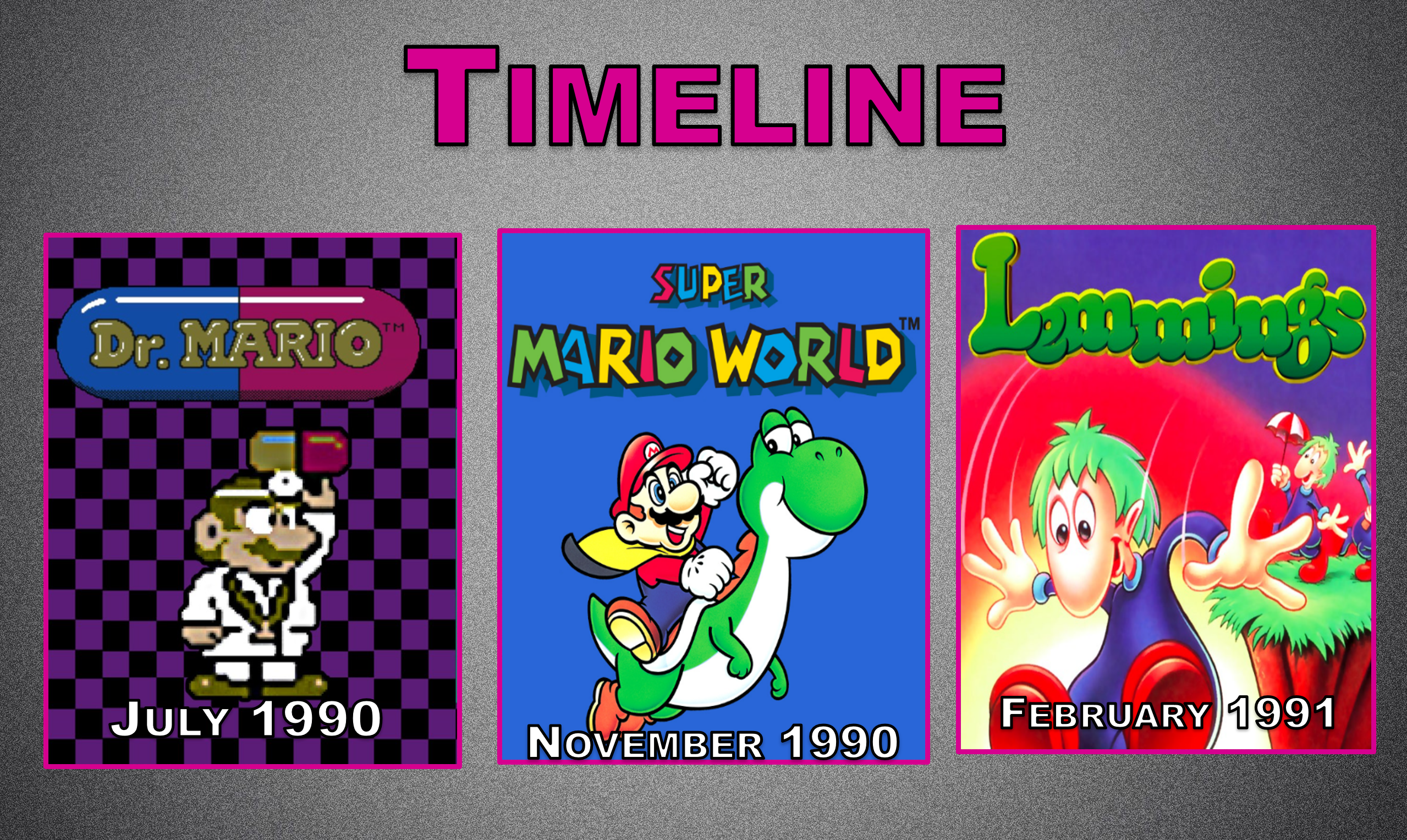
In 1990, Super Mario World set a new benchmark for platforming. It utilized the SNES's increased color palette and the "Mode 7" scrolling effect to create a sense of depth previously impossible on home hardware. Simultaneously, on the PC front, Sid Meier’s Civilization and The Secret of Monkey Island proved that gaming was maturing into complex strategy and narrative-driven experiences.
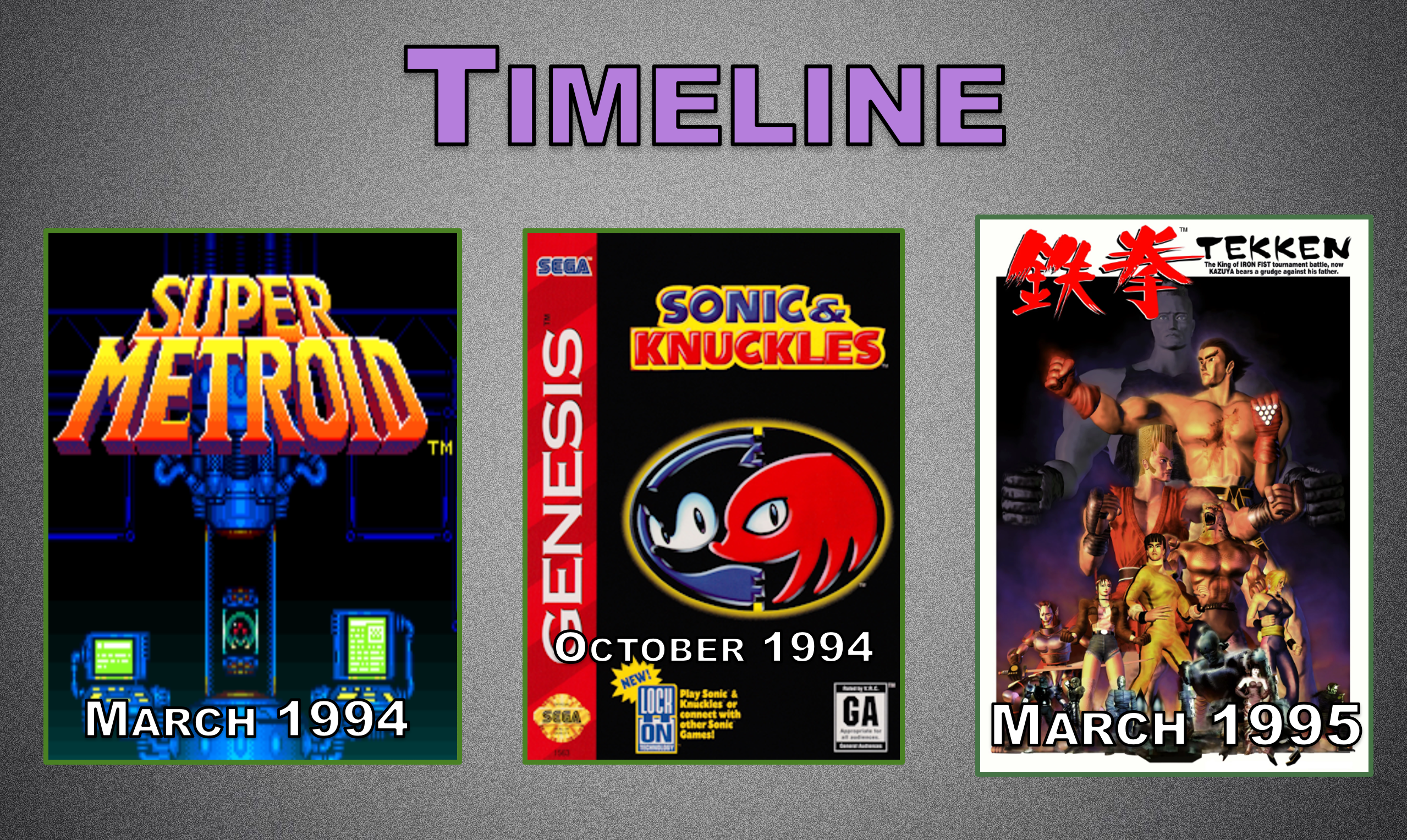
By 1991, Sega responded to Nintendo’s dominance with Sonic the Hedgehog. This title was a technical marvel for the Sega Genesis, emphasizing "Blast Processing"—a marketing term for the console's high CPU clock speed—which allowed for rapid sprite movement that the SNES struggled to match. This year also saw the release of The Legend of Zelda: A Link to the Past and Street Fighter II, the latter of which revolutionized the fighting game genre and revitalized the waning arcade scene.
1992–1993: Controversy and the Birth of the FPS
The middle of the decade saw a pivot toward more mature themes and technological breakthroughs in pseudo-3D environments. In 1992, Mortal Kombat debuted in arcades, sparking a national conversation regarding video game violence due to its digitized actors and "Fatality" finishing moves. This controversy eventually led to the creation of the Entertainment Software Rating Board (ESRB) in 1994.
Technologically, 1992 gave us Wolfenstein 3D from id Software. While not the first first-person game, it is widely considered the "grandfather" of the modern FPS. It used ray-casting technology to simulate a 3D environment on hardware that was strictly 2D.
In 1993, the industry changed forever with the release of Doom. Beyond its controversial gore, Doom introduced networked multiplayer (Deathmatch) and allowed users to create their own levels (WAD files), laying the groundwork for modern modding culture. On consoles, Nintendo released Star Fox, which utilized the Super FX chip—a supplemental RISC processor built into the cartridge—to render actual polygonal 3D on the SNES hardware.
1994: The Fifth Generation and the CD-ROM Revolution
1994 was a transitional year where 2D reached its artistic zenith while 3D hardware began to arrive. Donkey Kong Country was released on the SNES, using pre-rendered 3D models converted into 2D sprites, proving that the aging 16-bit hardware could still compete visually with upcoming systems.
However, the major shift occurred with the Japanese launch of the Sony PlayStation and the Sega Saturn. These consoles prioritized CD-ROM storage over traditional cartridges. While a cartridge could hold roughly 4 to 32 megabytes of data, a CD could hold 650 megabytes. This allowed for Full Motion Video (FMV), orchestral soundtracks, and significantly larger game worlds. Final Fantasy VI (released in the US as Final Fantasy III) also debuted this year, representing the peak of 2D storytelling in the JRPG genre.
1995: The Year of the RPG and 32-Bit Mainstreaming
By 1995, the PlayStation and Saturn had launched globally. Sony’s aggressive pricing and developer-friendly environment quickly gave it an edge over Sega. This year saw the release of Chrono Trigger, often cited as one of the greatest games ever made due to its multiple endings and "Active Time Battle" system.
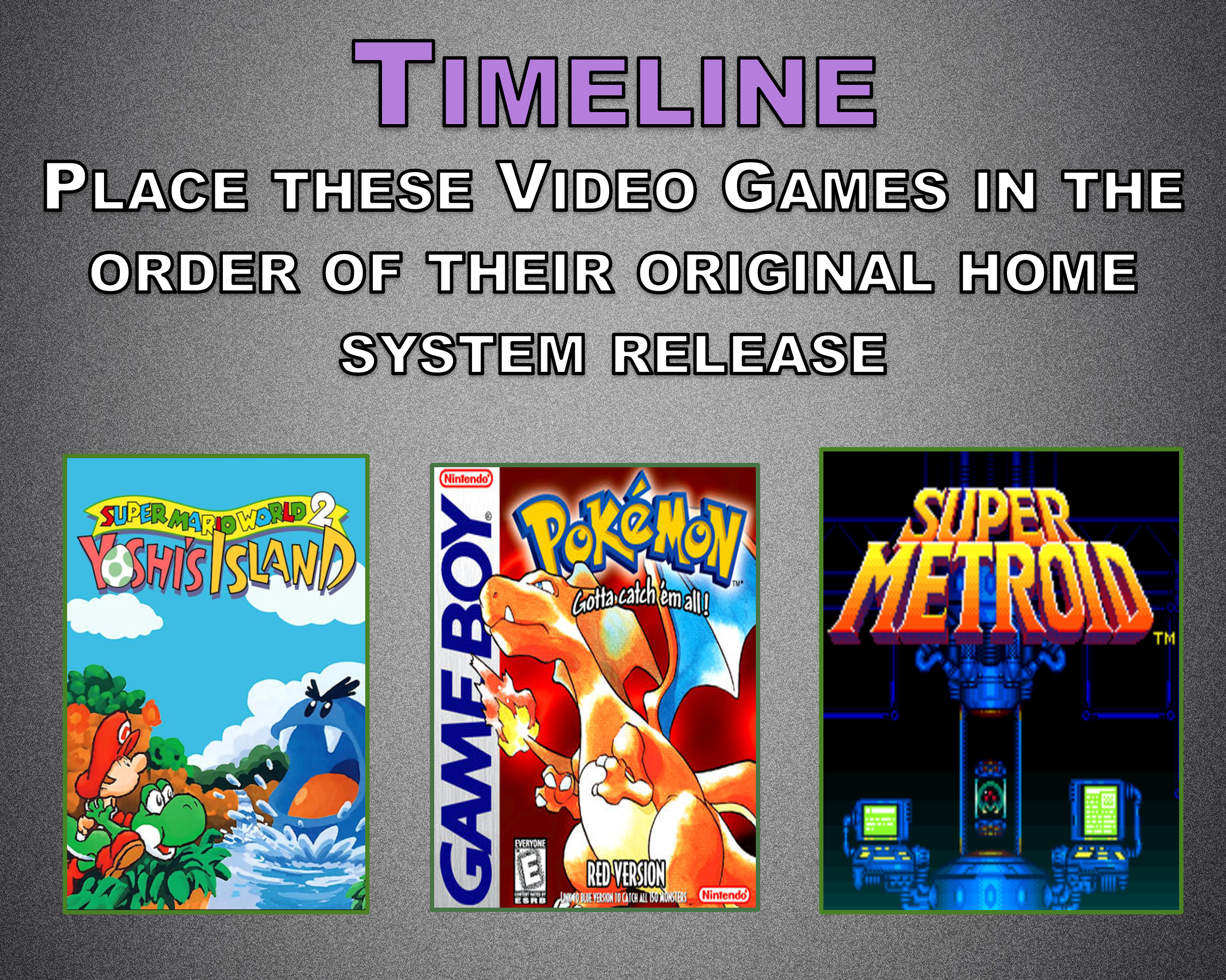
On the PC, Command & Conquer and Warcraft II: Tides of Darkness established the Real-Time Strategy (RTS) genre as a staple of home computing. These games moved away from the turn-based logic of the early 90s toward high-speed, tactical decision-making. 1995 also introduced Rayman and Yoshi’s Island, showing that high-fidelity 2D animation still had a place in a market increasingly obsessed with 3D polygons.
1996: Defining the 3D Space
If any year defined the "90s feel" of gaming, it was 1996. The launch of the Nintendo 64 (N64) brought Super Mario 64, which solved the "3D camera problem." Before Mario 64, navigating 3D space was clunky and intuitive; Nintendo’s use of an analog stick for 360-degree movement became the industry standard overnight.
Simultaneously, the PlayStation saw the release of Resident Evil (creating the "Survival Horror" term) and Tomb Raider. Lara Croft became a mainstream cultural icon, proving that video games could produce recognizable celebrities. In the PC arena, Quake took the FPS genre into "true" 3D, moving away from the 2D sprite enemies of Doom to fully articulated polygonal models, while also pioneering internet-based multiplayer via QuakeWorld.
1997: Narrative Depth and Cinematic Scope
In 1997, Final Fantasy VII was released on the PlayStation. Its move from Nintendo to Sony was a massive blow to Nintendo’s market share. The game’s cinematic cutscenes and complex, adult-oriented story brought the JRPG genre to a massive global audience, selling millions of units and making the PlayStation the "must-have" console for narrative seekers.
Nintendo 64 owners received GoldenEye 007, a game that proved first-person shooters could work—and thrive—on consoles with local four-player split-screen. Meanwhile, on PC, Fallout and Diablo redefined the Western RPG. Fallout offered unprecedented player agency and moral ambiguity, while Diablo combined RPG progression with "click-and-slay" action, creating the "Looter" subgenre.
1998: The Pinnacle of Design
Many historians and critics consider 1998 to be the greatest year in the history of the medium. The sheer volume of genre-defining titles released within these twelve months is staggering:
- The Legend of Zelda: Ocarina of Time: Often ranked as the best game ever made, it introduced the "Z-targeting" lock-on system, which is still used in almost every third-person action game in 2026.
- Metal Gear Solid: Hideo Kojima’s masterpiece brought "Stealth Action" and cinematic production values to the forefront, utilizing professional voice acting and meta-narrative techniques.
- Half-Life: Valve Corporation changed the FPS genre by telling a continuous story without cutscenes, keeping the player in the protagonist's shoes at all times.
- StarCraft: Blizzard Entertainment perfected the RTS, creating a competitive balance so precise it became a national sport in South Korea.
- Pokémon Red and Blue: The global "Pokémania" began in the West this year, proving that the aging Game Boy hardware was still a powerhouse for social gaming.
1999: The Dawn of the Sixth Generation
The decade closed with the release of the Sega Dreamcast, the first console of the sixth generation. It featured an integrated modem for online play, a precursor to the modern connected era. SoulCalibur on the Dreamcast was one of the first instances where a home console port was visually superior to the original arcade version.
1999 also saw the release of Silent Hill, which pushed psychological horror further than Resident Evil had, and Tony Hawk’s Pro Skater, which brought extreme sports into the mainstream. On PC, EverQuest and Asheron’s Call began the Massive Multiplayer Online RPG (MMORPG) craze, setting the stage for the massive digital worlds of the 2000s.
Chronological Table of Landmark 90s Video Games
| Year | Title | Primary Platform | Genre | Notable Innovation/Legacy |
|---|---|---|---|---|
| 1990 | Super Mario World | SNES | Platformer | Perfected 16-bit level design and secrets. |
| 1991 | Street Fighter II | Arcade/SNES | Fighting | Established the modern fighting game template. |
| 1992 | Mortal Kombat | Arcade | Fighting | Led to the creation of the ESRB rating system. |
| 1993 | Doom | PC | FPS | Pioneered 3D engines and multiplayer deathmatch. |
| 1994 | Final Fantasy VI | SNES | JRPG | Deep, ensemble-cast storytelling in 16-bit. |
| 1995 | Chrono Trigger | SNES | JRPG | Multiple endings and visible world-map enemies. |
| 1996 | Super Mario 64 | N64 | 3D Platformer | Defined 3D movement and camera controls. |
| 1996 | Resident Evil | PlayStation | Survival Horror | Popularized horror as a major gaming genre. |
| 1997 | Final Fantasy VII | PlayStation | JRPG | Brought cinematic RPGs to the global mainstream. |
| 1998 | Half-Life | PC | FPS | Integrated narrative seamlessly into gameplay. |
| 1998 | Metal Gear Solid | PlayStation | Stealth | Introduced high-level cinematic direction. |
| 1999 | SoulCalibur | Dreamcast | Fighting | Achieved "arcade-perfect" graphics at home. |
Technical Evolution: From Bits to Polygons
The 90s were characterized by a rapid escalation in hardware capabilities. At the start of the decade, the 8-bit NES (6502 processor) was still common. By 1999, the Dreamcast was using a 128-bit SH-4 CPU and a PowerVR2 GPU capable of rendering millions of polygons per second.
- Storage Transition: The move from 4MB cartridges to 650MB CD-ROMs allowed for pre-recorded audio and high-quality video. However, this came at the cost of "Loading Times," a concept unfamiliar to 80s gamers.
- Sound Synthesis: In 1990, music was composed using FM synthesis or simple PSG chips. By 1997, games like Final Fantasy VII and The Legend of Zelda: Ocarina of Time were using MIDI and high-quality samples to create symphonic scores.
- The Rise of 3D Acceleration: On the PC side, the mid-90s saw the release of the 3dfx Voodoo card. This was a dedicated piece of hardware for rendering 3D graphics, marking the birth of the modern GPU market dominated by NVIDIA and AMD in 2026.
Frequently Asked Questions
Which 90s console was the most successful?
The Sony PlayStation was the most successful console of the 1990s in terms of total units sold, exceeding 100 million shipments. It surpassed the Nintendo 64 and Sega Saturn by offering a more extensive third-party library, cheaper manufacturing costs for discs, and a branding strategy that targeted teenagers and young adults rather than just children.
Why is 1998 often called the best year in gaming history?
1998 is uniquely celebrated because it saw the release of multiple games that didn't just sell well, but fundamentally changed their respective genres. Ocarina of Time set the standard for 3D adventure; Half-Life redefined the FPS; Metal Gear Solid introduced cinematic stealth; and StarCraft became the blueprint for competitive RTS. The concentration of high-quality, innovative titles in a single 12-month period remains unmatched.
How did 90s games handle 3D before actual 3D hardware?
Before the N64 and PlayStation, developers used "pseudo-3D" techniques. One common method was Ray-casting (used in Doom), which draws 2D walls to look like 3D. Another was "Mode 7" on the SNES, which allowed a 2D background layer to be rotated and scaled, creating the illusion of a 3D floor in games like F-Zero or Super Mario Kart.
What was the impact of the ESRB on 90s gaming?
The ESRB (Entertainment Software Rating Board) was formed in 1994 in response to US Congressional hearings regarding violent games like Mortal Kombat and Night Trap. Its impact was twofold: it allowed the industry to self-regulate to avoid government censorship, and it paradoxically helped "M-rated" games sell by clearly identifying them as mature content, which appealed to older demographics.
Are 90s video games still playable today?
Yes, in 2026, most landmark 90s games are highly accessible. Through services like Nintendo Switch Online, Sony’s PlayStation Plus Classics, and PC platforms like GOG.com (Good Old Games), players can run original code on modern hardware. Additionally, the FPGA (Field-Programmable Gate Array) movement and high-quality emulation projects ensure that the original 90s hardware experience is preserved for future generations.
Practical Recommendation for Retro Enthusiasts
If you are looking to explore the 90s video game library in the current year (2026), start with the "Holy Trinity" of 1998: The Legend of Zelda: Ocarina of Time, Metal Gear Solid, and Half-Life. These three titles provide the clearest picture of how modern game design was born. For the best experience, seek out "pixel-perfect" modern ports or use an original CRT monitor if playing on legacy hardware to ensure the art looks as the developers intended.