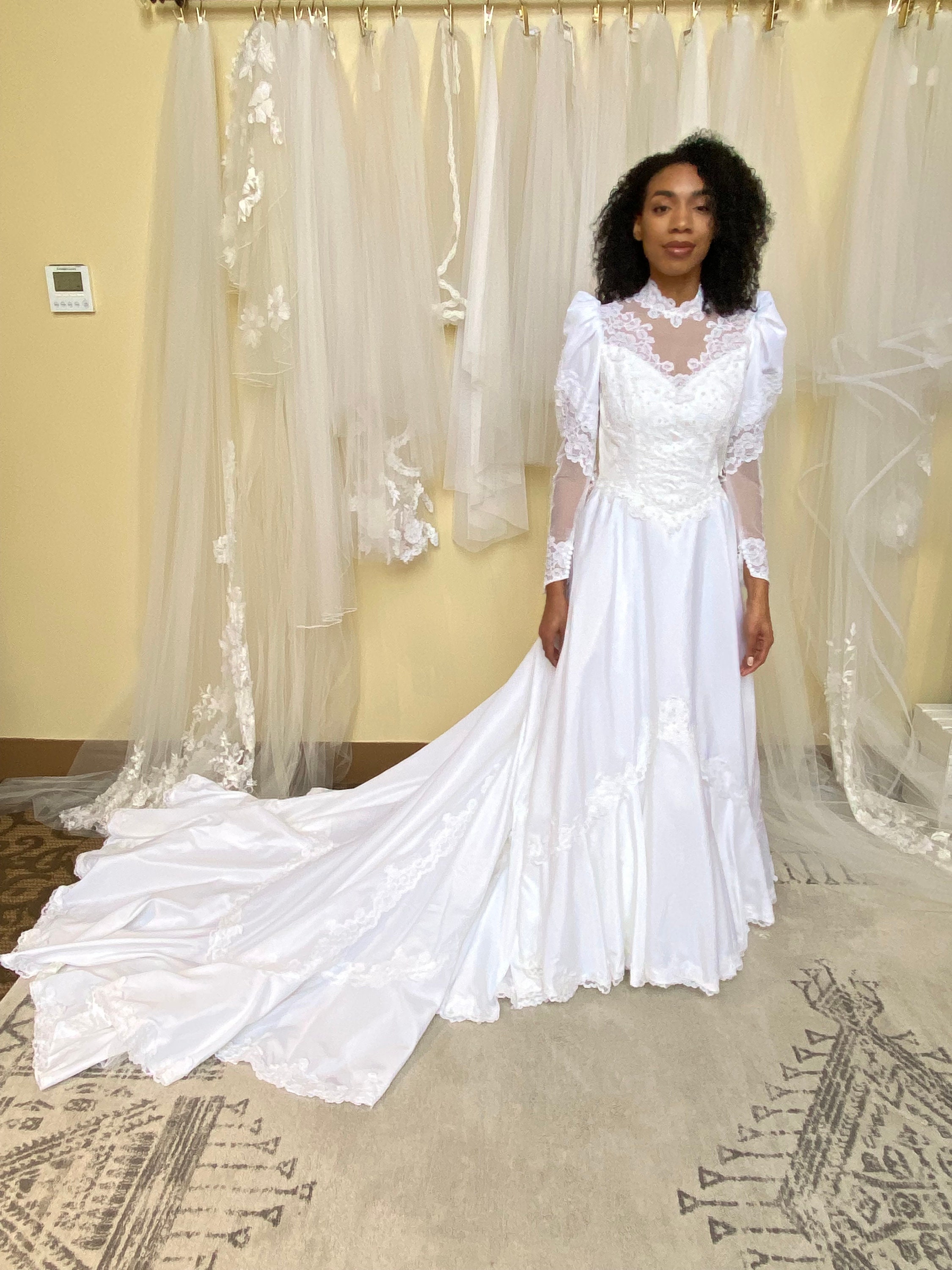
80s wedding attire is defined by maximalism, characterized by voluminous "puff" sleeves, dramatic lace ruffles, and structured shoulder pads. Influenced by royal weddings and pop culture, the era prioritized bold silhouettes and intricate detailing. Whether for a vintage-themed event or historical research, understanding these exaggerated proportions is key to capturing the decade's essence.
The Cultural Drivers of 80s Wedding Fashion
To understand 80s wedding attire, one must first recognize that the 1980s was a decade of "more is more." Coming out of the relaxed, bohemian aesthetic of the 1970s, the 1980s pivoted sharply toward opulence, status, and visible wealth. This shift was heavily influenced by two major cultural pillars: the British Royal Family and the rise of primetime soap operas like Dynasty and Dallas.
The decade’s fashion trajectory was fundamentally altered on July 29, 1981, when Lady Diana Spencer married Prince Charles. Her gown, designed by David and Elizabeth Emanuel, featured a 25-foot train, massive puffed sleeves, and thousands of pearls. This single event set the standard for bridal fashion for the next ten years. Almost overnight, the "meringue" style became the most sought-after silhouette, replacing the slim-fitting, disco-influenced slips of the late 70s.
Simultaneously, the "Power Dressing" movement influenced how women dressed for formal events. This introduced sharp tailoring, heavy shoulder padding, and stiff fabrics like taffeta and silk shantung into the wedding guest and bridesmaid categories. By the mid-to-late 1980s, wedding attire was no longer just about romance; it was about making a grand, architectural statement.
Defining Features of 80s Bridal Gowns
The 1980s wedding dress is perhaps the most recognizable garment in modern fashion history. While styles evolved slightly from 1980 to 1989, several core elements remained consistent throughout the decade.
The Power of the Sleeve
The sleeve was the centerpiece of the 80s gown. The most popular variation was the leg-o-mutton sleeve, which was voluminous at the shoulder and tapered tightly to the wrist. Other common styles included the "butterfly" sleeve and the "Juliet" sleeve. These designs relied on internal structures—such as tulle netting or plastic boning—to maintain their height and width. For a bride in the 80s, the larger the sleeve, the more fashionable the dress.
Necklines and the "Basque" Waist
High Victorian necklines were incredibly popular in the early half of the decade, often featuring sheer "illusion" panels made of lace or net. As the decade progressed, "off-the-shoulder" styles became the preferred choice, allowing for even larger shoulder details.
The Basque waistline was another staple. This design featured a bodice that came to a "V" shape at the natural waist or slightly below it. This was intended to create an exaggerated hourglass figure, drawing the eye downward toward a full, heavy skirt.
Fabric and Embellishment
In the 1980s, fabric choice was about stiffness and shine. Taffeta was the king of fabrics because it held its shape and created a distinctive "rustle" when the bride moved. Heavy satin and organza were also common.
Embellishments were rarely subtle. Gowns were frequently encrusted with:
- Iridescent sequins: Designed to catch the camera flash.
- Seed pearls: Often sewn in intricate floral or swirl patterns.
- Schiffli lace: A type of machine-made lace that allowed for large-scale, heavy patterns.
- Bow details: Large "butt bows" placed at the small of the back were a signature finish for many 80s gowns.
Groom and Groomsmen Style: Beyond the Classic Tuxedo
While bridal fashion was reaching new heights of volume, men’s 80s wedding attire was undergoing its own colorful transformation. The decade saw a move away from the traditional black-tie look toward more experimental colors and textures.
The Rise of the Morning Suit and Pastel Colors
Following the royal wedding trend, the morning suit (featuring a cutaway coat and striped trousers) saw a resurgence in formal ceremonies. However, for less traditional weddings, the influence of shows like Miami Vice was undeniable. This led to the popularity of pastel-colored suits—particularly in shades of powder blue, dove gray, and even pale pink or "peach."
Ruffles and Cummerbunds
The 1980s was the last great era of the ruffled tuxedo shirt. These shirts featured rows of lace or pleated fabric down the chest and often at the cuffs. To complete the look, grooms wore wide cummerbunds and matching bow ties, frequently in colors that coordinated with the bridesmaids' dresses.
Footwear and Grooming
For men, the mullet and "perm" hairstyles were often paired with highly polished patent leather shoes. In more casual or "New Wave" influenced weddings, grooms might even opt for white loafers or slim-fitting "drainpipe" trousers, reflecting the music-driven fashion of the era.
Bridesmaid and Guest Attire: A Riot of Color
If the bride was the "meringue," the bridesmaids were the colorful "macarons" surrounding her. 80s bridesmaid dresses are often remembered for their bright, sometimes clashing color palettes and the universal application of shoulder pads.
Typical 1980s Color Palettes
Early 80s weddings favored "dusty rose," "seafoam green," and "mauve." As the decade moved into the mid-80s, jewel tones like emerald green, royal blue, and electric purple took over. By 1989, neon accents and high-contrast combinations (like black and hot pink) were not uncommon for evening celebrations.
Guest Fashion Trends
Guests attending a wedding in the 80s often leaned into the "Glam" aesthetic. For women, this meant:
- Peplum waists: A short over-skirt attached to the waist of a jacket or dress.
- Metallic fabrics: Gold and silver lamé were popular for evening receptions.
- Cocktail hats: Small, tilted hats with netting (birdcage veils) were a common accessory.
For men, guest attire usually consisted of wide-shouldered suits with broad lapels. The "power tie"—usually a bold red or yellow—became a staple for male guests by the late 80s.
Essential 80s Accessories and Beauty Standards
No 80s wedding look was complete without the appropriate "finishing touches," which were just as bold as the clothing itself.
The Veil and Headpiece
The 80s did not do "minimalist" veils. Most brides wore a cathedral-length veil attached to a "coronet" or a floral headpiece. The "pouf" veil—a style where the tulle was gathered at the top of the head to create height—was the definitive look of the mid-80s.
Jewelry
Costume jewelry was at its peak. Large, clip-on gold earrings (often referred to as "door knockers") and heavy pearl chokers were the standard. For brides, "diamond" clusters (usually cubic zirconia or crystal) were popular for both earrings and necklaces.
Hair and Makeup
"Big hair" was a requirement, not an option. This was achieved through heavy perming, back-combing (teasing), and industrial-strength hairspray. In terms of makeup, the 80s look featured:
- Contoured cheeks: Heavy application of pink or plum blush.
- Blue and Purple Eyeshadow: Often applied up to the brow bone.
- Bright Lips: Fuchsia and true red were the go-to shades.
80s Wedding Attire Comparison Table
The following table compares the dominant styles of the early 80s (influenced by tradition) versus the late 80s (influenced by pop glam).
| Feature | Early 1980s (1980–1984) | Late 1980s (1985–1989) |
|---|---|---|
| Primary Silhouette | Victorian-inspired, high necks | Off-the-shoulder, architectural |
| Sleeve Style | Juliette or Bishop sleeves | Massive Leg-o-mutton or "Puff" |
| Preferred Colors | Dusty Rose, Mauve, Peach | Royal Blue, Emerald, Fuchsia |
| Fabric Choice | Voile, Eyelet Lace, Organza | Taffeta, Satin, Silk Shantung |
| Men's Formalwear | Morning suits, ruffled shirts | Slim-cut tuxedos, pastel suits |
| Key Accessory | Floral wreaths, long trains | Sequined headbands, "Butt bows" |
Frequently Asked Questions
Why were 80s wedding dresses so big?
The size of 80s wedding dresses was a reflection of the "conspicuous consumption" of the era. Larger dresses required more fabric, more lace, and more labor, making them a status symbol. Additionally, the cultural impact of Princess Diana’s wedding created a global trend where volume was equated with royal elegance.
What is a "Basque waist" on an 80s dress?
A Basque waist is a bodice that extends past the natural waistline and ends in a "V" or "U" shape over the hips. In the 80s, this was used to create a flattering silhouette that elongated the torso while supporting the weight of a very full, gathered skirt.
Can I wear authentic 80s attire to a wedding in 2026?
Yes, vintage 80s pieces are highly sought after in 2026 for themed events and "retro-glam" weddings. However, keep in mind that many 80s fabrics (like synthetic taffeta) do not breathe well. If you are wearing an original piece, ensure it has been professionally cleaned, as the elastic and lace can become brittle over forty years.
How do I modernize an 80s-inspired wedding look?
To modernize the 80s aesthetic, choose one "statement" element rather than incorporating all of them. For example, pair a modern, sleek gown with a vintage-inspired puffed sleeve, or choose a 1980s jewel-tone color palette but apply it to contemporary, minimalist silhouettes.
Were shoulder pads used in wedding dresses?
Absolutely. Shoulder pads were a defining structural element of 80s fashion. In wedding gowns, they were used to provide the necessary "lift" for heavy puffed sleeves, ensuring the fabric didn't collapse and maintaining the broad-shouldered silhouette that was fashionable at the time.
Finding and Sourcing 80s Wedding Attire in 2026
If you are looking to acquire or replicate 80s wedding attire in 2026, you have several reliable avenues. Authenticity is often the goal for collectors, while comfort is the priority for modern wearers.
- Specialty Vintage Retailers: Online marketplaces like Etsy and specialized vintage boutiques often carry preserved 80s gowns. Look for brands like Alfred Angelo, Priscilla of Boston, or Gunne Sax (for the early 80s "prairie" look).
- Estate Sales and Auctions: Since many women who married in the 80s are now downsizing, estate sales are prime locations for finding high-quality, one-of-a-kind designer gowns that have been kept in cedar chests for decades.
- Modern "Retro" Designers: Some contemporary bridal designers have released "80s Revival" collections that utilize the iconic puffed sleeves and bows but use modern, breathable fabrics like lightweight silk or stretch crepe.
- Tailoring and Alteration: If you find an authentic 80s dress but the proportions are overwhelming, a skilled tailor can "de-pouf" the sleeves or remove the crinolines to make the garment more wearable for a modern setting while preserving the vintage charm.
When sourcing, pay close attention to the condition of the lace and the integrity of the zippers. Plastic zippers from the 1980s are prone to failure, and many "illusion" panels may have yellowed over time. Proper restoration can bring these iconic garments back to their original 1980s glory.