The evolution of World War II aircraft was defined by rapid shifts from wood-framed biplanes to jet-powered interceptors, the integration of radar technology, and the move toward pressurized strategic bombers. These changes fundamentally altered military doctrine, prioritizing speed, altitude, and industrial mass production over traditional dogfighting maneuvers and manual aiming.
Between 1939 and 1945, aviation technology advanced more than it had in the previous three decades combined. As we look back from 2026, the historical record highlights seven specific shifts in design, utility, and tactical employment that transformed the airplane from a scouting tool into a decisive strategic weapon.
1. The Transition from Mixed-Material to All-Metal Monocoque Construction
At the onset of World War II, many air forces were still transitioning away from the biplane era. The early years of the conflict saw "mixed construction" aircraft—using wood, fabric, and steel tubing—compete against the emerging standard of all-metal stressed-skin monocoque designs.
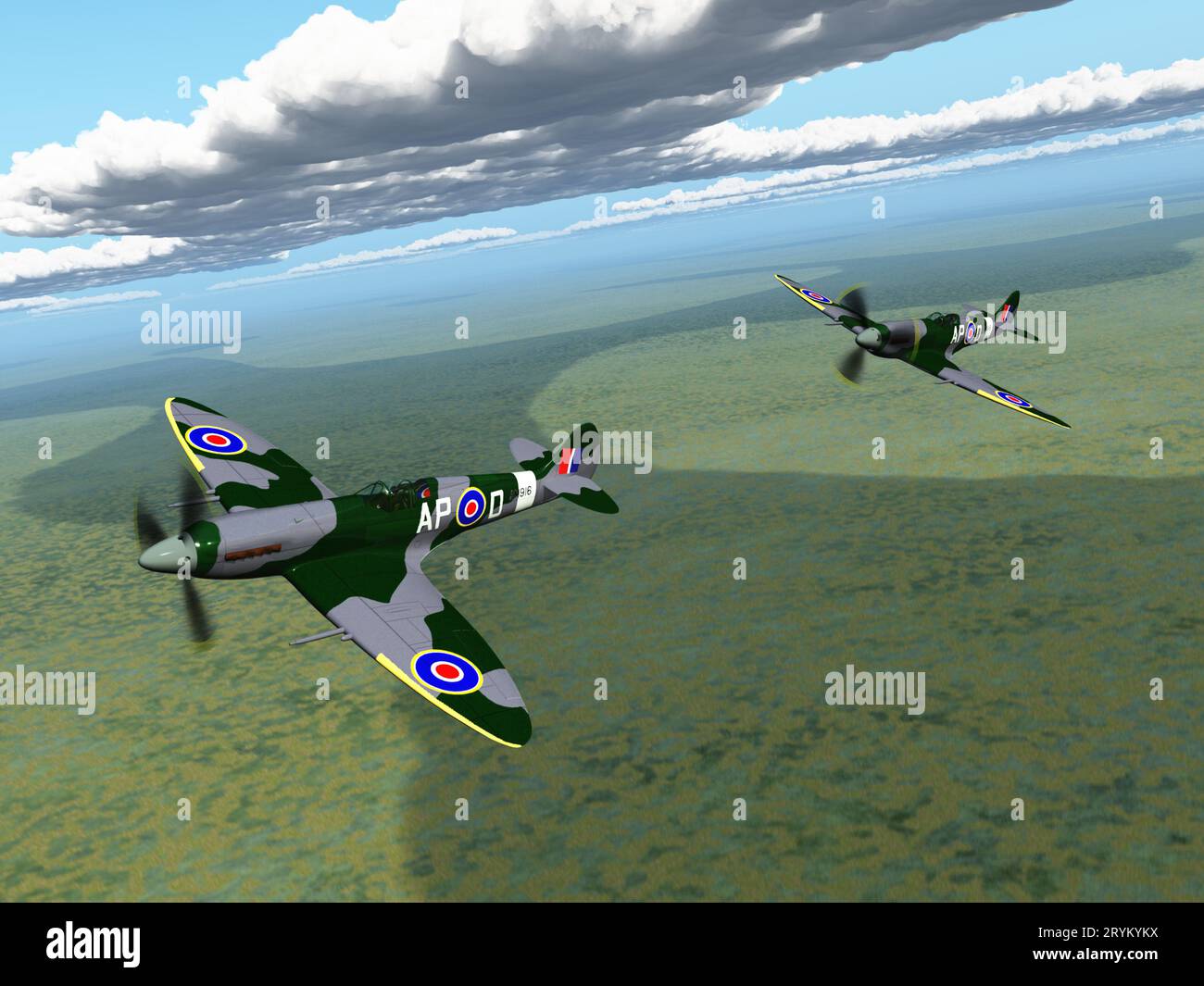
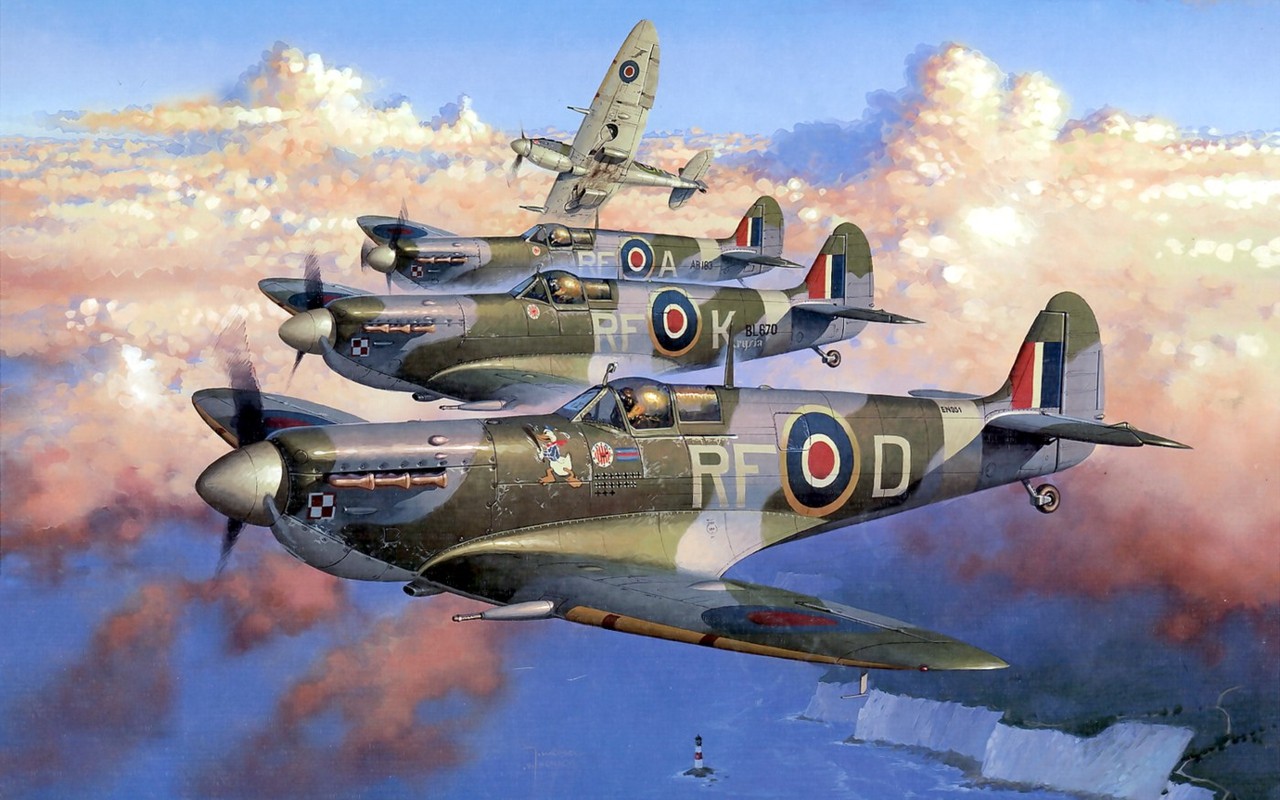
In 1939, the Hawker Hurricane, a stalwart of the Royal Air Force, utilized a traditional Hawker structure of mechanical joints and fabric covering on its rear fuselage. While rugged and easy to repair, it was a transitional design. The shift toward all-metal aircraft, like the Supermarine Spitfire and the Messerschmitt Bf 109, allowed for thinner, more aerodynamically efficient wings and higher diving speeds.
However, a surprising "reverse shift" occurred with the de Havilland Mosquito. Known as the "Wooden Wonder," it proved that high-performance combat aircraft could still be built from non-strategic materials. By using a plywood-balsa-plywood sandwich construction, the Mosquito became one of the fastest operational aircraft in the world. This shift demonstrated that while metal was the future, innovative uses of traditional materials could bypass metal shortages and provide exceptional speed through weight reduction.
2. From Open Cockpits and Manual Controls to Pressurization and Power Boosts
Early World War II planes required immense physical strength from pilots. As airspeeds increased, the aerodynamic forces acting on control surfaces—the ailerons, elevators, and rudders—became so great that moving them manually was nearly impossible during high-speed dives.
The shift toward hydraulic and spring-tab assistance allowed pilots to retain control at speeds exceeding 400 mph. Parallel to this was the shift toward cockpit pressurization. Before the mid-war period, pilots relied on oxygen masks and unheated suits, which were prone to failure and caused extreme fatigue at high altitudes.
The introduction of the Boeing B-29 Superfortress marked a definitive shift in this paradigm. It featured the first fully pressurized cabin for a production bomber, allowing crews to operate in a shirt-sleeve environment at 30,000 feet. This shift was not merely for comfort; it was a technical requirement for long-range strategic bombing in the Pacific theater, where extreme altitude was the primary defense against Japanese interceptors and anti-aircraft fire.
3. The Propulsion Leap: From Naturally Aspirated to Turbo-Supercharged and Jet Engines
The "engine war" was perhaps the most significant technological race of the era. In 1939, a standard fighter engine produced roughly 1,000 horsepower. By 1945, power plants like the Rolls-Royce Griffon or the Pratt & Whitney R-2800 Double Wasp were generating over 2,000 to 2,500 horsepower.
The critical shift here was the mastery of supercharging and turbo-charging. To maintain power in the thin air of high altitudes, engineers developed two-stage, two-speed superchargers. This allowed planes like the P-51D Mustang to escort bombers deep into Germany at altitudes where previous fighters would have floundered.
The most radical shift, however, was the jump from piston engines to gas turbines (jets). The Messerschmitt Me 262 and the Gloster Meteor represented a fundamental break from 40 years of aviation history. By eliminating the propeller, these aircraft bypassed the "compressibility" issues that limited piston-engine speeds. While the Me 262 entered the war too late to change the outcome, it shifted the entire trajectory of post-1945 aviation toward the jet age.
4. The Shift in Firepower: From Machine Guns to Integrated Cannon Systems
In the early 1930s, military theorists believed that a high volume of fire from .30 caliber (7.62mm) machine guns would be sufficient to down any aircraft. This was evidenced by the early eight-gun configurations of the Spitfire and Hurricane.
As the war progressed, a shift occurred toward heavy-caliber cannons (20mm and 30mm) and high-velocity .50 caliber machine guns. The reason was "time on target." At 400 mph, a pilot might only have a fraction of a second to fire. A .30 caliber bullet lacks the kinetic energy and explosive capacity to destroy modern metal airframes in a short burst.
The shift reached its zenith with the German Mk 108 30mm cannon, nicknamed the "pneumatic hammer," which could down a heavy bomber with just three or four hits. Conversely, the U.S. favored the .50 caliber M2 Browning for its reliability and high muzzle velocity, allowing pilots to strike targets from greater distances with a high volume of incendiary and armor-piercing rounds.
5. From Visual Interception to Radar-Guided Night Fighting
Before 1940, finding an enemy aircraft at night or in clouds was a matter of luck and searchlights. The development and miniaturization of radar (Radio Detection and Ranging) caused one of the most surprising shifts in tactical facts: the sky was no longer a place to hide.
The British "Chain Home" radar stations were the first step, but the true shift happened with Airborne Interception (AI) radar. Units like the Bristol Beaufighter and the Northrop P-61 Black Widow were designed specifically around radar sets. This shifted the pilot's role from a visual scout to a systems operator.
By 2026, many historians agree that the "Wizard War"—the back-and-forth development of radar and electronic countermeasures like Window (chaff)—was as critical to the Allied victory as the number of planes produced. It turned the air war into a scientific battle of frequencies and detection ranges.
6. The Rise of the Carrier-Based Task Force Over the Battleship
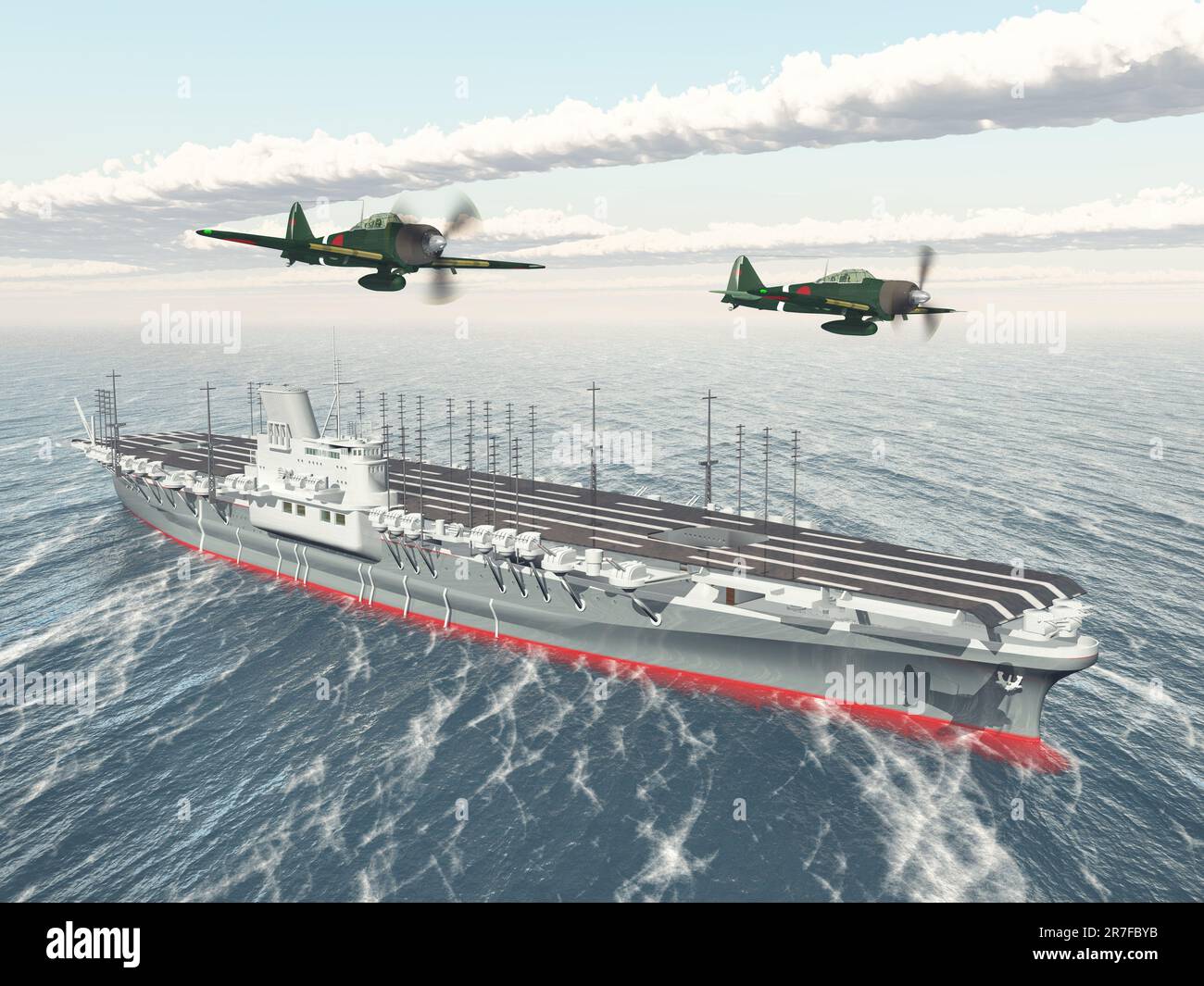
At the start of World War II, the battleship was considered the "Queen of the Seas." Aviation was viewed as a supporting arm for spotting and coastal defense. The shift that occurred between the Attack on Pearl Harbor (1941) and the Battle of Midway (1942) completely inverted this hierarchy.
Aircraft like the Douglas SBD Dauntless and the Grumman F6F Hellcat proved that carrier-based planes could sink the most heavily armored ships of the line from hundreds of miles away. This shift forced a total redesign of naval planes. They needed folding wings for storage, heavy-duty landing gear for carrier traps, and massive fuel tanks for long-range oceanic patrols.
By the end of the war, the "Shift in Facts" was clear: the aircraft carrier was the center of the fleet, and the battleship's primary role had shifted to providing anti-aircraft protection for the carriers.
7. The Logistic Shift: Mass Production and Interchangeable Parts
In the pre-war era, aircraft were often hand-built by skilled craftsmen. This changed when the United States applied automotive mass-production techniques to aviation. The shift from "boutique" manufacturing to the "Arsenal of Democracy" is best exemplified by the Ford Willow Run plant, which, at its peak, produced one B-24 Liberator bomber every hour.
This shift meant that World War II planes were no longer precious assets to be hoarded; they were consumable industrial products. This allowed for:
- Interchangeability: Damaged planes could be cannibalized for parts that fit perfectly across different production batches.
- Rapid Iteration: Constant "Block" updates (e.g., P-51B to P-51C to P-51D) could be integrated into the assembly line without stopping production.
- Standardization: Tools, fluids, and ammunition were standardized across theater commands, simplifying the massive logistical tail required to keep these machines flying.
Comparative Technical Evolution of WWII Aircraft
The following table illustrates the dramatic shift in performance metrics between early-war and late-war aircraft.
| Aircraft Type | Model (Year) | Top Speed | Max Altitude | Primary Armament | Engine Power |
|---|---|---|---|---|---|
| Early Fighter | Hawker Hurricane Mk I (1939) | 340 mph | 33,000 ft | 8x .303 Browning MG | 1,030 hp |
| Late Fighter | P-51D Mustang (1944) | 437 mph | 41,900 ft | 6x .50 cal MG | 1,490 hp (Avg) |
| Early Bomber | Heinkel He 111 (1939) | 273 mph | 21,300 ft | 3x 7.92mm MG | 1,100 hp (x2) |
| Late Bomber | B-29 Superfortress (1945) | 357 mph | 31,850 ft | 10x .50 cal + 20mm | 2,200 hp (x4) |
| Jet Fighter | Messerschmitt Me 262 (1944) | 540 mph | 37,500 ft | 4x 30mm Cannon | 1,980 lbf (x2) |
Frequently Asked Questions
What was the most important technological shift in WWII planes?
The move from piston engines to jet propulsion is widely considered the most significant shift. While piston engines reached their mechanical limits due to propeller tip speeds and heat dissipation, the jet engine opened the door to supersonic flight. However, in terms of immediate impact on the war's outcome, the development of high-performance superchargers for escort fighters was likely more decisive.
Why did some WWII planes still use wood in 1945?
Wood was used primarily to conserve "strategic materials" like aluminum and rubber. The de Havilland Mosquito and the Soviet Yakovlev fighters utilized wood and plywood to maintain production levels when metal supplies were redirected to heavy bombers or tanks. Surprisingly, these wooden structures often proved more resilient to certain types of battle damage and were easier to repair in the field.
How did radar change the way pilots flew?
Radar shifted the pilot's role from "visual search" to "system management." In night fighters, the pilot or a dedicated radar operator had to interpret "blips" on a cathode-ray tube to intercept targets. This required a new type of training focused on instrument flying and spatial awareness without external visual cues, forming the basis for modern all-weather flight operations.
Were WWII jets better than piston-engine planes?
In terms of raw speed and climb rate, yes. The Me 262 could outrun almost any Allied fighter. However, early jets were notoriously unreliable. Their engines had very short lifespans—sometimes only 10 to 25 hours of flight time—and they were extremely vulnerable during takeoff and landing because the engines responded slowly to throttle changes.
How did the shift to mass production affect aircraft quality?
While there were concerns that mass production would lead to "cheap" planes, the reality was the opposite. Industrial standardization led to higher tolerances and better quality control than hand-assembly. It also allowed for the rapid deployment of "modification kits" to fix design flaws across thousands of aircraft simultaneously, something that was impossible with older manufacturing methods.
Final Recommendations for Enthusiasts and Researchers
For those looking to explore these shifts further in 2026, visiting living history museums remains the most effective way to understand the scale of these machines. The National Air and Space Museum (Steven F. Udvar-Hazy Center) in the USA and the Imperial War Museum Duxford in the UK house the few remaining examples of the aircraft that bridged these technological gaps.
To see these "shifts" in action, researchers should focus on original technical manuals rather than just general histories. Examining the evolution of Pilot’s Notes from 1940 to 1945 reveals the increasing complexity of cockpit management and the shift toward the "systems-thinking" that dominates modern military aviation. Understanding the transition from the simple pneumatic systems of 1939 to the complex electronic suites of 1945 provides the clearest picture of how World War II set the stage for the aerospace achievements of the late 20th century.