The five most notable 80s TV drama series that reshaped the medium are Hill Street Blues, Miami Vice, Dallas, St. Elsewhere, and Cagney & Lacey. These programs moved television away from static, episodic storytelling toward complex serialization, cinematic aesthetics, and gritty social realism, establishing the structural blueprints still used by prestige streaming dramas in 2026.
The Paradigm Shift of 1980s Television Drama
To understand why specific 1980s dramas remain "notable" decades later, one must recognize the state of television prior to their arrival. In the 1970s, the "procedural" was the dominant form. Whether it was a police show or a medical drama, the "status quo" was always restored by the end of the hour. Characters rarely aged, learned, or carried emotional scars from one episode to the next.
The 1980s shattered this mold. This decade introduced the "ensemble drama," where a dozen or more characters shared the spotlight, and "serialization," where plotlines spanned months or even years. As we look back from 2026, the influence of these five series is evident in everything from police procedurals to high-concept streaming epics. They were the pioneers of "must-see" television, turning weekly broadcasts into global cultural events.
1. Hill Street Blues (1981–1987): The Architect of Ensemble Realism
If modern television has a single "ancestor," it is Hill Street Blues. Created by Steven Bochco and Michael Kozoll, this series broke every established rule of the police procedural. Before Hill Street, TV cops were often idealized heroes who solved crimes with clinical efficiency. The officers of the unnamed metropolitan precinct in Hill Street Blues were different: they were overworked, morally conflicted, and often failed.
The Innovation of Handheld Chaos
The show’s most striking technical contribution was its visual and auditory style. It utilized handheld cameras to create a "documentary" feel, long before that became a cliché. The sound design featured overlapping dialogue, where multiple characters spoke at once, mimicking the frantic energy of a real police station. This "controlled chaos" made the show feel more authentic than anything else on the air.
Serialization and the "Multi-Arc" Structure
Hill Street Blues was among the first dramas to successfully weave three or four distinct storylines through a single episode. Some stories were resolved quickly, while others—often involving the characters' messy personal lives—lasted for an entire season. This structure required a higher level of viewer commitment, a gamble that eventually paid off with 26 Emmy Awards and a legacy that paved the way for shows like The Wire and NYPD Blue.
2. Miami Vice (1984–1989): The Marriage of Music and Aesthetic
While Hill Street Blues redefined how TV looked through a lens of realism, Miami Vice redefined it through a lens of style. Produced by Michael Mann, the series was famously pitched to NBC executives with a two-word memo: "MTV Cops." It was the first series to prioritize aesthetic and atmosphere as much as plot, and in doing so, it changed the visual language of the medium.
A New Visual Palette
Miami Vice famously avoided "earth tones." The production team utilized a vibrant palette of pastels, neon lights, and Art Deco architecture to create a hyper-real version of Miami. This emphasis on "look" extended to the cast; Don Johnson’s Crockett and Philip Michael Thomas’s Tubbs became fashion icons, popularizing the unstructured linen blazer worn over a T-shirt—a look that defined 1980s masculinity.
The Impact of the Soundtrack
The show was revolutionary for its use of contemporary pop and rock music. Rather than relying on generic orchestral scores, Miami Vice spent thousands of dollars per episode to license tracks from artists like Phil Collins, Glenn Frey, and Dire Straits. The music wasn't just background noise; it was integrated into the storytelling, often driving long, dialogue-free sequences that felt like high-budget music videos. This integration of popular culture into dramatic narratives remains a staple of modern television production.
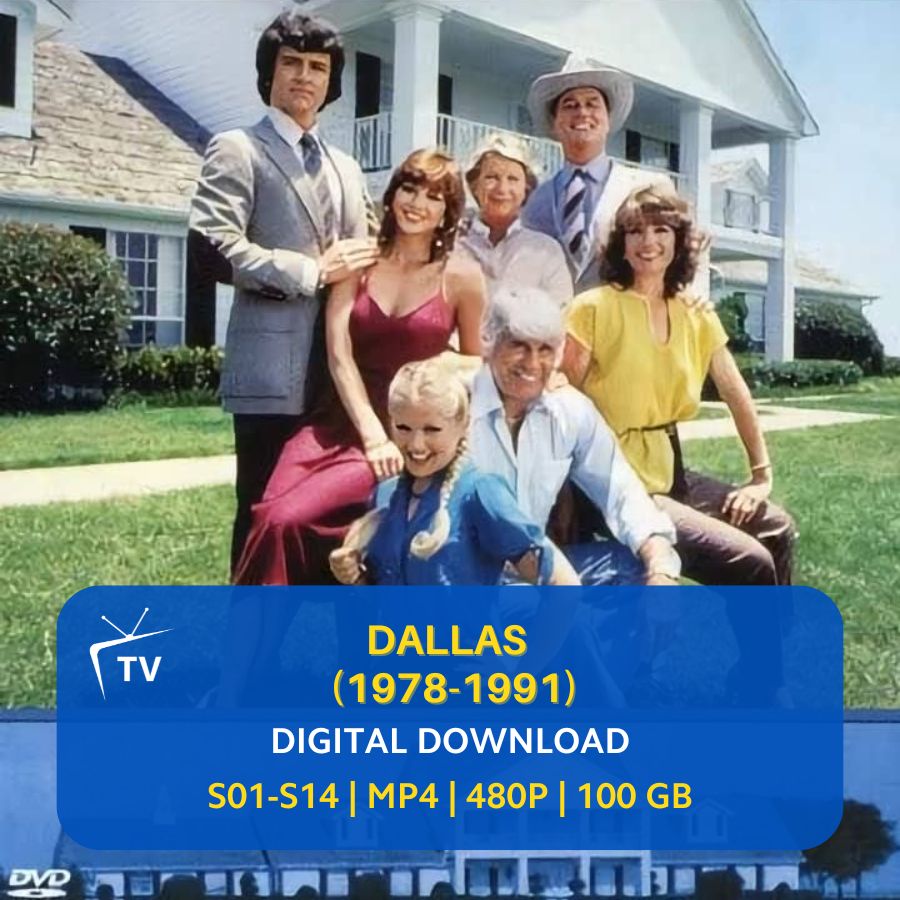
3. Dallas (1978–1991): The Birth of the Global Event
Although it debuted in the late 70s, Dallas was the definitive drama of the 1980s. It transformed the "prime-time soap opera" into a global phenomenon. While the show focused on the Ewings, a wealthy Texas oil family, its real contribution to television history was the mastery of the "cliffhanger."
The "Who Shot J.R.?" Phenomenon
In 1980, the "Who Shot J.R.?" storyline became a cultural milestone. The season-ending mystery regarding the fate of the villainous J.R. Ewing (Larry Hagman) captivated the world during the summer hiatus. When the resolution finally aired in November 1980, it drew an estimated 350 million viewers worldwide. This proved that television could be a shared global experience, a precursor to the "water cooler" TV discussions of the digital age.
Excess as a Narrative Device
Dallas (along with its rival Dynasty) leaned into the "Greed is Good" ethos of the 1980s. It presented a world of power, betrayal, and immense wealth that fascinated audiences across the socioeconomic spectrum. By focusing on a family dynasty rather than a workplace, it allowed for operatic emotional stakes that kept audiences hooked for over a decade.
4. St. Elsewhere (1982–1988): Medical Grittiness and Dark Humor
Before ER or Grey's Anatomy, there was St. Elsewhere. Set at St. Eligius, a decaying urban teaching hospital in Boston, the show was the "blue-collar" answer to the glossy medical dramas of the past. It was notable for its willingness to allow lead characters to fail, die, or leave under ignominious circumstances.
Realism and Mortality
St. Elsewhere demystified the medical profession. The doctors were often exhausted, cynical, and prone to making life-altering mistakes. The show tackled controversial subjects like breast cancer, AIDS, and addiction with a frankness that was rare for the 1980s. It also served as a launchpad for future stars, most notably Denzel Washington, who played Dr. Philip Chandler.
The "Tommy Westphall" Legacy
The series is perhaps most famous—or infamous—for its final episode. The "snow globe" ending suggested that the entire six-year run of the series had been a figment of a child's imagination. This led to the "Tommy Westphall Universe" theory, a pop-culture rabbit hole where fans have linked hundreds of TV shows together through crossovers and shared characters, proving just how deeply St. Elsewhere embedded itself in the collective consciousness of television viewers.
5. Cagney & Lacey (1981–1988): Breaking the Gender Barrier
Cagney & Lacey was a landmark in the representation of women on television. While there had been female leads before, Christine Cagney (Sharon Gless) and Mary Beth Lacey (Tyne Daly) were the first to lead a gritty police drama where their gender was central to the narrative but not a gimmick.
The Complexity of Female Partnership
The show explored the contrast between its two leads: Cagney was a single, career-driven detective, while Lacey was a working mother balancing a family with a dangerous job. The drama didn't just come from the crimes they solved, but from their interactions with a male-dominated police force and their support for one another.
Social Issues and Advocacy
Cagney & Lacey was unapologetically political. It tackled issues such as workplace harassment, alcoholism (Cagney’s battle with the bottle was a multi-season arc), breast cancer, and the Equal Rights Amendment. It was a show that respected its audience's intelligence, refusing to sugarcoat the difficulties women faced in both their professional and private lives. Its success proved that female-led dramas could be both critically acclaimed and commercially viable.
Comparative Overview of Notable 80s Dramas
The following table compares these five series across key metrics of influence and style.
| Series | Primary Genre | Key Innovation | Visual/Audio Style |
|---|---|---|---|
| Hill Street Blues | Police Procedural | Multi-arc serialization | Handheld cameras, overlapping dialogue |
| Miami Vice | Crime/Action | Music-driven narrative | Pastel/Neon color palette, MTV-inspired |
| Dallas | Family Saga | The modern cliffhanger | Glossy, high-budget soap opera |
| St. Elsewhere | Medical Drama | Gritty realism/dark humor | Urban, claustrophobic hospital setting |
| Cagney & Lacey | Police Drama | Authentic female leads | Dialogue-heavy, social-realist |
The Enduring Influence on Modern TV (Context for 2026)
As of 2026, these shows have undergone a digital renaissance. While their hair styles and technology (car phones and bulky monitors) are clearly artifacts of the 1980s, their DNA is visible in contemporary programming.
- The Ensemble Model: Every major streaming drama now uses the ensemble model pioneered by Hill Street Blues. The idea of "no single protagonist" allows for more complex world-building.
- Cinematic TV: The "Peak TV" era owes its visual ambition to Miami Vice. The standard for television cinematography was raised permanently once audiences saw that a weekly show could look as good as a feature film.
- Serialized Tension: The "binge-watching" culture is built on the foundation laid by Dallas. The "need to know what happens next" is a narrative hook that Dallas perfected through its cliffhangers.
- Moral Ambiguity: The "anti-hero" archetype, popularized by characters like Tony Soprano or Walter White, has roots in the flawed, often failing professionals of St. Elsewhere and Hill Street Blues.
Frequently Asked Questions
Which 80s drama had the most impact on modern police shows?
Hill Street Blues is widely considered the most influential. It introduced the "ensemble" format and the "gritty" aesthetic that would later define 20th-century hits like NYPD Blue and 21st-century masterpieces like The Wire. Before this show, police work on TV was largely stylized and episodic; after it, it became serialized and character-driven.
Why is Miami Vice considered "notable" beyond its fashion?
While the fashion was a huge cultural moment, Miami Vice's real legacy is its use of music and cinematography. It was the first show to use contemporary pop music as a narrative tool rather than just background filler. It also used "visual storytelling"—telling the story through lighting and color rather than just dialogue—which was a revolutionary concept for television in 1984.
Are these 80s series still available to watch in 2026?
Yes, most of these series are available through major streaming services, though licensing frequently shifts. Dallas and Miami Vice are often found on platforms specializing in legacy content. Hill Street Blues and St. Elsewhere are frequently available on services owned by Disney or NBCUniversal, given their production history with MTM Enterprises and various networks.
What was the "MTM" style?
MTM Enterprises (founded by Mary Tyler Moore and Grant Tinker) produced Hill Street Blues and St. Elsewhere. The "MTM style" was characterized by high-quality writing, complex character development, and a willingness to blend comedy with intense drama. It became a mark of "prestige" television long before that term was commonly used.
Why wasn't Dynasty included in the top 5?
While Dynasty was incredibly popular and influential in terms of fashion and "camp" culture, Dallas is generally considered the more historically significant of the two. Dallas pioneered the massive seasonal cliffhanger and had a broader global reach, setting the template that Dynasty and other prime-time soaps later followed.
Practical Recommendation for Viewers
If you are a student of television history or a casual viewer looking to understand where modern dramas come from, the best starting point is Hill Street Blues.
Start with the first season. Pay attention to how the show handles the morning "roll call" and how it transitions between the various detectives' lives. You will likely notice that the pacing and the "busy" feel of the precinct feel surprisingly modern. For those interested in the "vibe" of the 80s, a few episodes of Miami Vice (specifically the pilot, "Brother's Keeper") will provide the perfect introduction to the decade's unique aesthetic and musical influence.