In 2026, the top whole life insurance providers for multi-generational planning are Northwestern Mutual, MassMutual, New York Life, Guardian Life, and Penn Mutual. These carriers are selected for their long-standing mutual ownership structures, consistent dividend histories, and specialized riders that allow families to maximize tax-advantaged cash value growth and facilitate seamless wealth transfer across generations.
Multi-generational planning is a sophisticated financial strategy that extends beyond simple death benefit protection. It involves using permanent life insurance as a cornerstone for estate liquidity, wealth accumulation, and the creation of a "family bank." By choosing the right provider, policyholders can ensure that the capital they build today remains accessible to their children and grandchildren, shielded from unnecessary taxation and market volatility.
The Strategic Role of Whole Life Insurance in Legacy Building
Whole life insurance serves as a unique asset class in 2026, particularly for high-net-worth families navigating a complex tax environment. Unlike term insurance, which expires after a set period, whole life provides permanent coverage and a cash value component that grows at a guaranteed rate plus potential dividends.
For multi-generational planning, the primary goal is often to provide liquidity. As of 2026, the sunsetting of the Tax Cuts and Jobs Act (TCJA) provisions has lowered the federal estate tax exemption, meaning more families are facing significant tax liabilities upon the death of the second spouse. A well-structured whole life policy provides the liquid cash necessary to pay these taxes without forcing the liquidation of family businesses or real estate holdings.
Furthermore, these policies offer a "step-up" in financial capability for future generations. By utilizing a "Second-to-Die" or survivorship policy, parents can ensure a significant influx of capital is available precisely when the estate tax bill arrives. Alternatively, individual policies on younger family members can be funded by grandparents, creating a massive head start on retirement and legacy goals through the power of compounding dividends over seven or eight decades.
1. Northwestern Mutual: The Strength of Dividend Consistency
Northwestern Mutual remains a dominant force in the whole life landscape of 2026. As a mutual company, it is owned by its policyholders rather than shareholders, which aligns the company's long-term interests with those of families planning for the next century.
Financial Stability and Ratings
Northwestern Mutual consistently maintains the highest possible financial strength ratings from major agencies like A.M. Best (A++), Fitch (AAA), Moody’s (Aaa), and S&P (AA+). For multi-generational planning, this stability is non-negotiable. A policy intended to pay out 50 or 60 years from now must be backed by a company with an impeccable balance sheet.
Dividend Performance
In 2026, Northwestern Mutual continues its streak of paying substantial dividends to participating policyholders. While dividends are never guaranteed, the company has paid them every year since 1872. These dividends can be used to purchase Paid-Up Additions (PUAs), which increase both the death benefit and the cash value of the policy without requiring additional medical underwriting. This mechanism is the engine behind multi-generational wealth growth.
Specialized Planning Services
Northwestern Mutual offers integrated wealth management services that complement their insurance products. Their advisors are specifically trained in estate planning and can help coordinate between legal counsel and tax professionals to ensure the insurance is held within the proper trust structures, such as an Irrevocable Life Insurance Trust (ILIT).
2. MassMutual: Flexibility and Direct Recognition
Massachusetts Mutual Life Insurance Company (MassMutual) is a premier choice for families who prioritize flexibility in how they access their policy’s cash value. MassMutual’s whole life products are designed with high-early-cash-value options that are particularly attractive for "Infinite Banking" or family bank strategies.
Policy Structure Options
MassMutual offers a variety of payment structures, including 10-Pay and 20-Pay policies. For a grandparent looking to "seed" a legacy for a grandchild, a 10-Pay policy allows them to fully fund the insurance in a decade, after which the policy remains in force forever with no further premiums required, continuing to grow for the grandchild's entire life.
Direct Recognition vs. Non-Direct Recognition
MassMutual utilizes a direct recognition model for policy loans. This means the dividend rate on the portion of the cash value used as collateral for a loan may be adjusted. In 2026, this is often viewed as a benefit for long-term planners who do not intend to borrow heavily from the policy, as it typically allows the company to offer a higher base dividend rate to those who leave their capital untouched.
Survivorship Whole Life
Their survivorship whole life products are specifically engineered for estate tax liquidity. By covering two lives (usually spouses) and paying out upon the death of the second, the premiums are generally lower than two individual policies, and the benefit arrives exactly when the estate tax is due.
3. New York Life: Customization and Longevity
New York Life is the largest mutual life insurance company in the United States and has built its reputation on conservative management and highly customizable products. For multi-generational planning, their "Custom Whole Life" product is a standout in 2026.
Custom Whole Life (CWL)
The CWL product allows policyholders to pick the exact year they want the policy to be "paid up." This is essential for families who want to align their insurance funding with specific liquidity events, such as the sale of a business or reaching a certain retirement age. You can structure a policy to be fully funded by age 65, ensuring that no premiums are due during the "distribution phase" of the family's financial life.
Chronic Care Rider
Multi-generational planning isn't just about death; it's about protecting assets during life. New York Life’s chronic care riders allow policyholders to accelerate a portion of the death benefit if they require long-term care. This prevents the family from having to drain other legacy assets (like a family home or investment portfolio) to pay for medical expenses, thereby preserving the rest of the estate for the heirs.
Asset Integrity
New York Life’s investment portfolio is famously conservative, focusing on high-quality fixed-income assets. In the volatile economic climate of 2026, this "safe harbor" status makes it a preferred choice for the foundational layer of a multi-generational wealth strategy.
4. Guardian Life: Maximizing Wealth Accumulation
Guardian Life is often the provider of choice for those who are focused on the "living benefits" of whole life insurance—specifically, the rapid accumulation of cash value. Their policies are highly compatible with the Paid-Up Additions (PUA) rider, which allows for significant over-funding of the policy within IRS limits.
Non-Direct Recognition
Unlike MassMutual, Guardian is a non-direct recognition carrier. This means that if you take a loan against your cash value, Guardian continues to pay the full dividend on the entire cash value, including the portion you have borrowed. For families who want to use their policy as a source of capital for other investments (like real estate or business ventures) while still growing their legacy, Guardian is often the superior choice.
The L-Series Policies
Guardian’s L-series policies are designed for maximum flexibility. They offer riders that can prevent the policy from lapsing even if high loans are taken, and their disability waiver of premium is one of the most comprehensive in the industry. This ensures that if the primary breadwinner becomes disabled, the multi-generational funding plan remains on track.
Trust Services
Guardian provides specialized support for families using insurance in tandem with trusts. They understand the nuances of third-party ownership, which is critical for ensuring that the death benefit is not included in the insured's taxable estate.
5. Penn Mutual: Consistent Value and Innovation
Penn Mutual may be smaller than the "Big Three," but it consistently punches above its weight in dividend performance and product innovation. In 2026, Penn Mutual is recognized for offering some of the most competitive internal rates of return (IRR) on cash value and death benefits.
High Dividend Scales
Penn Mutual has historically maintained one of the highest dividend scales in the industry. For a multi-generational plan, a fraction of a percentage point in dividend performance can result in hundreds of thousands of dollars in difference over a 50-year timeframe due to the power of compounding.
Technological Integration
Penn Mutual has invested heavily in its digital platforms, making it easier for families to manage policies across multiple owners and beneficiaries. Their "Accelerated Client Experience" (ACE) allows for faster underwriting, which is beneficial for older family members who may want to secure coverage quickly before health changes occur.
Flexible Term Riders
To maximize the efficiency of a whole life policy for multi-generational planning, many advisors use a "Term Rider" to increase the death benefit early on while keeping costs low. Penn Mutual’s term riders are exceptionally flexible, allowing for a strategic balance between immediate protection and long-term cash accumulation.
Comparison of Top Whole Life Providers (2026 Data)
| Provider | Financial Strength (A.M. Best) | Dividend Philosophy | Best For... | Key Feature |
|---|---|---|---|---|
| Northwestern Mutual | A++ | Direct Recognition | Overall Stability | Largest Payouts |
| MassMutual | A++ | Direct Recognition | Policy Flexibility | 10-Pay/20-Pay Specialists |
| New York Life | A++ | Direct Recognition | Customization | Custom Paid-Up Dates |
| Guardian Life | A++ | Non-Direct Recognition | Cash Value Borrowing | Non-Direct Recognition Loans |
| Penn Mutual | A+ | Non-Direct Recognition | High Growth/IRR | Competitive Dividend Scale |
Essential Riders for Multi-Generational Planning
When structuring a policy for legacy purposes, the "base" policy is rarely enough. In 2026, sophisticated planners use specific riders to tailor the coverage:
- Paid-Up Additions (PUA) Rider: This is the most critical rider for multi-generational wealth. It allows you to "dump" extra cash into the policy to buy more insurance that is already paid for. This increases the cash value and the death benefit exponentially over time.
- Survivorship/Second-to-Die Rider: Ideal for estate tax planning, this ensures the payout happens only when the second spouse passes, providing liquidity exactly when the IRS requires it.
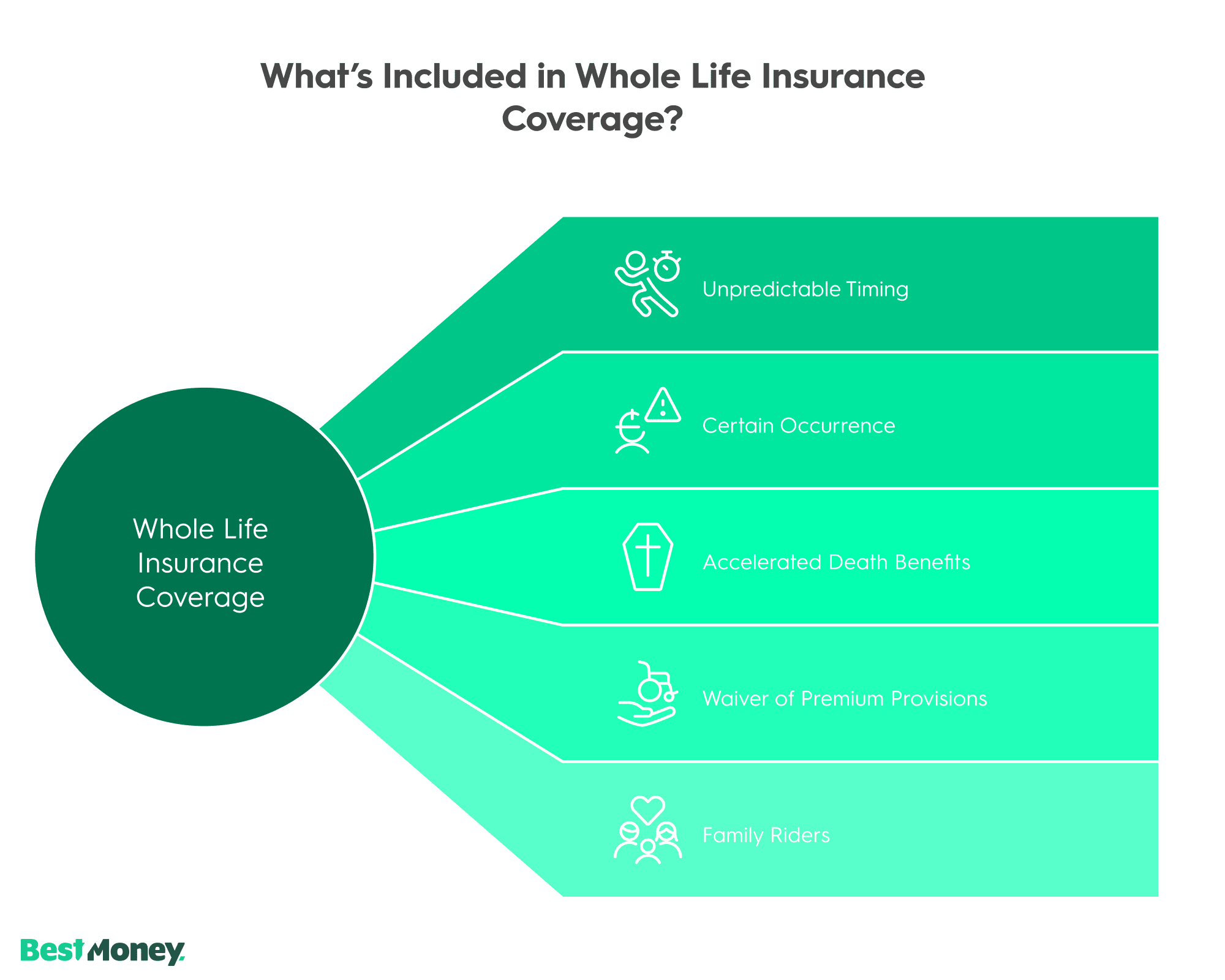
- Waiver of Premium: If the person paying the premiums becomes disabled, the insurance company takes over the payments. This guarantees the multi-generational plan continues even if the family's primary income is interrupted.
- Guaranteed Insurability Rider: This allows a child or grandchild to purchase more insurance at specific ages or life events without a medical exam. It protects the legacy against future health issues that might otherwise make them uninsurable.
Implementing the "Family Bank" Concept
A primary reason for choosing these specific providers in 2026 is their ability to support the "Family Bank" or "Infinite Banking" concept. This strategy involves using the cash value of a whole life policy to finance family needs—such as college tuition, a first home down payment, or a business startup—rather than using traditional banks.
By borrowing from the policy (which is essentially borrowing from the insurance company using your cash value as collateral), the family's capital continues to grow inside the tax-advantaged "envelope" of the policy. The interest paid on the loan goes back to the insurance company, but since you are a part-owner of a mutual company, you benefit from the company's overall profitability. This keeps wealth "in the family" across generations.
Common Mistakes in Multi-Generational Insurance Planning
Even with a top-tier provider, a poorly structured plan can fail. Avoid these common pitfalls:
- Failure to Use an ILIT: If you own the policy personally, the death benefit may be included in your taxable estate. In 2026, with lower estate tax exemptions, using an Irrevocable Life Insurance Trust is often essential to ensure the full benefit reaches your heirs.
- Triggering a MEC: A Modified Endowment Contract (MEC) occurs if you put too much money into a policy too quickly. This strips the policy of its tax-favored status for loans. Expert guidance is needed to "max fund" a policy without crossing the MEC line.
- Ignoring the Dividend Option: For legacy planning, dividends should almost always be set to "Purchase Paid-Up Additions." Taking them in cash or using them to reduce premiums slows down the growth of the death benefit significantly.
- Selecting a Non-Mutual Company: Publicly traded companies must answer to shareholders. In multi-generational planning, you want a mutual company where the interests of the policyholders are the sole priority.
Frequently Asked Questions
Why is whole life better than term for multi-generational planning?
Term insurance is designed for temporary needs, such as a mortgage or children's upbringing. It almost always expires before the policyholder dies. Multi-generational planning requires a guaranteed payout to handle estate taxes and create a permanent legacy, which only permanent insurance like whole life can provide.
How does the 2026 tax landscape affect these policies?
With the expiration of many 2017 tax reforms at the end of 2025, estate tax exemptions have decreased. This means a larger portion of a family's wealth is subject to a 40% federal tax. Whole life insurance provides a tax-free death benefit that can cover this liability, preserving the actual assets (stocks, property) for the heirs.
Can I start a policy for my grandchild?
Yes. Many families use a "Juvenile Whole Life" strategy where a grandparent purchases a policy on a grandchild. Because the grandchild is young and healthy, the cost of insurance is extremely low, allowing the cash value to compound for 70 or 80 years, creating a massive financial foundation for the grandchild's future.
What is "Direct Recognition" and why does it matter?
Direct Recognition is how a company treats your dividend when you have an outstanding loan. If you plan to use your policy's cash value frequently to fund other investments, a "Non-Direct Recognition" company like Guardian or Penn Mutual may be better, as they don't lower your dividend on the borrowed amount.
Are dividends guaranteed in 2026?
No, dividends are never guaranteed. However, the five providers listed above have paid dividends every year for over a century, including through the Great Depression, the 2008 financial crisis, and the pandemic. This history provides a high degree of confidence for long-term planning.
Final Recommendation
For most families seeking to establish a multi-generational legacy in 2026, Northwestern Mutual offers the highest level of overall security and historical performance. However, if your strategy involves frequent borrowing to fund family business ventures, Guardian Life or Penn Mutual may be more efficient due to their non-direct recognition policies.
Before committing to a policy, consult with a specialized estate planning attorney and a tax professional. The structure of the ownership (e.g., inside a trust) is just as important as the choice of the insurance provider to ensure that your multi-generational wealth remains protected from taxes and creditors.