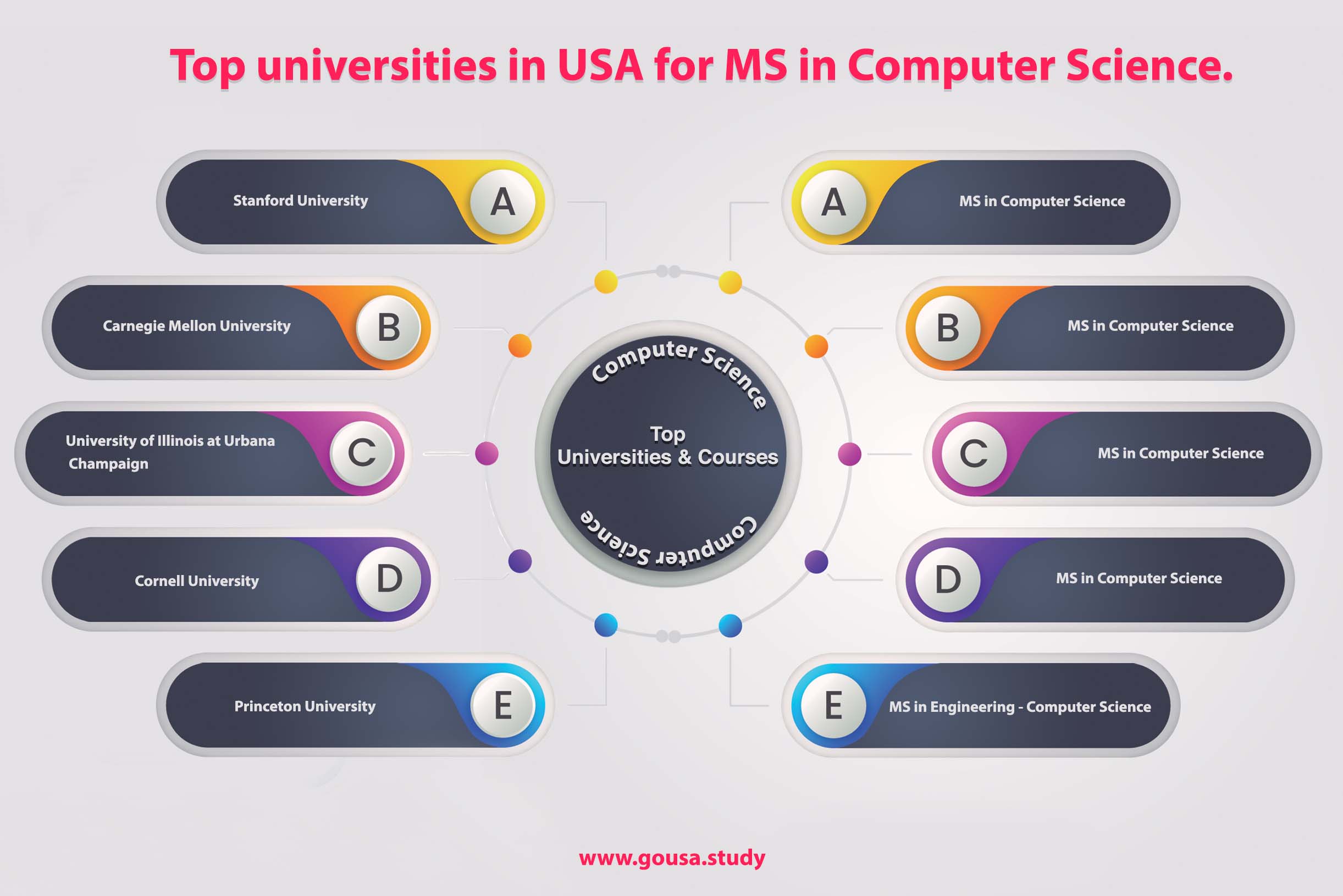
Choosing a Master of Science (MS) in Computer Science represents a pivotal investment in advanced technical education, career mobility, and specialized research capabilities. Evaluating top-tier graduate programs requires balancing curriculum depth, faculty expertise, research infrastructure, institutional reputation, and career placement metrics. The 5 best MS programs in Computer Science for 2026 combine rigorous theoretical foundations with cutting-edge applications in artificial intelligence, systems engineering, cybersecurity, and data science, offering prospective students unparalleled pathways into academia and industry leadership.
Understanding the Landscape of Graduate Computer Science Education
Navigating the landscape of graduate computer science education requires a clear understanding of what distinguishes top-tier institutions from the rest. The best Master of Science programs in computer science are characterized by rigorous admission selectivity, world-class research faculties, robust corporate recruitment pipelines, and extensive alumni networks. Prospective students must differentiate between terminal professional master's degrees—which often prioritize rapid workforce entry through coursework and applied projects—and research-oriented master's degrees that involve substantial thesis work and preparation for doctoral studies.
As the technology sector evolves, academic programs continuously update their core requirements and elective offerings. Emerging sub-disciplines such as quantum computing, large-scale machine learning, ethical AI governance, and advanced cryptography have moved from niche research areas into foundational curriculum components. Evaluating these programs requires looking beyond marketing brochures and examining faculty publication records, laboratory funding, graduate employment outcomes, and curriculum flexibility.
1. Massachusetts Institute of Technology (MIT) - EECS Graduate Program
The Department of Electrical Engineering and Computer Science (EECS) at the Massachusetts Institute of Technology consistently ranks at the pinnacle of global computer science education and research. While MIT primarily admits students directly into its Ph.D. track, the Master of Science in EECS serves as a cornerstone of its graduate framework, often earned en route to a doctorate or through specialized master's paths closely tied to research laboratories.
Curriculum and Research Environment
MIT’s academic environment bridges rigorous mathematical foundations with high-impact system implementation. Students engage with the Computer Science and Artificial Intelligence Laboratory (CSAIL), the Laboratory for Information and Decision Systems (LIDS), and the MIT Institute for Data, Systems, and Society (IDSS). Coursework ranges from advanced algorithms and cryptography to distributed systems and computer architecture.
Admissions Selectivity and Prerequisites
Admission to MIT EECS is intensely competitive, typically drawing thousands of applicants globally for a tightly managed cohort. Successful applicants generally present exceptional undergraduate academic records in computer science, mathematics, or related engineering disciplines. Strong letters of recommendation from recognized researchers, a clear statement of objectives aligned with ongoing faculty research, and documented programming or mathematical research proficiency are essential prerequisites.
2. Stanford University - MS in Computer Science
Stanford University, situated in the heart of Silicon Valley, offers an MS in Computer Science that is globally renowned for its integration with the tech industry and its entrepreneurial ecosystem. The Stanford Computer Science Department structures its master's program to allow both deep specialization and broad foundational knowledge across distinct focus areas.
Specialization Tracks
The Stanford program allows students to declare a specific specialization, tailoring their coursework to align with career objectives or research interests. Available tracks include:
- Artificial Intelligence
- Biocomputation
- Computer and Network Security
- Human-Computer Interaction (HCI)
- Information Management and Analytics
- Real-World Computing
- Software Engineering
- Systems
- Theory
Industry Integration and Career Outcomes
Proximity to venture capital firms and global technology headquarters provides Stanford graduate students with unique internship, networking, and employment opportunities. The program accommodates both full-time on-campus students and working professionals through the Stanford Center for Professional Development (SCPD), which offers part-time online enrollment options without compromising academic rigor.
3. Carnegie Mellon University (CMU) - School of Computer Science
Carnegie Mellon University houses one of the first and largest dedicated university-level computing schools in the world. The School of Computer Science (SCS) operates distinct master's programs, including the highly regarded traditional MS in Computer Science, the Master of Science in Automated Science, and specialized professional master's tracks tailored to software engineering, machine learning, and language technologies.
Program Distinction and Research Focus
CMU’s approach to computer science emphasizes interdisciplinary problem-solving and intense practical application. The faculty and student body pioneer advancements in robotics, software verification, human-computer interaction, and computational biology. The curriculum demands high-level proficiency in systems programming, theoretical computer science, and applied artificial intelligence.
Admissions and Technical Expectations
Applicants to CMU SCS undergo rigorous evaluation, with particular emphasis on coding proficiency, mathematical maturity, and quantitative aptitude. Unlike programs that accept applicants from diverse non-technical backgrounds, CMU generally expects a robust undergraduate preparation in computer science, computer engineering, or rigorous applied mathematics. GRE scores, while sometimes optional depending on the specific track, are heavily scrutinized when submitted.
4. University of California, Berkeley (UC Berkeley) - EECS Master's Programs
The Department of Electrical Engineering and Computer Sciences at UC Berkeley combines public institution accessibility with world-class private-tier research output. UC Berkeley offers the Master of Science (MS) as part of its Ph.D. pathway and the Master of Computer Science (MCS) or Master of Engineering (M.Eng.) for students seeking terminal professional preparation.
Research Centers and Collaborative Culture
UC Berkeley is home to influential research entities such as the Berkeley Artificial Intelligence Research (BAIR) Lab, the Real-Time Intelligent Secure Execution (RISELab), and the Foundations of Data Science Institute. Students collaborate across disciplines, contributing to open-source software projects, RISC-V hardware architecture development, and advanced machine learning frameworks.
Financial Considerations and Funding
As a premier public research university, tuition structures at UC Berkeley differ significantly for California residents and out-of-state or international students. While terminal professional master's students typically self-fund their education or secure industry sponsorship, research-track MS and Ph.D. candidates frequently receive graduate student instructor (GSI) or graduate student researcher (GSR) appointments that offset tuition and provide living stipends.
5. University of Illinois Urbana-Champaign (UIUC) - MCS and MS in Computer Science
The Department of Computer Science at the University of Illinois Urbana-Champaign boasts a historic legacy of innovation, including the development of the ILLIAC supercomputers and the Mosaic web browser. UIUC offers both a thesis-based MS in Computer Science and a coursework-only Master of Computer Science (MCS), available both on-campus and online via scalable digital platforms.
Flexibility and Accessibility
The UIUC online MCS program has democratized access to top-tier computer science graduate education, allowing working professionals worldwide to complete coursework from the same faculty teaching on campus. The curriculum covers high-demand areas such as cloud computing, data mining, database systems, and information security.
Research Excellence and Infrastructure
For on-campus students, UIUC provides access to the National Center for Supercomputing Applications (NCSA) and state-of-the-art computing clusters. The department maintains strong recruitment pipelines with major financial institutions, defense contractors, and Silicon Valley enterprises.
Comparative Overview of Top MS Programs in Computer Science
Evaluating these five institutions side-by-side clarifies their distinct structural advantages, degree formats, and primary programmatic focuses.
| Institution | Primary Degree Offerings | Program Format Options | Key Research Focus Areas | Typical Cohort Profile |
|---|---|---|---|---|
| MIT | MS (EECS), Ph.D. | Full-time, On-campus | AI, Systems, Theory, Cryptography | Highly selective, research-focused |
| Stanford University | MS in Computer Science | Full-time / Part-time (SCPD) | AI, HCI, Systems, Security | Industry-connected, flexible tracks |
| Carnegie Mellon | MS in CS, Professional Master's | Full-time, On-campus | Robotics, Software Engineering, ML | Rigorous technical prerequisite focus |
| UC Berkeley | MS, M.Eng., MCS | Full-time, On-campus | BAIR, RISELab, Hardware/Software | Public research excellence, diverse tracks |
| UIUC | MS in CS, MCS | On-campus / Online (MCS) | Cloud Computing, Data Mining, Systems | High accessibility via online format |
Key Factors in Selecting an MS Program
Choosing the correct master's program extends beyond institutional prestige. Applicants must systematically evaluate several operational and academic dimensions to ensure alignment with their long-term career trajectory.
Curriculum Structure: Thesis vs. Non-Thesis
Deciding between a research-focused (thesis) master's and a professional (non-thesis/coursework) master's is a critical first step. A thesis-based MS requires original research, close mentorship under a faculty advisor, and defense of a written thesis. This path is ideal for individuals contemplating doctoral studies or research and development (R&D) roles in industrial labs. Conversely, a coursework-based or professional master's accelerates entry into the workforce, focusing on advanced technical skills, group engineering projects, and practical electives.
Faculty Expertise and Laboratory Access
Prospective students aiming for specialized fields like computer vision, natural language processing, or blockchain engineering must investigate faculty publication histories and active grants. Access to well-funded laboratories, specialized computing hardware (such as GPU clusters), and industry-sponsored research initiatives directly impacts the quality of the graduate experience.
Return on Investment (ROI) and Total Cost of Attendance
Graduate tuition, mandatory fees, and living expenses vary widely between public state universities and private institutions. Applicants should calculate the net cost of attendance factoring in financial aid, teaching assistantships, research assistantships, and employer tuition reimbursement programs. Employment placement statistics, average starting salaries, and geographic alumni network density serve as reliable indicators of financial return.
Common Mistakes to Avoid When Applying
Navigating graduate school admissions requires meticulous preparation. Avoiding frequent missteps improves competitiveness across top-tier programs.
- Submitting Generic Statements of Purpose: Admissions committees reject applications that lack specific alignment with department faculty and ongoing research. Tailor every application to the specific strengths of the institution.
- Neglecting Prerequisite Gap Filling: Applying to rigorous programs without foundational mastery in linear algebra, data structures, algorithms, and discrete mathematics usually results in rejection. Complete bridge courses before applying if your undergraduate background is non-traditional.
- Ignoring Letter of Recommendation Quality: Academic or professional references who can speak in concrete detail about your technical problem-solving capabilities carry significantly more weight than generic endorsements from supervisors who only know you peripherally.
- Failing to Meet Funding Deadlines: Many prospective students focus entirely on admission deadlines while missing separate, earlier deadlines for departmental fellowships, assistantships, and financial aid consideration.
Frequently Asked Questions
Can I get into a top MS in Computer Science program with a non-CS undergraduate degree?
Yes, though it requires demonstrable proficiency in core quantitative and technical subjects. Many applicants with degrees in mathematics, physics, or engineering successfully transition by completing prerequisite coursework in data structures, algorithms, computer systems, and linear algebra prior to application, or by applying to programs specifically designed for academic conversion.
Are GRE scores mandatory for 2026 admissions?
GRE requirements vary significantly by institution. While some universities have permanently dropped the requirement or made it optional, others—particularly for competitive engineering tracks—continue to value quantitative and analytical GRE scores as a standardized metric across diverse international grading scales. Always verify the current admissions cycle guidelines directly on the official department admissions page.
What is the difference between an MS in Computer Science and a Master of Computer Science (MCS)?
An MS in Computer Science typically requires a research thesis or significant project component, preparing students for research roles or Ph.D. programs. An MCS (or Master of Engineering) is generally a terminal, coursework-only professional degree designed to equip working professionals or career-transitioning engineers with advanced practical computing skills.
How long does it take to complete an MS in Computer Science full-time?
Most full-time on-campus master's programs in computer science take between 1.5 to 2 years (3 to 4 semesters) to complete, depending on whether the curriculum includes a mandatory thesis, summer internships, or specialized capstone projects. Online professional degrees often offer flexible timelines ranging from 1 to 5 years.
Is financial aid or funding available for master's students?
Funding availability differs sharply between master's and doctoral students. While Ph.D. students are routinely fully funded with tuition waivers and stipends, terminal master's students are frequently self-funded or sponsored by employers. However, some universities offer merit-based scholarships, department-level graduate assistantships, or instructional roles to top-performing master's candidates.
Next Actions for Prospective Applicants
To initiate a successful application cycle, prospective students should begin by conducting a comprehensive self-assessment of their academic transcript, programming competencies, and career goals. Build a balanced school list containing reach, target, and safety programs based on admission statistics. Register for standardized tests early if required, cultivate professional and academic relationships for recommendation letters, and draft a targeted statement of purpose emphasizing specific institutional alignment. Engaging directly with admissions webinars, virtual open houses, and current graduate students provides valuable insight into the culture and expectations of each academic department.