A 4 kW home solar system is generally worth the cost for small households or energy-efficient homes with monthly electricity bills between $80 and $120. While smaller than the national average, it offers a shorter payback period and significant long-term savings, especially when utilizing the 30% federal tax credit and local incentives.
Investing in solar energy has shifted from a niche environmental choice to a calculated financial strategy for homeowners. As we move through 2026, the landscape of residential solar has matured. Hardware efficiencies have peaked with N-type and TOPCon cell technologies, and the financial structures supporting these installations—such as the Inflation Reduction Act’s extended credits—provide a stable foundation for calculating return on investment (ROI). However, the "worth" of a 4 kW system depends on more than just the sticker price; it requires an analysis of your energy consumption, roof orientation, and local utility rates.
Defining the 4 kW Solar System: Scale and Capacity
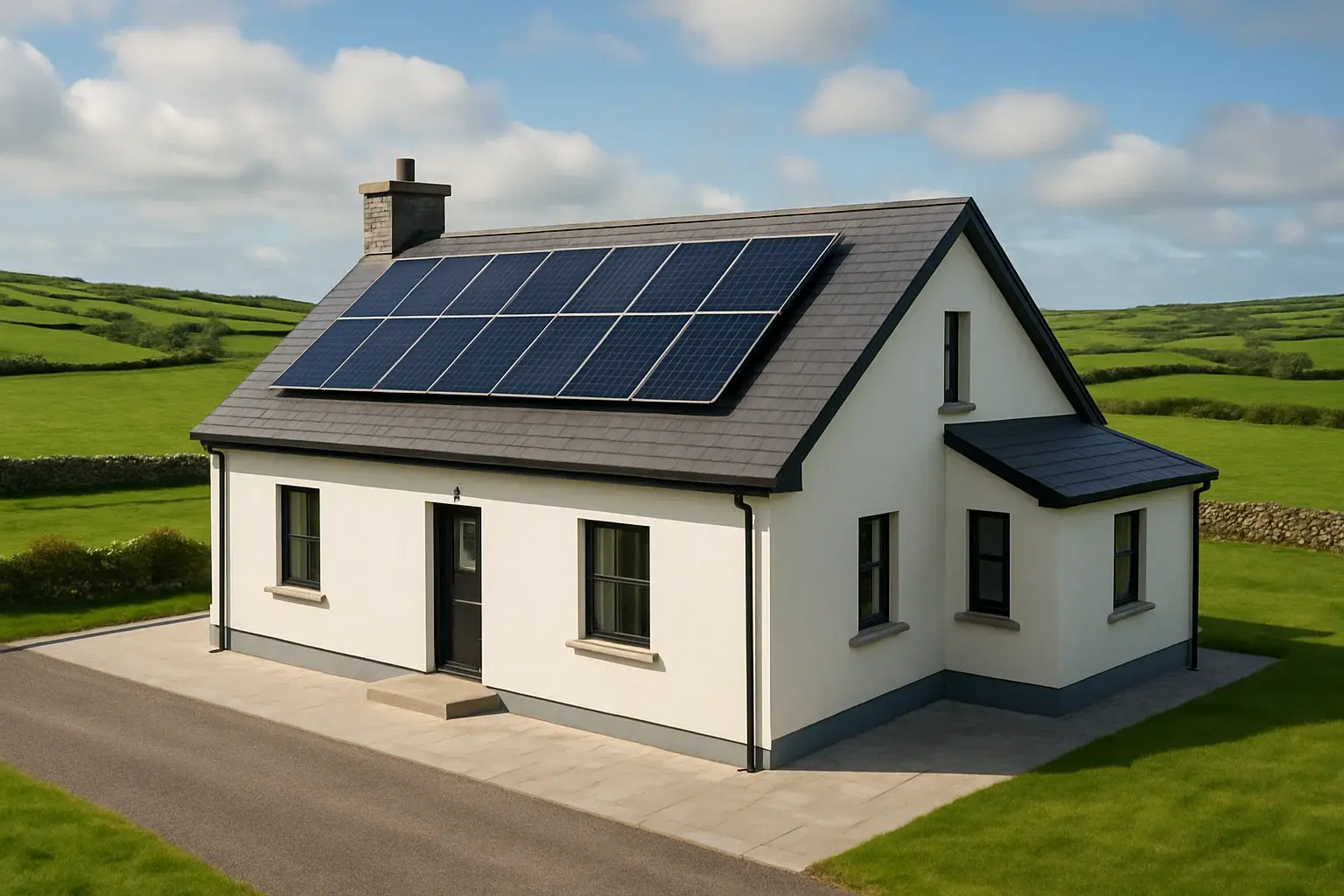
A 4 kilowatt (kW) solar system, also referred to as a 4,000-watt system, is considered a small-to-medium residential installation. In the context of 2026 technology, where high-efficiency panels often reach 400W to 450W each, a 4 kW array typically consists of 9 to 11 panels.
This size is particularly popular for "right-sizing" energy needs. For a household that has already invested in energy-efficient appliances, LED lighting, and smart thermostats, a massive 10 kW system might be overkill. The goal of a 4 kW system is often to wipe out the "base load" of a home—the constant energy draw from refrigerators, electronics, and HVAC fans—rather than trying to achieve 100% energy independence for a large, power-hungry estate.
Physical Requirements and Footprint
One of the primary advantages of a 4 kW system is its compact footprint. Each standard residential solar panel occupies approximately 17.5 to 20 square feet. Therefore, a 4 kW system requires roughly 180 to 220 square feet of clear, unshaded roof space. This makes it an ideal candidate for homes with complex rooflines, dormers, or limited south-facing exposure where a larger array simply wouldn't fit.
Expected Energy Output
The actual electricity generated by a 4 kW system is measured in kilowatt-hours (kWh). This production varies significantly based on your geographic location and the amount of "peak sun hours" your roof receives.
- High-Sun Regions (e.g., Arizona, Southern California): A 4 kW system can produce upwards of 6,500 to 7,200 kWh per year.
- Moderate-Sun Regions (e.g., Maryland, Ohio): Expect roughly 4,800 to 5,500 kWh per year.
- Low-Sun Regions (e.g., Washington State, New England): Production may fall between 4,000 and 4,500 kWh per year.
To put this in perspective, the average U.S. household consumes about 10,500 kWh annually. A 4 kW system in a sunny region could cover nearly 70% of that load, while in a cloudier climate, it might cover closer to 40%.
The Financial Breakdown: Costs and Incentives in 2026
In 2026, the gross cost of solar equipment has stabilized after the supply chain fluctuations of previous years. While labor and permitting costs remain a significant portion of the total price, the "price per watt" for a 4 kW system is slightly higher than for a larger 10 kW system due to diminishing economies of scale—the "soft costs" of sales, permitting, and truck rolls are largely the same regardless of system size.
Average Installation Costs
Currently, the national average for a professionally installed solar system ranges from $2.50 to $3.30 per watt. For a 4 kW system, the gross cost typically falls between $10,000 and $13,200.
| Component | Estimated Cost (Gross) | Description |
|---|---|---|
| Solar Panels | $3,000 – $4,500 | High-efficiency monocrystalline or N-type panels. |
| Inverter System | $1,500 – $2,500 | String inverters with optimizers or microinverters. |
| Racking & Mounting | $800 – $1,200 | Hardware to secure panels to the roof structure. |
| Labor & Electrical | $2,500 – $3,500 | Professional installation, wiring, and grid connection. |
| Permits & Overhead | $1,200 – $1,500 | Local building permits, inspections, and solar company margin. |
| Total Gross Cost | $9,000 – $13,200 | Before tax credits and local rebates. |
The Impact of the Federal Investment Tax Credit (ITC)
The most significant factor in making a 4 kW system "worth it" is the federal solar tax credit. Under the Inflation Reduction Act, homeowners can claim a 30% credit on their federal income taxes for the total cost of the solar system.
For a $12,000 system, this results in a $3,600 tax credit, bringing the effective net cost down to $8,400. It is important to note that this is a non-refundable tax credit, meaning you must have a federal tax liability to benefit from it, though it can be carried forward to future years if you cannot use the full amount in one year. More information on filing for this credit can be found on the Official IRS website.
Local Incentives and SRECs
Beyond the federal level, many states and municipalities offer additional incentives:
- State Tax Credits: Some states (like South Carolina or New York) offer additional credits that can knock another $1,000 to $2,500 off the price.
- Solar Renewable Energy Certificates (SRECs): In certain markets, you earn one SREC for every megawatt-hour (MWh) of electricity your system produces. These can be sold back to utilities, providing a small but steady stream of income (roughly $50–$300 per year depending on the state).
- Utility Rebates: Some local utility companies provide upfront cash rebates to encourage solar adoption.
Assessing the Return on Investment (ROI)
The financial "worth" of solar is measured by its payback period—the number of years it takes for the utility bill savings to equal the initial net investment.
Payback Period Calculation
If your 4 kW system costs $8,400 after the federal tax credit and saves you $100 per month on electricity ($1,200 annually), your simple payback period is 7 years. Given that modern solar panels are warrantied for 25 years and often last 30 to 35 years, you would enjoy 18 to 28 years of essentially "free" electricity.
The Rising Cost of Utility Power
One of the strongest arguments for 4 kW solar is "hedging" against inflation. Utility rates have historically increased by 2% to 4% annually. By installing solar, you lock in your electricity costs at today’s prices. As grid prices rise over the next two decades, your solar savings actually increase in value.
Property Value Enhancement
Research from the Lawrence Berkeley National Laboratory has consistently shown that homes with solar installations sell for more than comparable homes without them. On average, solar adds about $4,000 in value for every 1 kW of installed capacity. For a 4 kW system, this could translate to a $16,000 increase in home value, which in many cases exceeds the net cost of the installation itself.
Technical Considerations: When Is a 4 kW System NOT Worth It?
While the financial outlook is generally positive, certain technical hurdles can negate the benefits of a 4 kW installation.
1. Inefficient Roof Orientation and Shading
Solar panels perform best on south-facing roofs with a tilt between 30 and 45 degrees. If your only available roof space faces North or is heavily shaded by mature trees or neighboring buildings, a 4 kW system may only produce 50% of its rated capacity. In such cases, the payback period could stretch beyond 15 years, making it a poor financial investment.
2. Net Metering Policies (NEM 3.0 and Beyond)
The value of your solar energy depends heavily on how your utility compensates you for the excess power you send back to the grid.
- Full Net Metering: You receive a 1:1 credit for every kWh sent to the grid. This is the "gold standard" for solar ROI.
- Net Billing (e.g., California's NEM 3.0): You are credited at a much lower "export rate" (often 75% lower than the retail rate). In these regions, a 4 kW system is only worth it if you can consume most of the power as it is generated or if you pair it with a small battery storage system to avoid selling power cheaply to the utility.
3. Future Energy Needs
If you plan to buy an Electric Vehicle (EV) or switch from gas heating to an electric heat pump in the next 3 to 5 years, a 4 kW system will likely be insufficient. It is often cheaper to install a larger 6 kW or 8 kW system now than it is to add panels to a 4 kW system later, as adding panels requires new permits, additional labor, and potentially a new inverter.
Comparing 4 kW to Other System Sizes
Homeowners often wonder if they should go smaller or larger. The following table compares a 4 kW system to common alternatives based on 2026 averages.
| System Size | Ideal For | Est. Net Cost (After 30% ITC) | Annual Savings (Est.) | Payback Period |
|---|---|---|---|---|
| 2 kW | Tiny homes / Condos | $4,900 | $500 - $650 | 8 - 10 Years |
| 4 kW | Small homes / Energy-efficient | $8,400 | $1,000 - $1,300 | 6 - 8 Years |
| 6 kW | Average U.S. home | $11,500 | $1,500 - $1,900 | 6 - 7 Years |
| 10 kW | Large families / EV owners | $18,500 | $2,500 - $3,200 | 5 - 7 Years |
Note: Payback periods are shorter for larger systems due to the lower cost-per-watt for equipment and labor.
Maintenance and Long-Term Reliability
A 4 kW system is remarkably low-maintenance. Because it has no moving parts, there is very little that can break.
- Panel Longevity: Most Tier-1 panels (such as those from Qcells, REC, or Maxeon) come with a 25-year performance warranty, guaranteeing at least 85% to 92% of their original output at year 25.
- Inverter Replacement: The inverter is the "brain" of the system and typically needs replacement once every 12 to 15 years. Budget approximately $1,500 to $2,500 for this mid-life maintenance event.
- Cleaning: In most climates, rainfall is sufficient to keep panels clean. In dusty or high-pollen areas, a professional cleaning once a year (costing $150–$300) can boost efficiency by 5% to 10%.
Frequently Asked Questions
Can a 4 kW solar system run a whole house?
A 4 kW system can provide enough energy for the total annual needs of a small, highly efficient house (approx. 800–1,200 sq. ft.), but it cannot "run" the house in real-time during peak loads. For example, if you run an electric dryer, an oven, and an air conditioner simultaneously, the house will draw more than 4 kW of power, meaning you will pull the excess from the utility grid. Solar provides the volume of energy, while the grid (or a battery) provides the instantaneous power needed for heavy loads.
Is 4 kW enough to charge an Electric Vehicle?
An average EV requires about 30 kWh of electricity to travel 100 miles. A 4 kW system produces roughly 12 to 20 kWh per day. Therefore, a 4 kW system could offset the energy needed for a daily commute of 40 to 60 miles, provided the car is charged when the sun is shining or you have a favorable net metering agreement. If you drive more than that, you will likely need a larger system.
Do I need a battery with a 4 kW system?
In 2026, the decision to add a battery (like a Tesla Powerwall or Enphase IQ Battery) depends on your utility's rules. If you have "Full Net Metering," a battery is usually not worth the extra $10,000+ cost unless you want backup power for outages. If you are under a "Net Billing" structure or "Time-of-Use" rates, a battery is often essential to make a 4 kW system financially viable, as it allows you to store your solar energy for use during expensive evening hours.
How much does a 4 kW solar system cost without installation?
If you are looking at a DIY kit, a 4 kW system can cost between $4,500 and $6,500. However, DIY solar is complex and requires significant electrical knowledge. Most jurisdictions require a licensed electrician to perform the final grid interconnection and a structural engineer to sign off on roof attachments. Furthermore, many manufacturers only honor warranties if the system is installed by a certified professional.
Will a 4 kW system work during a power outage?
Standard grid-tied 4 kW systems will shut down automatically during a power outage for safety reasons (to prevent "islanding" or sending power back to lines that utility workers may be repairing). To have power during an outage, you must add a battery backup or use specific "sunlight backup" inverters like those offered by Enphase, which can provide limited power directly from the panels during the day.
Final Recommendation: Is It Worth It?
For the majority of small-to-medium households in 2026, a 4 kW home solar system is a highly worthwhile investment. It strikes a balance between a manageable upfront cost and significant long-term utility savings.
A 4 kW system is right for you if:
- Your monthly electric bill is currently between $80 and $130.
- You have limited roof space (under 250 sq. ft.) or a complex roof.
- You live in a state with a 30% federal tax credit and favorable net metering.
- Your primary goal is to reduce your carbon footprint and hedge against rising utility rates rather than achieving total grid independence.
You should consider a larger system (6 kW+) if:
- You plan to add an EV, heat pump, or pool heater in the future.
- Your monthly bill regularly exceeds $150.
- You live in an area with low sun exposure where a 4 kW array won't produce enough to justify the fixed "soft costs" of installation.
Before signing a contract, always obtain at least three quotes from reputable local installers and request a detailed shading analysis to ensure your specific roof can deliver the expected return on investment.