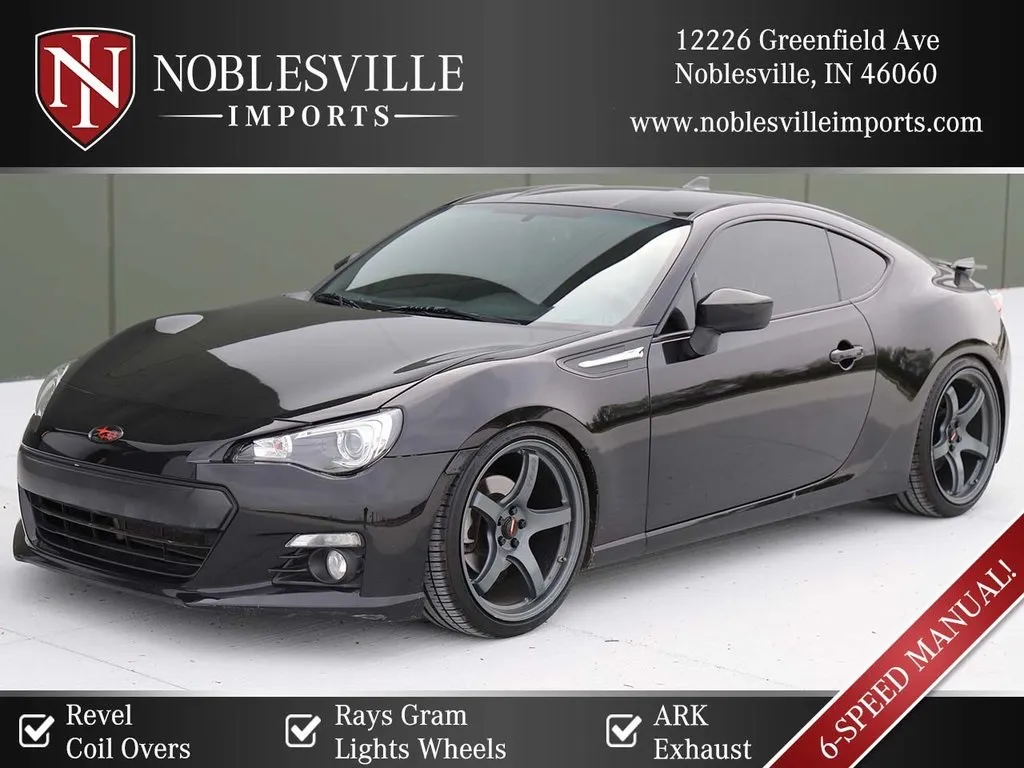
The 2016 Subaru BRZ Premium remains worth it for drivers who prioritize mechanical purity and handling over modern luxury features. As of 2026, its status as a lightweight, rear-wheel-drive enthusiast platform—offering a standard Torsen limited-slip differential and a lower entry price than the Limited trim—makes it an exceptional value for daily driving and tuning.
The Subaru BRZ, developed in partnership with Toyota (the "Toyobaru" project), was designed with a singular focus: the joy of driving. While the automotive landscape in 2026 has shifted heavily toward electrification and heavy, sensor-laden SUVs, the 2016 BRZ stands as a monument to analog feedback. Specifically, the "Premium" trim represents the entry point of the 2016 lineup, stripping away the creature comforts that add weight and cost, leaving behind the essential DNA of a sports car.
Defining the 2016 BRZ Premium Trim
In the context of the 2016 model year, "Premium" was a slightly counter-intuitive name, as it actually denoted the base trim level. Unlike the higher "Limited" trim, the Premium was designed for the purist. It excluded features such as Alcantara seat inserts, dual-zone automatic climate control, and keyless ignition.
For many buyers, this lack of complexity is exactly what makes the car worth it. In 2026, a decade after these vehicles rolled off the assembly line, electronic simplicity often translates to better long-term reliability and lower maintenance costs. The 2016 model year is particularly noteworthy because it represents the final year of the "Pre-Facelift" generation. It benefited from three years of production refinements—addressing early engine issues found in 2013 models—while retaining the original, classic styling before the 2017 updates.
Technical Specifications and Performance Core
At the heart of the 2016 BRZ Premium is the FA20 engine, a 2.0-liter naturally aspirated four-cylinder Boxer engine. This engine layout is fundamental to the car's identity; by mounting the engine low and flat, Subaru achieved a center of gravity lower than that of many exotic supercars of its era.
The Power Paradigm
The FA20 produces 200 horsepower and 151 lb-ft of torque. While these numbers might seem modest by 2026 standards, the vehicle's curb weight of approximately 2,764 pounds ensures a high power-to-weight ratio. The engine utilizes Toyota’s D-4S injection system, which combines both direct and port injection to optimize combustion across the RPM range.
One characteristic of this engine that prospective buyers must understand is the "torque dip." Between 3,500 and 4,500 RPM, there is a noticeable plateau in acceleration. While this can be frustrating during highway merging, it encourages the driver to stay high in the rev range, rewarding those who use the smooth-shifting six-speed manual transmission to keep the engine singing toward its 7,400 RPM redline.
Handling and Chassis
The "worth" of a BRZ is found in the corners, not the drag strip. The 2016 Premium trim includes the same Torsen limited-slip differential (LSD) found in the Limited trim. This is a critical point: Subaru did not compromise the mechanical performance of the base model. The LSD allows for better power delivery when exiting corners and provides the predictable oversteer characteristics that have made the BRZ a favorite for autocross and drifting enthusiasts.
The suspension setup consists of MacPherson struts in the front and a double-wishbone rear suspension. This configuration provides immense tactile feedback through the electric power steering, which was widely praised for being one of the best-tuned systems of its time.
| Feature | 2016 BRZ Premium Specifications |
|---|---|
| Engine | 2.0L 4-Cylinder Boxer (FA20) |
| Horsepower | 200 hp @ 7,000 RPM |
| Torque | 151 lb-ft @ 6,400 RPM |
| Drivetrain | Rear-Wheel Drive (RWD) |
| Differential | Torsen Limited-Slip (Standard) |
| Transmission | 6-Speed Manual (Standard) / 6-Speed Auto (Opt) |
| Curb Weight | ~2,764 lbs |
| Fuel Economy | 22 City / 30 Hwy (Manual) |
| Brakes | 11.6-inch Front / 11.4-inch Rear Ventilated Discs |
The "Premium" vs. "Limited" Value Proposition
To determine if the 2016 Premium is worth it, one must compare it to the Limited trim of the same year. In the used market of 2026, the price gap between these trims is often narrow, yet the Premium offers a different ownership experience.
- Interior Materials: The Premium features durable black cloth upholstery. While less "upmarket" than the Limited’s leather and Alcantara, the cloth seats are often in better condition after ten years, as they are less prone to the cracking and bolsters-wear common in aged leather.
- Climate Control: The Premium uses manual three-dial climate controls. These are tactile, easy to use while driving, and lack the complex actuators of the dual-zone digital system that can fail over time.
- Fog Lights and Spoiler: The Premium lacks the front fog lights and the body-colored trunk spoiler found on the Limited. For some, this "slick top" look is more aesthetically pleasing and emphasizes the car's clean lines.
- Keyless Entry: The Premium uses a traditional physical key. While less convenient than a "Push to Start" button, it eliminates the risk of expensive key-fob programming issues or sensor failures in the door handles as the car ages.
For a driver planning to modify the car—replacing the seats with racing buckets or adding aftermarket aero—paying extra for the Limited's factory features is often a waste of capital.
Maintenance and Long-Term Reliability in 2026
When purchasing a decade-old sports car, the question of "worth" is tied directly to maintenance. By 2016, Subaru had addressed the catastrophic valve spring recalls that plagued early 2013 models. However, there are still specific areas to inspect:
- Throw-Out Bearing (TOB): On manual transmission models, the factory TOB was a known weak point. Many 2016 owners have already replaced these with the updated 2017+ part. If the clutch pedal feels "crunchy" or makes a squealing noise, this is a likely culprit.
- Cam Cover Leaks: Like many Boxer engines, the cam covers can develop small oil seeps over time. In 2026, with most 2016 models likely hovering around 80,000 to 120,000 miles, checking the underside of the engine for oil residue is essential.
- Spark Plug Service: The Boxer engine’s horizontal layout makes spark plug changes notoriously difficult, often requiring the engine to be partially lifted or specialized tools to be used in tight spaces. This service is typically due every 60,000 miles; verify if it has been performed recently.
- Infotainment: The 2016 model saw the introduction of the 6.2-inch Starlink touchscreen. While a significant upgrade over the 2013-2015 "brick" head units, it lacks modern smartphone integration like Apple CarPlay or Android Auto. Many owners find that replacing this with a modern head unit is a cheap way to make the car feel contemporary.
Market Positioning and 2026 Pricing
In 2026, the 2016 BRZ Premium occupies a "sweet spot" in the used car market. It is significantly more affordable than the second-generation BRZ (2022+), yet it offers a nearly identical driving experience to the 2017–2020 models.
While the 2017 refresh brought a slight 5hp increase and shorter final drive gearing, the 2016 model's longer gearing actually makes it a more relaxed highway cruiser. For those looking to build a track car or a dedicated "canyon carver," the money saved by choosing a 2016 Premium over a 2017+ Limited can be immediately reinvested into high-quality tires, brake pads, and suspension bushings—upgrades that will yield a much higher performance return than the factory 5hp bump.
According to historical pricing trends, well-maintained 2016 Premium models in 2026 tend to hold their value well because the supply of unmodified, non-salvage examples is dwindling. This makes them a relatively "safe" place to put money, as depreciation has largely flattened out.
Why the 2016 BRZ Premium is Worth It
The ultimate value of the 2016 Subaru BRZ Premium lies in its intentionality. It does not try to be a luxury grand tourer or a high-tech powerhouse. It is a tool for learning the art of driving.
It is worth it because it teaches you about weight transfer, the importance of momentum, and the nuances of steering through the fingertips rather than just the palms. In an era where most cars are insulating the driver from the road, the 2016 BRZ invites the road in. For the enthusiast on a budget, it remains one of the few vehicles that provides a "connected" feeling that is increasingly rare in the 2026 marketplace.
Related Questions
How does the 2016 BRZ Premium handle as a daily driver? The 2016 BRZ is surprisingly practical for a sports car, featuring a "fold-flat" rear seat that allows for the transport of four track tires or a set of golf clubs. However, the ride is firm, and cabin noise is significantly higher than in a standard sedan or crossover. If your commute involves heavy traffic, the heavy clutch and low seating position may be tiring, but for those with open roads, the engagement is a daily reward.
Is the 2016 model year better than the 2013-2015 models? Yes. The 2016 model year is generally considered the best of the "pre-facelift" cars. It includes various internal engine refinements, improved weather stripping to prevent "window squeak," and a more modern (though still dated) infotainment system. Most importantly, it is largely free from the early valve spring recall issues that affected the 2013 production run.
Can I add the features of the Limited trim to a Premium later? Most mechanical parts are interchangeable. You can easily add the factory spoiler, fog lights, or even swap in the Alcantara seats from a wrecked Limited model. However, adding the dual-zone climate control or the keyless "Push to Start" system is prohibitively difficult and expensive, as it requires swapping the entire dashboard wiring harness and various sensors.
Does the 2016 BRZ require premium fuel? Yes, the FA20 engine has a high compression ratio (12.5:1) and requires 91 or 93 octane fuel. Using lower-grade fuel can lead to engine knocking and will cause the ECU to retard timing, significantly reducing power and potentially causing long-term damage to the engine components.
Final Recommendation
If you are looking for a pure, rear-wheel-drive sports car that emphasizes driver skill over raw power, the 2016 Subaru BRZ Premium is an outstanding choice. Seek out a specimen with a documented service history, specifically looking for recent oil changes and spark plug replacements. Prioritize cars with minimal modifications, as these tend to have been driven more gently. For the purist, the 2016 Premium is not just a budget option; it is the most honest version of a modern classic.