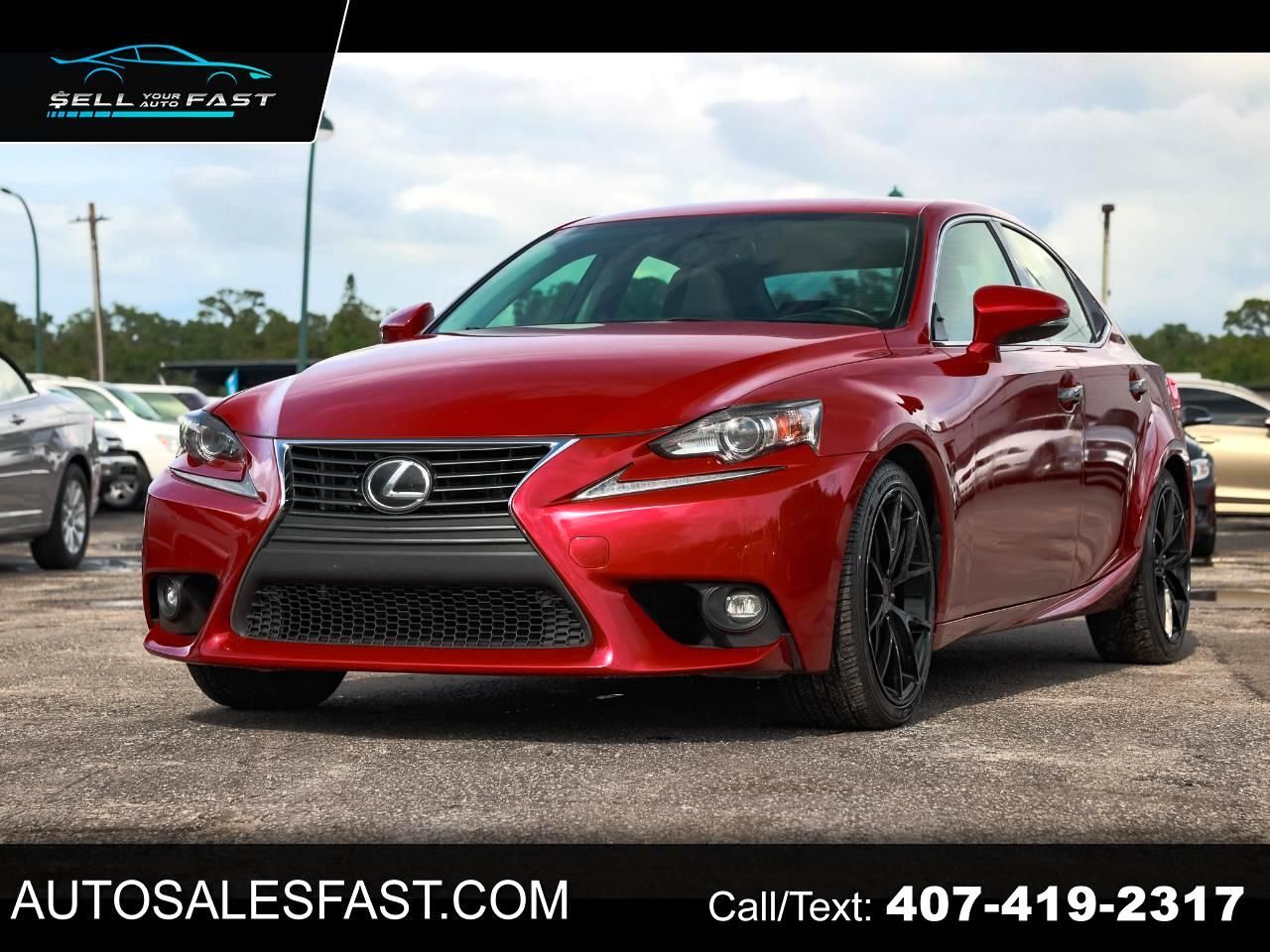
The 2015 Lexus IS 250 produces an exact output of 204 horsepower at 6,400 RPM and 185 lb-ft of torque at 4,800 RPM from its 2.5-liter V6 engine, sitting as a crucial transitional model in the compact executive sedan's mechanical evolution before the introduction of the direct-injection 2.0-liter turbo and 2.0-liter naturally aspirated variants in subsequent generations.
When automotive enthusiasts and prospective buyers examine the 2015 Lexus IS 250, they often find themselves parsing through shifting specifications, performance figures, and powertrain lineages. Lexus introduced the third generation of its popular compact executive sports sedan for the 2014 model year, and the 2015 iteration maintained this dynamic design language, interior architecture, and mechanical layout. Understanding the exact power figures of this vehicle requires looking closely at its naturally aspirated engine code, how it delivers power to the pavement, and where it fits within the broader historical lineage of the IS model line.
Core Powertrain Specifications of the 2015 Lexus IS 250
At the heart of the 2015 Lexus IS 250 is the 4GR-FSE engine, a 2.5-liter (2,499 cc) 24-valve V6 featuring dual VVT-i (Variable Valve Timing with intelligence). Unlike some of its high-performance stablemates or modern turbocharged contemporaries, this powerplant relies on port fuel injection rather than direct injection alone (though it uses a variant of Toyota's D-4 fuel injection system depending on the regional market, the North American version utilizes port injection combined with aluminum alloy blocks and heads).
The exact horsepower output is officially rated at 204 horsepower (hp), which translates to approximately 152 kilowatts, achieved at 6,400 RPM. Torque production reaches its peak at 185 lb-ft (251 Nm), delivered at a relatively high 4,800 RPM. This configuration means the driver must explore the upper half of the tachometer to access the engine's maximum capability.
The engine is paired exclusively with a 6-speed automatic transmission equipped with steering-wheel-mounted paddle shifters when configured in rear-wheel-drive (RWD) layouts. For models equipped with the optional all-wheel-drive (AWD) system, Lexus utilized a functionally identical 6-speed automatic transmission tailored to distribute power front and rear.
| Specification | Rear-Wheel Drive (RWD) Model | All-Wheel Drive (AWD) Model |
|---|---|---|
| Engine Type | 2.5L V6 (4GR-FSE) | 2.5L V6 (4GR-FSE) |
| Horsepower | 204 hp @ 6,400 RPM | 204 hp @ 6,400 RPM |
| Torque | 185 lb-ft @ 4,800 RPM | 185 lb-ft @ 4,800 RPM |
| Transmission | 6-speed sequential automatic | 6-speed sequential automatic |
| Curb Weight | ~3,583 lbs | ~3,737 lbs |
| 0-60 MPH Time | ~7.7 seconds | ~7.9 seconds |
The Evolution of the Lexus IS Powerplant Lineage
To fully appreciate the 2015 IS 250, it is helpful to examine its position within the broader historical evolution of the Lexus IS family, which spans multiple generations and engine swaps.
First Generation (IS 300, 2001–2005)
The lineage began in North America with the IS 300, powered by the legendary 2.0-liter inline-six 1G-FE (in global markets as the IS 200) and the 3.0-liter 2JZ-GE inline-six producing 215 horsepower. This era established the IS as a nimble, rear-wheel-drive competitor to the BMW 3 Series, prioritizing a mechanical, connected driving feel.
Second Generation (IS 250 and IS 350, 2006–2013)
For the second generation, Lexus completely overhauled the engine lineup, introducing V6 engines to replace the older inline-sixes. The IS 250 designation was born here, utilizing the same 4GR-FSE 2.5-liter V6 making 204 horsepower. During this era, critics and owners noted that while the cabin was quiet and refined, the 204-horsepower output lagged behind turbocharged German rivals in pure acceleration, a trade-off for bulletproof reliability and smoothness.
Third Generation and the 2015 Model Year (2014–2020)
When the third generation launched for 2014, it retained the exact same 2.5-liter V6 engine and 6-speed automatic transmission from the outgoing second-generation platform, despite adopting a stiffer chassis, more aggressive styling, and a modern interior. Therefore, the 2015 Lexus IS 250 represents the pinnacle—and the final curtain call—for this specific 2.5-liter V6 configuration in many major markets.
Following the 2015 model year, Lexus retired the IS 250 entirely. For the 2016 model year, they replaced it with the IS 200t (featuring a 2.0-liter turbocharged inline-four producing 241 horsepower) and later introduced other variants. This shift marked a definitive industry pivot away from naturally aspirated entry-level luxury V6 engines toward forced-induction four-cylinder configurations that offered superior low-end torque and better fuel economy figures.
Performance Realities and Driving Dynamics
While 204 horsepower is modest by contemporary standards—especially in a luxury sport sedan weighing over 3,500 pounds—the engine's charm lies in its refined power delivery and mechanical character.
Power Delivery and Throttle Response
Because the 4GR-FSE is naturally aspirated, it lacks the sudden surge of low-end torque characteristic of modern turbocharged engines. Peak torque arrives at 4,800 RPM, meaning drivers stepping away from a stoplight will experience linear, predictable acceleration rather than neck-snapping thrust. Zero to 60 miles per hour takes approximately 7.7 seconds for the RWD variant, placing the vehicle squarely in cruiser territory rather than track-day performance.
Transmission Behavior
The 6-speed automatic transmission is recognized for its durability and smooth shifts, though it lacks the extra ratios found in the 8-speed automatic units fitted to the higher-tier IS 350 models of the same year. In manual mode using the steering wheel paddle shifters, the transmission holds gears reasonably well, allowing drivers to keep the engine operating inside its optimal power band.
Fuel Economy Considerations
The trade-off for a relatively modest horsepower output from a V6 displacement is fuel efficiency that aligns with mid-2010s standards. The EPA estimated the 2015 Lexus IS 250 RWD at roughly 21 mpg city, 30 mpg highway, and 24 mpg combined. The heavier AWD variant sees a slight penalty, dropping to approximately 20 mpg city, 27 mpg highway, and 23 mpg combined.
Maintenance, Reliability, and Common Mechanical Traits
One of the primary reasons buyers seek out a used 2015 Lexus IS 250, despite its lower horsepower output compared to rivals like the BMW 328i or Audi A4 of the same era, is long-term reliability.
Carbon Buildup Considerations
Because early iterations of direct-injection engines experienced carbon accumulation on the intake valves due to fuel bypassing the intake tract, prospective buyers should note how the 4GR-FSE behaves. While some international variants use direct injection exclusively, North American versions utilized a port injection system that mitigates severe carbon buildup issues common to pure direct-injection engines of that era. However, routine inspections of the intake system during major service intervals remain a sound preventative maintenance step.
Routine Servicing
Maintaining the 2015 Lexus IS 250 involves standard practices:
- Oil Changes: Synthetic 0W-20 oil every 10,000 miles or 12 months.
- Spark Plugs: Replacement of the iridium spark plugs around every 60,000 to 100,000 miles.
- Fluid Flushes: Regular inspection and changing of transmission fluid, coolant, and brake fluid to ensure longevity.
Frequently Asked Questions
Is the 2015 Lexus IS 250 faster than the IS 350?
No, the IS 350 is significantly faster. While the IS 250 produces 204 horsepower, the IS 350 utilizes a 3.5-liter V6 (the 2GR-FSE) that generates 306 horsepower and 277 lb-ft of torque, dropping the 0–60 mph time to under 6 seconds while utilizing an 8-speed automatic transmission (on RWD models).
Can the horsepower of a 2015 Lexus IS 250 be easily upgraded?
Extracting significantly more power from the 2.5-liter V6 through aftermarket modifications is difficult and generally cost-ineffective. Because the engine is naturally aspirated, bolt-on modifications like cold-air intakes or exhaust systems yield very minor gains (often fewer than 5–10 horsepower) while altering the acoustic profile rather than transforming real-world acceleration.
Why did Lexus replace the IS 250 after 2015?
Lexus retired the IS 250 after the 2015 model year to align with global automotive trends favoring smaller displacement, turbocharged engines. Regulatory pressures regarding fleet fuel economy and consumer demand for low-end torque made turbocharged inline-four engines a more competitive choice for entry-level luxury sport sedans.
Does the 2015 Lexus IS 250 come in manual transmission?
No. The third-generation Lexus IS lineup (2014 and later) did not offer a manual transmission option in North America or most global markets, relying exclusively on the 6-speed automatic transmission for the IS 250.
Is the AWD system on the 2015 Lexus IS 250 rear-biased?
Yes. The electronic all-wheel-drive system on the IS 250 AWD typically sends 70% of engine power to the rear wheels under normal driving conditions to preserve sporty handling dynamics, but it can shift up to 50% of power to the front wheels automatically when slip is detected.
Final Recommendation and Buying Guidance
For drivers prioritizing bulletproof mechanical reliability, a quiet cabin, smooth V6 refinement, and classic rear-wheel-drive proportions over aggressive acceleration, the 2015 Lexus IS 250 remains a dependable entry-level luxury sedan. Those seeking brisk acceleration and modern sports-sedan performance will find the higher-tier IS 350 or subsequent turbocharged variants a better match for their driving expectations. When shopping for a pre-owned model, prioritize service records, verify suspension components, and confirm that all routine maintenance milestones have been properly addressed.