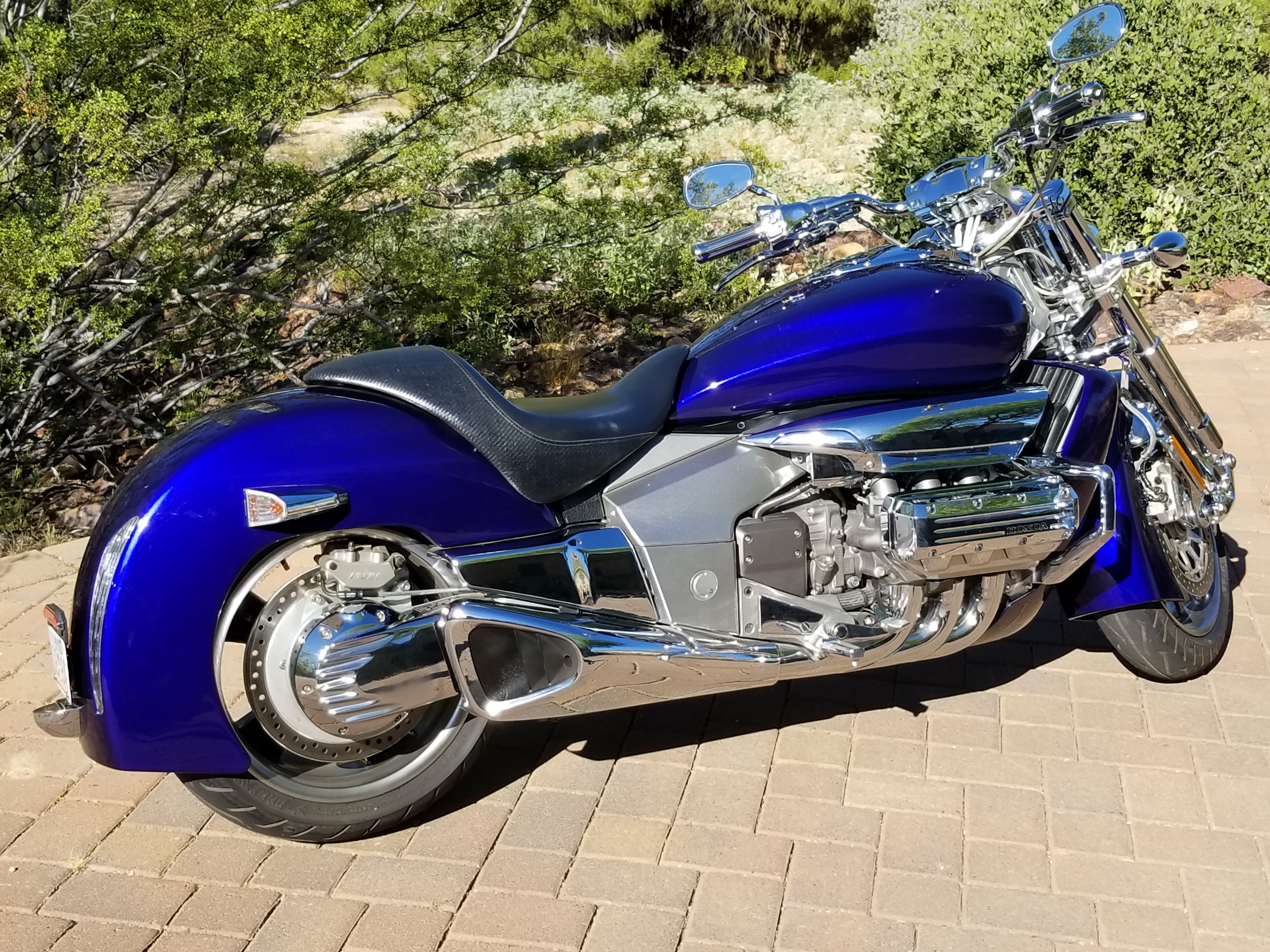
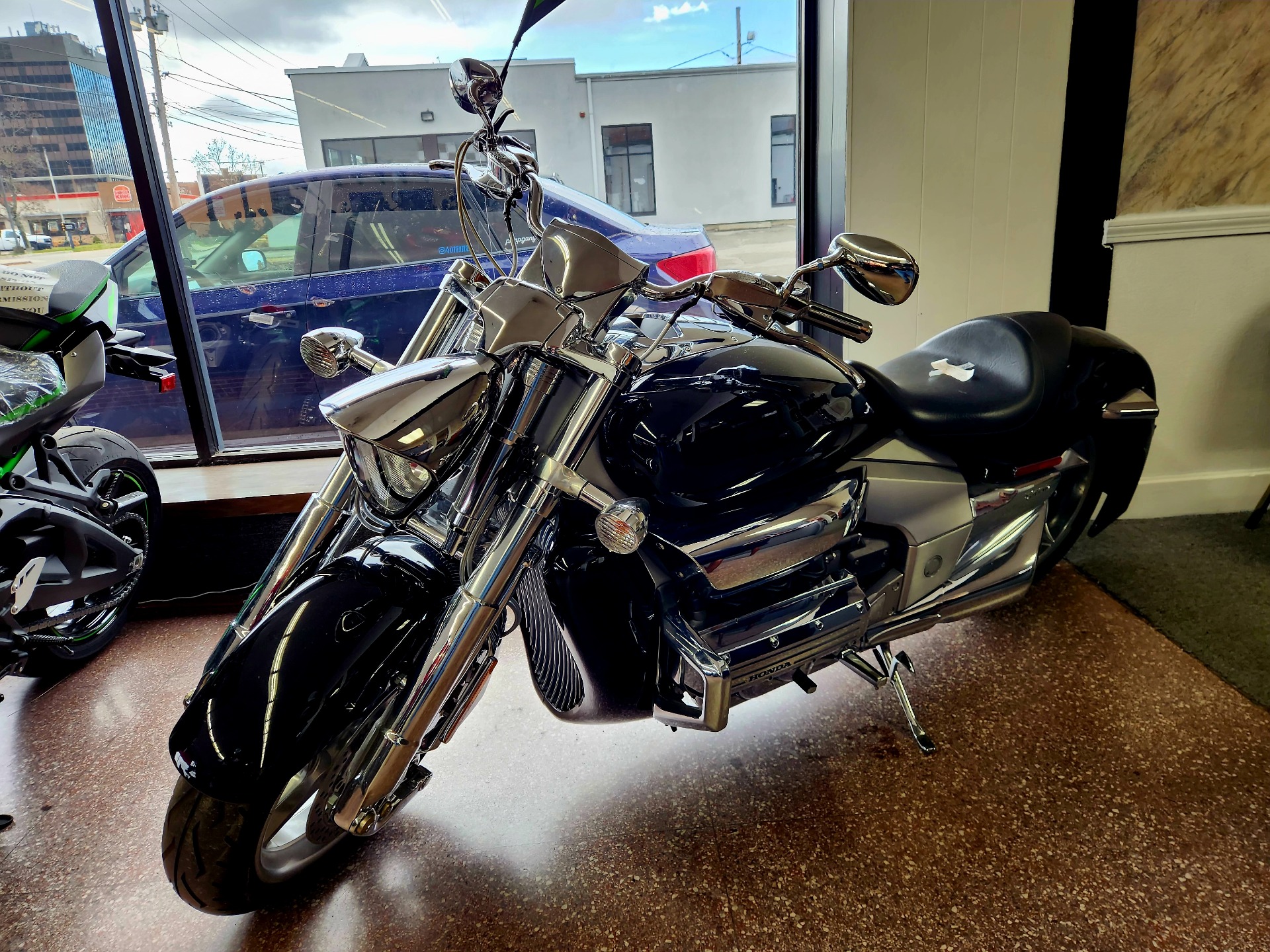
The 2004 Honda Valkyrie Rune is a legendary production custom motorcycle built around a massive 1,832cc flat-six engine derived from the Gold Wing. It combines avant-garde styling, inspired by 1930s art deco streamliner trends and hot-rod culture, with sophisticated engineering, offering an uncompromising blend of show-bike presence and heavy cruiser performance.
Introduction to the Honda Valkyrie Rune
When Honda introduced the Valkyrie Rune for the 2004 model year, it shattered conventions regarding what a factory motorcycle could look and feel like. Rather than following traditional cruiser formulas, Honda handed its designers and engineers a blank slate, giving them the rare freedom to turn a concept bike—specifically the Zodia concept shown at the 2001 Tokyo Motor Show—into a street-legal reality. The resulting machine, officially designated the NRX1800, stood as a rolling sculpture that prioritized emotional impact, mechanical mastery, and exclusivity above mass-market practicality.
For enthusiasts, collectors, and riders evaluating the machine today, understanding the Valkyrie Rune requires looking past its striking aesthetic. Beneath the flowing chrome and custom bodywork lies an immensely powerful flat-six engine and an advanced chassis architecture. Evaluating this motorcycle demands a close look at its historical context, mechanical specifications, riding dynamics, ownership considerations, and long-term collectibility.
Origins and Concept-to-Production Evolution
The story of the Valkyrie Rune begins with the success of the standard Honda Valkyrie (GL1500C), a power cruiser that utilized the flat-six engine from the GL1500 Gold Wing. While the standard Valkyrie gained a devoted following for its locomotive-like smoothness and distinct exhaust note, Honda wanted to push the envelope further. The design team, led by American Honda’s project leaders and Japanese engineers, sought to capture the essence of American hot-rod culture while incorporating Japanese precision manufacturing.
When the Zodia concept debuted, industry observers assumed it would remain an untouchable design exercise. However, Honda committed to producing the bike with minimal compromises to its radical lines. To achieve this, engineers developed entirely new manufacturing processes. The steel twin-tube frame was paired with a unique trailing-link front suspension system and a single-sided aluminum swingarm incorporating shaft drive. Every component—from the custom teardrop taillight to the massive chrome-plated exhaust headers—was custom-designed specifically for the Rune, resulting in a staggering development cost that made the bike a halo project for the brand.
Powertrain and Performance Specifications
At the heart of the 2004 Honda Valkyrie Rune is a liquid-cooled, 1,832cc, SOHC, 12-valve flat-six engine. Fed by computer-controlled programmed fuel injection (PGM-FI) with six 40mm throttle bodies, this powerplant delivers effortless torque across the entire rev range.
| Specification | Detail |
|---|---|
| Engine Type | Liquid-cooled, 1,832cc SOHC 12-valve flat-six |
| Bore and Stroke | 74.0mm x 71.0mm |
| Compression Ratio | 9.8:1 |
| Fuel Delivery | PGM-FI with automatic choke |
| Transmission | 5-speed constant-mesh |
| Final Drive | Shaft drive |
| Front Suspension | Unit Pro-Link trailing-link with one shock absorber |
| Rear Suspension | Pro-Arm single-sided swingarm with single shock |
| Front Brakes | Dual 330mm discs with 4-piston calipers |
| Rear Brakes | Single 336mm disc with dual-piston caliper |
| Wet Weight | Approximately 803 lbs (364 kg) |
| Wheelbase | 69.1 inches (1,755 mm) |
The engine is tuned differently than its contemporary Gold Wing sibling, featuring unique cam profiles and ignition mapping that prioritize low-end grunt and a visceral exhaust note. Power is sent to the rear wheel through a smooth five-speed transmission and a clean shaft-drive system, requiring minimal routine maintenance while delivering power with turbine-like linearity.
Chassis, Suspension, and Handling Dynamics
Riding the Valkyrie Rune is an experience unlike any traditional cruiser. Its chassis design features a massive steel frame that hugs the flat-six engine tightly, keeping the center of gravity remarkably low despite the bike's substantial physical footprint.
The front suspension is a mechanical masterpiece: a trailing-link design mounted to an aluminum steering knuckle. This setup separates braking forces from suspension action, virtually eliminating front-end dive under heavy braking. Stopping power is managed by dual 330mm front discs and a large rear disc, providing strong, reassuring deceleration for an 800-pound machine.
Out on the road, the Rune is surprisingly composed. Its long 69.1-inch wheelbase ensures exceptional straight-line stability, turning highways into effortless cruising zones. While the sheer physical dimensions and weight demand respect in tight urban environments or low-speed U-turns, the balanced chassis design allows the bike to sweep through long, flowing curves with grace and stability.
Design Variations: Standard Bars vs. Chrome Extension Bars
When purchasing or evaluating a 2004 Honda Valkyrie Rune, buyers will encounter two distinct factory handlebar configurations designated by suffix codes:
- NRX1800(A): Equipped with standard handlebars that sweep back toward the rider in a traditional cruiser posture.
- NRX1800(B): Equipped with "VMT" (Valence-styled) chrome-sleeved pull-back handlebars that extend further back, altering the riding position to place the rider in a more upright, relaxed stance.
Additionally, the bike was offered with two distinct rear-fender configurations: a traditional short fender and a longer touring-oriented fender (though availability of options varied by market and model year). Buyers could also choose between a standard chrome wheel finish or custom-style wheels, depending on the specific trim package ordered.
Ownership Experience and Maintenance
Owning a Valkyrie Rune involves balancing the pride of possessing a rare automotive art piece with the practical realities of maintaining a specialized, low-production motorcycle.
Because the engine is closely related to the GL1800 Gold Wing, the mechanical core is famously durable. The flat-six motor routinely exceeds 100,000 miles with basic fluid changes, valve inspections, and spark plug replacements. Shaft drive eliminates messy chain adjustments, and the robust electrical charging system easily powers accessories.
However, bodywork and proprietary chassis components present unique challenges. Because Honda manufactured the Rune in limited numbers between 2004 and 2005, specific cosmetic parts—such as the custom headlight housing, unique exhaust shields, specialized body panels, and front suspension linkage components—can be difficult and expensive to source if damaged. Owners must exercise caution to protect the intricate chrome and custom paintwork from parking lot mishaps and road debris.
Collectibility and Market Status
As time moves forward, the Honda Valkyrie Rune has transitioned from an expensive, misunderstood novelty into a bona fide modern classic and a sought-after collector item. When new in 2004, the Rune carried a steep manufacturer's suggested retail price—well over $25,000—which limited its initial sales volume.
Today, clean, low-mileage examples command strong interest on the collector market. Enthusiasts appreciate that manufacturers will likely never build another production motorcycle with such an uncompromised, extravagant design budget. Value is heavily dictated by condition, mileage, color rarity (such as Illusion Blue or Double-Clear Black), and whether the bike retains its original factory exhaust and un-modified bodywork.
Frequently Asked Questions
What is the difference between a 2004 and a 2005 Honda Valkyrie Rune?
Mechanically and aesthetically, the 2004 and 2005 models are virtually identical. Honda produced the Rune across these two model years with minor color updates, but no significant structural or performance changes were introduced during its brief production run.
Is the Honda Valkyrie Rune a practical motorcycle for daily commuting?
While it can be ridden daily, its massive size, heavy weight (over 800 pounds), wide turning radius, and limited storage make it less practical than standard tourers or mid-sized cruisers. It excels on open highways and as a weekend cruiser or showpiece.
How much fuel does the Valkyrie Rune hold and what is its range?
The Rune features a fuel capacity of approximately 6.1 US gallons (including reserve). Due to the high-performance tuning of its flat-six engine and its heavy weight, real-world fuel economy typically ranges from 30 to 35 mpg, giving it a practical touring range of around 180 to 200 miles.
Are replacement parts difficult to find for the Rune?
Engine and drivetrain components share high commonality with the GL1800 Gold Wing, making mechanical maintenance straightforward. However, cosmetic, chassis, and bodywork parts specific to the Rune are rare and often command high prices on the secondary market.
What is the best way to inspect a used Valkyrie Rune before buying?
Verify the condition of the chrome, check for any signs of cosmetic drop damage on the valve covers and exhaust, ensure all electronics and the digital instrumentation function properly, and verify that the maintenance history confirms regular fluid and filter changes.
Next Actions for Prospective Buyers and Collectors
If you are considering adding a 2004 Honda Valkyrie Rune to your garage, begin by connecting with marque-specific owner forums and enthusiast registries where verified examples are frequently traded. Inspect potential purchases thoroughly for originality, verify that all recall work has been completed by an authorized technician, and ensure you have secure garage space to protect a machine that represents a unique chapter in motorcycle design history.