A 1611 King James Bible PDF is a digital facsimile or text-based reproduction of the original first edition of the Authorized Version, published under the patronage of King James I. To access a verified version in 2026, researchers and readers should prioritize high-resolution scans from institutional archives like the Internet Archive or the British Library to ensure the inclusion of the original 1611 orthography, the Apocrypha, and the "Translators to the Reader" preface.
The Historical Significance of the 1611 Authorized Version
The publication of the King James Bible in 1611 marked a pivotal moment in the history of the English language and Western Christianity. Often referred to as the "Authorized Version," its development was the result of the Hampton Court Conference in 1604, where King James I responded to the grievances of Puritans who were dissatisfied with earlier English translations, such as the Great Bible and the Bishops' Bible.
The translation was not the work of a single individual but rather a collaborative effort involving 54 of the most learned scholars and linguists in England. These men were divided into six companies—two at Oxford, two at Cambridge, and two at Westminster. They were tasked with producing a translation that was faithful to the original Hebrew and Greek texts while maintaining a formal, liturgical dignity that could be used in the Church of England.
Finding a 1611 King James Bible PDF allows modern readers to see the fruits of this labor in its rawest form. Unlike modern editions, the 1611 version was printed using "black letter" type, a Gothic style of lettering that was standard for ecclesiastical texts of the era. The digital PDF format preserves these visual elements, offering a window into the 17th-century printing world.
Why Seek a 1611 King James Bible PDF in 2026?
In 2026, the demand for the original 1611 text remains high for several distinct reasons, ranging from academic rigor to personal curiosity. While the "KJV" is the most famous Bible in the world, many readers are unaware that the version found in most pews today is actually the 1769 revision by Benjamin Blayney.
Academic and Linguistic Research
Scholars of Early Modern English utilize the 1611 PDF to study the evolution of grammar, syntax, and spelling. The 1611 version uses archaic orthography—such as the interchangeable use of "u" and "v," and "i" and "j"—which provides essential data for historical linguists. A PDF that offers high-resolution scans of the original pages is indispensable for this type of primary-source analysis.
Theological Verification
Many students of theology want to see exactly how the original translators rendered specific passages before centuries of minor edits and spelling standardizations took place. The 1611 version also contains the Apocrypha, a group of books located between the Old and New Testaments that were later removed from most Protestant Bibles in the 19th century. Accessing these through a PDF ensures a complete view of what the 1611 translators considered the full "Authorized" corpus.
Historical Context and Prefaces
A significant portion of the 1611 Bible is dedicated to introductory material that is almost never printed in modern editions. This includes the "Translators to the Reader," an extensive essay defending the need for a new English translation and explaining the translators' methodology. Reading this in a 1611 PDF provides context that is vital for understanding the religious and political landscape of the early 17th century.
Key Differences Between the 1611 and Modern KJV Editions
When you download a 1611 King James Bible PDF, the first thing you will notice is that it looks remarkably different from a modern Bible. Understanding these differences is crucial for effective reading and study.
Orthography and Typography
In 1611, English spelling was not yet standardized. In a PDF facsimile, you will see "Heauen" instead of "Heaven," "Iesus" instead of "Jesus," and "vnto" instead of "unto." The letter "s" often looks like an "f" (the long 's'), and "th" was sometimes represented by a "y" with a small "e" above it (the "ye" in "Ye Olde"). These are not errors; they are reflections of the typography of the time.
The Apocrypha
The original 1611 Bible contained 14 books of the Apocrypha, including 1 and 2 Maccabees, Judith, and Tobit. These were included for their historical and moral value, though they were distinguished from the inspired canon. A true 1611 PDF will include these books, which are essential for understanding the transition from the Geneva Bible to the Authorized Version.
Marginal Notes
Unlike modern Bibles which often include "study notes" or commentary, the original 1611 marginalia focused strictly on cross-references and literal translations of Hebrew or Greek words where the English rendering was difficult. These notes offer insight into the translators' struggles with the ancient manuscripts.
Identifying Authentic 1611 PDF Versions
With many digital files available online, it is important to distinguish between a "text-only" 1611 and a "facsimile" 1611.
- Facsimile Scans: These are the gold standard. They are photographs of the actual pages of a 1611 edition. They show the original woodcut illustrations, the black letter typeface, and the physical wear of the paper. This is the most "authentic" experience.
- OCR Text Files: These are PDFs where the text has been typed out or recognized by software. While easier to search, they often correct the spelling to modern standards or fail to replicate the original layout, which may defeat the purpose of seeking the 1611 edition.
- The "He" vs. "She" Bibles: Collectors and scholars often look for the "Great He Bible." This refers to the very first printing where Ruth 3:15 says "he went into the citie." Later printings corrected this to "she went into the citie." A high-quality PDF will often specify which printing it is scanning.
Comparison of the 1611 Original vs. the 1769 Standard (Modern KJV)
The following table highlights the material differences you will encounter when comparing a 1611 PDF to a standard modern King James Bible.
| Feature | 1611 Original Edition | 1769 Blayney Revision (Modern) |
|---|---|---|
| Typeface | Black Letter (Gothic) | Roman Type |
| Spelling | Archaic (e.g., Iewes, Euangelist) | Standardized Modern English |
| Apocrypha | Included between Testaments | Omitted in most editions |
| Preface | "Translators to the Reader" included | Often omitted or shortened |
| Punctuation | Heavy use of colons and commas | Streamlined and modernized |
| Marginalia | Literal Hebrew/Greek variants | Modern cross-references |
| Ruth 3:15 | "He went into the city" (First print) | "She went into the city" |
Technical Requirements for Using Large Bible PDFs
A high-resolution facsimile of a 1611 Bible is a massive file. Because the original Bible was a "folio" size (very large), a PDF scan at a resolution high enough to read the marginal notes can easily exceed 500 MB or even 1 GB.
- Storage: Ensure your device has enough local storage if you intend to use the file offline.
- PDF Readers: Standard browser-based PDF viewers may struggle with 1,500+ pages of high-resolution images. Using dedicated software like Adobe Acrobat or Foxit PDF is recommended for smoother navigation.
- Searchability: If the PDF is a pure image scan, it will not be searchable unless it has been processed with Optical Character Recognition (OCR). Many academic PDFs offer a "hidden text" layer that allows you to search for specific verses while still viewing the original image.
Common Misconceptions About the 1611 Edition
As you explore your 1611 King James Bible PDF, it is important to address several common myths.
Myth 1: The 1611 is "more inspired" than later KJV editions. The changes between 1611 and 1769 were almost entirely related to spelling, punctuation, and correcting printing errors (like the "He/She" discrepancy). The underlying text remains the same.
Myth 2: The 1611 is the first English Bible. The KJV was actually the culmination of a long line of English Bibles, including Tyndale’s New Testament (1526), the Coverdale Bible (1535), and the Geneva Bible (1560). The 1611 translators explicitly stated they were not making a "new translation" but making a good one better.
Myth 3: The 1611 language was the "common speech" of the day. Even in 1611, the language used in the Bible was slightly archaic and formal. The translators used "thee" and "thou" to distinguish between singular and plural "you," a distinction that was already beginning to fade from common spoken English.
Navigating the Digital Archive: Step-by-Step
If you are looking to download or view a 1611 King James Bible PDF in 2026, follow these steps to ensure you find a reputable version:
- Visit Institutional Repositories: Start with the British Library or the Internet Archive. These organizations provide scanned copies of specific physical Bibles held in their collections.
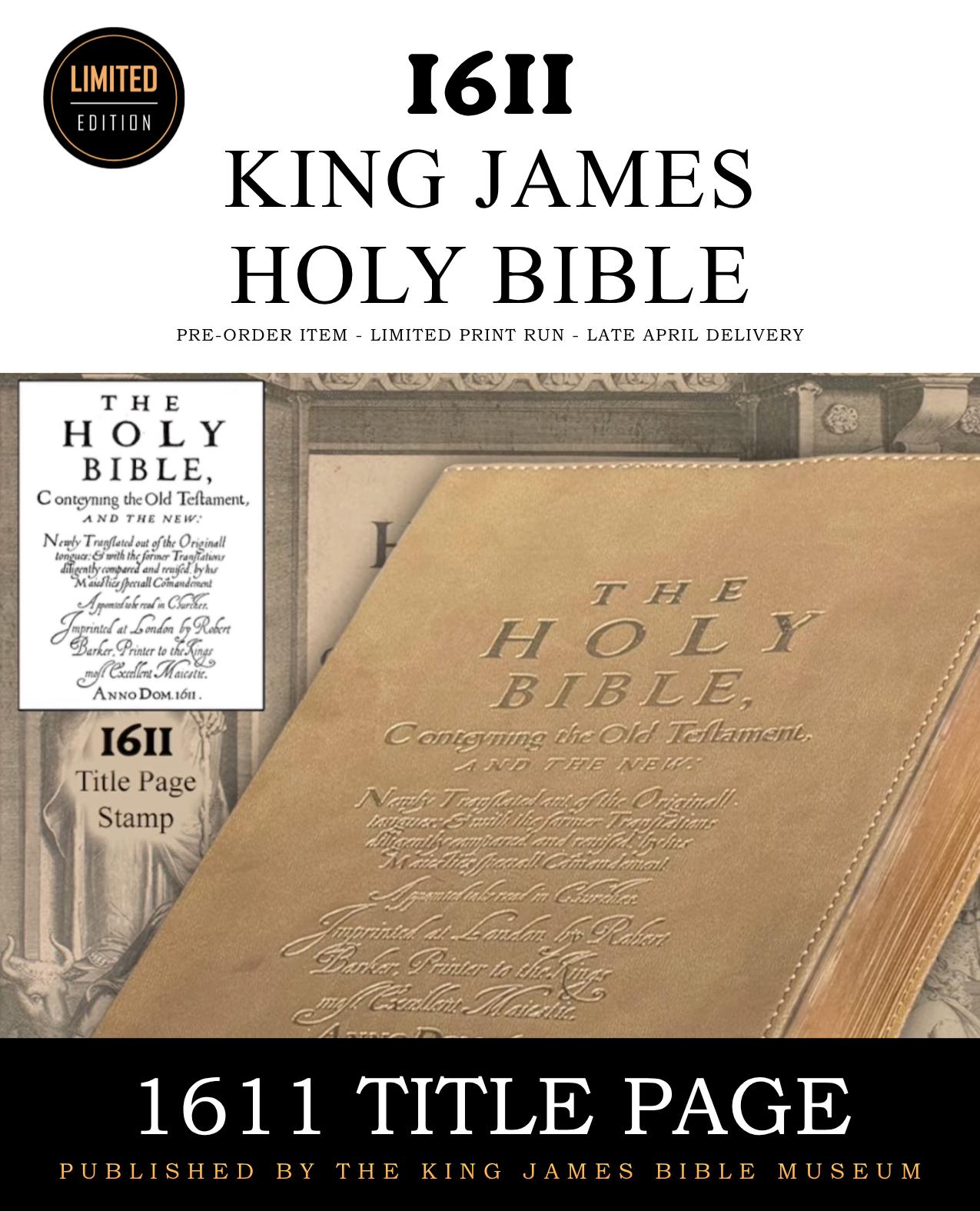
- Verify the Title Page: A legitimate 1611 PDF will show a title page that reads: "The Holy Bible, Conteyning the Old Testament, and the New: Newly Translated out of the Originall tongues: & with the former Translations diligently compared and reuised by his Maiesties speciall Comandement."
- Check for the Genealogies: The original 1611 edition contained 34 pages of biblical genealogies and a map of Canaan. These are often missing from "text-only" digital versions.
- Confirm the Date: Ensure the Roman numerals on the title page read M.DC.XI (1611).
FAQs About the 1611 King James Bible PDF
Does the 1611 KJV PDF include the Apocrypha?
Yes, any authentic 1611 facsimile will include the Apocrypha. The books are placed between the Old Testament and the New Testament. If a PDF claims to be a 1611 edition but jumps directly from Malachi to Matthew, it has been edited and is not a true representation of the original 1611 publication.
Is the 1611 version harder to read than the modern KJV?
For most readers, yes. The primary difficulty is not the vocabulary—which is largely identical to the 1769 version—but the typography. The black letter font and the 17th-century spelling conventions (like using "v" for "u" at the start of words) require an adjustment period for the eyes.
Why are some words in the 1611 PDF spelled with a "y" instead of a "th"?
This is a carryover from the Old English letter "thorn" (þ), which represented the "th" sound. In early printing, "thorn" often looked like a "y." Therefore, "The" was printed as "ye" and "That" as "yt." This is most common in early printed English works and is preserved in high-quality 1611 PDFs.
Is it legal to download a 1611 King James Bible PDF?
Yes. The 1611 King James Bible is in the public domain globally. While the specific digital scan or software used to host the PDF might be subject to terms of service from a library or archive, the text and images of the 1611 Bible itself are free from copyright.
What is the "Translators to the Reader" section?
This is a 10-to-11-page preface written by Miles Smith, one of the translators. It is a vital document that explains why the translation was made, how it was conducted, and it encourages the reader to engage with the scriptures. It is a key feature to look for in a 1611 PDF.
Final Recommendation for Users
When searching for a "1611 king james bible pdf" in 2026, the most effective approach is to seek out a high-resolution photographic facsimile. While text-based versions are useful for quick searches, only a facsimile provides the full historical context, including the original "Translators to the Reader" preface, the genealogies, and the distinct black letter typography. For serious study, download a version from a reputable source like the Internet Archive or a university library, and ensure your device has a robust PDF reader capable of handling large, image-heavy files.