Rainforests house some of the planet’s most complex ecological networks, where survival frequently depends on exploiting other organisms. Parasitism—an ecological relationship where one species benefits at the expense of another—plays a vital role in shaping tropical biodiversity, controlling population sizes, and driving evolutionary adaptations.
Understanding Parasitism in Tropical Ecosystems
Rainforest ecosystems are characterized by high temperatures, abundant moisture, and dense biodiversity. This intense competition for light, space, and nutrients has driven many organisms to evolve specialized survival strategies. Among these, parasitism stands out as one of the most successful and widespread trophic interactions. Unlike predators, which typically kill their prey quickly, parasites usually maintain a long-term relationship with their hosts, feeding on their tissues, blood, or metabolic resources without immediately causing death.
In the context of the rainforest, parasitism is not a monolith. It spans a vast spectrum of biological kingdoms, involving fungi, plants, insects, nematodes, and vertebrates. Understanding these relationships requires looking beyond simple damage; parasites act as vital ecological filters. They regulate dominant species, prevent any single organism from monopolizing resources, and create structural habitats that other forest dwellers utilize. The following ten examples illustrate the incredible diversity, anatomical adaptations, and ecological impacts of parasitic relationships in the world's most vibrant ecosystems.
1. Ophiocordyceps unilateralis (Zombie-Ant Fungi)
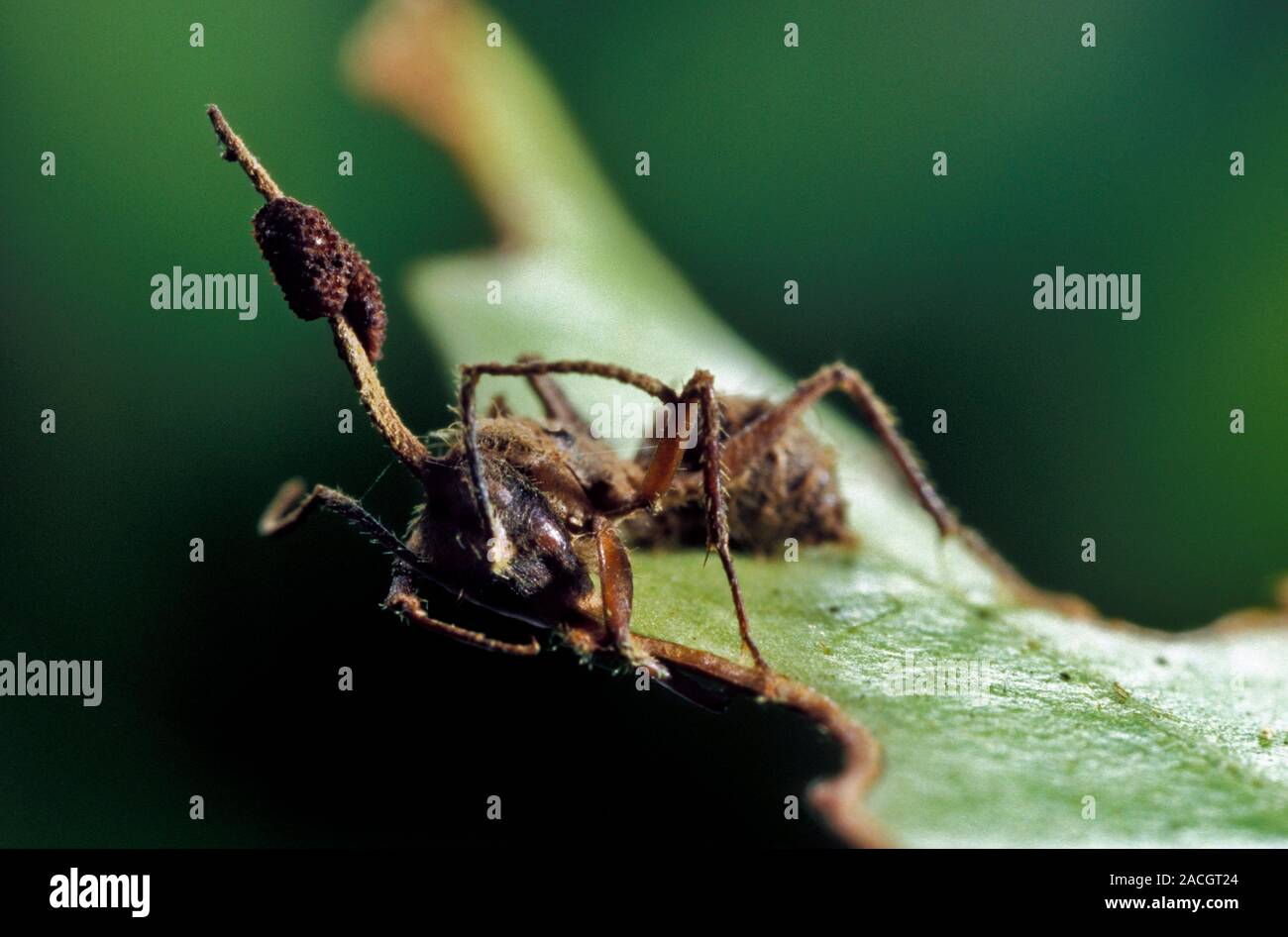
Perhaps the most famous and visually striking example of tropical parasitism involves the entomopathogenic fungus Ophiocordyceps unilateralis and its primary hosts, carpenter ants of the tribe Camponotini. When an airborne spore of the fungus encounters a foraging ant on the rainforest floor, it attaches to the exoskeleton, pierces it using specialized enzymes, and begins growing inside the insect's hemolymph.
Rather than immediately killing the host, the fungus gradually takes control of the ant's nervous system. As the infection progresses, the infected ant exhibits aberrant behavior, leaving its colony high in the canopy and wandering down to the understory. The fungus compels the ant to climb a plant stem, position itself on the underside of a leaf roughly 25 centimeters above the ground—where temperature and humidity conditions are ideal for fungal growth—and lock its mandibles into a major leaf vein in a death grip.
Once secured, the ant dies, and a fruiting body erupts from the back of its head, rupturing to release millions of spores down onto the forest floor below, infecting new foraging ants. This gruesome cycle showcases behavioral manipulation, where the parasite essentially operates the host organism like a biological vehicle.
2. Strangler Figs (Ficus spp.)
While many people associate parasitism with microscopic agents or insects, the botanical world offers profound examples of parasitic and semi-parasitic habits, most notably the strangler fig. Operating as hemiepiphytes, strangler figs begin their life cycle high up in the rainforest canopy. Birds or mammals consume the fig's fruit and deposit the seeds onto the branches or crevices of a host tree, often a tall emergent hardwood.
The fig seed germinates, sending down long, dangling roots that eventually reach the forest floor to tap into rich soil nutrients. Over decades, these roots multiply, thicken, and weave together, forming an intricate, rigid lattice around the trunk of the host tree.
As the strangler fig grows larger and expands its canopy, it intercepts sunlight that would otherwise reach the host, while its massive root system outcompetes the host for water and soil minerals. Eventually, the original host tree suffocates, decays, and leaves behind a hollow, fluted column of fig roots that stands independently in the forest.
3. Rafflesia arnoldii (Corpse Flower)
Deep within the rainforests of Southeast Asia grows Rafflesia arnoldii, producer of the world's largest individual flower. Despite its massive, mottled red petals that can span up to a meter across and weigh up to 11 kilograms, this plant possesses no leaves, roots, stems, or photosynthetic tissue. It exists entirely as a parasite.
Rafflesia lives its entire life cycle embedded within the vines of tropical tetrastigma lianas, a type of woody climber belonging to the grape family. The plant grows as microscopic strands of thread-like tissue called haustoria, absorbing water and nutrients directly from the vascular system of the host vine.
It remains invisible for years until it is ready to reproduce, at which point a cabbage-like bud erupts directly through the bark of the host stem. When it blooms, it emits a powerful odor resembling rotting meat, attracting carrion flies for pollination. This extreme evolutionary reduction proves that when resources are reliably provided by a host, a parasite can dispense with standard plant structures entirely.
4. Botflies (Dermatobia hominis)
Parasitic insects in the rainforest utilize complex vectors to ensure their offspring reach a suitable mammalian host. The human botfly, Dermatobia hominis, employs a reproductive strategy known as phoresy. The female botfly does not lay her eggs directly on a mammal; instead, she captures blood-feeding insects such as mosquitoes, stable flies, or ticks while they are in flight.
Using a sticky substance, the female botfly glues a batch of 15 to 30 eggs onto the abdomen of the intermediate vector. When this carrier insect lands on a warm-blooded rainforest mammal—ranging from rodents and monkeys to humans—to feed, the ambient heat triggers the botfly eggs to hatch instantly.
The tiny larvae drop onto the skin of the host and burrow into the subcutaneous tissue through the mosquito's bite wound or hair follicles. There, they construct a breathing pore, remaining embedded beneath the skin for several weeks, feeding on host fluids before dropping to the forest floor to pupate.
5. Cuscuta spp. (Dodder Vine)
Known commonly as dodder, witch's hair, or strangleweed, Cuscuta species are obligate parasitic vines found winding through various tropical and subtropical understories. Lacking chlorophyll, dodder cannot produce its own food through photosynthesis. Instead, seedlings must locate a suitable host plant within days of germination, or they perish.
Using circumnutation—a sweeping growth motion—the seedling detects the volatile organic compounds emitted by nearby host plants. Once it makes contact, the dodder wraps tightly around the stem and drives specialized piercing organs called haustoria directly into the host's vascular bundles (phloem and xylem).
After successfully establishing this connection, the dodder’s lower roots wither away, and the vine severs all ties with the soil, living entirely as an aerial parasite. It steals sugars, water, and mineral nutrients, frequently weakening the host plant and reducing overall canopy density in localized understory patches.
6. Sarcophagid and Tachinid Parasitoids
Rainforest insects face continuous pressure from various parasitoids—organisms that spend significant portions of their life cycle attached to or inside a single host, ultimately killing it. Tachinid flies and certain flesh flies (Sarcophagidae) are prime examples of this phenomenon among rainforest arthropods.
These adult flies locate caterpillars, beetles, or stick insects and deposit eggs either directly on the insect's skin, inside its body, or on nearby foliage where the host is likely to ingest them. Once inside the living host, the fly larvae hatch and begin feeding selectively.
Remarkably, parasitoid larvae typically consume non-essential tissues first, such as fat bodies and hemolymph, leaving vital organs intact so the host remains alive and mobile. Only near the end of the larval stage are the heart and nervous system consumed, ensuring the host survives just long enough to sustain the parasite's development.
7. African and Neotropical Ticks (Ixodidae)
Hard ticks are classic ectoparasites that inhabit the humid understory and leaf litter of tropical rainforests. While many people associate ticks with temperate grasslands, rainforest environments support diverse tick species that parasitize reptiles, birds, and mammals.
A tick climbs onto vegetation and adopts a questing posture, stretching its legs outward to latch onto passing hosts. Once attached, it pierces the skin, secretes an anesthetic cement to anchor its mouthparts, and begins a slow, multi-day blood meal.
Beyond the direct loss of blood and localized tissue irritation, rainforest ticks act as biological vectors for numerous arboviruses, rickettsiae, and protozoan parasites. Their feeding habits maintain complex zoonotic cycles within the rainforest ecosystem, regulating the health and population densities of vertebrate species.
8. Epiphytic Orchids and Myco-Heterotrophs
While many orchids are benign epiphytes that simply use tall trees for physical support to reach sunlight, some specialized rainforest plants adopt parasitic or semi-parasitic relationships with fungi to survive in the dark, shaded understory. Myco-heterotrophic plants, such as Monotropa relatives or tropical orchids belonging to the genus Gastrodia, have abandoned photosynthesis altogether.
These plants form tripartite relationships with mycorrhizal fungi, which in turn are connected to the roots of photosynthetic canopy trees. The myco-heterotrophic plant cheats the fungus by extracting carbon, water, and nutrients that the fungus originally derived from the host tree.
In this underground network, the forest floor acts as a conduit where parasites siphon resources indirectly from autotrophic giants, proving that parasitism extends deep into the soil microbiota of the jungle.
9. Tropical Leech Species (Hirudinea)
The forest floor and damp lower strata of rainforests teem with terrestrial leeches, such as those belonging to the family Haemadipsidae. These segmented worms are specialized blood-feeding ectoparasites that wait quietly in leaf litter or cling to the underside of broad leaves, detecting approaching hosts through vibrations and carbon dioxide gradients.
When a vertebrate—ranging from amphibians and ground-nesting birds to tapirs and humans—brushes past, the leech drops or lunges onto the host. It attaches using both anterior and posterior suckers, piercing the skin with razor-sharp chitinous jaws.
Leeches secrete powerful anticoagulants, vasodilators, and anesthetics into the wound, allowing them to ingest several times their body weight in blood unnoticed. While individual bites are rarely fatal, heavy infestations can cause significant blood loss and secondary bacterial infections.
10. Parasitic Nematodes in Rainforest Amphibians
Tropical rainforests host the highest amphibian diversity on Earth, making them hotspots for internal parasites, particularly parasitic roundworms (nematodes). These microscopic to ribbon-like worms inhabit the digestive tracts, lungs, and subcutaneous tissues of frogs, toads, and salamanders.
Many of these nematodes rely on complex life cycles involving intermediate hosts, such as mosquitoes, beetles, or aquatic snails. When an amphibian consumes an infected insect, the nematode larvae encyst in the gut and mature into adults.
They absorb nutrients directly from the host's digested food or blood supply. While healthy amphibians often tolerate low parasite loads, environmental stressors such as habitat fragmentation, chemical runoff, or climate shifts can weaken host immune systems, allowing these parasitic infections to become fatal.
Summary of Rainforest Parasitic Interactions
| Parasite Species | Host Organism | Primary Mechanism of Action | Ecological Impact |
|---|---|---|---|
| Ophiocordyceps unilateralis | Carpenter Ants | Behavioral manipulation; fungal spores erupt from the host's head. | Controls ant populations, preventing canopy over-predation. |
| Strangler Figs | Canopy Trees | Hemiepiphytic root lattice that suffocates and replaces the host. | Creates structural hollows utilized by secondary rainforest wildlife. |
| Rafflesia arnoldii | Tetrastigma Lianas | Internal haustoria stealing water and nutrients from the vine. | Specialized floral adaptation relying on insect pollination. |
| Human Botfly | Mammals (e.g., monkeys, rodents) | Larvae burrow into subcutaneous tissue via insect vectors. | Regulates vertebrate health and drives vector behavioral adaptations. |
| Dodder Vine (Cuscuta) | Understory Plants | Aerial stems use haustoria to drain host vascular systems. | Reduces localized plant competition and opens understory gaps. |
| Tachinid Flies | Insects and Caterpillars | Internal larvae consume non-essential tissues before killing the host. | Acts as a top-down regulator of herbivorous insect populations. |
| Hard Ticks | Reptiles, Birds, Mammals | Ectoparasitic blood feeding combined with vector disease transmission. | Maintains pathogen cycles and impacts vertebrate fitness. |
| Myco-Heterotrophic Orchids | Mycorrhizal Fungi & Trees | Underground carbon and nutrient theft via fungal intermediary networks. | Demonstrates complex multi-trophic parasitic cheating strategies. |
| Terrestrial Leeches | Forest Vertebrates | Sucking blood using anticoagulant and anesthetic secretions. | Influences animal movement patterns and regulates host condition. |
| Parasitic Nematodes | Amphibians | Internal gastrointestinal and tissue colonization. | Controls amphibian population dynamics under environmental stress. |
Frequently Asked Questions
What is the difference between a parasite and a predator in the rainforest?
A predator kills and consumes multiple prey items rapidly throughout its lifetime. A parasite, by contrast, establishes a long-term, intimate relationship with a single host organism, feeding on its resources over an extended period. Parasites rarely aim to kill their host immediately, as doing so would destroy their habitat and food source before they can reproduce.
Are all rainforest parasites microscopic?
No. While many parasites like bacteria and protozoa are microscopic, many notable rainforest parasites are macroscopic organisms. Examples include large botanical parasites like the strangler fig and Rafflesia arnoldii, as well as visible ectoparasites like terrestrial leeches, ticks, and botfly larvae.
How do parasitic plants survive without photosynthesis?
Parasitic plants such as dodder and Rafflesia have lost the genes responsible for chlorophyll production. Instead, they produce specialized root-like structures called haustoria that penetrate the stems or roots of a host plant, tapping directly into its phloem and xylem to steal water, minerals, and manufactured sugars.
Why is parasitism so common in tropical rainforests?
The extreme biodiversity and high density of species in rainforests provide abundant ecological niches. With constant warm temperatures and high humidity year-round, conditions are optimal for the survival and transmission of parasites, insects, fungi, and spores, fostering intense evolutionary arms races between hosts and parasites.
Do parasites play a positive role in rainforest ecosystems?
Yes. Although they harm individual hosts, parasites are essential for maintaining ecosystem health. They prevent any single species from becoming overly dominant, regulate population sizes of plants and animals, drive genetic diversity through evolutionary pressure, and cycle nutrients back into the forest food web.
Conclusion and Conservation Takeaways
Parasitism in the tropical rainforest represents a pinnacle of evolutionary specialization. Far from being simple pests, these organisms act as master architects of biodiversity, maintaining the delicate balance of tropical ecosystems. Understanding these intricate biological relationships underscores the importance of preserving intact rainforest habitats, where every predator, plant, and parasite depends on the health of the entire web of life.