Vehicle-to-Everything (V2X) communications represent a critical suite of wireless technologies allowing vehicles to exchange data with other vehicles, infrastructure, pedestrians, and network systems. By facilitating real-time situational awareness and cooperative driving maneuvers, V2X aims to significantly improve road safety, optimize traffic flow, and serve as a foundational pillar for future autonomous vehicle deployment.
Understanding the V2X Framework
V2X communications function as the sensory extension of the modern vehicle. While traditional advanced driver-assistance systems (ADAS) rely on on-board sensors—such as cameras, LiDAR, and radar—which are limited by line-of-sight and physical occlusion, V2X introduces a "connected" layer. This layer allows a vehicle to "see" around corners, detect hazards beyond the range of onboard optics, and anticipate the movements of other traffic participants.
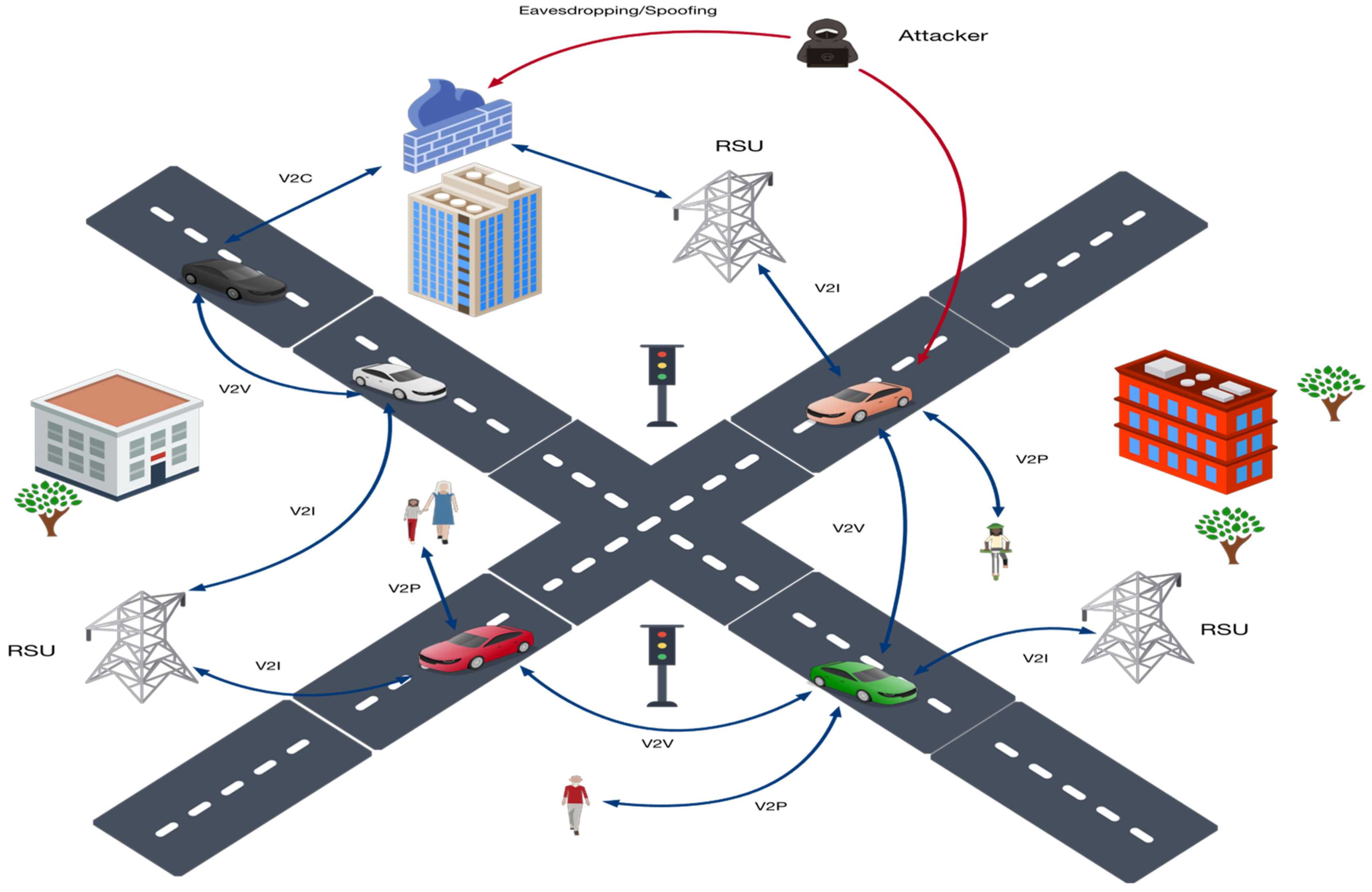
The term "Everything" in V2X encompasses several specific communication modalities, each addressing different safety and efficiency use cases:
- V2V (Vehicle-to-Vehicle): Direct communication between vehicles to share speed, heading, position, and braking status, facilitating collision avoidance and cooperative adaptive cruise control.
- V2I (Vehicle-to-Infrastructure): Communication between vehicles and roadside equipment, such as traffic signals or signage, providing real-time data on traffic light timings, construction zones, or hazardous weather conditions.
- V2P (Vehicle-to-Pedestrian): Interaction between vehicles and vulnerable road users, typically via mobile devices or wearable technology, to alert drivers of pedestrians or cyclists in proximity.
- V2N (Vehicle-to-Network): Communication between vehicles and cloud-based systems via cellular infrastructure, providing long-range information such as global traffic updates, routing optimization, and high-definition map updates.
Technical Foundations: DSRC vs. C-V2X
The development of V2X has historically been defined by a technological divergence between two primary standards: Dedicated Short-Range Communications (DSRC) and Cellular Vehicle-to-Everything (C-V2X).
Dedicated Short-Range Communications (DSRC)
Rooted in the IEEE 802.11p standard—a derivative of Wi-Fi—DSRC was the early frontrunner for V2X. It operates in the 5.9 GHz spectrum and was designed specifically for low-latency, high-reliability mobile environments. Its primary strength lies in its maturity and independence from cellular network infrastructure. However, as of 2026, many jurisdictions have shifted focus toward cellular-based alternatives due to the perceived scalability advantages offered by 5G evolution.
Cellular V2X (C-V2X)
C-V2X, standardized by the 3rd Generation Partnership Project (3GPP), utilizes the cellular ecosystem. It offers two transmission modes:
- PC5 (Sidelink): A direct communication interface that operates independently of cellular coverage, essential for safety-critical V2V and V2I applications.
- Uu Interface: The standard cellular connection that links vehicles to the network, supporting broader V2N applications.
In current global deployments, C-V2X is increasingly recognized as the preferred path for long-term V2X integration. The integration of 5G New Radio (NR) Sidelink technology further enhances C-V2X by supporting higher data rates and lower latencies, which are necessary for advanced automated driving functions like cooperative platooning or sensor sharing.
Comparison of Communication Standards
The following table outlines the fundamental differences between the primary V2X technologies currently impacting market adoption.
| Feature | DSRC (IEEE 802.11p) | C-V2X (3GPP Rel 14/15/16+) |
|---|---|---|
| Primary Basis | Wi-Fi derivative | Cellular (LTE/5G) |
| Network Dependency | None (Ad-hoc) | PC5 for Sidelink (None), Uu for Network |
| Latency | Low | Very Low (enhanced in 5G) |
| Range | Moderate | Superior range and link budget |
| Evolution Path | Limited | High (Forward compatible with 5G/6G) |
| Global Status | Legacy/Legacy-support | Global standard of choice |
The Role of Infrastructure and Roadside Units (RSU)
Infrastructure support is the engine of V2I implementation. A Roadside Unit (RSU) is a physical device installed at intersections or along highways that bridges the gap between the vehicle and the traffic management center.
RSUs perform several critical functions:
- Signal Phase and Timing (SPaT): Broadcasting the state of traffic lights to approaching vehicles, allowing for "Green Light Optimized Speed Advisory" (GLOSA) to reduce idle time and emissions.
- Hazard Warning: Relaying information about road closures, ice patches, or emergency vehicle movements.
- Congestion Management: Acting as a localized gateway to push traffic flow data back to the central network, assisting in dynamic signal timing adjustments.
The deployment of RSUs requires significant capital investment from municipalities and regional transportation authorities. Challenges include ensuring cross-vendor interoperability and maintaining the physical hardware against environmental degradation, a key consideration for transportation departments planning their 2026–2030 road infrastructure budgets.
Safety and Security: The V2X Imperative
Because V2X transmits sensitive data regarding vehicle location and behavior, the security of the communication channel is paramount. The system is designed around a Public Key Infrastructure (PKI) framework known as a Security Credential Management System (SCMS).
Security Requirements
- Authentication: Ensuring that the sender of a message is a legitimate, authorized participant in the V2X ecosystem.
- Message Integrity: Protecting against "man-in-the-middle" attacks where malicious actors might inject false traffic information.
- Privacy (Pseudonymity): Vehicles rotate their digital certificates frequently to prevent tracking of individual users, balancing the need for security with the right to privacy.
Failures in the SCMS could lead to "ghost vehicles" or malicious traffic manipulation. Consequently, global standards organizations, such as the SAE International and the European Telecommunications Standards Institute (ETSI), maintain rigorous protocols for certificate management and revocation lists.
Operational Challenges and Implementation Hurdles
While the promise of V2X is significant, several barriers prevent full-scale, immediate adoption:
- Market Penetration: The "Day 1" problem—V2X benefits increase exponentially with the number of connected vehicles. Until a critical mass of the fleet is V2X-equipped, the safety benefits remain localized.
- Interoperability: Ensuring that a vehicle from manufacturer A can communicate seamlessly with an RSU from vendor B in country C requires strict adherence to international standards.
- Frequency Allocation: Different regions have historically fought over the 5.9 GHz band. While consensus is growing, local regulatory differences still complicate the hardware design for global automotive OEMs.
- Backhaul Connectivity: Reliable, high-bandwidth connections are required for RSUs to communicate with the broader traffic management network, which can be difficult to deploy in rural or mountainous environments.
Future Outlook: Beyond 2026
By 2026, the focus has shifted from "proof of concept" to "deployment at scale." We are observing a trend where automotive manufacturers are increasingly bundling V2X modules into standard hardware configurations, particularly for higher-end vehicle trims.
The integration of V2X with artificial intelligence is the next horizon. Vehicles will not just share raw location data; they will share processed intelligence. For example, a vehicle that identifies a complex traffic obstruction via its AI-vision system can share a "map update" with other vehicles in the area, essentially crowdsourcing real-time infrastructure data.
Frequently Asked Questions
Does V2X require a cellular subscription?
V2X Sidelink (PC5) communications do not require an active subscription or cellular coverage to function, as they communicate directly from vehicle to vehicle. However, V2N (Vehicle-to-Network) features, such as remote cloud diagnostics or high-definition map streaming, do require cellular data access.
Is V2X essential for fully autonomous vehicles?
While autonomous vehicles rely heavily on on-board sensors, most industry experts consider V2X a necessary supplement for Level 4 and Level 5 autonomy. It provides "non-line-of-sight" data that fills gaps in sensor perception, acting as an essential safety redundancy.
What is the difference between V2X and telematics?
Telematics typically refers to the remote transmission of vehicle data to the cloud for fleet management or insurance purposes (e.g., GPS tracking). V2X is a specialized communication protocol designed for low-latency safety applications and real-time interaction with the immediate driving environment.
Can V2X prevent all traffic accidents?
No. V2X is a safety-enhancing technology intended to mitigate human error, which accounts for the vast majority of traffic incidents. It cannot override physical limitations, such as braking distance on black ice or mechanical failures, though it can provide faster warnings than a human driver could process.
How does V2X handle privacy?
V2X systems use an anonymous certificate rotation process. Vehicles do not broadcast a persistent identifier; instead, they use temporary, rapidly changing identifiers, making it cryptographically difficult to link a specific broadcast to a specific driver or vehicle identity over time.
Recommended Next Steps
For engineers, fleet managers, or municipal planners looking to engage with V2X technology:
- Assess Standards: Review the specific V2X regulatory mandates for your target region, as requirements for C-V2X hardware often differ between the EU, North America, and China.
- Evaluate Use Cases: Focus on "Day 1" applications such as intersection movement assist and electronic emergency brake lights, which offer the highest immediate safety ROI.
- Audit Security Infrastructure: If implementing or managing infrastructure, familiarize yourself with the regional SCMS authority requirements to ensure your deployment remains compliant and secure.
- Monitor Pilot Programs: Review ongoing municipal C-V2X pilots, which provide the best data on real-world latency and hardware performance in your specific climate and traffic conditions.