Accurate ICD-10-CM coding for B-cell lymphoma requires precise identification of the histological subtype and the specific anatomical sites involved. In 2026, the primary codes reside within the C82 to C88 range, where the fourth character defines the lymphoma type (e.g., follicular, diffuse, or mantle cell) and the fifth character specifies the nodal or extranodal location.
Medical coding for B-cell lymphoma is a specialized task that bridges the gap between complex oncological pathology and administrative data. B-cell lymphomas represent a heterogeneous group of malignancies arising from B-lymphocytes, ranging from slow-growing (indolent) to highly aggressive forms. For coding professionals and healthcare providers, the transition from a clinical diagnosis to a specific ICD-10-CM code involves navigating a hierarchy of classification that emphasizes morphology, genetics, and anatomy.
The Structural Hierarchy of Lymphoma Coding
To code B-cell lymphoma correctly, one must understand the organization of Chapter 2 (Neoplasms) in the ICD-10-CM manual. Malignant neoplasms of lymphoid, hematopoietic, and related tissue are classified in the C81–C96 range.
The specificity of these codes is paramount. A generic diagnosis of "lymphoma" is often insufficient for reimbursement or clinical tracking, as it defaults to unspecified codes (C85.90) that fail to capture the severity or nature of the disease. In 2026, payers and regulatory bodies increasingly require documentation of the "B-cell" origin to justify high-cost treatments like CAR-T cell therapy or monoclonal antibodies.
The Importance of the Fifth Character: Anatomical Site
One of the most critical aspects of B-cell lymphoma coding is the fifth character, which identifies the anatomical site of the lymphadenopathy or extranodal involvement. Regardless of whether the lymphoma is follicular or diffuse, the following site markers are standard:
- 0: Unspecified site
- 1: Lymph nodes of head, face, and neck
- 2: Intrathoracic lymph nodes
- 3: Intra-abdominal lymph nodes
- 4: Lymph nodes of axilla and upper limb
- 5: Lymph nodes of inguinal region and lower limb
- 6: Intrapelvic lymph nodes
- 7: Spleen
- 8: Lymph nodes of multiple sites
- 9: Extranodal and solid organ sites
For example, a patient with Diffuse Large B-Cell Lymphoma (DLBCL) in the axillary lymph nodes would be coded as C83.34. If the disease is present in both the neck and the groin, the "multiple sites" marker (8) is used, resulting in C83.38.
Coding the Most Common B-Cell Subtypes
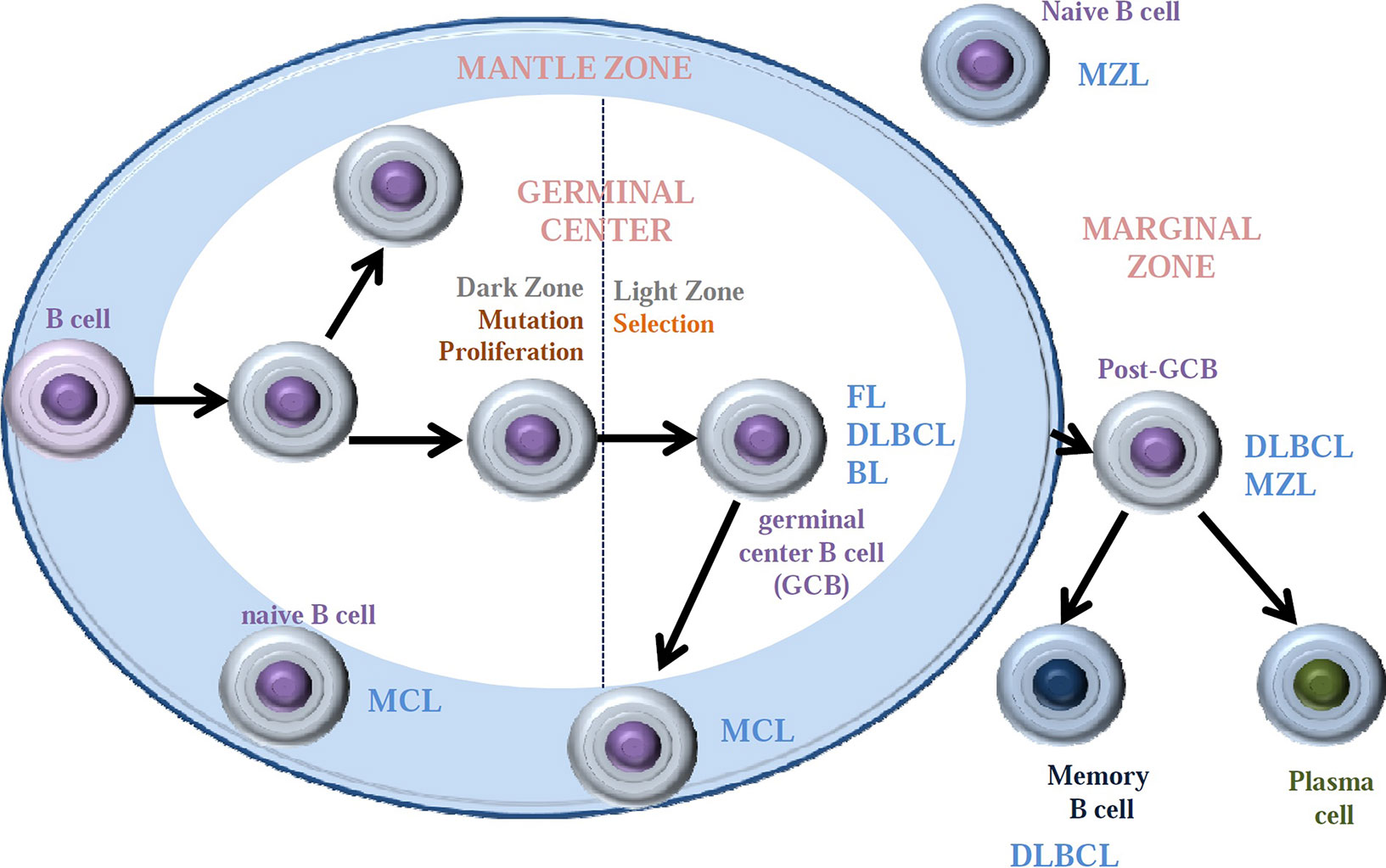
B-cell lymphomas are broadly categorized into Hodgkin and Non-Hodgkin varieties, with B-cell Non-Hodgkin Lymphoma (NHL) being the most prevalent. The following sections detail the coding requirements for the most frequent subtypes encountered in 2026.
Diffuse Large B-Cell Lymphoma (DLBCL) - C83.3
DLBCL is the most common aggressive B-cell lymphoma. It is characterized by the rapid growth of large B-cells that can arise in lymph nodes or extranodal sites like the gastrointestinal tract, skin, or bones.
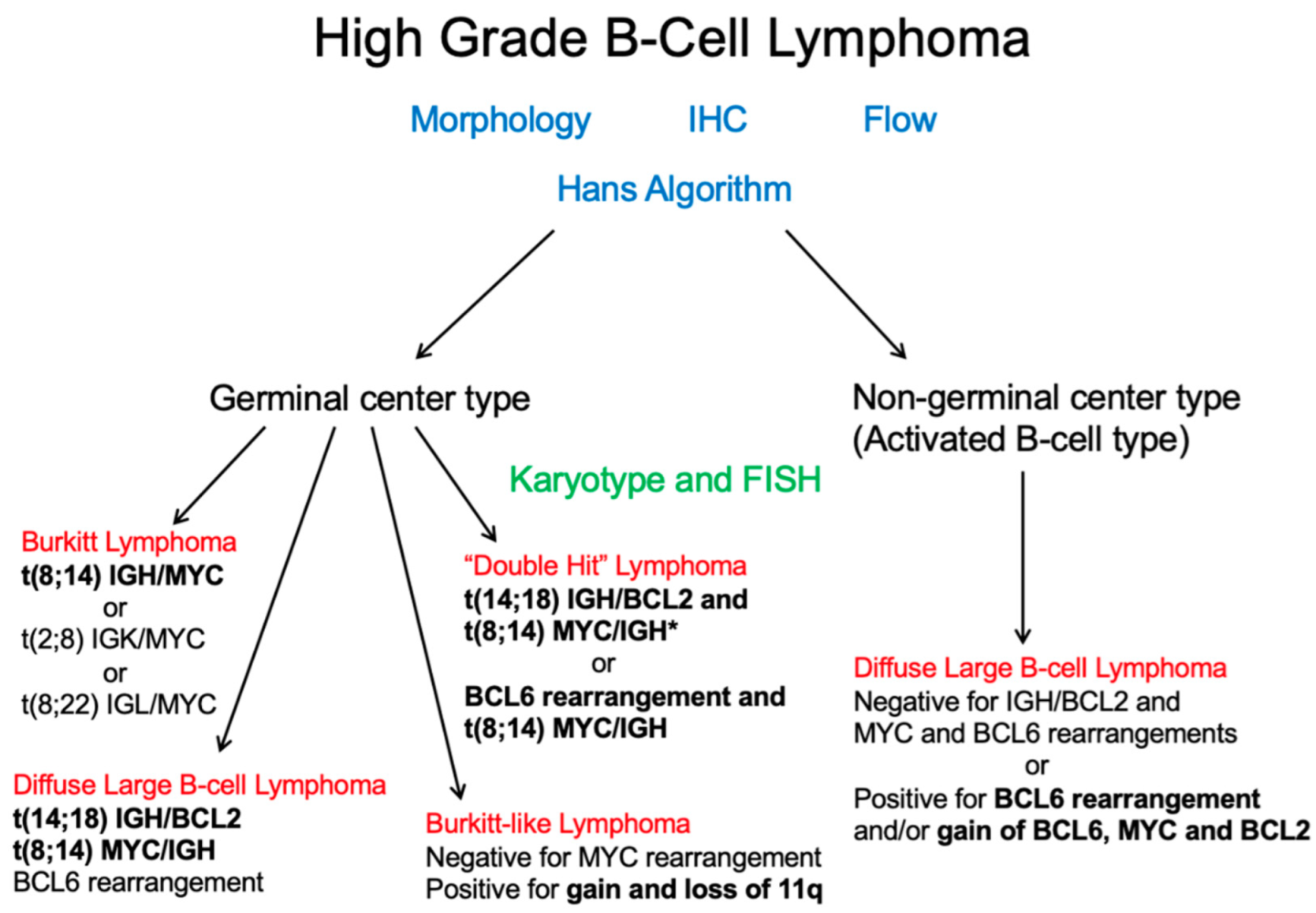
When coding DLBCL, the documentation must support the "diffuse" and "large cell" descriptors. In 2026, further sub-classification (such as germinal center B-cell type vs. activated B-cell type) is often noted in pathology reports for prognostic purposes, but the ICD-10 system currently groups these under the C83.3 category.
Follicular Lymphoma - C82
Follicular lymphoma is the most common indolent lymphoma. Coding for this subtype requires an understanding of "grading," which refers to the number of large cells (centroblasts) found per high-power field.
- Grade I (C82.0-): 0-5 centroblasts per field.
- Grade II (C82.1-): 6-15 centroblasts per field.
- Grade III (C82.2-): More than 15 centroblasts.
- Grade III is further divided into 3a and 3b in clinical practice, though ICD-10 often uses C82.2 for "Grade III, unspecified" and C83.3 if it has transformed into a diffuse pattern.
Mantle Cell Lymphoma (MCL) - C83.1
Mantle cell lymphoma is a unique subtype that often behaves aggressively but has the histological features of a mature B-cell lymphoma. It is typically characterized by the t(11;14) translocation and overexpression of cyclin D1. The base code is C83.1, followed by the site-specific fifth character.
Marginal Zone Lymphomas and MALT - C83.0 and C88.4
Marginal zone lymphomas (MZL) are categorized based on where they originate. Extranodal marginal zone lymphoma of mucosa-associated lymphoid tissue (MALT lymphoma) is specifically coded under C88.4. However, nodal and splenic marginal zone lymphomas are often directed to C83.0 (Small cell B-cell lymphoma). This distinction is a frequent source of coding errors and requires careful review of the pathology's site of origin.
Comprehensive B-Cell Lymphoma Code Reference Table
The following table serves as a quick reference for the primary categories of B-cell lymphoma codes used in 2026.
| Lymphoma Subtype | ICD-10 Category | Key Clinical/Pathological Features |
|---|---|---|
| Diffuse Large B-Cell (DLBCL) | C83.3- | Aggressive; CD20 positive; large B-lymphocytes. |
| Follicular Lymphoma | C82.- | Indolent; organized in follicles; graded I to III. |
| Mantle Cell Lymphoma (MCL) | C83.1- | Intermediate to aggressive; cyclin D1+, CD5+. |
| Small Lymphocytic Lymphoma (SLL) | C83.0- | Indolent; morphologically identical to Chronic Lymphocytic Leukemia (CLL). |
| Burkitt Lymphoma | C83.7- | Highly aggressive; "starry sky" histology; MYC translocation. |
| Marginal Zone (MALT) | C88.4 | Often associated with chronic inflammation (e.g., H. pylori). |
| Lymphoblastic (B-cell type) | C83.5- | Precursor B-cell malignancy; requires differentiation from ALL. |
| Mediastinal Large B-Cell | C85.2- | Arises in the mediastinum; distinct from standard DLBCL. |
Nuances in Documentation and Sequencing
The accuracy of B-cell lymphoma coding is heavily dependent on the physician's documentation. In the medical record, "lymphoma" is a diagnosis, but "B-cell" is the morphology. Without both, the coder cannot reach the highest level of specificity.
Primary vs. Secondary Diagnoses
The sequencing of B-cell lymphoma codes depends on the "reason for the encounter."
- Treatment Encounters: If a patient presents specifically for chemotherapy, immunotherapy, or radiation therapy, the primary code should be from the Z51 series (e.g., Z51.11 for antineoplastic chemotherapy). The B-cell lymphoma code (C82–C88) is then listed as a secondary diagnosis.
- Management of Complications: If a patient is admitted for a complication of the lymphoma, such as febrile neutropenia or anemia of chronic disease, the lymphoma code is typically sequenced as the principal diagnosis, followed by the codes for the complications.
- Active Treatment vs. History: A common error is using a "History of" code (Z85.72) while the patient is still receiving maintenance therapy or is in clinical remission but still under active surveillance. The malignancy code (C-series) should be used as long as the patient is receiving active treatment or there is evidence of the disease.
Coding for Remission and Relapse
In ICD-10-CM, lymphoma codes do not have separate characters for "in remission" in the same way that leukemia codes (C91–C95) do. For B-cell lymphomas, if the patient is in remission, the coder continues to use the specific C-code for that lymphoma until the physician documents that the malignancy is no longer present (History of). In 2026, documentation of "complete response" (CR) or "partial response" (PR) provides the clinical context for the continued use of the active malignancy code.
Challenges in B-Cell Lymphoma Coding
As genomic sequencing becomes standard in 2026, coders often encounter pathology reports filled with molecular markers (e.g., BCL2, BCL6, MYC). While these are vital for treatment planning, they do not always change the ICD-10-CM code.
"Double-Hit" and "Triple-Hit" Lymphomas
"Double-hit" lymphomas are high-grade B-cell lymphomas with rearrangements of MYC and BCL2 and/or BCL6. These are typically coded as C83.39 (Diffuse large B-cell lymphoma, extranodal and solid organ sites) or C83.8- (Other non-follicular lymphoma), depending on the specific morphology. The coder must look for the term "High-grade B-cell lymphoma" in the documentation, which may point toward C83.8.
Overlap with Leukemia
Small Lymphocytic Lymphoma (SLL) and Chronic Lymphocytic Leukemia (CLL) are considered different clinical manifestations of the same disease. In SLL (C83.0), the disease is primarily in the lymph nodes. In CLL (C91.1), it is primarily in the blood and bone marrow. If both are present, the ICD-10-CM guidelines generally suggest that the leukemia code (C91.1) takes precedence if the blood/bone marrow involvement is significant, though this requires clinical confirmation.
Regulatory and Compliance Considerations
In 2026, the Centers for Medicare & Medicaid Services (CMS) and private insurers utilize "Risk Adjustment" models that rely on the specificity of ICD-10 codes. Unspecified lymphoma codes (C85.90) often fail to map to a Hierarchical Condition Category (HCC), which can result in lower reimbursement rates for Medicare Advantage plans and an inaccurate representation of the patient's complexity.
Furthermore, medical necessity for expensive medications—such as Rituximab, Obinutuzumab, or the latest 2026-approved bispecific antibodies—is often validated by the specific ICD-10 code. If a code for "Follicular Lymphoma" is used for a drug only approved for "Mantle Cell Lymphoma," the claim will likely be denied during the automated adjudication process.
Frequently Asked Questions
What is the ICD-10 code for B-cell lymphoma, unspecified?
The code for B-cell lymphoma, unspecified site, is C85.10. However, this code should be avoided if more specific information regarding the histology (such as DLBCL or Follicular) or the anatomical site is available in the medical record.
How do I code B-cell lymphoma that has transformed?
When an indolent B-cell lymphoma (like Follicular) transforms into an aggressive one (like DLBCL), both conditions should be coded if the clinician documents both. Typically, the aggressive form (C83.3-) is sequenced first as it represents the current focus of treatment, followed by the code for the underlying follicular lymphoma (C82.-).
Is there a difference between coding for nodal and extranodal B-cell lymphoma?
Yes. The fifth character of the ICD-10 code changes based on whether the disease is in the lymph nodes or an extranodal site. For example, DLBCL in the cervical lymph nodes is C83.31, while DLBCL in the stomach (an extranodal site) is C83.39.
When should I use the code for "History of Lymphoma" (Z85.72)?
The code Z85.72 should only be used when the patient has completed all treatment, there is no clinical evidence of the disease, and the physician documents that the patient is "disease-free" or has a "history of" the condition. If the patient is on maintenance therapy (common in follicular lymphoma), the active C-code should still be used.
How do I code for B-cell lymphoma in 2026 for a patient with HIV?
For patients with HIV-related B-cell lymphoma, the HIV code (B20) must be sequenced first, followed by the specific code for the B-cell lymphoma (e.g., C83.3- for DLBCL). This is a standard ICD-10-CM sequencing rule for HIV-related conditions.
Practical Recommendations for Coding Accuracy
To ensure compliance and maximum reimbursement in 2026, coding departments should implement a standard review process for oncology charts. First, always prioritize the pathology report over the initial clinical impression; lymphomas are often "upstaged" or re-classified after a biopsy. Second, query the physician if the documentation lacks the "B-cell" designation or a specific grade for follicular lymphoma.
Finally, leverage the specificity of the anatomical site codes. Moving away from "unspecified" codes (ending in 0) to specific nodal or extranodal markers (1–9) not only improves data quality but also reduces the likelihood of audits and claim denials. As treatment protocols for B-cell lymphoma become more personalized in the mid-2020s, the precision of the ICD-10 code remains the foundation of the healthcare data ecosystem.
For official updates and the complete 2026 code set, professionals should refer to the CDC ICD-10-CM Browser Tool and the CMS.gov ICD-10 resources.