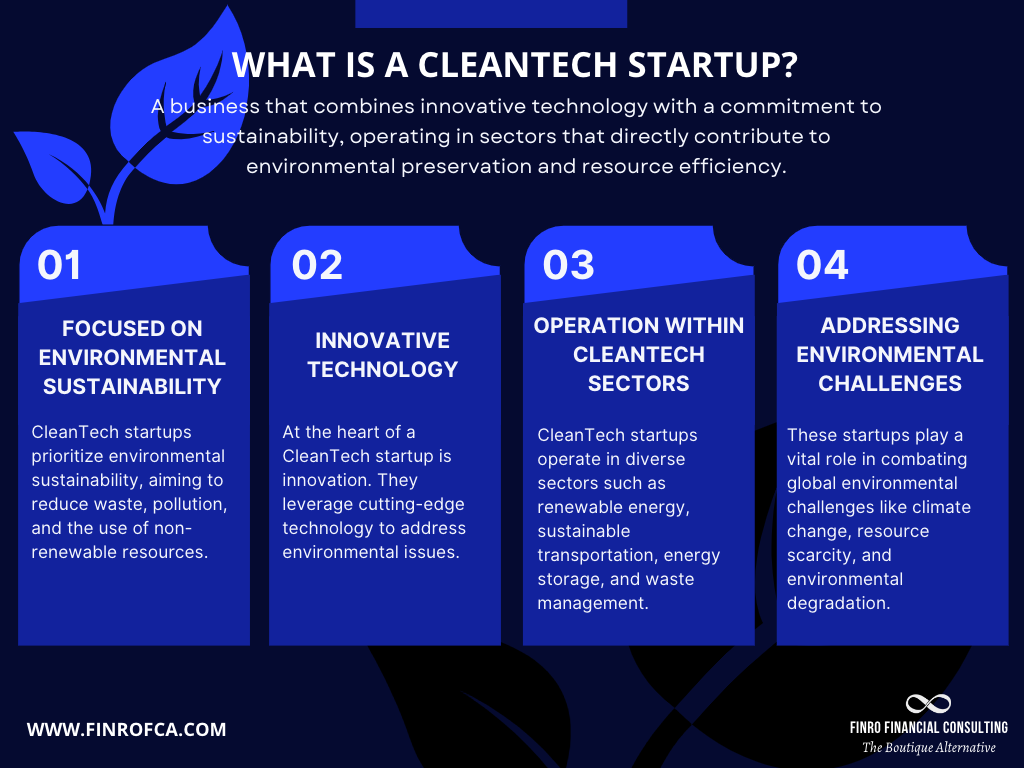
Environment-focused startups, often categorized under the umbrella of "Climate Tech," represent a high-stakes segment of the modern economy that balances significant long-term growth potential against considerable execution risk. While they address urgent global challenges—ranging from carbon sequestration to circular supply chains—their status as the "best" investment depends heavily on an investor’s risk tolerance, time horizon, and specific exposure to regulatory and technological variables.
The Evolution of the Environmental Startup Landscape
The surge in environmental startups is not merely a reaction to climate awareness but a response to deep structural shifts in the global economy. As of 2026, we have transitioned from a phase of "early adoption" to a period of "industrial integration." Early-stage environmental ventures are no longer niche research projects; they are becoming essential components of global supply chains, energy grids, and manufacturing processes.
This evolution is largely driven by three factors: mandatory carbon reporting, the rising cost of resource scarcity, and aggressive government subsidies. For investors, this means the environment-startup sector has moved from a philanthropic "impact" category into a core fundamental asset class. Unlike the purely digital innovations of the 2010s, modern environmental startups often require heavy capital expenditure (CapEx) to scale physical infrastructure, which changes the risk profile significantly.
Evaluating Investment Potential: The Core Variables
Determining if these startups are the best investment requires stripping away the marketing labels and focusing on the underlying mechanics of their business models.
1. The Capital Expenditure (CapEx) Barrier
Many environmental startups deal with hardware: modular reactors, next-generation battery chemistry, or direct air capture (DAC) facilities. Unlike software-as-a-service (SaaS) companies, which can scale with minimal incremental costs, environmental startups must build tangible assets. This creates a "valley of death" where ventures struggle to transition from pilot programs to full-scale commercialization. Investors must look for startups with strong manufacturing partnerships or those that license intellectual property rather than trying to build factories from scratch.
2. Regulatory Tailwinds and Geopolitics
By 2026, the regulatory environment has solidified into a complex web of incentives and penalties. In many jurisdictions, carbon pricing mechanisms have increased the operational costs of traditional industries, creating a "natural" market for environmental solutions. Startups that position themselves as the cheapest way for large corporations to comply with these regulations have a much higher probability of success than those trying to create entirely new consumer behaviors.
3. The Shift from Innovation to Deployment
The most successful startups today are those moving out of the laboratory. Investors are increasingly favoring "deployment-ready" technologies—solutions that can be integrated into existing infrastructure without requiring a complete overhaul of the power grid or the global logistics network.
Comparison of Environmental Startup Sectors
When evaluating where to allocate capital, it is helpful to contrast the risk-reward profiles of different environmental sectors.
| Sector | Primary Risk | Scalability | Revenue Model |
|---|---|---|---|
| Renewable Energy Storage | Technological obsolescence | High | Utility contracts / Wholesale |
| Carbon Sequestration | Regulatory/Pricing uncertainty | Moderate | Credits / Offsets |
| Circular Economy/Recycling | Logistics/Supply chain costs | Low | B2B raw materials |
| Precision Agriculture | Slow adoption cycles | Moderate | Subscription software/hardware |
The Role of Due Diligence in Green Tech
Investing in environmental startups requires a different technical lens than traditional venture capital. Because these companies often hinge on physics or chemistry rather than just coding, due diligence must go beyond the balance sheet.
Verification of Physical Claims
"Green" is often used as a marketing term. A technical audit should verify if the startup’s claims about carbon reduction, energy efficiency, or waste elimination are supported by independent life-cycle assessments (LCA). An LCA is a standardized, scientific method to evaluate the environmental impact of a product from "cradle to grave." If a startup cannot provide a credible, third-party verified LCA, it should be treated with extreme caution.
Assessing the Moat
In the environmental space, the "moat"—or the sustainable competitive advantage—is rarely just software code. It is often a combination of:
- Patented Materials: Exclusive access to the chemistry or biology required for a process.
- Vertical Integration: Control over the raw materials or the end-market infrastructure.
- Data Loops: Proprietary data sets that improve the efficiency of an industrial system over time.
Common Risks and Pitfalls for Investors
Even the most promising environmental startups face risks that are not present in traditional tech sectors. Investors often overlook the "scale-up" problem. A pilot plant that produces 1,000 units of a sustainable material may perform perfectly, but replicating that success to produce 1,000,000 units often introduces failure points that did not exist at the smaller scale.
Furthermore, these investments are highly susceptible to changes in political cycles. While the current global trajectory is heavily weighted toward sustainability, local election cycles can suddenly alter subsidy programs or trade tariffs. A diverse portfolio that spans multiple countries and regulatory regimes is often the only hedge against this localized volatility.
Practical Steps for Prospective Investors
If you are considering exposure to this sector, follow these steps to manage risk:
- Define your horizon: Environmental investments, particularly those involving hard-tech infrastructure, often require a 7-to-10-year horizon before a liquidity event occurs.
- Focus on "Boring" Innovation: Look for startups that improve efficiency rather than those promising to disrupt entire global systems. Efficiency-based startups, such as those improving factory-level energy use, typically have shorter, more predictable sales cycles.
- Prioritize Unit Economics: Ensure the startup has a clear path to profitability that does not rely solely on government subsidies. Subsidies should be viewed as an accelerator, not the primary revenue stream.
- Engage with Industry Verticals: Environmental startups often survive by partnering with "legacy" players (e.g., oil and gas, heavy manufacturing, or shipping). Check for partnerships or pilot programs with established industry incumbents.
Frequently Asked Questions
Are environmental startups immune to economic downturns?
No. While they address long-term needs, environmental startups are subject to the same macro-economic pressures as any other sector, including rising interest rates and tightening venture capital liquidity. When capital is expensive, startups that rely on heavy borrowing to build infrastructure are particularly vulnerable.
How do I verify a startup's environmental claims?
Look for certification standards such as ISO 14040/14044 for Life Cycle Assessment. If a company claims to be "carbon neutral," verify if that status includes Scope 3 emissions (the entire supply chain) or merely Scope 1 and 2 (direct and energy-related emissions). Avoid companies that rely on unverifiable "offset" markets as their primary business model.
Is it better to invest in startups or established energy companies?
This depends on your goal. Established energy companies provide dividends and stability but have slower growth profiles. Startups offer the potential for exponential growth but carry a high risk of total loss. Most investors balance the two, using the stable performance of incumbents to offset the high-risk, high-reward nature of early-stage green ventures.
What is the most promising sub-sector within climate tech for 2026?
By 2026, grid-balancing software and industrial heat decarbonization have emerged as critical areas. As renewable energy penetration on the grid reaches record highs, the "intermittency" problem—matching power supply with demand—has become a massive, profit-generating opportunity for companies that can balance energy load using AI and advanced storage.
Does government policy dictate the success of these companies?
To a significant degree, yes. Because many environmental startups are attempting to displace industries that have benefited from decades of established infrastructure and lobbying, government policy acts as the "referee." Changes in tax credits, carbon taxes, or import duties can shift the competitive landscape overnight. Always track the major policy frameworks in the specific geography where the startup operates.
Final Recommendation: The "Bridge" Strategy
For the prudent investor, the best approach to environmental startups is a "bridge" strategy: focusing on companies that bridge the gap between traditional industrial operations and future net-zero requirements. Rather than searching for the "next big thing" that will replace an entire industry, look for the technology that makes existing industries 10% more efficient or 20% less carbon-intensive.
These companies have the advantage of an existing customer base, a clearer path to revenue, and lower market-entry barriers. While they may not provide the same speculative upside as a disruptive, unproven startup, they offer a significantly higher probability of long-term survival and compounding growth. By prioritizing companies with proven unit economics, legitimate intellectual property, and a clear role within the current industrial framework, you can align your portfolio with the future of the global economy while mitigating the inherent volatility of the startup world.