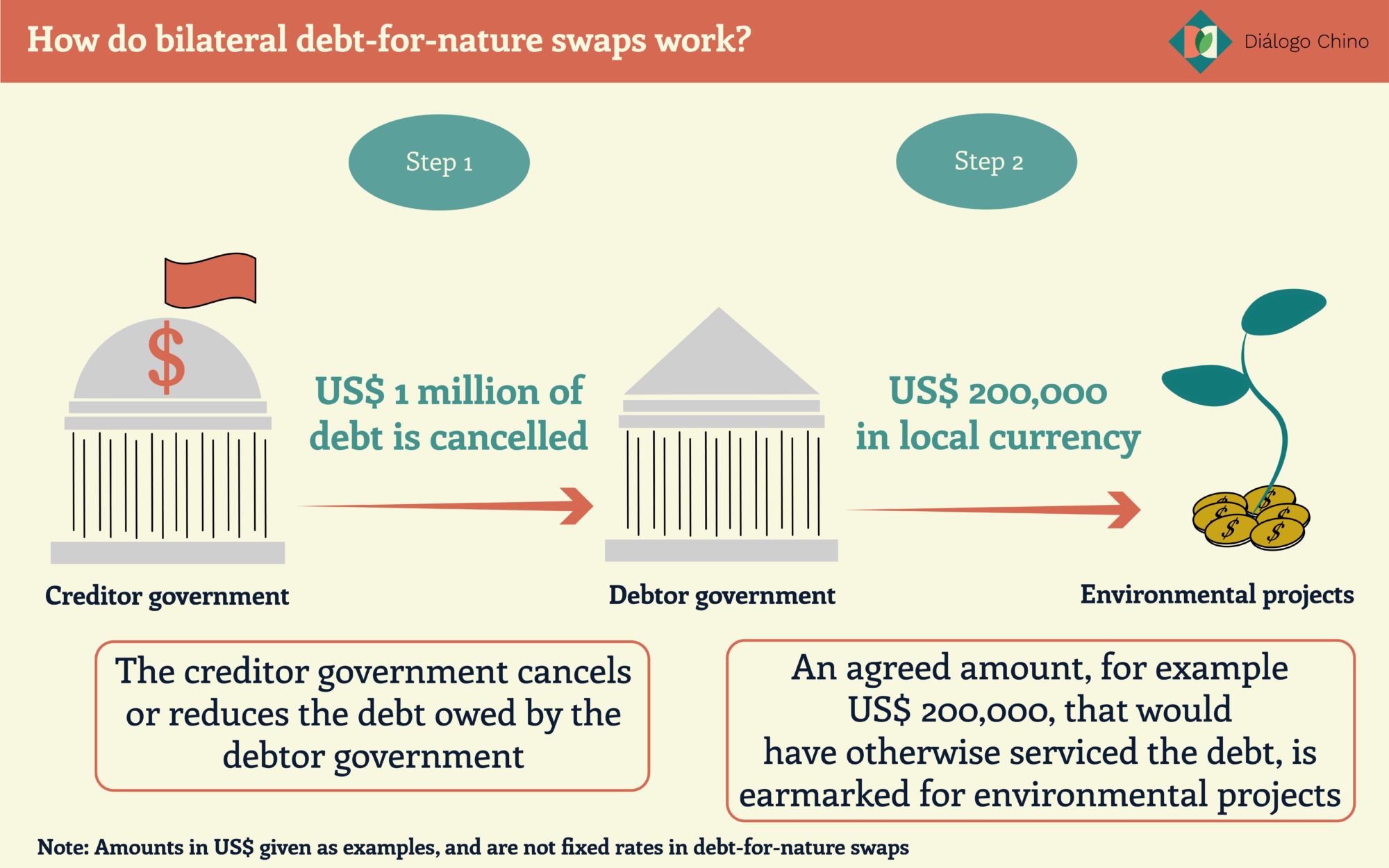
A debt-for-nature swap is a financial mechanism where a portion of a developing nation's foreign debt is forgiven or restructured in exchange for local investments in environmental conservation measures. A primary example is Belize’s 2021 "Blue Bond" agreement, which reduced the country's external debt by $364 million while committing hundreds of millions to ocean protection.
Debt-for-nature swaps (DFNS) represent a convergence of international finance and environmental science. As we look at the landscape in 2026, these instruments have evolved from niche experimental tools into essential components of the "Blue Economy" and "Green Economy." They solve two problems simultaneously: the "debt trap" that prevents developing nations from investing in their infrastructure, and the global biodiversity crisis that requires urgent funding in the very same regions struggling with debt.
The Mechanics of a Debt-for-Nature Swap
To understand a debt-for-nature swap example, one must first understand the financial engineering behind it. These deals are rarely simple "forgiveness" transactions. Instead, they involve a sophisticated restructuring process often facilitated by third-party non-governmental organizations (NGOs) and international development banks.
The process typically begins when a country’s sovereign debt is trading at a discount on the secondary market. This happens when investors fear the country might default. An NGO—such as The Nature Conservancy (TNC)—arranges a loan to the country to buy back its old, expensive debt at a cheaper rate. This new loan is often "wrapped" in a credit guarantee from a AAA-rated institution like the U.S. Development Finance Corporation (DFC) or the World Bank.
Because of this guarantee, the country pays a much lower interest rate on the new loan. The "savings" created by the lower interest and the principal reduction are then redirected into a local trust fund. This fund pays for specific, measurable conservation projects over several decades, such as patrolling marine parks, restoring mangroves, or implementing sustainable fishing practices.
The Belize Blue Bond: A Milestone Example
The Belize debt-for-nature swap, finalized in late 2021, remains the most cited example of this mechanism's success. By 2026, the results of this deal have provided a roadmap for other nations in the Caribbean and Africa.
The Debt Crisis Context
Prior to the swap, Belize faced a crippling debt-to-GDP ratio that exceeded 120%. The country was struggling to service its "Superbond," a massive commercial loan that had been restructured multiple times. With the economy heavily dependent on tourism, the global shocks of the early 2020s left Belize with little room to fund the protection of the Belize Barrier Reef—the largest reef system in the Northern Hemisphere and a UNESCO World Heritage site.
The Transaction Details
The Nature Conservancy (TNC) facilitated a deal where Belize bought back its $553 million Superbond at a 45% discount. To fund this, Belize issued $364 million in "Blue Bonds." These bonds were made attractive to private investors through a $610 million political risk insurance policy provided by the U.S. International Development Finance Corporation (DFC).
The deal successfully reduced Belize's debt-to-GDP ratio by approximately 12 percentage points. In exchange, Belize committed to:
- Protecting 30% of its ocean territory by 2026 (a goal it has since achieved).
- Establishing an independent conservation trust fund (the Belize Fund for a Sustainable Future).
- Implementing a rigorous Marine Spatial Plan to manage coastal development.
Long-Term Impact in 2026
As of 2026, the Belize Fund for a Sustainable Future (BFSF) has become a model for transparent governance. It distributes approximately $4 million annually to local NGOs, community groups, and government agencies. These funds have been used to equip rangers with satellite monitoring technology and to provide grants to fishers transitioning to sustainable mariculture.
Comparative Analysis of Major Debt-for-Nature Swaps
While Belize is the foundational example, other nations have followed with increasingly complex structures. The following table compares three landmark deals that have shaped the 2026 conservation finance landscape.
| Feature | Belize (2021) | Ecuador (2023) | Gabon (2023) |
|---|---|---|---|
| Primary Goal | Coral Reef & Mangrove Protection | Galápagos Islands Preservation | Marine Biodiversity & Blue Carbon |
| Debt Reduced | $364 Million | $1.1 Billion (approx.) | $500 Million |
| Conservation Funding | $180 Million over 20 years | $450 Million (total) | $125 Million over 15 years |
| Key Partner | TNC & U.S. DFC | Pew-Bertarelli & IADB | TNC & Bank of America |
| Main Innovation | First large-scale Blue Bond | Largest swap in history at the time | Use of private commercial banking |
The Role of Credit Enhancement and Insurance
A critical component of a debt-for-nature swap example is the "credit wrap." Investors are often hesitant to lend to countries with a history of default. To overcome this, organizations like the Inter-American Development Bank (IADB) or the U.S. DFC provide guarantees.
In the 2026 market, these guarantees are seen as the "secret sauce" of sustainable finance. They act as a form of insurance: if the sovereign nation fails to pay the bondholders, the guarantor steps in. This lowers the risk for private investors, allowing them to accept a lower interest rate. This "spread" between the old, high-interest debt and the new, low-interest guaranteed debt is what generates the cash flow for the environment.
Without this credit enhancement, the debt-for-nature swap would not be financially viable. The savings would be too small to cover both the debt service and the conservation commitments.
Challenges and Critiques of the Model
Despite the success of the Belize example, debt-for-nature swaps are not without controversy. Critics and policy analysts in 2026 point to several recurring challenges:
- Sovereignty Concerns: Some argue that these swaps allow foreign NGOs and international banks to dictate a country’s environmental policy for decades. To mitigate this, modern deals emphasize "nationally led" conservation plans where the local government maintains ultimate decision-making power.
- Transaction Costs: Setting up these deals is incredibly expensive. Legal fees, financial modeling, and environmental audits can cost millions of dollars. This often makes swaps unfeasible for very small amounts of debt.
- Additionality: There is a constant debate over whether the conservation activities are "additional." Are these funds paying for things the government should have been doing anyway? Modern 2026 standards require strict Verification and Monitoring (MRV) to prove that the funds are driving new, quantifiable conservation gains.
- Scaling Issues: While $1 billion for Ecuador sounds significant, it is a small fraction of the trillions in global emerging market debt. The challenge for 2026 and beyond is moving from "one-off" bespoke deals to a standardized market.
Eligibility and Requirements for a Swap
Not every country is a candidate for a debt-for-nature swap. Based on the precedents set by Belize and others, several prerequisites must be met:
- Debt Profile: The country must have commercial or bilateral debt that is trading at a discount or is eligible for restructuring.
- High Biodiversity Value: Donors and NGOs are most interested in regions with "global public goods," such as major rainforests, significant coral reefs, or critical carbon sinks.
- Institutional Capacity: The country needs a stable enough government to enter into a 20-year commitment and a transparent way to manage the conservation trust fund.
- Political Will: These deals require high-level coordination between the Ministry of Finance and the Ministry of Environment—two departments that do not always see eye-to-eye.
Steps in Executing a Debt-for-Nature Swap
If a government intends to follow the Belize example, the process generally follows these steps:
- Feasibility Study: An NGO or investment bank assesses the country's debt portfolio and identifies potential savings.
- Conservation Strategy: The government defines the environmental milestones it is willing to commit to (e.g., "protecting 30% of the coastline").
- Negotiation with Creditors: The country (often with the help of a "bridge loan") offers to buy back its old debt from existing creditors.
- Issuing the New Bond: The country issues a new "Green" or "Blue" bond, backed by a credit guarantee.
- Establishing the Trust: An independent legal entity is created to receive the interest savings and distribute them to local conservation projects.
- Ongoing Monitoring: Third-party auditors verify every year that the conservation milestones are being met. If the country fails to protect the environment, there are often financial penalties built into the bond structure.
Verification and Transparency in 2026
By 2026, the technology used to verify these swaps has advanced significantly. In the Belize case, satellite imagery and drone surveillance are now used to prove that "No-Take" fishing zones are being respected. These data points are often recorded on decentralized ledgers (blockchain) to ensure that the reports cannot be tampered with by local political interests.
This level of transparency is vital for "Impact Investors" who are providing the capital. They need to prove to their own shareholders that their investment is actually helping the planet, not just providing a financial return. This has led to the rise of "KPI-linked" bonds, where the interest rate the country pays might actually go down if they exceed their environmental targets.
Frequently Asked Questions
Does a debt-for-nature swap forgive all of a country's debt?
No. A swap typically targets a specific portion of a country's debt, usually commercial bonds or bilateral debt (money owed to another country). For example, in Belize, the swap addressed the "Superbond," but the country still held other domestic and multilateral debts. It is a tool for debt management, not total debt eradication.
Who actually loses money in these deals?
Usually, the original creditors (the banks or bondholders who owned the old debt) take a "haircut." They agree to sell the debt back to the country for less than its face value (e.g., 55 cents on the dollar). They do this because they would rather have a guaranteed payment of 55 cents now than risk a total default later where they might get nothing.
Can debt-for-nature swaps be used for climate change?
Yes. While early swaps focused on "nature" (biodiversity and forests), newer "Debt-for-Climate" swaps are emerging in 2026. These focus on investments in renewable energy grids, coastal resilience against rising sea levels, and the decommissioning of coal-fired power plants.
What happens if the country stops protecting the environment?
Most modern debt-for-nature swaps have "consequence" clauses. If the monitoring reports show the country has violated its environmental commitments, the funding to the trust fund may be suspended, or the interest rate on the bond may increase. This ensures the government remains accountable for the life of the bond.
Are these swaps considered "Greenwashing"?
This is a common critique. To avoid greenwashing, 2026 standards require that the conservation goals are "ambitious" and "science-based." If a country commits to protecting an area that was already protected or has no ecological value, the deal is unlikely to gain the support of major NGOs or credit guarantors.
Practical Recommendations for Stakeholders
For policymakers and environmental advocates looking at the Belize example as a template, the following actions are recommended:
- Prioritize Transparency: The success of the Belize model relied on the independence of the Belize Fund for a Sustainable Future. Ensure that the board of directors for the trust fund includes scientists, civil society members, and international observers—not just government officials.
- Focus on Local Communities: Conservation is only successful if the people living in those areas benefit. Use a portion of the swap funds to create "green jobs" or sustainable livelihoods for local communities affected by new regulations.
- Seek Multilateral Support Early: Credit guarantees from institutions like the DFC or IADB are the most difficult part of the deal to secure. Begin these conversations years in advance of the debt restructuring.
- Use Standardized Metrics: In 2026, investors want to see "Global Biodiversity Framework" (GBF) aligned metrics. Use recognized international standards for measuring forest density, species populations, or water quality to ensure the deal's credibility.
The debt-for-nature swap is a powerful example of how creative finance can address the dual crises of the 21st century. By following the blueprint set by Belize, Ecuador, and Gabon, developing nations can find a path toward both fiscal stability and environmental preservation.