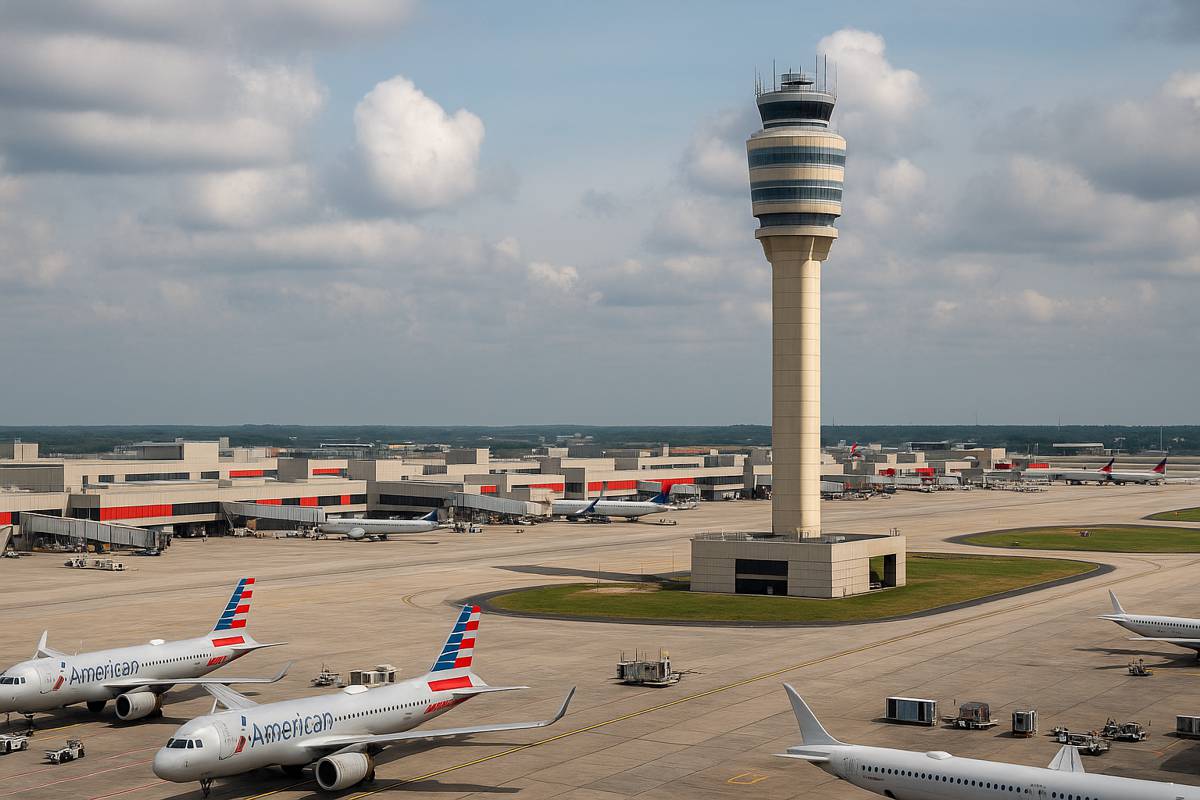
As of 2026, Hartsfield-Jackson Atlanta International Airport (ATL) maintains a total net position—the municipal equivalent of net worth—of approximately $4.8 billion to $5.2 billion. This figure represents the difference between its vast capital assets, valued at over $11 billion, and its long-term bond liabilities used to fund continuous expansion and modernization projects.
To understand the "net worth" of Hartsfield-Jackson, one must look beyond a single number. Unlike a private corporation, the airport is a department of the City of Atlanta, functioning as a self-sustaining enterprise fund. It does not use local taxpayer money; instead, it generates revenue through landing fees, concessions, and passenger charges to pay for its multi-billion-dollar infrastructure. In 2026, the airport continues to be the most significant economic engine in the Southeast, with a regional economic impact exceeding $66 billion annually.
Understanding the Financial Structure of Hartsfield-Jackson
Hartsfield-Jackson Atlanta International Airport is not a "company" in the traditional sense, but its financial reporting mirrors that of a massive global corporation. As a department of the City of Atlanta, the airport’s financial health is documented in the Annual Comprehensive Financial Report (ACFR). The "net worth" is technically referred to as the Net Position.
The airport operates as an enterprise fund, meaning it must generate enough revenue to cover its operating expenses and debt service. Its primary sources of capital are federally backed grants and municipal bonds. Because the airport is a vital piece of national infrastructure, its valuation is tied to its ability to process over 100 million passengers annually and serve as the primary global hub for Delta Air Lines. In 2026, the financial stability of ATL is bolstered by long-term lease agreements with major carriers that ensure a steady flow of "non-aeronautical" and "aeronautical" revenue.
Total Assets: The Physical Value of ATL
The "assets" side of the airport’s balance sheet is staggering. In 2026, the total value of capital assets (after depreciation) is estimated at roughly $11.5 billion. This valuation includes the physical land, the terminals, the runways, and the highly complex automated systems that keep the airport running.
Land and Infrastructure
ATL sits on approximately 4,700 acres of land. In the Atlanta real estate market of 2026, this land alone is worth billions, though it is designated strictly for aeronautical use. The infrastructure includes five parallel runways, miles of taxiways, and the massive terminal complex consisting of the Domestic Terminal and the Maynard H. Jackson Jr. International Terminal.
The ATLNext Modernization Program
A significant portion of the current asset value comes from the ATLNext program, a multi-decade, multi-billion-dollar capital improvement plan. By 2026, several key components of this plan have been completed, including:
- The modernization of the domestic terminal gates and concourses.
- The expansion of Concourse T and the preliminary work on Concourse G.
- Upgraded cargo facilities that have increased the airport’s logistics capacity.
- New parking decks integrated with smart-sensor technology and EV charging hubs.
Revenue Streams: How the Airport Generates Value
The "worth" of the airport is also defined by its income-generating potential. Hartsfield-Jackson’s revenue model is diversified to protect against fluctuations in the aviation industry.
Aeronautical Revenue
This includes landing fees charged to airlines, fuel flowage fees, and plane parking fees. Delta Air Lines, which operates its primary hub at ATL, contributes the largest share of this revenue. These fees are typically calculated on a "cost-recovery" basis, meaning they are set to cover the specific costs of operating the airfield.
Non-Aeronautical Revenue
This is where the airport generates its most significant "profit" margins. In 2026, non-aeronautical revenue remains the backbone of the airport’s financial independence.
- Concessions: With over 300 retail and dining locations, the airport takes a percentage of every meal and souvenir sold.
- Parking: As one of the largest parking operators in Georgia, the airport generates hundreds of millions of dollars annually from its terminal and economy lots.
- Rental Cars: The consolidated Rental Car Center (RCC), connected by the ATL SkyTrain, provides a steady stream of lease and transaction fee revenue.
Liabilities and Debt Service
To calculate net worth, one must subtract liabilities from assets. In 2026, Hartsfield-Jackson carries approximately $6.5 billion in long-term debt. This debt is primarily in the form of general airport revenue bonds (GARBs).
Investors highly value these bonds because the airport has a "monopoly" position in the region and a consistent history of high passenger volumes. The debt is used to finance the massive "yellow equipment" and concrete work required for runways and terminals. While $6.5 billion in debt sounds substantial, the airport’s debt-to-equity ratio is considered healthy by credit rating agencies like Moody’s and S&P, which consistently grant ATL high investment-grade ratings.
Comparison of Financial Metrics (Estimated 2026)
| Financial Category | Estimated Value (USD) | Description |
|---|---|---|
| Total Capital Assets | $11.5 Billion | Land, buildings, runways, and equipment. |
| Total Liabilities | $6.5 Billion | Outstanding municipal bonds and accounts payable. |
| Net Position (Net Worth) | $5.0 Billion | The "equity" held by the City of Atlanta Aviation Dept. |
| Annual Operating Revenue | $1.4 Billion | Combined airline fees and concession income. |
| Annual Economic Impact | $66 Billion | Total regional value including jobs and tourism. |
The "Delta Factor" and Strategic Partnerships
One cannot discuss the net worth or financial viability of ATL without mentioning Delta Air Lines. Delta accounts for approximately 75–80% of the passenger traffic at Hartsfield-Jackson. The 20-year lease agreement between the City of Atlanta and Delta provides a level of financial certainty that few other airports in the world enjoy.
This partnership increases the airport’s "intrinsic value." Because Delta is headquartered in Atlanta and has invested billions in its own infrastructure at the airport, the risk of a "hub pull-out" is extremely low. This stability allows the airport to secure lower interest rates on its bonds, effectively increasing its net position by reducing the cost of capital.
Economic Impact vs. Book Value
While the "book value" or net worth of the airport is roughly $5 billion, its economic value to the state of Georgia is much higher. The Atlanta Department of Aviation frequently cites an economic impact of over $66 billion for the 20-county metro area.
This impact is calculated by measuring:
- Direct Employment: Over 63,000 people work at the airport itself (airlines, ground handling, TSA, concessions).
- Indirect Employment: Support industries like hotels, logistics companies, and corporate headquarters that choose Atlanta because of the airport's connectivity.
- Tourism: The billions of dollars spent by visitors who arrive through ATL.
- Cargo: The value of goods moving through the airport's expanding cargo "city."
In 2026, this economic impact has become even more critical as Atlanta hosts major international events and continues to grow as a tech and film hub. The airport is the reason why 18 Fortune 500 companies are headquartered in the metro area.
Future Outlook: Valuation Drivers Toward 2030
As we look past 2026, several factors will likely increase the "net worth" of Hartsfield-Jackson:
- The Sixth Runway: Discussions regarding a sixth runway continue. If approved and funded, this would add billions in physical asset value, though it would also increase debt levels.
- Sustainable Aviation Fuel (SAF) Infrastructure: As the industry moves toward "Net Zero," ATL is investing in green infrastructure. These specialized assets will increase the airport's technological valuation.
- Digital Transformation: The implementation of biometric boarding and AI-driven logistics in 2026 has reduced operating costs, improving the net margin of the airport’s operations.
Frequently Asked Questions
Is ATL Airport a private company?
No, Hartsfield-Jackson Atlanta International Airport is owned and operated by the City of Atlanta. It is a government entity, but it operates as an "enterprise fund," meaning it functions like a business and is self-funded through its own revenues rather than local taxes.
How does ATL's net worth compare to other airports?
ATL's net position is among the highest in the world, comparable to major hubs like Dallas/Fort Worth (DFW) and Denver (DEN). Because ATL has a highly efficient "hub and spoke" layout, its operating costs per passenger are often lower than those of more sprawling international airports like London Heathrow or Paris Charles de Gaulle.
Does the $66 billion economic impact go to the city?
No. The $66 billion is the total estimated value of business activity, jobs, and tax revenue generated across the entire region because of the airport's existence. The airport's actual annual revenue that stays within its accounts is closer to $1.3–$1.5 billion.
Can the City of Atlanta use airport money for other things?
Under Federal Aviation Administration (FAA) "revenue diversion" rules, almost all money generated by the airport must stay at the airport. It cannot be used to fund the city’s general police force, schools, or other non-aviation projects. This ensures that the airport remains financially robust and well-maintained.
What is the most profitable part of the airport?
While landing fees bring in significant volume, parking and concessions (restaurants/retail) often have the highest profit margins for the airport authority. Parking, in particular, has very low overhead compared to the fees generated from thousands of daily travelers.
Strategic Recommendation for Analysts
When evaluating the "net worth" of Hartsfield-Jackson in 2026, observers should focus on the Debt Service Coverage Ratio (DSCR) rather than just total assets. A high DSCR indicates that the airport is generating more than enough cash to pay its creditors, which is the ultimate sign of financial health for a municipal entity. For those interested in the broader impact, the airport's value is best measured by its role as a "force multiplier" for the Georgia economy. Moving forward, the integration of the ATLNext projects will be the primary driver of asset growth.