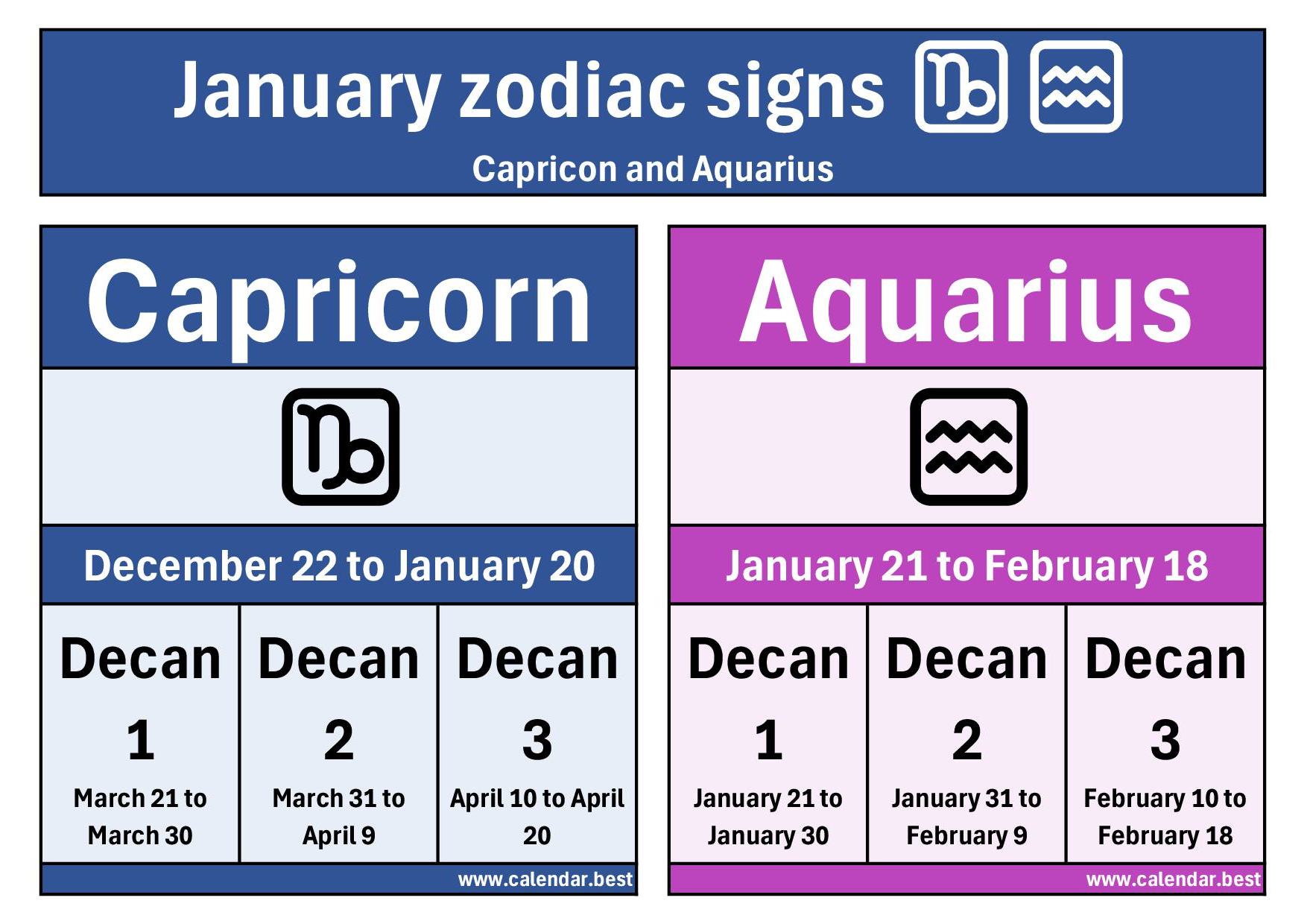
Aquarius typically begins on January 20, marking the transition from the Earth sign Capricorn to the Air sign Aquarius. Because the sun’s exact transition time varies annually based on the Earth’s orbit, the precise moment the sun enters the constellation of Aquarius shifts slightly each year. In 2026, the transition confirms that January 20 serves as the definitive start for those born under this sign.
The Astronomical Basis of Zodiac Dates
To understand why Aquarius begins on January 20, one must first distinguish between tropical astrology—which is used in most Western contexts—and sidereal astronomy. Western astrology is based on the tropical zodiac, a seasonal coordinate system tied to the equinoxes and solstices rather than the actual physical constellations in the sky.
The tropical zodiac divides the year into twelve 30-degree segments, starting with the Vernal Equinox (the start of Aries). Because the tropical year is approximately 365.2422 days long, the Gregorian calendar requires leap years to keep the dates aligned with the solar cycle. Consequently, the sun’s ingress into a specific zodiac sign—such as Aquarius—can fall on different hours or even different calendar days depending on the year. For the majority of the 21st century, the sun enters Aquarius on January 20, though in specific years or time zones, this can occasionally drift to January 19 or January 21.
Defining the Aquarius Personality in Tropical Astrology
Aquarius is classified as a fixed Air sign, ruled by the planet Saturn in traditional astrology and by Uranus in modern interpretations. Being the eleventh sign of the zodiac, Aquarius is often associated with collective goals, humanitarian efforts, and radical innovation.
Individuals born on or after January 20 are often described through the lens of intellectual independence and a desire for social progression. Because it is a "fixed" sign, Aquarius is associated with persistence, consistency, and a stubborn adherence to personal ideals. The Air quality of the sign lends itself to communication, abstract reasoning, and a preference for logic over emotional volatility.
The Influence of Transitioning Dates: The Cusp Explained
A common point of confusion for those born on January 20 is the concept of the "cusp." In popular parlance, a cusp refers to the transitional period where a person is born on the boundary between two signs. If you were born on January 20, you may feel you possess traits of both Capricorn (the previous sign) and Aquarius.
However, from a technical astrological perspective, there is no such thing as being "in two signs at once." The sun is physically positioned at only one coordinate at any given moment. To determine an accurate birth sign for someone born on the transition date, an individual requires an exact birth time. If the sun was at 0 degrees Aquarius at the exact moment of birth, the individual is an Aquarius, regardless of whether it was the first day of the sign.
Comparing Zodiac Signs: Capricorn vs. Aquarius
The transition from Capricorn to Aquarius on January 20 marks a fundamental shift in elemental energy. Capricorn is an Earth sign, focusing on structure, hierarchy, and material achievement. Aquarius, by contrast, is an Air sign, focusing on social networks, intellectual evolution, and dismantling outdated structures.
| Feature | Capricorn (Ends ~Jan 19) | Aquarius (Starts ~Jan 20) |
|---|---|---|
| Element | Earth | Air |
| Modality | Cardinal (Initiating) | Fixed (Stabilizing) |
| Ruling Planet | Saturn | Saturn (Ancient) / Uranus (Modern) |
| Primary Focus | Practicality and Tradition | Innovation and Humanity |
| Expression | Internal/Achievement-oriented | External/Community-oriented |
This table highlights why the transition on January 20 is significant. The energy moves from the grounded, authoritative nature of the Earth sign to the unconventional, reformist nature of the Air sign.
How to Verify Your Sun Sign
If you were born on January 20 and are unsure of your sign, you must consult an ephemeris—a table of astronomical positions. Because local time zones differ, an individual born in Sydney, Australia, on January 20 might have a different solar position than someone born in New York on the same day.
- Obtain Precise Birth Data: You need the exact date, time, and location (city/country) of your birth.
- Utilize a Tropical Ephemeris: Look up the longitude of the sun for your specific birth time.
- Check the Ingress: If the sun’s longitude is 300 degrees or greater, the sun has entered Aquarius. The sign begins exactly at the 300-degree mark of the ecliptic.
Using automated online calculators can simplify this, but ensure the calculator is programmed for the tropical zodiac rather than the sidereal system used in Vedic astrology, which tracks the actual background constellations and would result in significantly different dates.
Common Misconceptions About Aquarius Dates
Many people mistakenly believe that zodiac signs change exactly at midnight. In reality, the sun crosses the boundary of a sign at a specific, localized moment. For instance, if the ingress occurs at 4:00 PM UTC on January 20, someone born at 2:00 AM UTC on that same day would technically still be a Capricorn.
Another misconception is that the dates are fixed across all astrological traditions. Sidereal astrology, which accounts for the precession of the equinoxes—the slow wobble of the Earth’s axis—places the sun in the constellation of Capricorn for much of the time Western astrology claims is Aquarius. When searching for "Aquarius starts on January 20," it is crucial to recognize that this is specifically a statement about the Western Tropical Zodiac, which remains the standard for most personality-based horoscopes in English-speaking regions.
Philosophical and Psychological Impact of the Aquarius Season
As the sun enters Aquarius on January 20, the collective "vibe" often shifts toward a greater emphasis on friendship and long-term societal planning. In the cycle of the seasons, this time corresponds to the deep winter in the Northern Hemisphere, a period traditionally associated with gathering resources and contemplating community survival.
Psychologically, the Aquarius energy encourages individuals to detach from subjective, emotional perspectives to look at situations from a "bird's-eye view." This is the intellectual capacity of the Air sign. It allows for objectivity, which is necessary for scientific progress and humanitarian reform. Those born after January 20 are often noted for their ability to remain calm under pressure, provided that their personal autonomy is respected.
Practical Steps for Astrology Enthusiasts
If you are researching January 20 to determine the sign of yourself or an acquaintance, follow these practical steps to ensure accuracy:
- Avoid "General" Zodiac Calendars: Many newspapers and generic lifestyle websites use broad date ranges. These are often simplified and may not account for the precise ingress of the sun.
- Use Professional Software: For the most reliable results, utilize professional-grade astrology software (such as AstroGold or Solar Fire) or trusted, high-reputation web portals that calculate the sun's exact ingress longitude.
- Account for Daylight Savings: When entering birth data into calculation tools, ensure you specify whether Daylight Savings Time was in effect. Even a one-hour discrepancy can occasionally push a birth time across the boundary of a sign if the sun is moving across the cusp at that exact hour.
- Prioritize the Natal Chart: Remember that the Sun sign is only one part of an individual's astrological makeup. The Moon sign, Ascendant (Rising sign), and the placement of other planets (Mercury, Venus, Mars) are essential for a full profile. Even if the sun is at the very beginning of Aquarius, other planetary placements may provide a different balance of energy.
Frequently Asked Questions
Does the start date of Aquarius change every year? The date is consistently January 20 for the current era, but the precise hour and minute of entry shift annually due to the Earth's orbit and the leap year cycle. In some years, the sun enters the sign in the early morning; in others, it may enter later in the day.
What if I was born on January 20 at 12:01 AM? You are likely still a Capricorn. Because the ingress into Aquarius usually happens later in the day on January 20, an early morning birth on that date usually leaves the sun in the final degrees of Capricorn. You must check a birth-time specific ephemeris to be certain.
Is Aquarius a water sign because of the name? No. Despite the name—which translates to "water-bearer"—Aquarius is an Air sign. The "water" poured from the pitcher represents the gift of knowledge, truth, and wisdom being shared with humanity, rather than the literal element of water.
How does 2026 affect the timing of Aquarius? The orbital mechanics remain consistent, meaning 2026 follows the same pattern as other recent years. The sun's transit into Aquarius continues to fall on January 20, providing a stable baseline for those tracking their zodiac profile.
Why do some websites list January 21 as the start date? Older or less precise sources often use generalized dates. Additionally, some sources use time zones that differ from your own. If a source is based in a different longitude, their "start date" might appear to be a day later than it is for your specific location.
Conclusion and Next Actions
January 20 serves as the reliable threshold for the start of the Aquarius zodiac sign in Western tropical astrology. If you or someone you know was born on this day, the most accurate way to determine the sign is to verify the exact birth time against an ephemeris.
For those looking to deepen their understanding of their own astrological profile, your next step should be to generate a full natal chart. By using your exact minute and location of birth, you can confirm not just your Sun sign, but also your Rising and Moon signs, which together offer a comprehensive view of your personality. Whether you are an early-degree Aquarius or a late-degree Capricorn, understanding the mechanics of these transitions provides a clearer perspective on the shifting energies of the calendar year.