Another term for owner’s equity is net assets, net worth, or proprietorship. In a corporate environment, it is more commonly referred to as shareholders’ equity or stockholders’ equity. These terms all describe the residual interest in an entity’s assets after all its liabilities have been deducted.
Understanding the various names for owner's equity is more than just a lesson in vocabulary; it is a fundamental requirement for interpreting financial statements, assessing a company's health, and communicating effectively with financial professionals. As of 2026, standardized accounting practices under Generally Accepted Accounting Principles (GAAP) and International Financial Reporting Standards (IFRS) continue to use these terms interchangeably depending on the legal structure of the business.
The Core Concept of Owner’s Equity
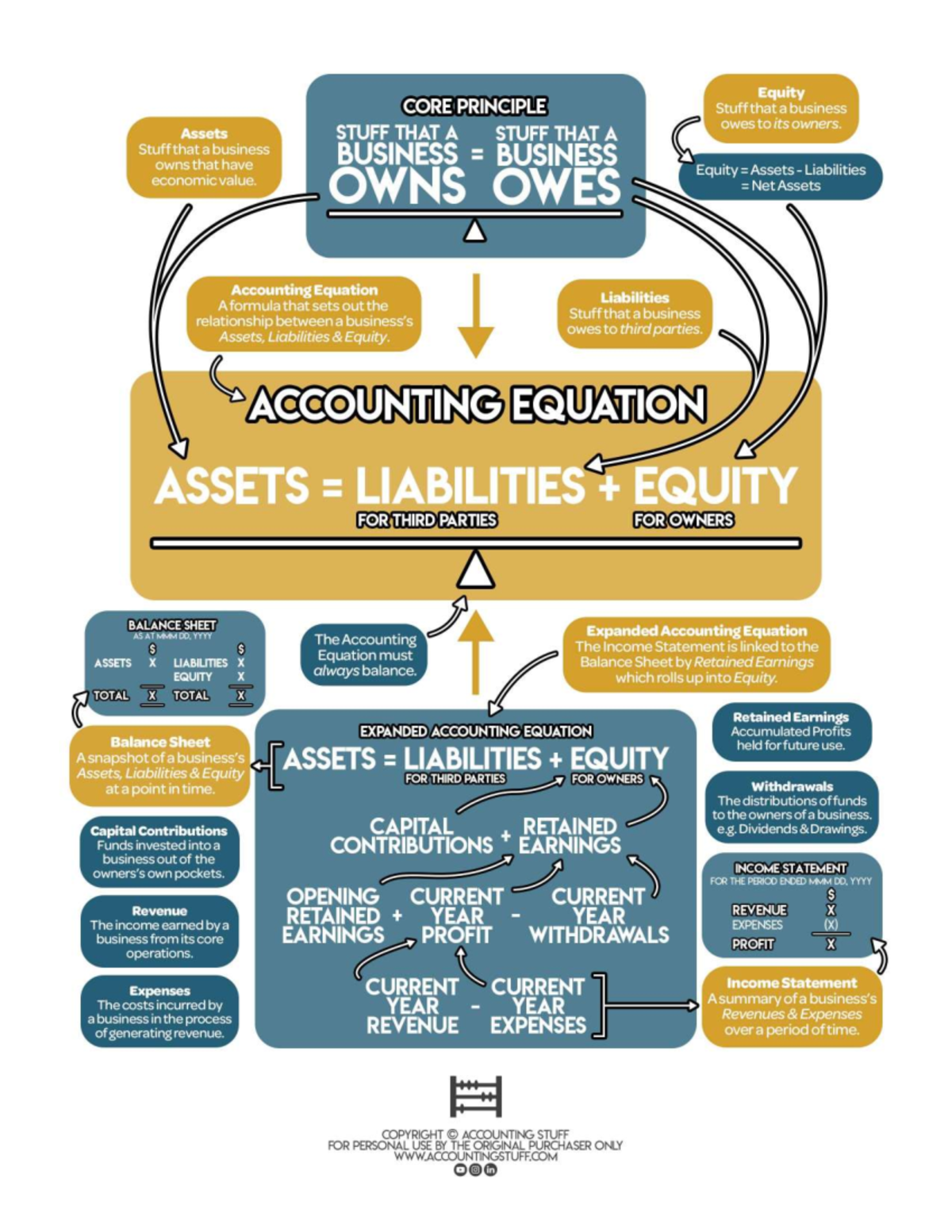
To understand why so many terms exist for this single concept, one must first understand the fundamental accounting equation. This equation serves as the foundation for the entire double-entry bookkeeping system:
Assets = Liabilities + Owner’s Equity
When you rearrange this equation to solve for equity, you get:
Owner’s Equity = Assets – Liabilities
This simple subtraction reveals why net assets is one of the most accurate synonyms. It represents what is left over—the "net" amount—once all debts and obligations (liabilities) are cleared using the company's resources (assets). From a legal and financial perspective, equity represents the "residual claim" that the owners have on the business. If a company were to stop operations today, sell every piece of equipment, and pay off every creditor, the remaining cash would be the owner's equity.
Why Context Dictates the Terminology
The term used often changes based on who owns the business and how that ownership is legally structured.
- Sole Proprietorships: In a business owned by one person, the term Owner’s Equity or simply Capital is most common. It reflects the individual owner's personal investment plus any kept profits.
- Partnerships: When two or more people own a business, the section is often labeled Partners’ Equity or Capital Accounts.
- Corporations: Because ownership is divided into shares of stock, the term shifts to Stockholders’ Equity or Shareholders’ Equity.
- Non-Profit Organizations: Since there are no "owners" in a traditional sense, the term used is Net Assets, often categorized as "with donor restrictions" or "without donor restrictions."
Common Synonyms Explained
1. Net Assets
In technical accounting circles, net assets is arguably the most common alternative. It is favored because it describes exactly how the value is derived. In the public sector and for non-profit entities, this is the standard terminology. It emphasizes the valuation of the entity as a whole rather than the individual's stake in it.
2. Net Worth
While net worth is frequently used in personal finance to describe an individual’s financial standing, it is also applied to small businesses. When a business owner asks, "What is my company worth on paper?" they are referring to the net worth or book value of the business. However, it is important to distinguish this from "market value," which is what someone might actually pay to buy the business.
3. Shareholders’ Equity / Stockholders’ Equity
These are the standard terms for any entity that has incorporated and issued stock. This includes everything from a small "S-Corp" to massive publicly traded firms listed on the NYSE or NASDAQ. It represents the sum of the capital contributed by investors and the earnings the company has retained since its inception.
4. Book Value
From an investment perspective, owner’s equity is often called the book value of the company. This term is used to contrast the accounting value of the company (based on historical costs) with its market capitalization (the current price of all outstanding shares).
The Components of Owner’s Equity
To understand the breadth of this topic, one must look at what actually comprises these figures on a balance sheet. Owner’s equity is not a single pile of cash; it is a cumulative record of several different financial activities.
Contributed Capital (Paid-In Capital)
This is the money that owners or investors have directly put into the business. In a corporation, this is divided into Common Stock and Preferred Stock. There is also a sub-category called Additional Paid-In Capital (APIC), which represents the amount investors paid over the "par value" of the stock.
Retained Earnings
This is arguably the most critical component of equity for a growing business. Retained earnings are the profits that the company has earned over time but has not distributed to the owners as dividends or draws. Instead, these funds are "plowed back" into the business to fund operations, purchase assets, or pay down debt. A negative retained earnings balance is often called an accumulated deficit.
Treasury Stock
When a corporation buys back its own shares from the open market, it is recorded as treasury stock. This is a "contra-equity" account, meaning it reduces the total amount of stockholders' equity. Companies do this to return value to shareholders or to prevent hostile takeovers.
Accumulated Other Comprehensive Income (AOCI)
This is a more technical component that includes gains and losses that are not yet "realized." Examples include fluctuations in the value of foreign currency or changes in the market value of certain investments. These items bypass the income statement and go directly into the equity section of the balance sheet.
Practical Usage: Comparing the Terms
| Term | Primary Context | Why It Is Used |
|---|---|---|
| Owner’s Equity | Sole Proprietorships / Small Business | Clearly identifies the owner's personal stake in the business. |
| Stockholders’ Equity | Corporations | Reflects that ownership is held through shares of stock. |
| Net Assets | Non-Profits / Government / IFRS | Focuses on the math (Assets minus Liabilities) rather than ownership. |
| Net Worth | Personal Finance / Small Business | A general term for total wealth or value after debts. |
| Capital | Bookkeeping / Partnerships | Focuses on the "funding" or "investment" aspect of the business. |
| Book Value | Investment Analysis | Distinguishes accounting value from current market price. |
Why the Terminology Matters in 2026
As we move through 2026, the integration of global markets has made it more common for business owners to encounter international financial reports. If you are a US-based business owner looking at a European partner's financial statement, you might see "Capital and Reserves" instead of "Owner's Equity." Recognizing these synonyms prevents confusion during audits, loan applications, and mergers.
Furthermore, lenders look specifically at the Equity Ratio (Total Equity / Total Assets) to determine the solvency of a business. Whether the bank calls it "Net Worth" or "Stockholders' Equity," they are looking for the same thing: a cushion of value that protects them if the business faces a downturn. If your liabilities are nearly equal to your assets, your equity is thin, making the business a higher risk for creditors.
How to Calculate and Report Owner's Equity
Reporting equity is a dynamic process. It is not just a snapshot; it is a story of how the business has changed over a specific period. This is typically done through the Statement of Changes in Equity.
Step-by-Step Calculation
- Determine Total Assets: List everything the business owns, including cash, accounts receivable, inventory, equipment, and real estate. Use their "book value" (cost minus accumulated depreciation).
- Determine Total Liabilities: List everything the business owes, including bank loans, accounts payable, accrued taxes, and long-term debt.
- Subtract Liabilities from Assets: The resulting figure is your current Owner's Equity (Net Assets).
- Reconcile with the Previous Period: Take the equity balance from the end of the last year, add any new owner investments, add the net income (profit) for the current year, and subtract any owner draws or dividends. The result should match the figure from Step 3.
Common Misconceptions About Owner's Equity
Equity is Not Cash
One of the most dangerous mistakes a business owner can make is assuming that having $500,000 in owner's equity means they have $500,000 in the bank. Equity is a "paper value." Your assets might be tied up in specialized machinery or unpaid customer invoices. You can have high equity and still go bankrupt if you run out of liquid cash to pay your bills.
Equity Can Be Negative
If a company’s liabilities exceed its assets, the owner's equity becomes negative. This is often referred to as being "underwater" or having a "deficiency in equity." This usually happens after several years of significant losses or if a company takes on massive debt to fund a failed project.
Market Value vs. Book Value
As mentioned earlier, the "another term" aspect often leads to confusion between accounting and reality. A tech company might have "Stockholders' Equity" of $10 million on its balance sheet, but the stock market might value the company at $100 million. This is because accounting (and the term "owner's equity") focuses on historical costs, while the market focuses on future earning potential.
The Role of Equity in Business Strategy
In the current 2026 economic landscape, equity management has become a sophisticated tool for business growth. Companies use their equity levels to:
- Attract Investors: High equity-to-debt ratios signal a stable, well-managed company.
- Secure Financing: Banks are more likely to offer lower interest rates to businesses with substantial "skin in the game" (high owner's equity).
- Employee Retention: Many companies now offer "Equity Compensation" or "Stock Options," which allows employees to own a piece of the stockholders' equity, aligning their interests with the company's success.
Frequently Asked Questions
Is "Net Assets" the exact same as "Owner's Equity"?
Yes, in the context of the accounting equation, they are mathematically identical. However, "Net Assets" is the preferred term in non-profit accounting because there are no owners to claim the residual value. In for-profit accounting, "Owner's Equity" emphasizes the rights of the proprietors.
Why do some people call it "Proprietorship"?
"Proprietorship" is an older, more traditional term. It stems from the word "proprietor," meaning owner. While you might still see this in older textbooks or in the records of very old family businesses, it has largely been replaced by "Owner's Equity" or "Capital" in modern software.
Can Owner's Equity change without any new investment?
Absolutely. The most common way equity changes without direct investment is through Net Income or Net Loss. If your business earns a profit, that profit increases your Retained Earnings, which in turn increases your total Owner's Equity. Conversely, a loss will decrease it.
How does "Draw" affect Owner's Equity?
An owner's draw (in a sole proprietorship or partnership) or a dividend (in a corporation) directly reduces owner's equity. It represents the owner taking out a portion of their residual claim in the form of cash.
What is "Negative Equity"?
Negative equity occurs when your total liabilities are greater than your total assets. This usually indicates that the company has accumulated significant losses over time or has borrowed more money than the current value of its resources can support.
Final Recommendations for Business Owners
When discussing your business finances with an accountant, banker, or potential investor, clarify which term they prefer to use. While they are synonyms, using Shareholders' Equity when speaking to a venture capitalist or Net Worth when speaking to a mortgage officer can demonstrate your financial literacy.
Always remember that maintaining a healthy level of equity is the best defense against economic volatility. By keeping an eye on your Retained Earnings and managing your Liabilities, you ensure that the value of your ownership continues to grow, regardless of which term you choose to describe it.