Annual net cash inflow is the total liquid capital a business or project generates over a one-year period after subtracting all cash outflows from total cash receipts. Unlike net income, it focuses strictly on the timing of cash movements, serving as a critical metric for assessing liquidity, solvency, and investment viability in 2026's dynamic economic landscape.
The Fundamentals of Annual Net Cash Inflow
To understand annual net cash inflow, one must first distinguish between "cash" and "accounting profit." In the world of finance and corporate accounting, profit is often an abstract concept influenced by non-cash items like depreciation, amortization, and accruals. Annual net cash inflow, however, represents the actual "greenbacks" moving into the bank account.
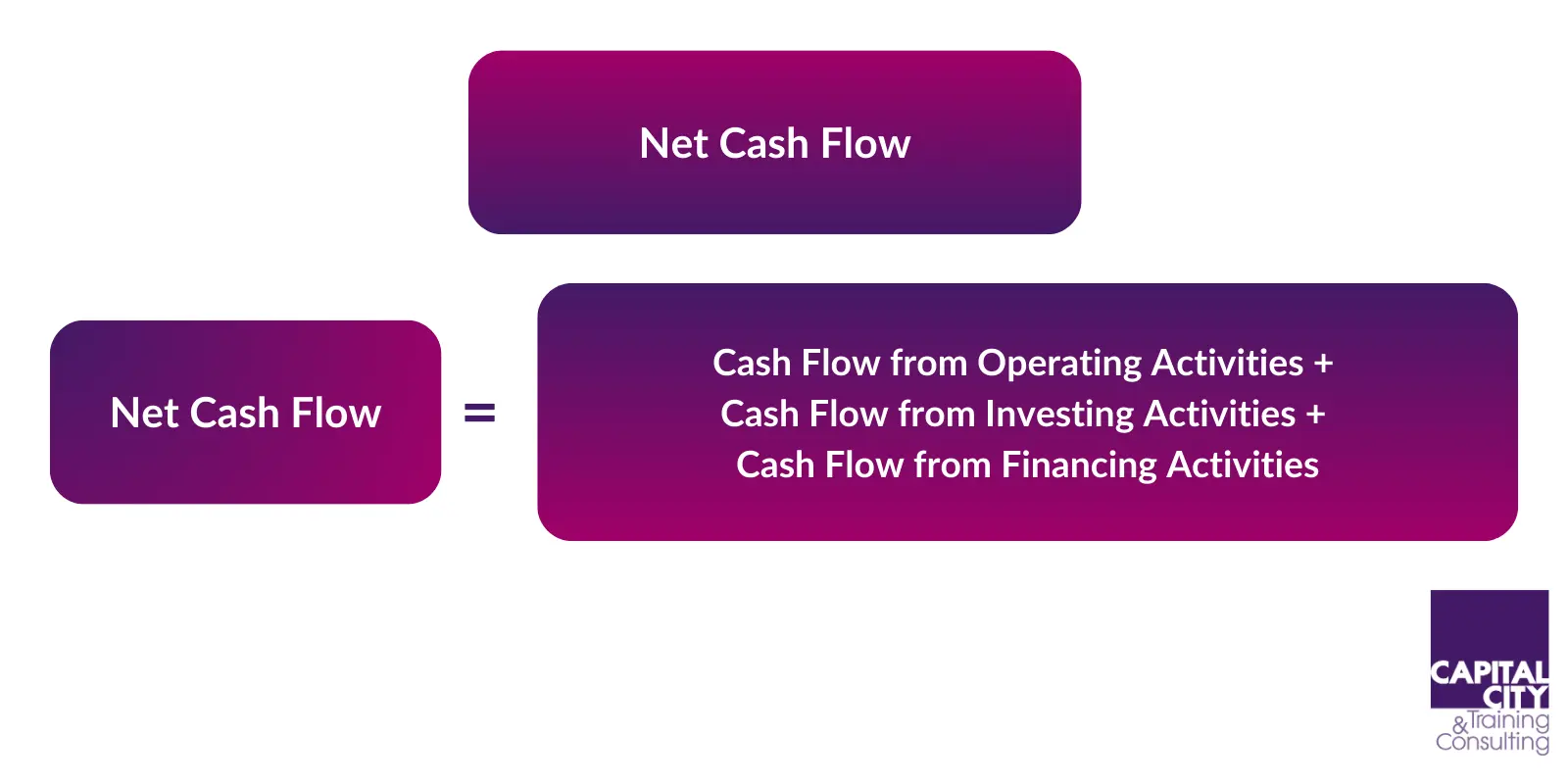
In 2026, as interest rates and inflation continue to influence capital allocation, the ability to generate consistent cash is the ultimate litmus test for any enterprise. Net cash inflow is calculated by taking the total cash received from all business activities—operations, investments, and financing—and subtracting the total cash disbursed for expenses, asset purchases, and debt repayments within a single fiscal year.
The primary goal of tracking this metric is to ensure that a business remains "liquid." A company can be profitable on paper while being cash-poor, a dangerous state that often leads to insolvency if the company cannot meet its immediate obligations, such as payroll or interest payments.
Components of Annual Net Cash Inflow
Breaking down the "inflow" and "outflow" requires an analysis of the three main sections of a standard cash flow statement. While the annual net cash inflow is often viewed as a singular figure, it is the sum of these three distinct areas:
1. Operating Activities
This is the core of the business. It includes cash received from customers for goods or services and cash paid to suppliers and employees. To calculate the net inflow from operations, start with the net income and add back non-cash expenses like depreciation. Adjustments are also made for changes in working capital, such as accounts receivable and inventory. If a company is healthy, the majority of its annual net cash inflow should ideally stem from this section.
2. Investing Activities
This section tracks the cash used for, or generated by, long-term assets. Inflows might include the proceeds from selling a piece of machinery or a subsidiary. Outflows typically involve capital expenditures (CapEx), such as buying new technology or property. In 2026, many firms are seeing significant outflows in this category as they invest heavily in automated systems and sustainable energy infrastructure.
3. Financing Activities
Cash flow from financing involves how the business is funded. Inflows come from issuing stock or taking on new debt (loans/bonds). Outflows occur when the company pays dividends, repurchases shares, or pays down the principal on its debt. While these are "inflows," a reliance on financing to maintain a positive annual net cash inflow is often a red flag for investors, as it suggests the core business is not self-sustaining.
How to Calculate Annual Net Cash Inflow
There are two primary methods for calculating cash flow: the direct method and the indirect method. While the indirect method is more common in 2026 corporate reporting due to its alignment with the balance sheet, the direct method provides a clearer picture of where cash is actually coming from.
The Direct Method Formula
The direct method lists all major classes of gross cash receipts and gross cash payments.
Annual Net Cash Inflow = (Cash Received from Customers + Interest/Dividends Received) - (Cash Paid to Suppliers + Cash Paid to Employees + Interest Paid + Taxes Paid)
The Indirect Method Formula
The indirect method starts with net income and "cleans" it of non-cash transactions to arrive at the cash figure.
Annual Net Cash Inflow = Net Income + Depreciation/Amortization + Changes in Working Capital (Decrease in Assets/Increase in Liabilities) - Capital Expenditures ± Financing Cash Flows
Understanding these formulas is vital for financial modeling. For instance, if you are evaluating a new project, you must forecast the annual net cash inflow for each year of the project’s life to determine if the initial investment is justified.
The Role of Annual Net Cash Inflow in Capital Budgeting
In capital budgeting, annual net cash inflow is the lifeblood of valuation models. Analysts do not use "net profit" to determine the value of a project; they use cash flow. This is because cash has a time value—a dollar today is worth more than a dollar tomorrow.
Net Present Value (NPV)
NPV is the gold standard for investment appraisal. It involves discounting the expected annual net cash inflows of a project back to their "present value" using a required rate of return. If the sum of these discounted inflows exceeds the initial investment, the project is considered viable.
Internal Rate of Return (IRR)
The IRR is the discount rate that makes the NPV of all annual net cash inflows from a particular project equal to zero. Essentially, it is the expected compound annual rate of return that the project will earn. Businesses compare the IRR to their "hurdle rate" to decide whether to proceed.
Payback Period
This is a simpler metric that calculates how many years of annual net cash inflows it will take to "pay back" the initial capital outlay. While it ignores the time value of money, it is a useful secondary metric for assessing risk and liquidity.
Comparing Financial Metrics: A 2026 Project Example
To illustrate how annual net cash inflow functions in a real-world scenario, consider two competing projects in a manufacturing firm.
| Feature | Project Alpha (Automation) | Project Beta (Market Expansion) |
|---|---|---|
| Initial Investment | $500,000 | $500,000 |
| Year 1 Net Cash Inflow | $120,000 | $200,000 |
| Year 2 Net Cash Inflow | $150,000 | $180,000 |
| Year 3 Net Cash Inflow | $180,000 | $150,000 |
| Year 4 Net Cash Inflow | $210,000 | $100,000 |
| Total 4-Year Inflow | $660,000 | $630,000 |
| Primary Advantage | High terminal value; efficient | Quick recovery of capital |
| Risk Profile | Low (Internal efficiency) | High (Market volatility) |
In this table, Project Alpha provides an increasing annual net cash inflow, while Project Beta starts strong but tapers off. An analyst would use these figures to calculate NPV. Even though Project Beta pays back more cash early on, Project Alpha’s higher total inflow might make it more attractive depending on the discount rate used in 2026.
Why Profit is Not the Same as Net Cash Inflow
One of the most common mistakes in business management is conflating profit with cash. This distinction is governed by the principles of Accrual Accounting, which is the standard required by the Financial Accounting Standards Board (FASB) and International Financial Reporting Standards (IFRS).
The Timing Problem
Accrual accounting records revenue when it is earned and expenses when they are incurred, regardless of when the money actually changes hands. If a company sells $1 million worth of goods on credit in December, its "profit" for the year goes up by $1 million. However, if the customer doesn't pay until February of the following year, the "annual net cash inflow" for the current year is zero for that transaction.
Non-Cash Expenses
Depreciation is the most significant non-cash expense. When a company buys a $100,000 machine, it doesn't subtract $100,000 from its profit in year one. Instead, it might subtract $10,000 every year for ten years. However, the cash left the building in year one. Therefore, to find the annual net cash inflow, depreciation must be added back to the net income.
Inventory Management
Buying inventory is a cash outflow. However, it does not appear on the income statement as an expense until the inventory is sold (as Cost of Goods Sold). A company that overstocks inventory will see its annual net cash inflow drop significantly, even if its sales and profits look healthy.
Strategies to Improve Annual Net Cash Inflow
For businesses operating in 2026, maintaining a healthy cash flow is essential for navigating market shifts. There are several levers a manager can pull to optimize annual net cash inflow:
- Accelerate Receivables: Offering small discounts for early payment (e.g., 2/10 net 30) can encourage customers to pay faster, pulling cash into the current fiscal year.
- Optimize Inventory: Using "Just-in-Time" (JIT) inventory systems or advanced AI-driven demand forecasting can reduce the amount of cash tied up in unsold products.
- Negotiate Payables: While you want customers to pay you quickly, you want to pay your suppliers as late as possible without incurring penalties or damaging relationships. This keeps cash in your accounts longer.
- Lease vs. Buy: Instead of a large upfront cash outflow to purchase equipment, leasing allows a company to spread the cost over several years, preserving the annual net cash inflow for other operations.
- Tax Planning: Utilizing tax credits, such as R&D credits or energy efficiency incentives available in 2026, can reduce the cash outflow associated with tax payments.
Common Mistakes in Forecasting Cash Inflows
Predicting the future is inherently difficult, but certain systematic errors frequently lead to overestimating annual net cash inflows:
- The "Optimism Bias": Assuming sales will grow at a constant rate without accounting for market saturation or competitive entry.
- Ignoring Seasonality: Many businesses fail to account for the fact that cash inflows are rarely distributed evenly throughout the 12 months of the year.
- Underestimating Capital Maintenance: Projects often require "stay-in-business" CapEx—periodic repairs or software updates—that are frequently omitted from long-term cash flow projections.
- Neglecting Inflation: In the economic climate of 2026, failing to account for the rising cost of inputs can result in a projected net inflow that is far higher than what is realistically achievable.
Frequently Asked Questions
What is the difference between net cash flow and net income?
Net income is an accounting figure that includes non-cash items and follows accrual rules. Net cash flow is a measure of actual liquid currency entering and leaving the business. A company can have a high net income but negative net cash flow if its wealth is tied up in accounts receivable or inventory.
Can a company have a positive annual net cash inflow but still be in trouble?
Yes. If a company's positive cash inflow is primarily driven by "Financing Activities" (taking on debt) or "Investing Activities" (selling off its productive assets), the business may be in a "death spiral." A healthy business should generate the majority of its inflow from "Operating Activities."
How do interest rates affect annual net cash inflow?
As of 2026, interest rates directly impact the "Financing" portion of cash flow. Higher rates increase interest payments (an outflow), thereby reducing the net cash inflow. Furthermore, higher rates increase the "discount rate" used in NPV calculations, making future cash inflows less valuable in today's terms.
Is annual net cash inflow the same as "Free Cash Flow"?
They are closely related but distinct. Annual net cash inflow is the total change in cash over a year. Free Cash Flow (FCF) is specifically the cash a company generates after accounting for cash outflows to support operations and maintain its capital assets. FCF is often used by investors to determine how much cash can be returned to shareholders.
Why do banks prioritize net cash inflow over profit when lending?
Banks are concerned with a borrower's ability to service debt. Profit includes non-cash items that cannot be used to pay interest or principal. A bank looks at the annual net cash inflow to ensure the business has the literal "cash on hand" to meet its monthly or annual loan obligations.
Practical Recommendation for 2026
For business owners and financial analysts in 2026, the most effective way to manage annual net cash inflow is through rolling 12-month forecasts. Rather than performing a single static projection at the start of the fiscal year, update your cash flow model at the end of every month. This allows you to adjust for real-world changes in customer behavior, supply chain costs, and interest rate fluctuations.
If your analysis reveals a trend of declining operating cash inflows, prioritize "Working Capital Management" immediately. Tightening credit terms for customers and reducing safety stock in your inventory are the fastest ways to stabilize your cash position without taking on expensive new debt.