To calculate an annual increase, subtract the original value from the new value, divide the result by the original value, and multiply by 100 to get the percentage. For multi-year growth periods, the Compound Annual Growth Rate (CAGR) formula is used: [(Ending Value / Beginning Value)^(1 / Number of Years)] - 1.
Understanding how to calculate an annual increase is a fundamental skill in finance, business management, and personal career planning. Whether you are evaluating a salary raise, analyzing the appreciation of a property, or measuring the growth of a business’s revenue in 2026, the underlying mathematics remain consistent. While the basic percentage increase formula is suitable for simple year-over-year changes, more complex scenarios involving compounding require a deeper understanding of algebraic principles.
The Logic of the Simple Annual Increase Formula
The simple annual increase formula measures the relative change between two points in time. It is expressed as a percentage to provide context. For example, a $5,000 increase means something very different to someone earning $50,000 than it does to someone earning $500,000. By converting the absolute change into a percentage, we gain a standardized metric for comparison.
The Mathematical Components
The standard formula for a simple percentage increase is:
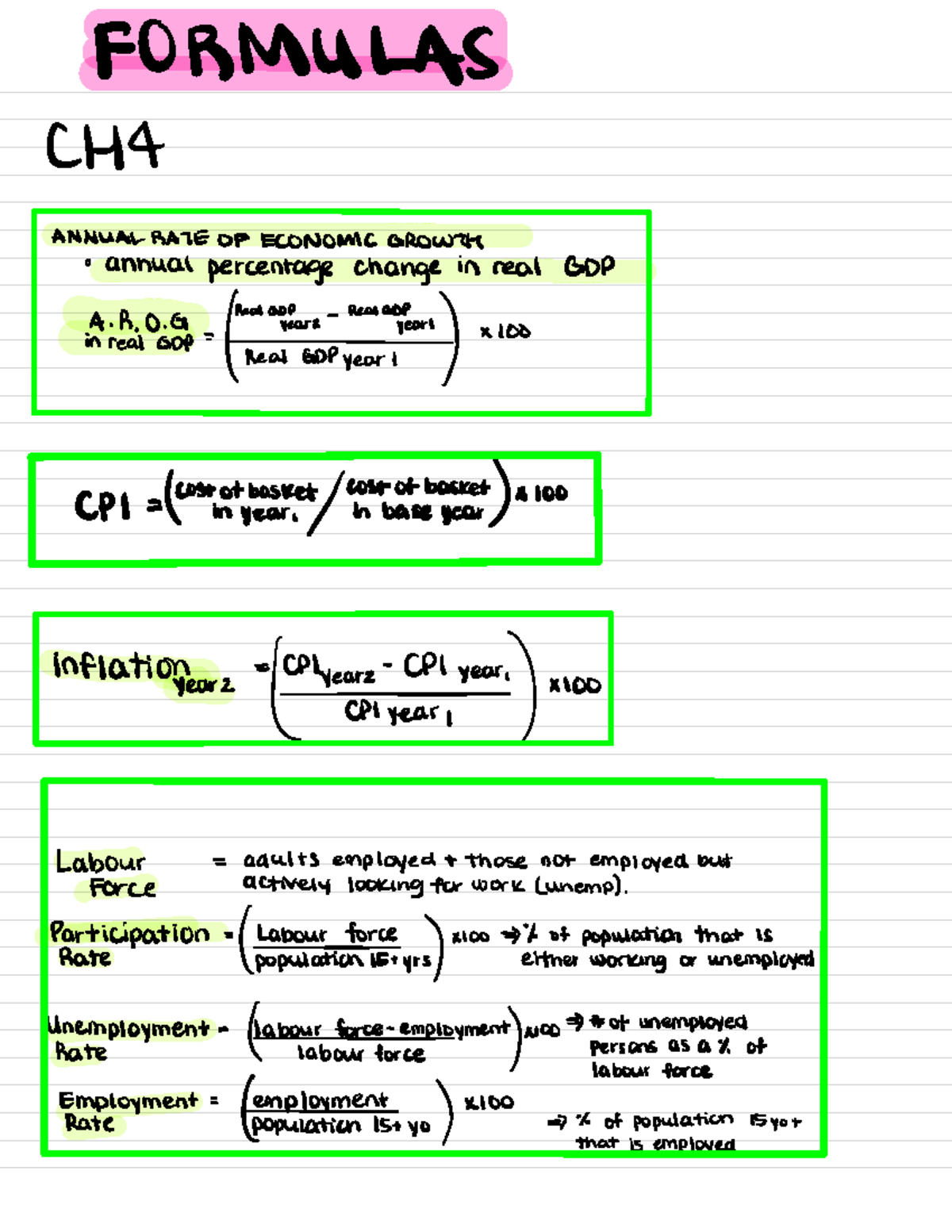
Percentage Increase = [(New Value - Old Value) / Old Value] × 100
To break this down:
- The Difference (Numerator): By subtracting the Old Value from the New Value, you find the "absolute increase." This is the raw amount of growth.
- The Base (Denominator): You divide the absolute increase by the Old Value because the Old Value is the starting point or the "whole" upon which the growth occurred.
- The Percentage Conversion: Multiplying by 100 shifts the decimal point two places to the right, turning a decimal (like 0.05) into a readable percentage (5%).
Practical Example: Salary Adjustment
Suppose an employee’s salary was $75,000 in 2025 and increased to $78,750 in 2026.
- Step 1: $78,750 - $75,000 = $3,750 (Absolute Increase)
- Step 2: $3,750 / $75,000 = 0.05
- Step 3: 0.05 × 100 = 5%
In this scenario, the annual increase is exactly 5%. This calculation is vital for employees during performance reviews and for HR departments managing payroll budgets.
Compound Annual Growth Rate (CAGR)
While the simple formula works for a single year, it fails to account for the "compounding effect" over multiple years. If a business grows by 10% each year for three years, its total growth is not a simple 30%. Because each year’s 10% is calculated on an already increased base, the total growth is actually 33.1%.
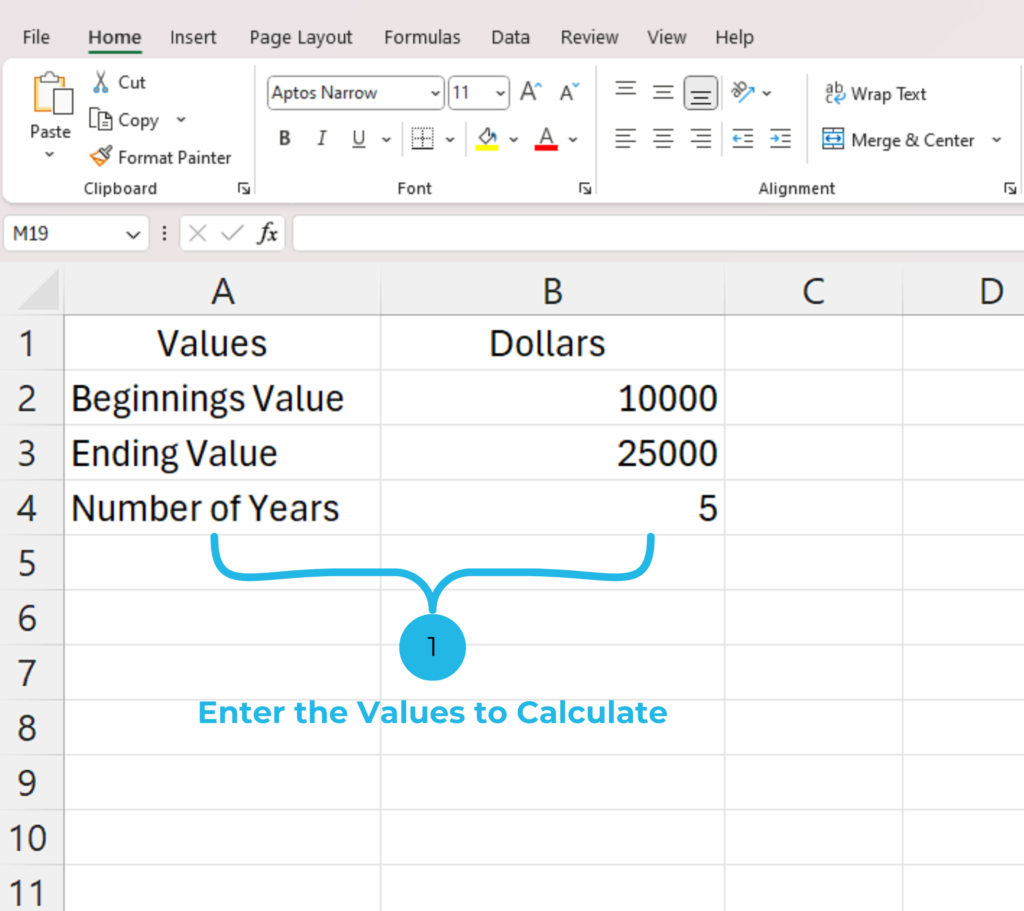
To find the smoothed average annual growth rate over a multi-year period, we use the Compound Annual Growth Rate (CAGR) formula:
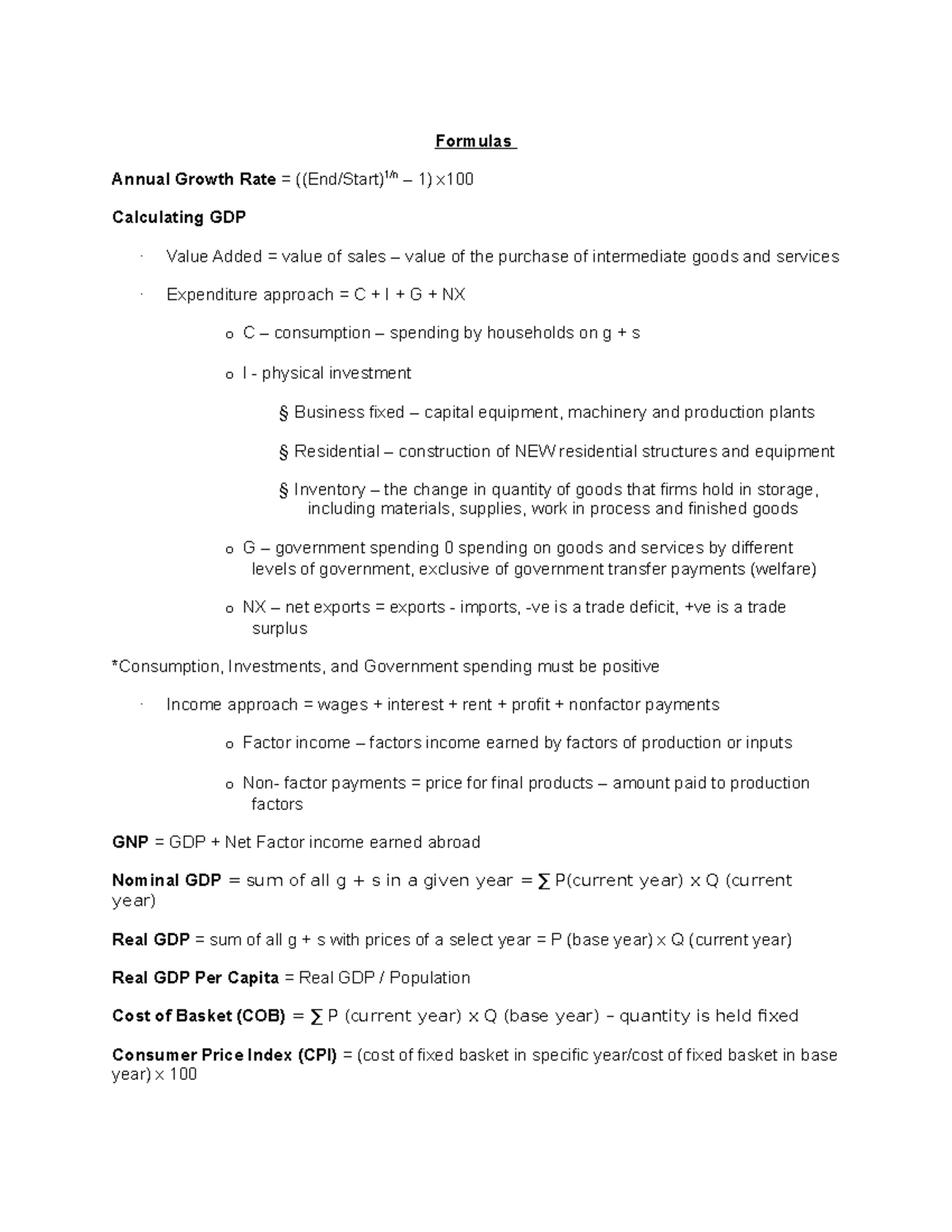
CAGR = [(Ending Value / Beginning Value)^(1 / n)] - 1
Where:
- Ending Value: The value at the end of the period.
- Beginning Value: The value at the start of the period.
- n: The number of years in the period.
Why CAGR is Essential in 2026
In the current economic climate of 2026, volatility in markets and shifting inflation rates make single-year snapshots less reliable than multi-year averages. CAGR provides a "geometric mean," representing the rate at which an investment would have grown if it had grown at a steady rate each year and the profits were reinvested. It is the most accurate way to compare the performance of different asset classes, such as stocks, bonds, or real estate, over long durations.
Step-by-Step CAGR Calculation
Imagine an investment of $10,000 in 2022 that has grown to $14,641 by 2026. This is a four-year period (n=4).
- Divide Ending Value by Beginning Value: $14,641 / $10,000 = 1.4641
- Apply the Exponent: 1.4641 ^ (1 / 4) = 1.4641 ^ 0.25 = 1.1
- Subtract 1: 1.1 - 1 = 0.1
- Convert to Percentage: 0.1 × 100 = 10%
The CAGR for this investment is 10% per year.
Annual Increases in Real Estate and Rent
For landlords and tenants, the annual increase formula is often governed by both market forces and local legislation. In many jurisdictions in 2026, rent increases are capped based on the Consumer Price Index (CPI), which is a measure of inflation.
Calculating Rent Increases
When a landlord applies a percentage increase to rent, the formula is: New Rent = Current Rent × (1 + Percentage Increase)
If a tenant pays $2,000 per month and the landlord applies a 3.5% increase:
- $2,000 × (1 + 0.035) = $2,000 × 1.035 = $2,070.
The Role of Inflation (CPI)
The "real" value of an annual increase is often measured against the inflation rate. If a worker receives a 4% salary increase in 2026, but the annual inflation rate is 4.5%, that worker has actually experienced a 0.5% decrease in purchasing power. This is known as a "real" wage decrease. Businesses use the same logic when evaluating revenue growth; if revenue grows by 5% but expenses (due to inflation) grow by 7%, the company is effectively shrinking in terms of profitability.
Annual Increase Methods Comparison
Different scenarios require different mathematical approaches. The table below outlines the most common methods used in 2026 for calculating and interpreting growth.
| Method | Formula | Best Use Case | Key Limitation |
|---|---|---|---|
| Simple Percentage Increase | [(New-Old)/Old] * 100 |
Year-over-year (YoY) salary or budget changes. | Does not account for multi-year compounding. |
| CAGR | [(End/Start)^(1/n)] - 1 |
Measuring investment performance or long-term business growth. | Masks year-to-year volatility or "shocks." |
| Rule of 72 | 72 / R = Years |
Estimating how long it takes for a value to double at a fixed rate (R). | Only an approximation; less accurate at high rates. |
| Cost of Living Adjustment (COLA) | Base * CPI Rate |
Adjusting pensions, Social Security, or wages to maintain purchasing power. | Based on general indices that may not reflect individual costs. |
Common Pitfalls in Calculating Annual Increases
Despite the relative simplicity of the formulas, errors are frequent, particularly in professional reporting. Avoiding these mistakes ensures financial accuracy and prevents misleading stakeholders.
1. Confusing Percentage Increase with Percentage Points
This is a classic error. If an interest rate moves from 4% to 5%, that is an increase of one percentage point, but it is a 25% increase in the rate itself (1 / 4 = 0.25). In 2026, with interest rates remaining a focal point of economic policy, using the correct terminology is vital for clear communication.
2. Failing to Use the Correct Base Value
Always divide by the original value, not the new value. Dividing by the new value will result in a lower percentage, which is a common tactic used to downplay significant increases in costs or taxes.
3. Ignoring the "n" in Multi-Year Calculations
When calculating CAGR, the number of years (n) represents the number of intervals, not the number of data points. For example, if you have data for 2024, 2025, and 2026, there are three years of data but only two annual intervals (2024–2025 and 2025–2026). Using n=3 instead of n=2 will result in an incorrect, lower growth rate.
4. Overlooking Negative Growth
The formula works for decreases as well, but the result will be a negative number. If a stock drops from $100 to $80, the calculation is (80 - 100) / 100 = -0.20, or a 20% decrease. Ensure that negative signs are preserved to accurately reflect losses.
The Significance of Annual Increases in Business Strategy
For businesses operating in 2026, the annual increase formula is more than a retrospective tool; it is a forecasting necessity. By analyzing past annual increases, companies can project future trends through trendline analysis.
- Budgeting: Departments often receive "incremental budgets," where the next year's funding is the current year's funding plus a percentage increase.
- Pricing Strategy: Companies must calculate the annual increase in the cost of goods sold (COGS) to determine if they need to raise prices for consumers.
- Employee Retention: HR departments track the "Annual Salary Increase Budget" (ASIB) to stay competitive within their industry. If the industry average annual increase is 4% and a firm only offers 2%, they risk losing talent to competitors.
The U.S. Bureau of Labor Statistics (BLS) provides comprehensive data on average annual wage increases and price changes, which serves as a benchmark for these business decisions.
Frequently Asked Questions
How do I calculate an annual increase if I only have monthly data?
To find the annual increase from monthly data, you compare the same month from the previous year (e.g., March 2025 vs. March 2026). This is called a "year-over-year" (YoY) change. Comparing March to February of the same year provides a monthly increase, but because many industries are seasonal, this can be misleading. To annualize a single month's growth, you can use the formula: (1 + monthly rate)^12 - 1, though this assumes the monthly growth will remain constant, which is rarely the case.
What is a "good" annual increase for a salary in 2026?
A "good" increase typically exceeds the current rate of inflation. Historically, average merit-based increases range from 3% to 5%. However, in specialized fields like AI development or renewable energy engineering in 2026, annual increases can be significantly higher due to labor shortages. It is important to look at the total compensation package, including bonuses and benefits, rather than just the base salary increase.
Is the formula different for calculating an annual decrease?
No, the formula [(New Value - Old Value) / Old Value] * 100 remains the same. If the result is negative, it represents a decrease. For example, if your energy usage dropped from 500 kWh to 450 kWh, the calculation would be (450 - 500) / 500 = -0.1, which is a 10% annual decrease.
How does the annual increase formula apply to "compounded" interest in a savings account?
The annual increase in a savings account is essentially the Annual Percentage Yield (APY). If you start with $1,000 at a 5% APY, your "new value" after one year is $1,050. The formula (1050 - 1000) / 1000 confirms the 5% increase. The complexity arises when interest is compounded monthly or daily; in those cases, the effective annual increase (the APY) is slightly higher than the nominal interest rate.
Can I use the annual increase formula for non-financial metrics?
Yes. The formula is purely mathematical and applies to any quantifiable metric. You can use it to track website traffic, carbon footprint reduction, population growth, or even personal fitness goals like the number of miles run per year. If the starting value in 2025 was 200 miles and the 2026 value is 250 miles, you have achieved a 25% annual increase in your running volume.
Final Recommendation
When using the annual increase formula, always identify the specific goal of your calculation. For simple comparisons between two consecutive years, use the Percentage Increase formula. If you are evaluating the long-term performance of an investment or business over three or more years, prioritize the CAGR formula to account for the compounding of value. For the most accurate professional results in 2026, always compare your calculated percentage against a benchmark, such as the inflation rate or industry-specific growth averages, to determine if the increase represents true progress or merely a nominal change.