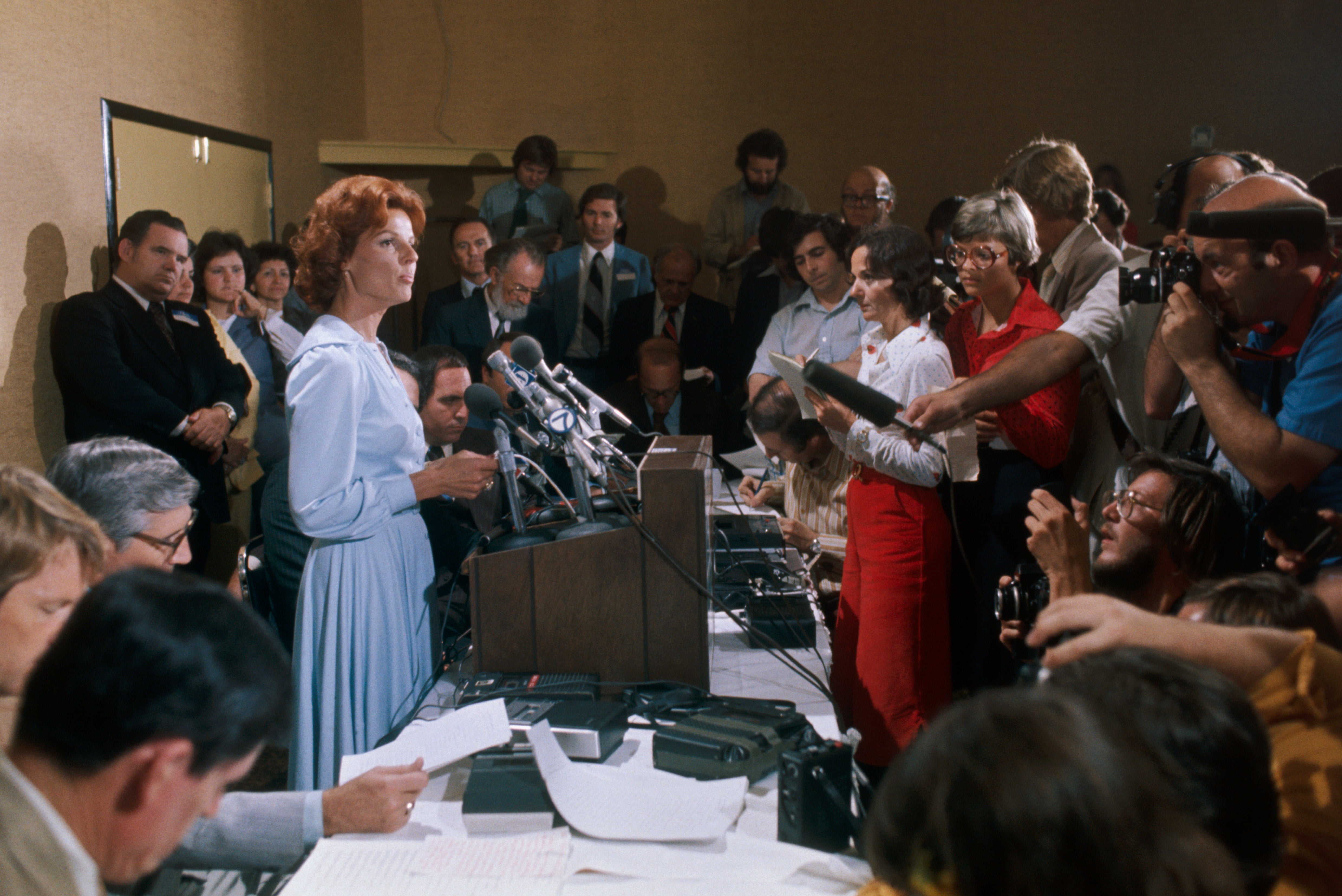
As of 2026, Anita Bryant is alive and remains a figure of significant historical interest. While she transitioned out of the public eye decades ago, her name remains synonymous with the 1977 "Save Our Children" campaign. The frequent search for her "death" often refers to the abrupt end of her mainstream entertainment career and her enduring status as a polarizing icon in the history of LGBTQ+ civil rights.
The Current Status of Anita Bryant in 2026
Anita Bryant, born March 25, 1940, in Barnsdall, Oklahoma, is currently 86 years old. In recent years, she has lived a relatively private life in her home state of Oklahoma. After decades of attempting to revive her singing career and navigating the fallout of her political activism, she eventually moved away from the national spotlight. Her public appearances in 2026 are rare, usually restricted to local community events or religious gatherings.
The persistent interest in her passing is largely a reflection of her status as a "historical" figure. For many younger generations, Bryant is a name found in history books or documentaries about the 1970s, leading to the assumption that she is no longer living. However, she remains a living link to one of the most volatile eras of American social change. Her longevity has allowed her to witness the total reversal of the political goals she once championed, as LGBTQ+ rights moved from the fringes of society to the mainstream of American law and culture.
The Rise of an American Icon: Before the Controversy
To understand the historical context of Anita Bryant, one must first recognize the scale of her fame prior to 1977. She was not merely a political activist; she was one of the most trusted and beloved celebrities in the United States.
Early Career and Pageantry
Bryant’s rise to prominence began in the late 1950s. She was crowned Miss Oklahoma in 1958 and went on to become the second runner-up in the 1959 Miss America pageant. This platform launched her career as a singer, where she enjoyed significant success in the late 1950s and early 1960s. Hits like "Paper Roses," "In My Little Corner of the World," and "Till There Was You" established her as a wholesome, talented performer with broad appeal.
The Face of Florida Orange Juice
By the late 1960s, Bryant had become a household staple through her work as the brand ambassador for the Florida Department of Citrus. Her slogan, "A day without orange juice is like a day without sunshine," became one of the most successful advertising campaigns in American history. She represented a specific vision of American womanhood: patriotic, Christian, and family-oriented. This image made her an ideal spokesperson for a commodity associated with health and domesticity.
Religious and Patriotic Prominence
Beyond her commercial success, Bryant was a frequent guest at the White House and a staple of the USO tours led by Bob Hope. She performed for troops in Vietnam and sang at the funeral of President Lyndon B. Johnson in 1973. Her cultural footprint was massive, which is why her sudden pivot into aggressive political activism in 1977 felt like such a seismic shift for the American public.
The 1977 "Save Our Children" Campaign
The event that defined Bryant’s legacy and essentially "killed" her mainstream career was the 1977 battle over a human rights ordinance in Dade County, Florida.
The Catalyst: Ordinance 77-4
In early 1977, the Dade County Commission passed an ordinance that prohibited discrimination based on sexual orientation in housing, employment, and public accommodations. While similar ordinances had passed in other cities without national fanfare, Bryant viewed the Florida law as a direct threat to the moral fabric of the community.
She founded an organization called Save Our Children, Inc., arguing that the ordinance was an attempt to "recruit" children into what she termed the "homosexual lifestyle." Her rhetoric focused heavily on the idea that because gay people could not biologically reproduce, they had to "recruit" through education and influence. This specific framing—associating LGBTQ+ rights with child endangerment—became a foundational tactic for anti-LGBTQ+ movements for decades to follow.
The Political Victory
Bryant’s campaign was remarkably effective in the short term. On June 7, 1977, Dade County voters repealed the ordinance by a margin of more than two-to-one. This victory was the first major setback for the nascent gay rights movement in the United States and served as a blueprint for the "New Right" and the Moral Majority, led by figures like Jerry Falwell and Pat Robertson.
The Historical Rebound: The Birth of Modern LGBTQ+ Activism
While Bryant won the battle in Dade County, many historians argue she lost the war. Her campaign served as an unintended catalyst that unified a fractured and largely underground gay community.
National Boycotts and the "Orange Juice Boycott"
The backlash against Bryant was swift and economically devastating. Activists organized a nationwide boycott of Florida orange juice. Bars across the country, particularly in San Francisco and New York, famously stopped serving "screwdrivers" (vodka and orange juice), replacing them with "Anita Bryants" (vodka and apple juice).
This was one of the first times the LGBTQ+ community demonstrated its collective economic power. The boycott put significant pressure on the Florida Department of Citrus, which eventually realized that Bryant had become a liability to their brand.
The Pie-in-the-Face Incident
One of the most famous moments in 20th-century political theater occurred on October 14, 1977. During a televised press conference in Des Moines, Iowa, activist Thom Higgins hit Bryant in the face with a strawberry rhubarb pie. Bryant’s immediate reaction—praying for Higgins and then breaking into tears—was broadcast globally. While her supporters saw it as an act of martyrdom, for many others, it signaled the beginning of the end of her influence. The image of the "pieing" became a symbol of the breakdown of the polite veneer of 1950s-era social conservatism.
Influence on Harvey Milk and California Politics
Bryant’s success in Florida emboldened conservative lawmakers elsewhere, leading to the Briggs Initiative (Proposition 6) in California, which sought to ban gay people from teaching in public schools. However, this threat mobilized figures like Harvey Milk, the first openly gay man elected to public office in a major U.S. city. Milk used Bryant as a foil, arguing that her "Save Our Children" rhetoric was based on fear rather than fact. The Briggs Initiative was ultimately defeated in 1978, marking a turning point where the momentum shifted back toward civil rights.
The "Death" of a Career: Financial and Personal Fallout
The immediate years following 1977 saw a total collapse of Anita Bryant’s professional and personal life. This period is often analyzed as a "career death" that was as swift as it was absolute.
| Aspect of Career/Life | Status Before 1977 | Status After 1980 |
|---|---|---|
| Endorsements | Top-tier (Florida Orange Juice, Singer) | Dropped by all major brands |
| Income | Multi-millionaire status | Filed for bankruptcy twice (1997, 2001) |
| Public Image | "America's Sweetheart," wholesome | Highly polarizing, persona non grata |
| Marital Status | Married to Bob Green (manager) | Divorced (1980), then remarried/divorced |
| Music Industry | Regular chart presence, USO tours | Limited to small religious venues |
The Loss of the Florida Citrus Contract
In 1979, the Florida Department of Citrus declined to renew Bryant’s contract. While they officially cited the need for a "new direction," it was clear that the controversy had made her toxic to a general audience. Without this income and the ability to book major venues, Bryant’s financial empire began to crumble.
The Internal Conflict: Divorce and Religion
In a move that shocked her conservative Christian base, Bryant filed for divorce from her husband and manager, Bob Green, in 1980. She cited emotional abuse and a "rocky" marriage that had been hidden from the public to maintain her image. Her supporters, who viewed her as the champion of "traditional family values," were largely unforgiving. Many fundamentalist churches that had hosted her for speaking engagements cancelled her appearances, viewing her divorce as a betrayal of the biblical principles she had preached.
Legacy and Re-evaluation in the 21st Century
By 2026, the historical analysis of Anita Bryant has moved from simple condemnation to a more complex understanding of her role in American political history.
The Architect of Polarization
Bryant is often credited (or blamed) for helping to bridge the gap between religious fundamentalism and partisan politics. Before 1977, evangelical Christians were less involved in organized electoral politics. Bryant’s campaign proved that "moral issues" could be used to mobilize a massive voting bloc, a strategy that would become the cornerstone of the Republican Party’s "Southern Strategy" and the rise of the Religious Right.
A Symbol for the LGBTQ+ Movement
For the LGBTQ+ community, Bryant remains a symbolic "villain" whose opposition forced the movement to grow up. The infrastructure built to fight her—the fundraising networks, the legal defense funds, and the political action committees—stayed in place long after she disappeared from the headlines. In 2010, the Miami-Dade County Commission formally apologized for the 1977 repeal, and the anti-discrimination protections were long ago reinstated.
Later Life and Attempts at Redemption
Bryant spent much of the 1990s and 2000s in Oklahoma and Branson, Missouri, attempting to run her own theaters. These ventures frequently ended in financial failure and legal disputes over unpaid wages. In rare interviews, she has remained steadfast in her religious beliefs, though her rhetoric has softened significantly compared to the 1970s. She often portrays herself as a victim of "blacklisting," drawing parallels between her experience and the McCarthy-era Hollywood blacklists.
Summary of Historical Milestones
- 1958: Crowned Miss Oklahoma.
- 1968: Becomes the spokesperson for Florida Orange Juice.
- January 1977: Dade County passes LGBTQ+ non-discrimination ordinance.
- June 1977: Bryant’s "Save Our Children" campaign successfully repeals the ordinance.
- October 1977: The famous pie-in-the-face incident in Iowa.
- 1979: Loses her contract with Florida Citrus.
- 1980: Divorces Bob Green; career effectively ends in the mainstream.
- 1998: Dade County reinstates the civil rights protections Bryant fought to remove.
- 2026: Bryant lives privately in Oklahoma as the LGBTQ+ rights movement she opposed celebrates decades of legal marriage equality.
Frequently Asked Questions
Is Anita Bryant still alive in 2026?
Yes, Anita Bryant is alive. She is 86 years old and resides in Oklahoma. While she is no longer active in politics or entertainment, she is occasionally mentioned in news cycles regarding the history of the culture wars.
What caused Anita Bryant's career to end?
Her career ended due to the massive public and corporate backlash following her 1977 "Save Our Children" campaign. The resulting boycott of Florida Orange Juice made her a liability for advertisers, and her 1980 divorce alienated her remaining conservative religious base.
Did Anita Bryant ever apologize for her anti-gay campaign?
Bryant has never issued a formal apology for the "Save Our Children" campaign. In subsequent decades, she has maintained that she was following her religious convictions, though she has expressed regret over the personal toll the controversy took on her family and career.
How did Anita Bryant influence the Moral Majority?
Her success in Florida showed evangelical leaders like Jerry Falwell that "moral" and "pro-family" messaging could be used to mobilize voters and influence legislation. This led directly to the formation of the Moral Majority in 1979, which became a powerful force in the election of Ronald Reagan.
What is the "Anita Bryant effect" in politics?
The "Anita Bryant effect" refers to a situation where an aggressive campaign against a minority group backfires by unintentionally unifying that group and generating sympathy/support from the broader public. It is studied by political scientists as a case study in "winning the battle but losing the war."
Final Considerations
Anita Bryant’s story is a profound example of how quickly the cultural landscape can shift. In 1977, she was a cultural powerhouse who successfully moved the needle of American law through the sheer force of her celebrity and conviction. Today, she is a historical footnote to the very movement she tried to stop. For researchers and students of history in 2026, her life provides a vital lens through which to view the origins of modern political polarization and the enduring power of grassroots activism.