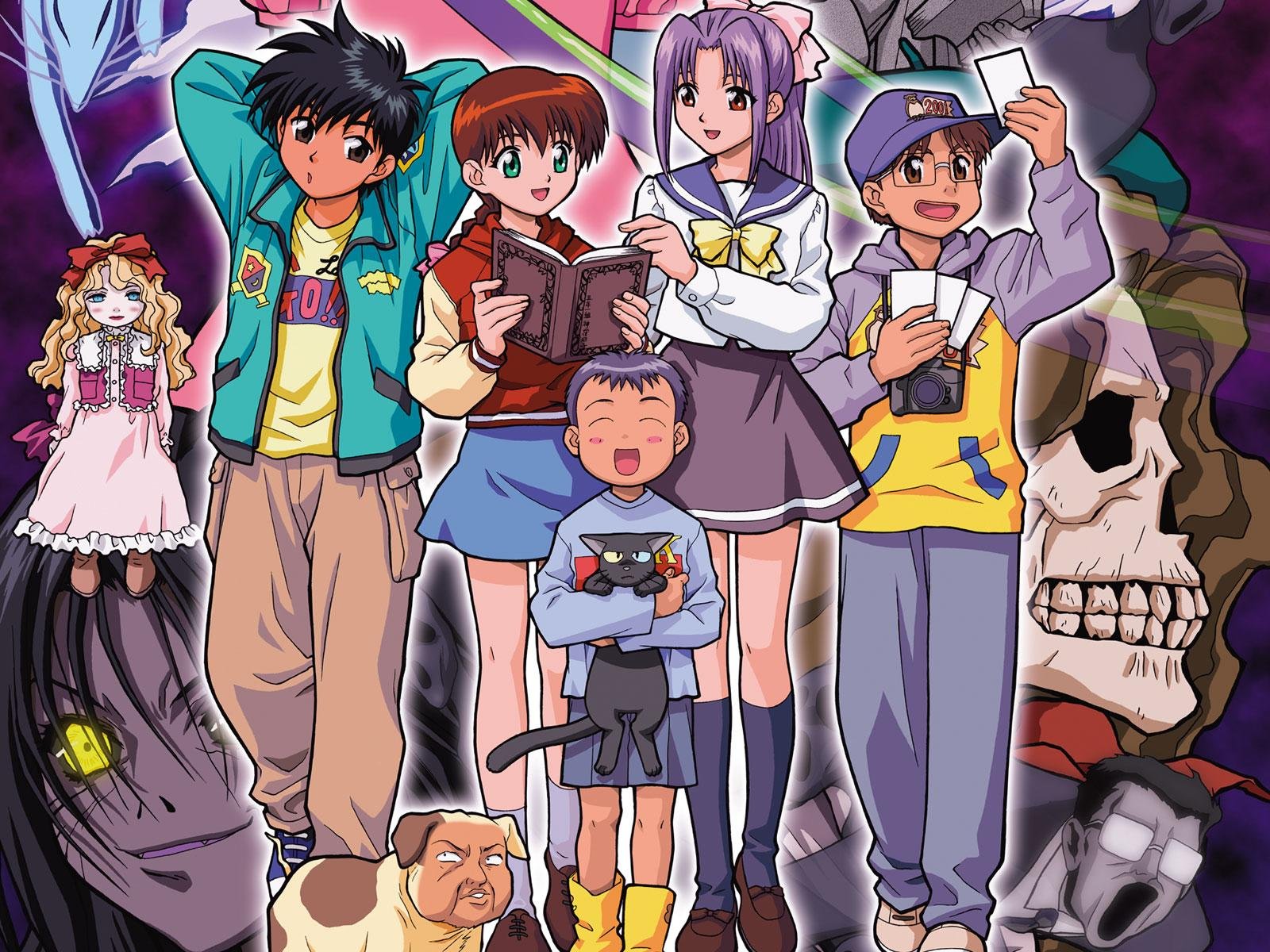
In the context of supernatural media, "Ghost Hunt" (based on Fuyumi Ono’s Akuryō Series) stands as a definitive exploration of paranormal investigation within contemporary urban environments. Unlike traditional gothic horror that relies on ancient castles or isolated villages, "Ghost Hunt" utilizes modern spaces—schools, office buildings, and residential suburbs—integrating scientific methodology with diverse spiritual traditions to resolve hauntings.
The Architecture of Contemporary Fear
Modern horror in anime often finds its greatest strength in the subversion of the familiar. In Ghost Hunt, the "modern space" is not merely a backdrop; it is a central character that dictates the flow of the investigation. While traditional Japanese horror (J-Horror) frequently focuses on rural folklore and ancestral curses, the shift to modern spaces introduced a new set of psychological triggers.
The Institutional Haunting: Schools and Offices
The most recurring modern space in the series is the Japanese school system. Schools are architecturally designed for efficiency, surveillance, and order. When these spaces are compromised by the supernatural, the terror stems from the violation of a controlled environment. The "Evil Spirits All Over the Place" arc exemplifies this by turning a standard school building into a labyrinth of hidden history. In modern spaces, hauntings often manifest through the infrastructure itself—strange noises in the ventilation, flickering fluorescent lights, or anomalies in the electrical grid—rather than just "ghostly" apparitions.
Residential Modernity and Domestic Terror
The series also explores modern housing, such as the "Doll House" arc. Here, the modern suburban home represents safety and the nuclear family unit. By introducing a poltergeist or a spiritual infestation into a relatively new construction, the narrative suggests that the age of a building is irrelevant to its potential for horror. Modern spaces lack the protective "spiritual barriers" often found in older, consecrated structures, making them vulnerable to contemporary urban legends and modern-day tragedies.
The Shibuya Psychic Research (SPR) Toolkit
A hallmark of Ghost Hunt in modern spaces is the reliance on technology. Kazuya Shibuya (Naru) approaches the paranormal not as a mystic, but as a researcher. This "technical ghost hunt" involves a suite of equipment designed to quantify the unseen, mirroring real-world paranormal investigation techniques developed in the late 20th and early 21st centuries.
Technical Equipment Breakdown
The SPR team utilizes a variety of tools that define the "modern" aspect of their hunts:
- Infrared and Thermal Imaging: Used to detect "cold spots" or heat signatures that cannot be explained by the building's HVAC system. In modern spaces, identifying drafting or insulation leaks is the first step in debunking a haunting before moving to supernatural explanations.
- Highly Sensitive Microphones and Parabolic Ears: These are deployed to capture Electronic Voice Phenomena (EVP) or localized sounds that are too faint for the human ear.
- EMF Meters: Measuring electromagnetic fields is a standard procedure. In modern spaces, the SPR must differentiate between the electromagnetic "smog" produced by computers and appliances and the spikes associated with spiritual manifestations.
- Automated Data Logging: Unlike a traditional exorcist who reacts in the moment, Naru sets up a command center with multiple monitors, tracking data over several days to find patterns in the haunting’s activity.
The Role of the Base Camp
In every investigation, the establishment of a "Base Camp" or "Command Center" is a logistical necessity. This room serves as the brain of the operation, usually located in a room with stable power and central access. The contrast between a room filled with high-end monitors and the dark, echoing hallways of a haunted modern facility creates a tension between the known (technology) and the unknown (the spirit).
The Intersection of Faith and Science in the 21st Century
While Naru provides the scientific framework, the strength of the series lies in its ensemble cast, representing a spectrum of spiritual disciplines. This multi-disciplinary approach is essential for modern spaces where a single tradition may not suffice to explain a complex haunting.
The Specialists
- Houshou Takigawa (Monk): A Buddhist monk who balances traditional chants with a modern lifestyle (as a studio musician). His presence suggests that ancient rites still hold power in steel-and-glass structures.
- Ayako Matsuzaki (Miko): A Shinto priestess whose power is tied to the spirits of the land. She often struggles in urban environments where nature has been paved over, highlighting the disconnect between modern architecture and traditional spiritual energy.
- John Brown (Catholic Priest): An Australian exorcist who uses holy water and Latin prayers. His inclusion brings a Western perspective to the Japanese urban landscape.
- Masako Hara (Medium): A high-profile television medium who senses the emotional residue of the deceased. Her character reflects the modern phenomenon of "celebrity psychics" and the commercialization of the paranormal.
Case Study: The Bloodstained Labyrinth
One of the most complex examples of a ghost hunt in a modern (or modernized) space is the "Bloodstained Labyrinth" arc. This case involves a massive mansion that has been continuously renovated and expanded, resulting in a nonsensical layout of rooms within rooms and corridors that lead nowhere.
This setting represents the "liminal space" trope—a modern architectural nightmare where the physical layout of the building mirrors the fractured psyche of the antagonist. The investigation requires the team to map the building physically while simultaneously uncovering its dark history. This highlights a key theme in modern ghost hunting: the "ghost" is often tied to the physical modifications and structural choices made by the living.
Procedural Realism and Investigation Phases
Ghost Hunt avoids the "monster of the week" format in favor of a procedural approach. This realism is what makes the modern setting effective. An investigation typically follows a structured timeline:
| Phase | Description | Key Objective |
|---|---|---|
| Initial Interview | Meeting the client and touring the modern facility. | Establishing the "baseline" of normal activity. |
| Setup & Calibration | Deploying cameras, temperature sensors, and microphones. | Ensuring data integrity and identifying technical interference. |
| Observation | Monitoring feeds during peak activity hours (usually night). | Gathering empirical evidence of anomalies. |
| Hypothesis Testing | Attempting to debunk findings (e.g., checking for plumbing issues). | Narrowing down the cause from physical to spiritual. |
| Intervention | Applying spiritual or physical solutions (Exorcism or Cleansing). | Neutralizing the threat based on the gathered data. |
| Post-Investigation | Analyzing the results and finalizing the case file. | Confirming the cessation of the haunting. |
The Psychology of the Modern Hunter
In 2026, the appeal of Ghost Hunt remains rooted in the character of Mai Taniyama. As the "outsider" who joins the SPR, she provides the emotional core that science lacks. While Naru analyzes decibels and temperature gradients, Mai experiences "latent dreams" that offer a subjective look at the tragedy behind the haunting.
This duality—Naru’s objective data vs. Mai’s subjective empathy—defines the modern ghost hunt. In a world of cold, modern spaces, the investigation is not just about removing a "nuisance" spirit; it is about resolving the human trauma that left a mark on the environment. The "modern" aspect is the realization that ghosts are not just figures in white sheets, but echoes of human emotion trapped in the rigidity of modern life.
Challenges of Modern Ghost Hunting
Modern environments present unique challenges that did not exist in traditional folklore. These factors must be accounted for by any serious paranormal investigation team:
- Acoustic Pollution: In urban areas, traffic, airplanes, and industrial machinery create a constant low-frequency hum (infrasound), which has been scientifically linked to feelings of unease and even hallucinations.
- Optical Illusions: Modern materials like glass, polished steel, and synthetic fabrics can create reflections and shadows that are easily mistaken for apparitions on low-resolution security footage.
- Digital Artifacting: As investigations move to digital sensors, "orbs" are often revealed to be nothing more than dust motes or moisture droplets reflecting the camera's infrared light (the "backscatter" effect).
- Psychological Priming: In a highly connected world, the "contagion" of urban legends can cause mass hysteria in modern spaces like schools or offices, where a single report of a ghost can lead dozens of others to "experience" the same phenomenon.
Legacy of the Series in Modern Media
Ghost Hunt set the template for how supernatural investigation is handled in anime. It moved the genre away from "magical girls" and "shonen battles" toward a more grounded, analytical approach. Subsequent series like Occultic;Nine or The Case Files of Jeweler Richard (to an extent) owe a debt to the SPR's methodology.
The focus on "modern spaces" also anticipated the "liminal space" and "backrooms" aesthetics that became popular in internet culture during the early 2020s. The idea that a sterile, modern office could be more terrifying than a graveyard is a concept that Ghost Hunt pioneered decades ago.
Frequently Asked Questions
Does the Ghost Hunt anime cover the entire novel series?
No, the 25-episode anime adaptation covers several major arcs but does not conclude the entire narrative found in the original Akuryō Series or the later Ghost Hunt rewritten novels. Specifically, the anime concludes before some of the more intense final revelations regarding Naru’s identity and his ultimate goals.
Is the equipment used in the show based on real science?
Yes, the SPR uses tools that were standard in parapsychology during the late 20th century. While the existence of ghosts remains unproven by mainstream science, the methods of tracking temperature drops, EMF spikes, and EVP are based on real-world "ghost hunting" protocols used by groups like the Society for Psychical Research (the real-life SPR).
Why are schools such a common setting for these investigations?
Schools are "transient" modern spaces where thousands of individuals pass through, leaving behind significant emotional energy. Architecturally, their long hallways and repetitive room structures make them ideal for creating a sense of disorientation (liminality) when the lights are out and the building is "empty."
How does Ghost Hunt differ from other supernatural anime like Mieruko-chan?
While Mieruko-chan focuses on the visual horror of seeing spirits and the protagonist's survival, Ghost Hunt is a procedural investigation. Ghost Hunt focuses on the "Why" and "How"—using logic and research to solve the problem—whereas many other series focus on the "Fear" and "Reaction."
Can the spirits in Ghost Hunt be harmed by physical weapons?
Generally, no. The series emphasizes that spirits are non-physical entities. Resolving a case usually requires a combination of spiritual intervention (exorcism, sutras, or cleansing) and addressing the underlying emotional or historical cause of the spirit's presence.
Practical Recommendation for Enthusiasts
For those interested in exploring the world of "Ghost Hunt" and its portrayal of modern paranormal investigation, it is recommended to start with the anime's "File 1: Evil Spirits All Over the Place" to understand the foundational methodology of the SPR. Following this, reading the original novels or the manga adaptation (illustrated by Shiho Inada) provides a deeper dive into the technical details and the "Bloodstained Labyrinth" arc, which offers the most profound look at how modern architecture can be manipulated by the supernatural. If you are conducting your own research into modern urban legends, always prioritize the "debunking" phase—identifying logical, physical explanations for anomalies is the hallmark of a true investigator in the vein of Kazuya Shibuya.